
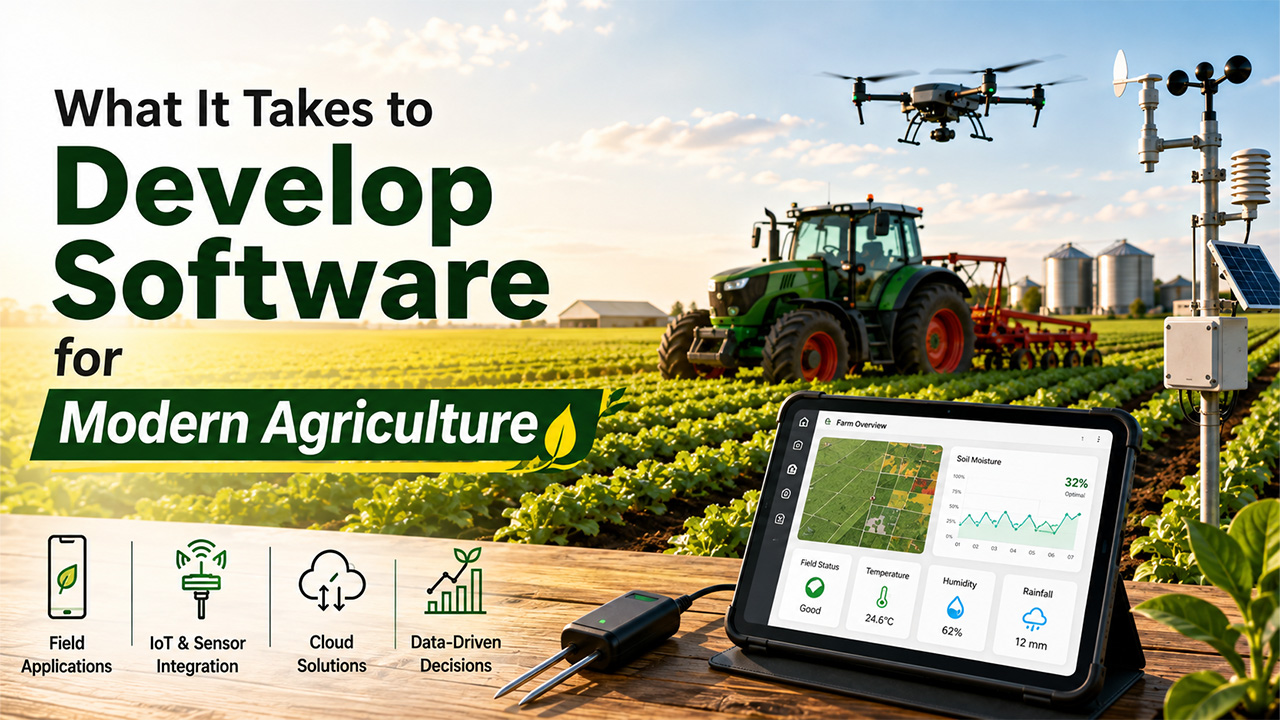

Modern farm software has to work where crops grow, machines move, and internet service comes and goes. Agricultural software development must account for these conditions from the beginning. A field application may guide a tractor, collect soil readings, and help a manager review irrigation plans. This range of tasks explains why teams assessing software development companies in Latin America need to look beyond standard web and mobile experience when choosing a partner for agricultural work.
The product team must understand physical operations as well as code. Devices face dust, heat, rain, vibration, weak signals, and long distances between users and support staff. Providers experienced in connected devices, cloud systems, data tools, and mobile products can cover these needs. N-iX is one example of a technology partner that works across these areas and can support complex products with distributed engineering teams.
Farms Create a Different Software Environment
Agricultural software connects digital records with events happening on real land. A planting plan depends on field boundaries, crop history, machine access, soil condition, labor, and weather. Each detail changes what the application should display and which action should come next.
Field users also work under time pressure. A machine operator may need to confirm a task while wearing gloves inside a moving cab. A crop adviser may inspect several fields in one day and enter notes with one hand. Thus, clear buttons, large touch areas, short forms, and readable maps carry more weight than decorative screens.
The physical setting adds another layer. Wireless sensor networks can collect information from plants, soil, water systems, storage areas, and livestock facilities, but each sensor has limits. Batteries run down, readings drift, hardware gets moved, and local conditions can block signals. Software must mark missing or doubtful data clearly so users can judge it correctly.
What Agricultural Software Development Must Handle
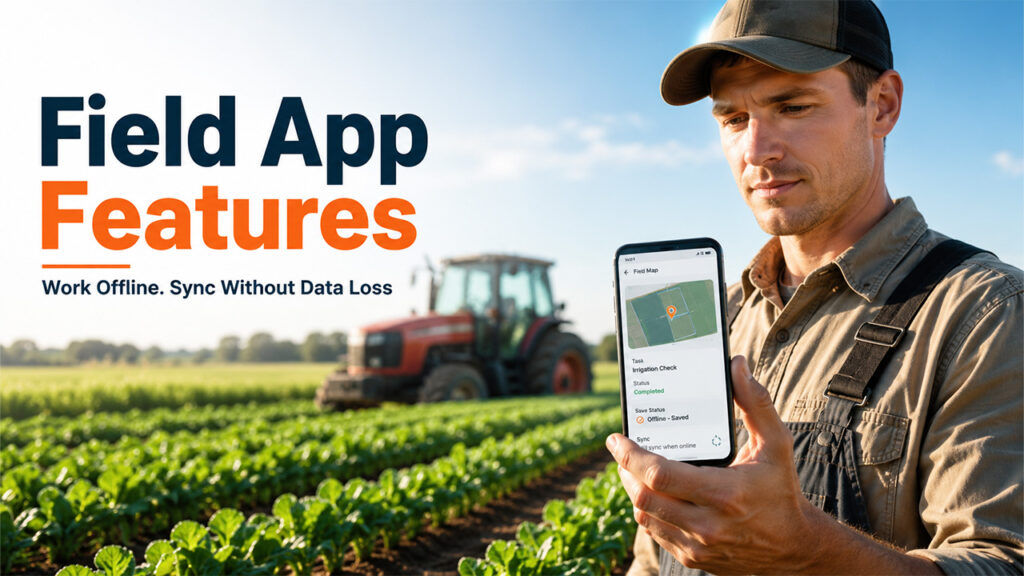
A useful field app grows from daily farm tasks rather than a generic mobile template. Its core features should match the decisions users make near crops, equipment, or animals.
- Offline work: Maps, job details, notes, and photos should remain available when mobile coverage disappears.
- Safe data syncing: If several workers change the same information offline, the app should merge the updates carefully or ask someone to review the conflict.
- Fast task entry: Common actions, such as marking a job complete or reporting equipment damage, should take only a few taps.
- Location awareness: Maps, field boundaries, routes, and geotagged records connect each update to the correct place.
- Simple status signals: Users need clear labels for uploaded, pending, failed, and outdated records.
These features depend on testing in real conditions. A screen that works in an office may become hard to read under direct sun. A ten-step form may slow down a worker who repeats the same action hundreds of times. Therefore, field trials should happen early, with feedback from operators, agronomists, managers, and technicians.
The app should also protect users from data loss. Local storage, automatic saving, retry rules, and visible sync history give users a record of what happened. This matters when a failed upload could hide a completed spray task, a broken irrigation line, or a machine warning.
Connecting Sensors, Machinery, and Weather Data
Modern farm products may combine soil readings, weather stations, satellite images, equipment logs, manual observations, and business records. The main technical task is turning these streams into one consistent view, which is a key part of smart farming.
A number without context can send users down the wrong path. For example, a moisture reading needs to include the field, crop, soil type, sensor depth, timestamp, and recent rainfall. The software should keep that context attached, highlight sudden changes, and allow users to check the original readings.
Machinery data brings its own complications. Farms may run equipment from several brands, each with different file types, naming rules, and connection methods. One tractor may send information in real time, while a sprayer uploads its records hours later. A shared integration layer can translate the data into common terms while preserving details that matter for each machine.
Weather data affects planning for planting, spraying, irrigation, and harvest. Applications can combine forecasts with local station readings, then show how conditions may affect a task. Precision agriculture becomes more practical when the interface explains the reason behind an alert, the time window involved, and the data used to produce it.
Choosing the Right Development Partner
Agricultural software works best when field knowledge guides the technical decisions. Agricultural software development requires farmers and operators to explain what happens during a shift, where delays appear, and which information matters in the moment. Farmers and operators can explain what happens during a shift, where delays appear, and which information matters in the moment. A software development company in Latin America should turn that knowledge into practical requirements, then test each early version with users working in real conditions.
The partner should have practical experience with mobile tools, equipment connections, mapping, data systems, and support for users in remote locations. Questions about security, access rights, data ownership, and maintenance should come up early as well.
Pay attention to the questions a team asks. Software development companies that want to know which machines are used, when seasonal workloads peak, who enters data, and where internet service drops are digging into the real job rather than working from assumptions.
It also helps to build the product in manageable pieces. Testing one farm process at a time makes problems easier to spot and fix. Providers such as N-iX can support this approach with skills in cloud development, mobile applications, connected systems, and data engineering.
Building Software That Holds Up in the Field
Modern agricultural software must connect fieldwork, sensors, machinery, weather, and business records without depending on constant internet access. Strong products start with real farm routines, keep essential features available offline, and explain data clearly enough for quick decisions. They also store changes safely, handle mixed equipment, and give remote support teams useful diagnostic details. Therefore, agricultural software development requires close work between engineers, farm specialists, operators, and product owners. A partner with experience in mobile apps, connected devices, cloud systems, and data processing can build a product that remains practical across changing seasons, distant locations, and varied technical conditions.
%201.png)

%201.png)

%201.png)