
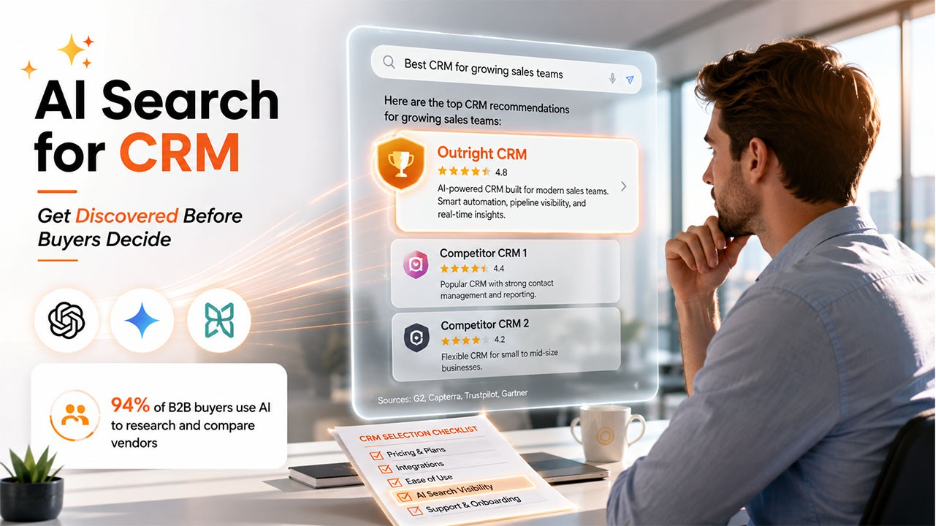

When teams go through a CRM selection process, the checklist usually covers pricing, integrations, pipeline management, onboarding support, and ease of use. These criteria matter. But there is one factor most teams overlook entirely, and it is reshaping how B2B buyers discover and evaluate CRM vendors before a sales conversation ever starts.
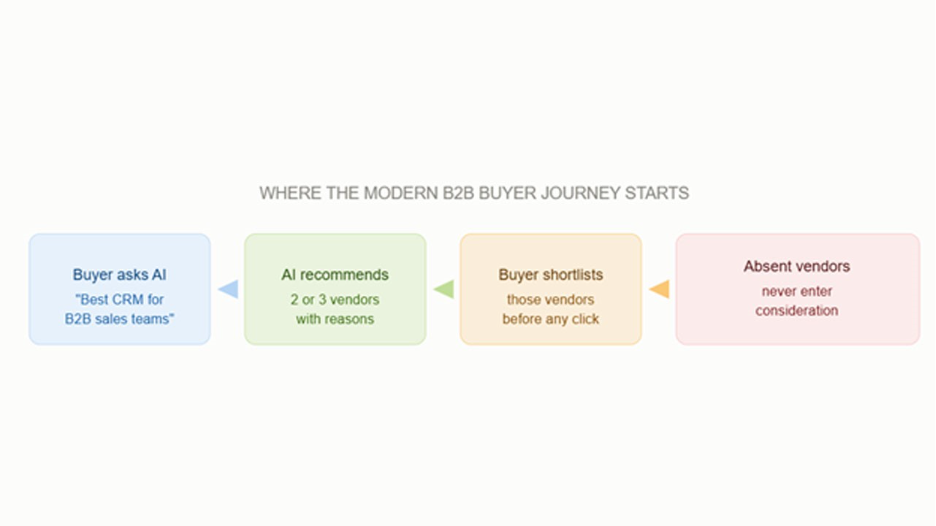
A prospect evaluating CRM software today asks ChatGPT or Perplexity for a recommendation before visiting a single website. The vendors who appear in those answers make the shortlist.
The ones who do not are never considered. This is the same shift that pushed teams to start tracking Peec AI alternatives as AI visibility platforms multiplied and buyers began forming opinions inside AI answers rather than on review sites.
This is the CRM visibility gap. And it should be part of how you evaluate vendors.
Did you know💡: 94% of B2B buyers used AI during their most recent purchase process, with 55% using it specifically to compare vendors
1. Buyers form opinions in AI before they visit vendor websites
The modern B2B buying journey now starts with a prompt, not a search result page. A sales manager looking for a CRM types a question into ChatGPT and gets two or three vendor recommendations with reasons. That shortlist shapes everything that follows.
Your CRM never logs this. There is no form fill, no ad click, no UTM parameter. The discovery happened before any tracked touchpoint.
A vendor who shows up consistently in AI answers is building consideration at the exact moment buyers are deciding who to evaluate.
2. AI visibility signals market authority
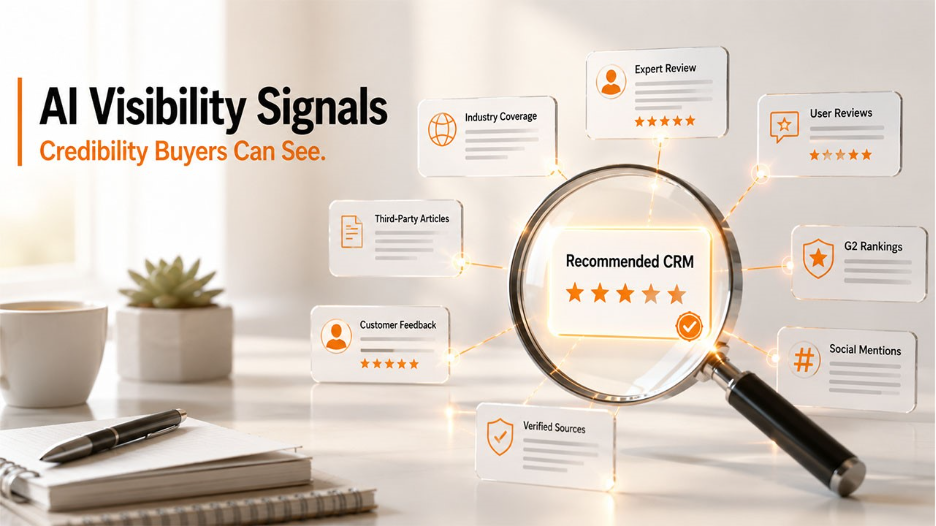
When an AI model recommends a CRM vendor, it is drawing on third party coverage, user reviews, expert content, and how consistently the brand appears across the web. A vendor cited regularly in AI answers has usually earned genuine market authority.
During a CRM selection process, that matters. It tells you that the vendor has a strong content presence, credible reviews, and enough independent coverage that AI systems surface them as trustworthy.
A vendor who is absent from AI answers often has a content and authority gap worth understanding before you commit.
3. It reveals competitive positioning you would otherwise miss
AI answers rarely recommend just one vendor. They typically name two or three, often with a comparison of strengths. Running a few prompts before you shortlist vendors gives you a clear view of how your options are being positioned against each other in the eyes of buyers.
| What to search | What you learn |
| "Best CRM for small sales teams" | Which vendors own this use case in AI |
| "CRM software for B2B SaaS companies" | How each vendor is framed for your segment |
| "CRM with best pipeline management" | Which features AI associates with each brand |
| "Affordable CRM for startups" | Price positioning and who dominates budget conversations |
Running these prompts across ChatGPT, Perplexity, and Gemini takes under an hour and tells you more about real market positioning than most analyst reports. As explored in this guide on how AI and machine learning are transforming CRM systems, AI is now shaping not just what CRM platforms can do internally but how buyers find and evaluate them in the first place.
4. A vendor's AI visibility tells you how they think about long term discoverability
Ask each shortlisted vendor whether they monitor their citation presence across AI platforms. The answer is revealing.
A vendor who actively tracks where and how they appear in AI generated answers is investing in being found as AI search continues to grow.
They understand that discoverability is shifting. A vendor with no awareness of their AI visibility is likely to fall further behind as more buyers start their research in AI tools rather than Google.
Teams that want a structured view of how vendors compare across AI platforms can use Wellows, which does LLM citation tracking across ChatGPT, Perplexity, Gemini, Google AI Overviews, and Google AI Mode.
It shows not just whether a brand appears but what is being said, which sources are cited, and how visibility shifts over time, then closes the loop with content optimization that runs a cannibalization check and line-level gap analysis before recommending anything, plus outreach that hands you the verified contact and the pitch.
5. It future proofs your vendor decision
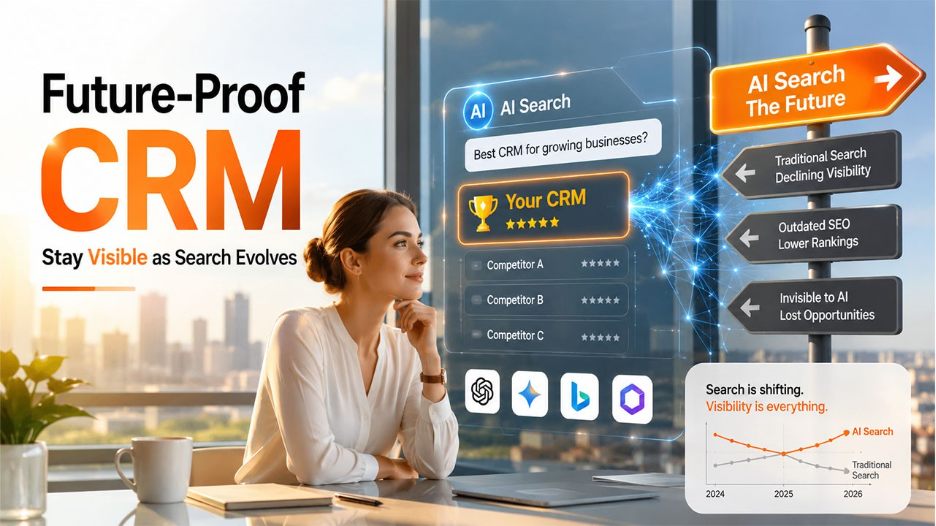
AI search is not a trend that will reverse. Traditional search volume is projected to shift significantly toward AI assistants over the next two years.
The CRM vendor you choose today needs to be discoverable not just through Google SEO but through the AI platforms where your future buyers will be doing research.
A vendor who is building AI visibility now will be easier for your prospects to find as that shift accelerates. A vendor who is absent today is likely to become harder to find as AI search grows.
This mirrors exactly what happened with AI in sales — teams that adopted AI tools early built a structural advantage that late movers are still trying to close. The same pattern is now playing out in AI search visibility.
A quick checklist before you shortlist
Before finalizing your CRM selection process, run these checks:
- Search "best CRM for [your use case]" in ChatGPT, Perplexity, and Gemini
- Note which vendors appear and how they are described
- Check whether sentiment is positive, neutral, or cautionary
- Ask shortlisted vendors whether they track their AI citation presence
- Compare which competitors appear alongside each vendor in AI answers
Adding this step takes under an hour and gives you a clearer picture of how each vendor is positioned where your buyers are already looking.
Conclusion
The CRM selection process has always been about finding the platform that fits how your team works today and where your business is going. AI search adds a new dimension to that decision.
The vendors who show up in AI answers are building pipeline before a single form is filled. The ones who are absent are starting every conversation at a disadvantage.
Adding an AI visibility check to your evaluation does not require new tools or a long process.
A few prompts in ChatGPT, Perplexity, and Gemini, and a direct question to each vendor about whether they track their citation presence, is enough to tell you whether a vendor is thinking seriously about how buyers will find them over the next few years.
In a market where AI search is growing every month, that question belongs in every CRM selection process.
%201.png)

%201.png)

%201.png)