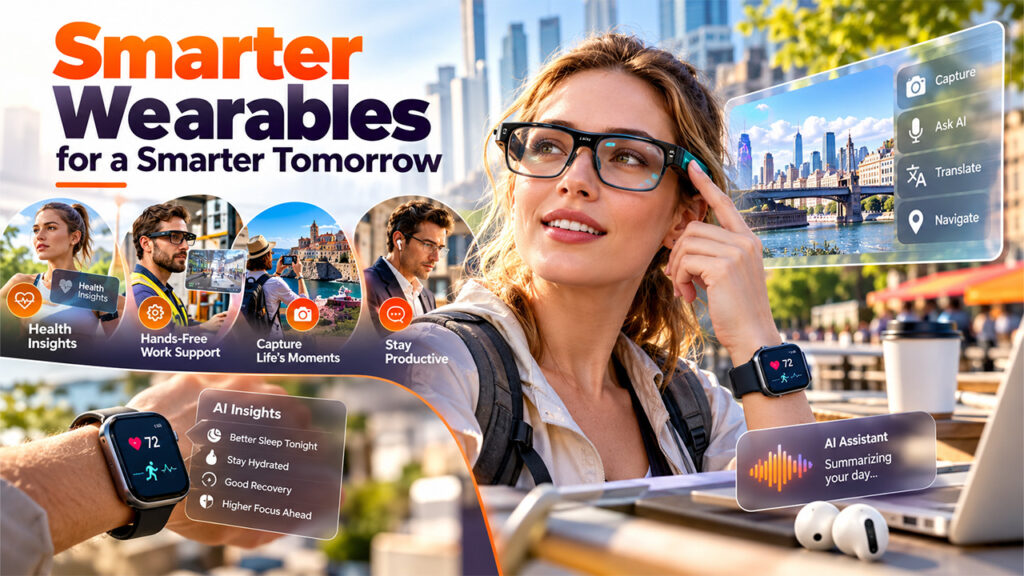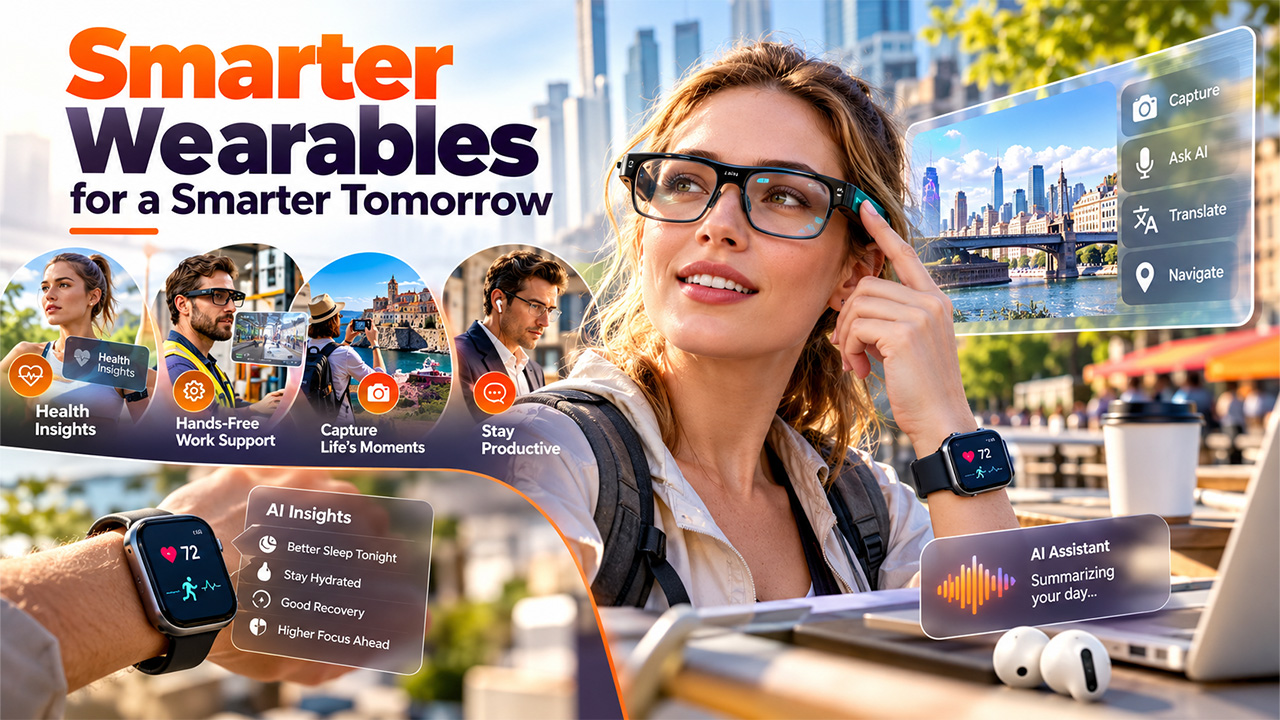

Wearable technology has entered a new phase in 2026. For past few years, most wearables were typically judged by simple functions, like counting steps, tracking heart rate, showing notifications, or playing audio. AI is changing that. The next generation of wearable technologies are beginning to interpret context, support decisions, personalize experiences, and reduce the need to interact with screens all day, instead of only collecting data.
Wearables Are Moving From Tracking to Intelligence
The first waves of popular wearables were generally built around monitoring. Technologies like smartwatches, fitness bands, and wireless earbuds offer users quick access to data and communication. That was useful but limited.
AI adds a new layer. Wearable technology can move from "here is your data" to "here is what this data means". The technology can help detect patterns, make suggestions, respond to voice commands, or support real-time assistance.
This shift matters because wearables sit close to the body. They can collect information from movement, audio, location, routine, and sometimes visual context. When AI is added thoughtfully, those signals can support more personal and timely interactions.
That is why AI is becoming part of broader business and automation conversations, not just consumer gadgets. As explained in discussions about AI transforming CRM and business automation, intelligent systems are becoming valuable because they help people act on information faster, not just store it.
AI Is Making Wearables More Personal
Personalization is one of the biggest reasons AI matters for wearable technology. A device worn daily can learn patterns over time. It can understand when the user is active, resting, commuting, working, exercising, or traveling.
This can improve everyday experiences in several ways:
- Smarter fitness recommendations
- More useful reminders
- Better notification filtering
- Personalized audio or assistant responses
- Context-aware health insights
- More relevant travel or productivity prompts
For businesses, the same idea connects personalization at a larger scale. AI systems can utilize structured data to create more relevant customer experiences, whether in CRM platforms, marketing tools, or connected products. This is why AI CRM System are becoming more essential for companies that want to understand user behavior and respond with better timing.
Wearable technology brings this logic closer to the individual. The more personal the device, the more important it becomes to make the experience useful, instead of being intrusive.
Smart Eyewear Is Changing the Interface
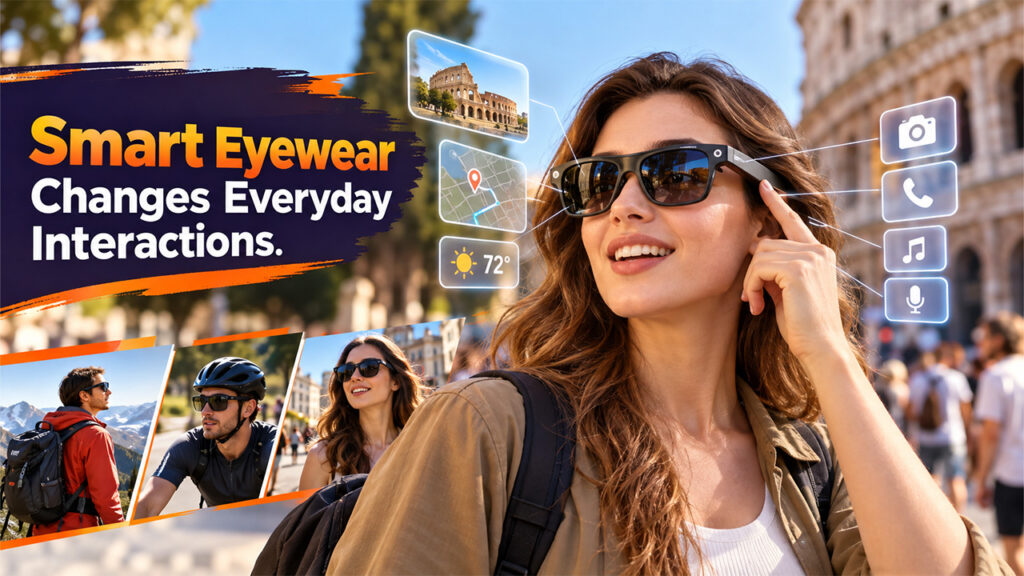
Smart eyewear is one of the most interesting areas in wearable technology because it changes the way people interact with digital tools. Phones require hands and attention. Watches are useful, but small. Earbuds are good for audio, but not visual context.
Smart glasses sit closer to the eyes and ears, making them suitable for voice commands, audio, first-person capture, and quick AI support. That is where glasses with camera show how eyewear can become more than just a style accessory. Smart glasses can support hands-free photos, short videos, audio, calls, and connected features, while fitting into everyday routines.
This form factor is important because many daily moments happen while people are moving. Pulling out a phone can interrupt the moment. Smart glasses can reduce that friction, especially for travel, content creation, outdoor activities, worksite documentation, and hands-free communication.
AI Is Turning Sensor Data Into Useful Context
Wearables collect signals, but signals alone are not enough. A heart rate reading, movement pattern, audio command, or visual input only becomes valuable when the system can interpret it.
AI helps convert raw data into context. In health and wellness, this can mean identifying trends in activity, sleep, or recovery. In workplace settings, it can mean supporting safety, workflow guidance, or real-time task assistance. In consumer eyewear, it can mean using voice and camera input to support faster interaction.
Research on AI and intelligent sensing shows how artificial intelligence is reshaping the way sensors collect and interpret data across different devices and environments. This is central to the future of wearables because the next step is not only smaller hardware. It is smarter interpretation.
Wearable AI Has Business Value Too
Wearable AI is not just a consumer trend. It has business implications across healthcare, logistics, retail, manufacturing, events, customer service, and field operations.
For example, wearable devices can help teams:
- Document work hands-free
- Support remote guidance
- Monitor safety conditions
- Capture visual notes
- Improve training
- Reduce device switching
- Support faster communication
In customer-facing industries, wearable AI could also help employees access information without leaving the interaction. A worker may be able to capture a visual issue, receive a prompt, or document a task while staying focused on the customer or environment.
This is where wearable technology connects with the larger AI trend in business: better information, faster response, and less manual friction.
Privacy and Trust Will Shape Adoption

The more intelligent wearables become, the more seriously companies and users must treat privacy. Wearable devices can collect sensitive information, including health patterns, voice inputs, location, visual content, and personal habits.
That creates serious questions:
- What data is collected?
- Where is it stored?
- Who can access it?
- Is processing happening on-device or in the cloud?
- Can users delete their data?
- Are permissions clear?
- Is the device recording others?
These questions are especially important for camera-enabled wearables and workplace use. AI-powered wearables will only gain long-term trust if users feel informed and in control.
The importance of privacy-safe design is already clear in wearable health research, where AI-powered wearable sensors are discussed alongside challenges such as battery life, data sharing, clinical testing, and privacy-safe AI.
The Future of Wearables Is Less Screen-Centered
AI is pushing wearable technology toward a less screen-centered future. Instead of forcing every interaction through a phone, users may rely on voice, audio, gestures, sensors, and context-aware prompts.
That future will likely include:
- Smarter glasses
- More capable rings
- AI-supported earbuds
- Health-focused wearables
- Workplace wearables
- Connected clothing
- More on-device intelligence
- Better personalization across devices
The best products will not be the ones with the most features. They will be the ones that understand when to help and when to stay quiet.
Final Thoughts
In the current digital landscape, wearable technology is witnessing constant transformation with the introduction of AI by making the devices more personal, contextual, and useful. Wearable technology is moving beyond simple tracking into interpretation, assistance, communication, and real-time support.
Technologies like smart glasses, watches, rings, earbuds, and sensor-based devices points in the same direction, that the technology is becoming more integrated into daily life, without always depending on screens.
For users and businesses, the opportunity is clear, wearable AI can reduce friction, improve personalization, and support faster decisions, but its future depends on comfort, trust, privacy, battery life, and whether technology solves real world problem, or just add another connected device to manage.
%201.png)

%201.png)

%201.png)