

The decisions for nonprofit board technology have become more structured in 2026. The governance committees look beyond the basic document storage and ask whether the platform can support confidentiality, trustee participation, meeting disciplines, and reporting expectations.
The nonprofit boards mainly rely on volunteer trustees, lean administrative teams, and hybrid meeting formats. The tool; that saves a few hours per meeting cycle can also make governance more consistent. It can be a poor fit, but can also create extra work, weaken adoption, and push trustee back to email.
The article offers a deep review on how nonprofit boards evaluate nonprofit governance in a digital competitive era. The article also compared seven commonly considered platforms across governance workflow fit, usability, security, and relevance to nonprofits.
Why Nonprofit Boards Are Adopting Board Portals in 2026
Nonprofit boards across the globe are adopting board portals because governance work has become more document-heavy and visible. The funders, regulators, auditors, and donors increasingly expect boards to display a clear oversight, along with reliable records and diciplined decision making.
Among all the popular tools across the sector, BoardSource is leading its competitors, as it offers intent research, that tracks nonprofit board practices and governance benchmarks across all the sectors. The National Council of Nonprofits also emphasizes that board members act as fiduciaries responsible for ethical, legal, and financial oversight through sound governance policies.
Important to note that legacy tools make that work harder.
- Shared folders may be convenient, but they often lack strong access controls, meeting workflows, retention settings, and audit trails.
- Email-based board packs expose confidential information to forwarding, version confusion, and accidental disclosure.
- Paper packs increase printing costs and no longer align with how many trustees prepare for meetings.
A reliable nonprofit board portal also addresses all these listed gaps through a centralized board of material, meeting agendas, minutes, approvals, and committee records integrated within a single controlled environment. For smaller and mid-sized organizations, the value portal often features less advanced features and more about reducing administrative friction while improving basic governance discipline.
7 Board Portals for Nonprofits in 2026
The following seven platforms are representative of the nonprofit board portal category and are frequently evaluated by governance committees during annual tooling reviews. Independent research published on sites that compare board portals for nonprofits has also made it easier for organizations to shortlist platforms without relying only on vendor-produced comparison tables.
1. Ideals Board: Board portal software for first-time users
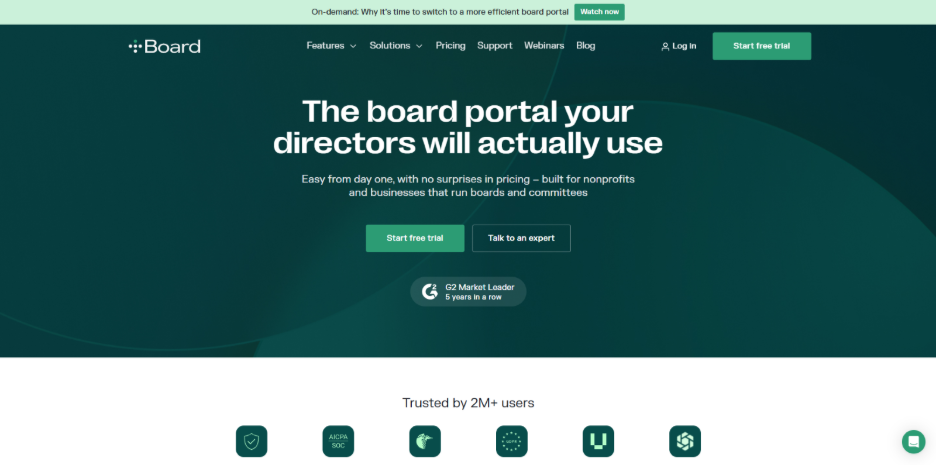
The Ideals Board is considered among the most popular portals for nonprofit boards, especially those requiring a clear interface for meeting preparation, materials distribution, voting, and board-level collaboration. The strongest relevance of the portal is where trustees may not use board technology every day and need a short learning curve.
The platform is commonly evaluated by European nonprofits and public-sector boards that require secure document handling, structured meeting workflows, and dependable access controls. It can fit organizations moving from email or shared folders to a more formal board environment.
2. BoardEffect: Nonprofit-focused board management platform
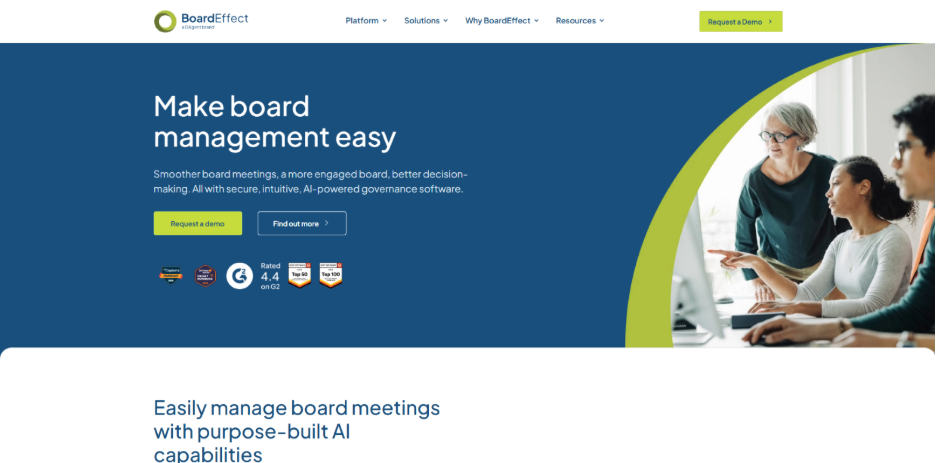
BoardEffect is widely associated with nonprofit governance workflows. It supports the distribution of board materials, minutes, committee activity, and policy management. For nonprofits, its category fit often comes from workflows such as conflict-of-interest tracking, D&O documentation, and recurring committee processes.
Healthcare nonprofits, foundations, associations, and mission-driven organizations often evaluate BoardEffect when they need a system that reflects board administration rather than generic project management. It is especially relevant for organizations with multiple committees and a steady governance calendar.
3. BoardPro: Streamlined board software for small-to-mid nonprofits
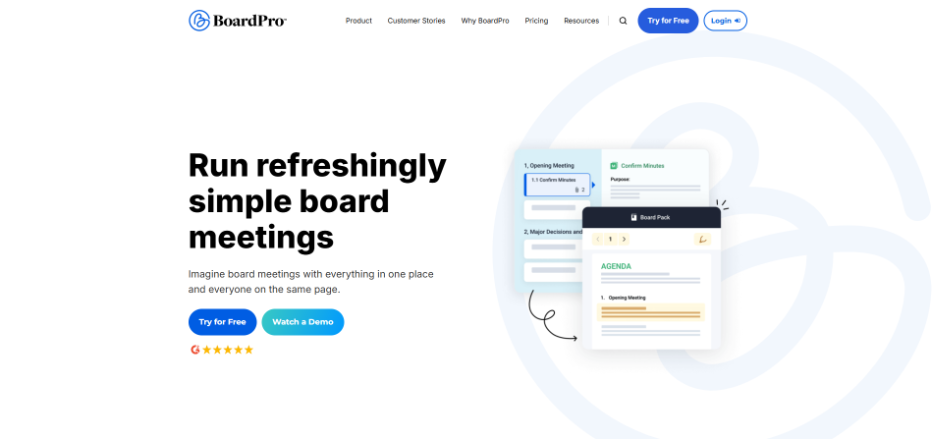
BoardPro is positioned around simpler board operations, including agenda building, minutes, decisions, and action tracking. For volunteer-heavy boards, this can be useful because implementation does not need to feel like an enterprise software rollout.
Small and mid-sized nonprofits may consider BoardPro when they need nonprofit board software that is easy to adopt and practical for routine meetings. Community organizations, associations, and local nonprofits often value tools that reduce preparation time without adding complex configuration.
4. Boardable: Board management platform focused on engagement
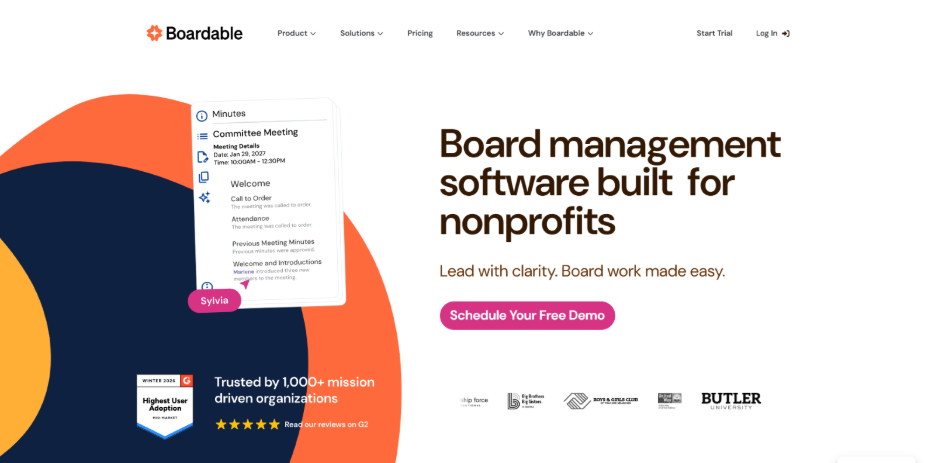
Boardable is frequently evaluated by nonprofit boards that want to improve trustee participation and committee coordination. Its feature set typically centers on meeting management, materials distribution, scheduling, and engagement support.
Education nonprofits, membership associations, and mission-driven organizations may find this category useful when board participation is inconsistent or committee communication is fragmented. In this context, the phrase best board software for nonprofits should be treated as a fit question rather than a universal ranking, because trustee behavior and administrative capacity vary widely.
5. OnBoard: Board portal with mid-market reach and strong usability
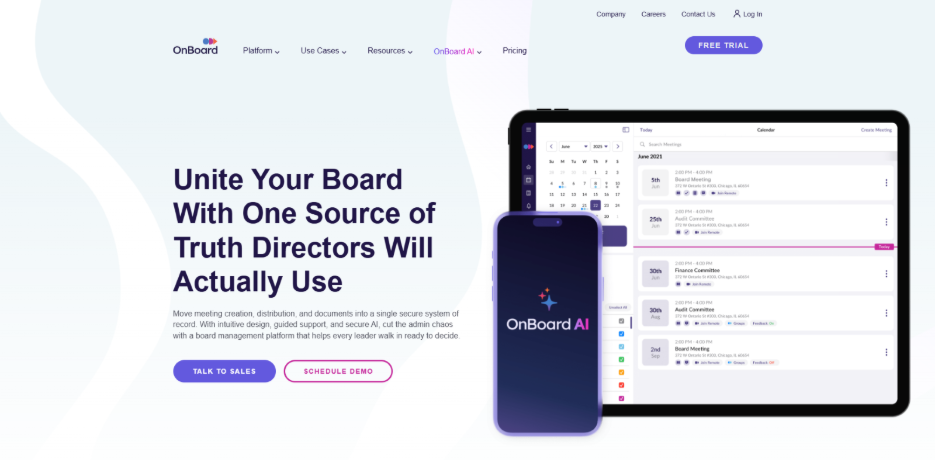
OnBoard is commonly associated with agenda building, meeting materials, voting, approvals, and engagement analytics. Its mobile and tablet experience is often relevant for distributed trustees who review board packs across devices.
Mid-sized nonprofits, credit unions, healthcare organizations, and education-sector boards may evaluate OnBoard when they need a broader board management system that can scale beyond a single small board. It can be especially relevant when governance teams want usability, reporting, and structured meeting workflows in a single platform.
6. Diligent Community: Governance platform for public and community-facing boards
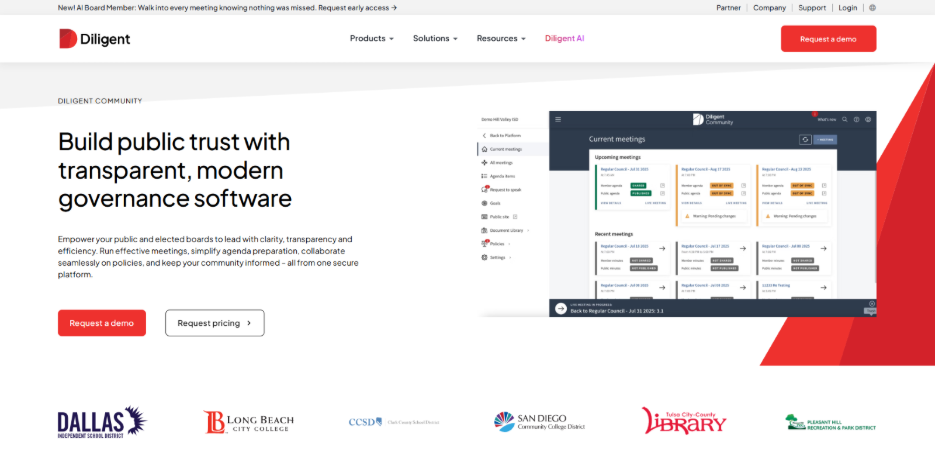
Diligent Community is designed for organizations with public-facing or community governance obligations, including school boards, councils, public bodies, and some nonprofit boards. Its workflows often focus on agendas, minutes, records, and public-meeting processes.
Community nonprofits and organizations with formal transparency obligations may evaluate Diligent Community when board work overlaps with public accountability. It is part of the broader Diligent governance ecosystem, but its relevance to nonprofits depends on whether the organization needs public-board-style workflows.
7. Govenda: Board portal with flexible pricing for mid-market nonprofits
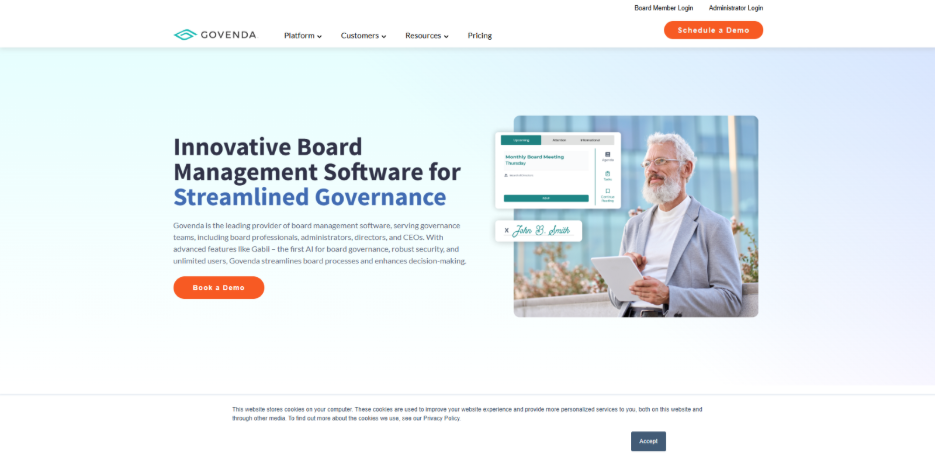
Govenda supports board books, minutes, committee management, and governance workflow coordination. It is often considered by mid-market nonprofit organizations that need more structure than basic file sharing, but may not require a large enterprise governance platform.
Healthcare, education, and mid-sized nonprofit boards may evaluate Govenda for director engagement analytics, committee support, and adaptable pricing. It can be relevant when a board wants to improve accountability without overcomplicating the trustee experience.
Future-Proofing Nonprofit Board Technology
The market for board management software for nonprofits in 2026 is moving toward lighter onboarding, stronger security baselines, and better support for lean governance teams.
Several trends are worth watching:
- Volunteer-friendly onboarding. Boards need tools that trustees can use without repeated training. Much like organizations that leverage CRM systems to create structured onboarding experiences for new employees, nonprofit boards benefit from platforms that help trustees quickly access documents, understand governance processes, and become productive from the start.
- Right-sized security. Nonprofits need access control, audit trails, and secure storage without the complexity of enterprise-level systems.
- AI-assisted preparation. Summarization, search, and action extraction may help small teams manage growing volumes of documents.
- Funder and compliance reporting. Better records can support grant oversight, audit preparation, and annual governance reviews.
Deloitte’s guidance on effective not-for-profit boards emphasizes that nonprofit governance operates in a demanding stakeholder environment. Technology cannot replace board judgment, but it can make oversight easier to document and repeat.
Conclusion
Choosing the most reliable and optimum nonprofit board portal in 2026 is mainly considered a governance choice, which also affects trustee preparation, confidentiality, record keeping, and administrative capacity. The ideal process of evaluation starts with board workflow needs, along with testing each platform against their usability, security, pricing, and committee complexity.
The nonprofits, which define their needs before comparing different vendors, which are more likely to select a platform which efficiently supports governance work, rather than just adding another layer to the administrative process.
FAQs
What should nonprofit boards look for in a board portal in 2026?
Nonprofit boards should look for secure document storage, simple meeting preparation, committee workflows, trustee-friendly access, minutes support, voting, and reliable permission controls.
How does nonprofit board software differ from enterprise portals?
Nonprofit platforms usually place more emphasis on affordability, volunteer usability, committee coordination, and practical governance workflows.
Is a board portal worth it for smaller nonprofits?
A board portal can be worth it if the organization regularly distributes confidential materials, manages several committees, or struggles with email-based board packs.
How long does implementation typically take for a nonprofit board?
The complete implementation can take a few weeks for smaller boards, whereas for organizations with multiple committees, historic materials, and stricter security guidance, the implementation may take longer.
%201.png)

%201.png)

%201.png)