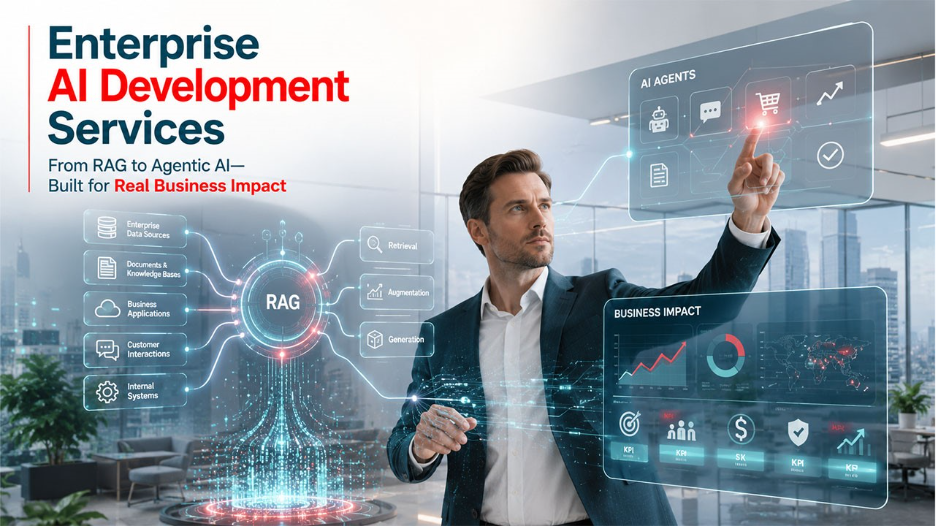

The corporate landscape has officially transitioned into a pragmatic new era. The phase of superficial experimentation where organizations spent millions building simple web wrappers around generic public models just to issue futuristic press releases is over.
In today’s market, Artificial Intelligence has matured into a core, infrastructure-level engineering discipline. For enterprise organizations and high-growth mid-market firms, staying competitive requires moving past basic consumer chatbots. True commercial value lies in designing customs, secure, and production-grade intelligent systems that integrate deeply with proprietary data assets and execute complex corporate workflows with absolute precision.
Achieving this level of digital transformation requires a specialized partner. Collaborating with an elite ai development company allows organizations to leverage tailored ai development services to turn fragmented corporate data into a sustainable, highly automated, and predictive market advantage.
Deconstructing Enterprise AI Development Services
When an executive team retains a professional AI engineering firm, they are investing in far more than raw algorithmic code. True enterprise AI development is an end-to-end software lifecycle designed to solve specialized business challenges while maintaining strict security, data integrity, and computing efficiency.
Modern, full-scale AI development services are anchored across five primary engineering pillars:
The Enterprise AI Development Lifecycle
- Technical Discovery & ROI Assessment
- Data Engineering, Ingestion, & Vectorization
- Model Customization (Fine-Tuning & Advanced RAG)
- System Orchestration & Core Integration Layers
- MLOps Lifecycle Governance & Continuous Auditing
Pillar 1: Strategic Discovery & Feasibility Mapping
Every successful deployment starts on a digital whiteboard, not in an IDE. Before writing a single line of Python, engineers must audit your current operational workflows, evaluate your existing database formats, and score target use cases. This technical assessment separates highly profitable, achievable AI initiatives from empty tech hype, giving your leadership team a board-ready business case with clear ROI metrics.
Pillar 2: Enterprise Data Engineering
An AI framework is only as precise as the data structure feeding it. Most enterprise information is trapped in fragmented silos scattered across legacy databases, local share drives, unstructured PDFs, and isolated CRM logs. Data engineering pipelines securely gather, clean, deduplicate, and vectorize these assets. This process constructs a highly organized, secure data fabric capable of feeding intelligent models without data leaks or structural formatting errors.
Pillar 3: Advanced Retrieval-Augmented Generation (RAG)
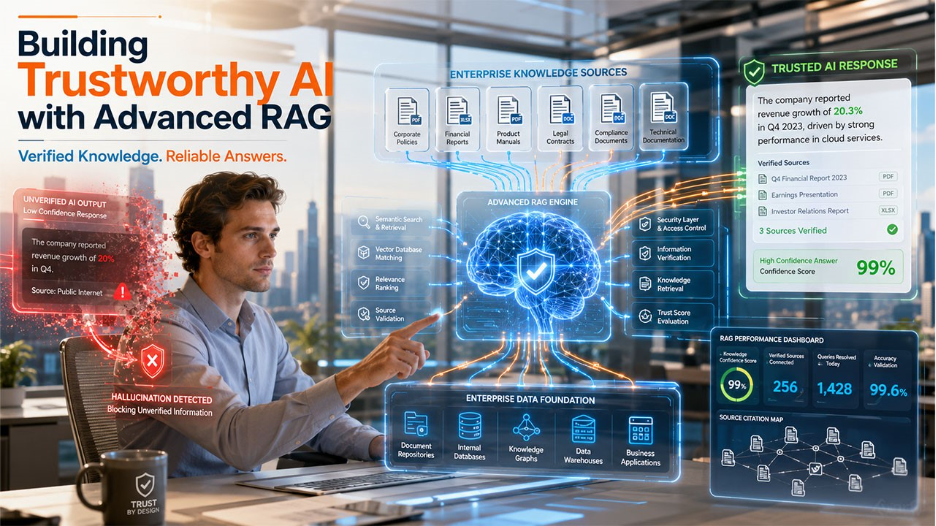
To deploy AI into high-stakes operational environments, developers must eliminate the risk of "hallucinations" (where models invent false information). This is achieved by building advanced Retrieval-Augmented Generation (RAG) architectures.
Instead of allowing an AI to guess answers based on generic public internet data, a custom RAG pipeline forces the algorithm to act as a highly secure search engine, drawing insights exclusively from your company's private, verified documentation. When deeper linguistic or domain expertise is required, engineers fine-tune the core foundation models directly on specialized enterprise datasets.
Pillar 4: Agentic Workflow Design
While standard generative tools are built to summarize or draft text, Agentic AI is engineered to execute real-world tasks. AI development services focus heavily on building autonomous digital agents capable of multi-step logical reasoning, goal-planning, and interacting with third-party software APIs. These agents can manage complex, end-to-end corporate cycles such as fully automating a supplier procurement process or reconciling multi-tiered customer billing disputes with minimal human intervention.
Pillar 5: Continuous MLOps and Lifecycle Governance
An AI model is a living asset, not a static software program. The day the system goes live is simply the starting line. Production deployment requires building automated MLOps (Machine Learning Operations) pipelines to track accuracy metrics, query latencies, and token consumption in real time. These automated monitors immediately flag "data drift" (when real-world customer behaviors evolve away from the model’s original training data) and trigger secure, isolated retraining loops to keep the system running at peak precision.
Choosing the Right AI Development Company: Critical Evaluation Factors
Selecting the technical team that will handle your company's proprietary data and operational logic is a high-stakes decision. The market is currently saturated with boutique agencies that excel at building flashy front-end mockups but lack the deep engineering background required to deploy secure back-end platforms.
When auditing a potential ai development company, enterprise technology leaders should filter prospects using three non-negotiable criteria:
Data Isolation and Security Paradigms
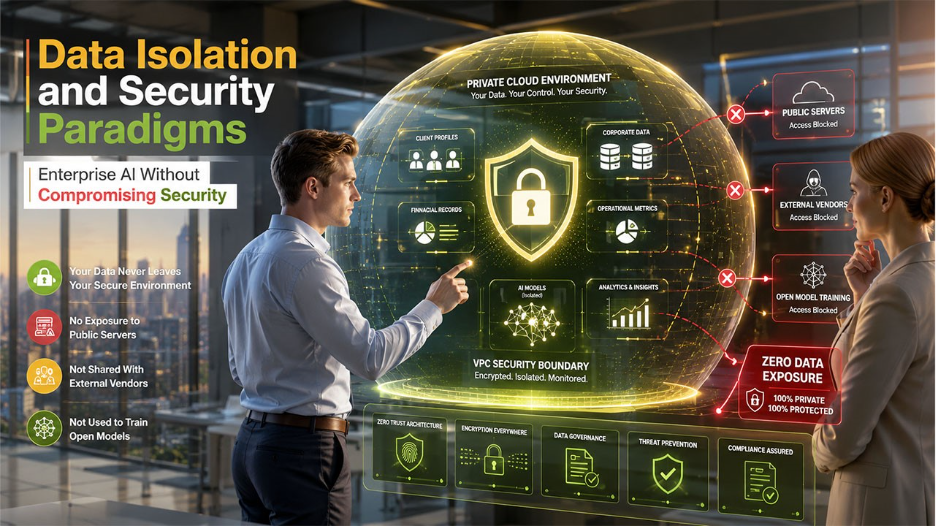
Your proprietary corporate data, client profiles, and operational metrics represent your primary intellectual property. A qualified development partner must possess a proven track record of engineering solutions within highly isolated cloud environments such as Virtual Private Clouds (VPCs) on AWS, Azure, or Google Cloud. They should explicitly guarantee that your corporate datasets are never transmitted to public servers, never exposed to external vendors, and never utilized to train open-source foundation models.
Integration Pedigree with Legacy Architecture
An isolated AI tool adds very little systemic value to an organization. The true financial return on investment surfaces when the intelligent engine can communicate smoothly with the back-office infrastructure your teams use daily. Your development partner must feature an engineering team capable of architecting robust, bidirectional API integrations with complex Enterprise Resource Planning (ERP) mainframes, CRM suites, and custom database setups, including SAP, Oracle, Microsoft Dynamics 365, and Salesforce.
Compliance and Guardrail Engineering
Operating within highly regulated verticals such as Financial Services, Healthcare, or Supply Chain Logistics demands strict compliance with international legal frameworks. Top-tier AI development companies build robust, automated guardrail layers around the core algorithms. These security pipelines execute real-time PII (Personally Identifiable Information) masking, enforce role-based access data permissions, and maintain immutable, time-stamped audit logs that detail exactly how an AI arrived at a specific commercial or analytical decision. These safeguards should form part of a broader enterprise AI security framework that protects models, data, infrastructure, and autonomous agents throughout the development and deployment lifecycle.
Industrial Transformation: AI at Work
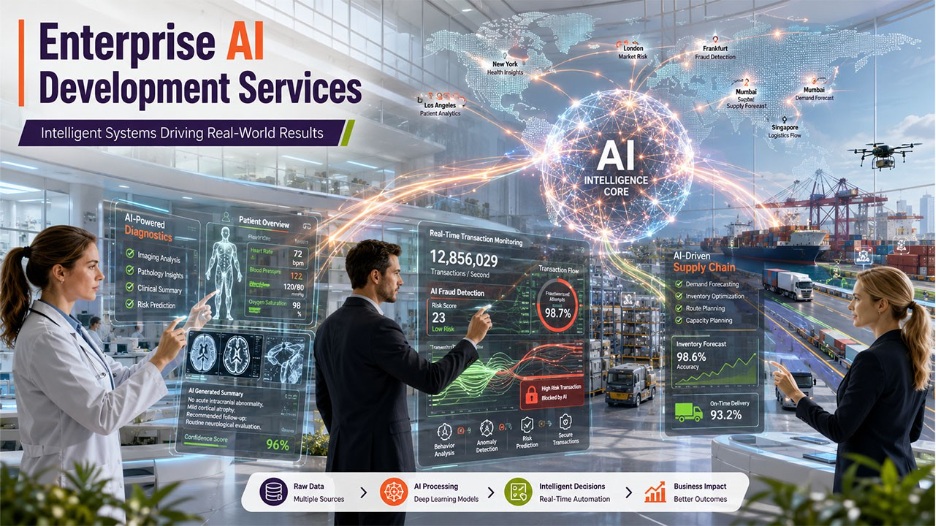
Bespoke AI applications are fundamentally altering processing speeds, operational overhead, and error rates across major global industries:
- Healthcare and Diagnostics: Custom vision and natural language models process complex medical records, pathology sheets, and imaging data simultaneously. By automating the extraction of key clinical insights, these systems drastically reduce diagnostic turnaround times and remove manual documentation burdens for medical staff while remaining fully HIPAA compliant.
- Fintech and Algorithmic Fraud Detection: Financial enterprises leverage fine-tuned machine learning models to analyze millions of transactions per second. Rather than operating on rigid, rule-based systems, these predictive engines detect subtle, evolving behavioral anomalies, completely shutting down fraudulent payment vectors before capital leaves the network.
- Logistics and Supply Chain Orchestration: Machine learning platforms process historical order patterns, real-time weather telemetries, and manufacturing capacities to forecast localized inventory demands. These systems automatically optimize warehouse distribution levels, minimize storage overhead, and dynamically route logistics fleets to guarantee maximum margin protection.
Operational Realities: Timelines and Financial Commitments
Developing custom AI infrastructure requires a structured, milestone-driven investment path. This controlled execution model protects corporate capital, allows for thorough compliance testing, and validates performance metrics before expanding software access across the entire organization.
| Project Phase | Primary Deliverables & Output | Average Timeframe | Average Financial Range (USD) |
| Phase 1: Technical Discovery | Comprehensive data audit, gap analysis, target architecture map. | 2 – 3 Weeks | $10,000 – $20,000 |
| Phase 2: Proof of Concept (PoC) | Functional sandbox environment, single-source data ingestion test. | 4 – 6 Weeks | $25,000 – $50,000 |
| Phase 3: Core System Build | Advanced RAG pipeline engineering, legacy API integration layers. | 3 – 5 Months | $90,000 – $250,000 |
| Phase 4: Scale & MLOps Rollout | Multi-tenant production launch, automated drift monitoring. | Continuous | $300,000+ |
Summary Roadmap for Corporate Leadership
To launch a successful AI transformation without introducing technical debt or blowing past quarterly IT budgets, modern executives should adhere to a strict implementation strategy:
- Prioritize Data Quality Over Hype: Before investing in custom model training, ensure your internal data houses are clean, structured, and properly indexed. Your AI will only ever be as intelligent as the data feeding it.
- Default to Hybrid Workflows: The most profitable AI systems augment human capability rather than trying to achieve total automation in a vacuum. Design your operational loops so that the AI manages 85% of high-volume, routine analytical drafting, while automatically routing complex edge cases to human specialists for final verification.
- Establish Clear Accountability Metrics: Tie every development sprint to a concrete corporate KPI. Whether your goal is reducing customer onboarding cycles by 60%, removing data entry friction in logistics, or boosting sales conversion rates, anchoring development in precise business metrics ensures your software yields real commercial value.
Frequently Asked Questions (FAQs)
What is the difference between open-source models and proprietary APIs?
Proprietary APIs (such as OpenAI's GPT models or Anthropic's Claude) offer state-of-the-art linguistic reasoning right out of the box with zero setup friction, but they charge variable fees based on token consumption and present compliance challenges for heavily regulated firms.
How does an AI development company prevent model "hallucinations"?
To eliminate the risk of an AI generating incorrect data, a professional development team builds advanced Retrieval-Augmented Generation (RAG) frameworks. A RAG pipeline constrains the model’s logical boundary.
Can custom AI tools integrate with our old legacy software applications?
Yes, absolutely. A professional AI application should never exist in a technical silo. Through secure, custom-built API layers, software architects construct bidirectional data pipelines that allow the intelligent engine to safely read inputs from and write automated actions back to.
Who owns the intellectual property of an AI system built by an external partner?
When partnering with a reputable AI development company, total intellectual property (IP) ownership must belong exclusively to you. This non-negotiable guarantee should always be explicitly detailed inside your master services agreement.
%201.png)

%201.png)

%201.png)