

When it comes to Artificial Intelligence innovation, one place is the epicenter. It is Silicon Valley in the United States. However, among the plethora of companies that announced themselves as AI companies in recent times, not all have achieved the same level of success. Only a handful managed to survive in the marketplace. As we go through 2026, a fresh wave of AI startups is transforming industries ranging from robotics to the generation of creative content. In this guide, let us present you with the top 15 hottest AI startups in Silicon Valley that you need to keep an eye on in 2026. We will see what they do, the pros and cons, to get the gist of why they are transforming the AI industry in 2026.
15 Hottest AI Startups in Silicon Valley
The list includes some big names from Anthropic, Physical Intelligence, World Labs, and Braintrust. Let us analyze them one by one:
1. Anthropic:
Founded in 2021, the company has undergone quick expansion, rising from an AI startup to an AI pioneer with a $965 billion valuation. Currently, it employs between 3,000 and 5,000 employees. It has also submitted an S-1 Form to the SEC (Securities and Exchange Commission) for IPO (Initial Public Offering). It focuses on safe and useful AI platforms with a strong focus on AI safety and alignment. The globally popular AI assistant Claude showcases a fresh approach to conversational AI, emphasizing harmlessness, helpfulness, and honesty.
Why You Need to Consider Claude?
- Leading company in AI safety research
- Advanced technical capabilities, especially with the introduction of Claude Code
- Collaboration with major enterprises
- Strong focus on responsible development of AI
Best for:
Research institutions, enterprise applications, and businesses are focusing on AI safety.
Advantages:
- Its flagship product, Claude, is immensely popular in enterprise applications, competing strongly with ChatGPT
- It has made its name as the company that remains committed to AI safety and alignment
- Great support from Amazon
- Increasing enterprise adoption
- Research publications
Disadvantages:
- Faces strong competition from xAI, Google, and OpenAI
- High research and development costs
- AI regulatory uncertainty
- Challenges in scaling with safety constraints
2. Physics Intelligence:

Known for bringing revolution into the robotics field. Physical Intelligence is creating basic software for robots, developing AI tools that can comprehend and interact with their physical world. Their technology focuses on creating robots to carry out complicated tasks in real-world environments.
Why You Need to Consider Them?
- Top-level Leadership: Built by some popular names such as Lachy Groom and Sergey Levinine.
- Tremendous Funding: Funding is secured from investors such as Sequoia, Lux Capital, and Jeff.
- Market Timing: It has positioned itself at the intersection of the robotics and AI boom.
Best For:
Organizations are looking to automate manufacturing facilities, physical processes, and logistics processes.
Advantages:
- Transformative approach to robot intelligence.
- Qualified technical team with verified track records.
- Considerable backing of venture capital.
- First-mover advantage in physical AI.
Disadvantages:
- The company is still in its fledgling stage with unverified commercial products.
- There are risks in development and technical complexity.
- In the field of robotics, long development cycles are quite common.
3. Runway:
It is a creative AI powerhouse that develops generative AI tools personalized for creative professionals. These involve text-to-video, motion design features, and video editing. Their solutions become useful in filmmaking, advertising, and digital content creation, where AI video generation software featured in Revoyant is transforming how visual content is being created at scale.
Why Consider Them?
- Effective product in creative industries.
- High rate of user adoption and strong revenue growth.
- Reputed for generative video creation.
- Best for: Filmmakers, creative agencies, marketing teams, and content creators.
Advantages:
- Established presence in the market
- Top-quality generation of AI videos
- Robust user community
- Consistent innovation in products
- Supported by top-level investors
Disadvantages:
- Strong competition from market giants such as Meta, Adobe, and others.
- High computation costs for the generation of videos.
- Regulatory issues related to deepfakes.
- Reliance on creative industry cycles.
4. World Labs-
It is widely regarded as the spatial intelligence pioneer. Founded in 2024, it is a company that employs between 20 and 50 employees. It is focused on the core AI niche: To understand and create in 3D. The company is building Large World Models (LWMs) that introduce spatial intelligence into the industry. This enables AI to reason about the movement, objects, and ecosystems.
Why Do We Need to Consider Them?
- Innovation powerhouse in AI 3D projects
- Addresses a key gap in the present AI capabilities
- Robust technical basics in computer vision
Best For:
Architectural firms, gaming companies, AR/VR developers, and autonomous vehicle manufacturers.
Advantages:
- Unique position in the space of 3D AI
- Addresses evolving demand for spatial intelligence
- Strong potential for technical innovation
- Multiple applications in the industry
Disadvantages:
- The company is still in the very early stages
- Complex technical difficulties lay ahead
- Restricted commercial validation
- Strong competition from tech giants
5. The Bot Company:
Founded in 2023, it employs around 120 employees. The Bot Company, which is founded by Kylie Vogt (former Cruise CEO), creates AI-driven household robots specialized in managing daily chores and freeing up individuals’ time. The company integrates sophisticated robotics with large language models to generate innovative machines, which are capable of understanding commands in natural language.
Why You Need to Consider Them?
- Intuitive combination of robotics and LLMs.
- The approach to robot interaction is quite user-friendly.
- Evolving demand for conversational AI in robotics.
Right Option for:
Customer service operations, hospitality industry, and educational institutions.
Advantages:
- Cutting-edge integration with LLM robotics
- Innovative interface for natural language
- Adjusting to different environments
- Powerful technical capacity
Disadvantages:
- The product development approach is still in the early stages
- Complex challenges in integration
- High deployment and development expenses
- Unverified scalability
6. HyScaler:
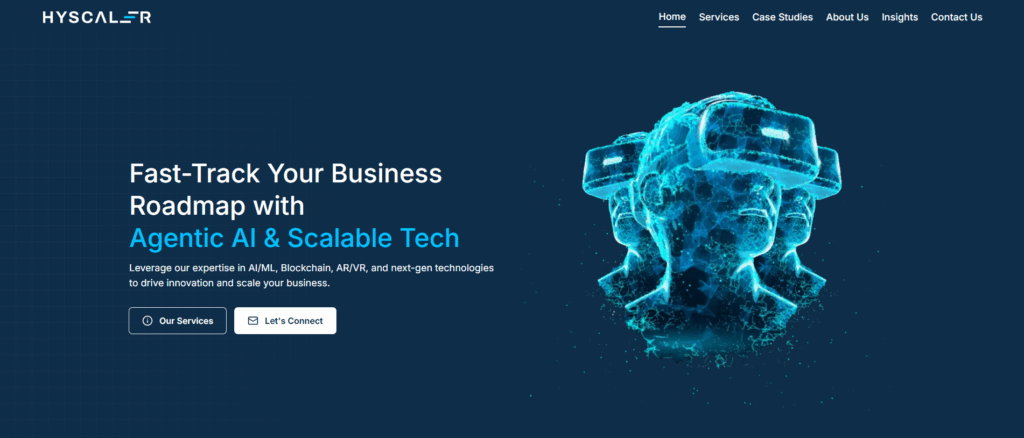
It is comparatively an older company, founded in 2009 for AI infrastructure excellence and currently employs close to 450 employees. The company specializes in cloud optimization solutions and AI infrastructure, empowering enterprises to efficiently deploy and scale AI applications. The platform ensures automated management of resources, performance tracking for AI workloads, and cost optimization.
Why Consider Them?
- Great track record in cloud optimization
- Greater focus on enterprise AI infrastructure requirements
- Increasing demand for AI scaling solutions
- Team with high experience with in-depth technical expertise
Best For
Enterprise companies implement AI at scale, AI development teams, and cloud service providers.
Advantages
- Vital infrastructure plays a key role in the AI environment
- Robust enterprise customer base
- Recurring model of revenue generation
- High switching costs allow HyScaler to retain its customers
Disadvantages
- Complex enterprise sales cycles
- Great competition from mainstream cloud providers
- Needs consistent investment in Research and Development
- Greatly depends on AI adoption rates
7. Perplexity AI:
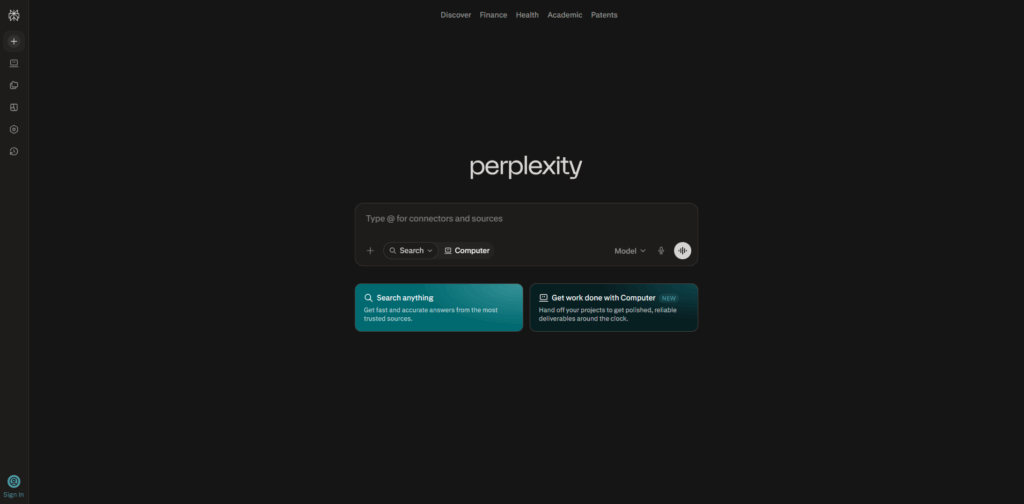
Founded in 2022, it has grown from being a small company with 30-40 employees to a global AI powerhouse with 1200-1400 employees. It has revolutionized how users search for something on the internet with the help of its conversational AI that provides direct responses with citations of sources. Their platform integrates large language models with the capabilities of web search in real-time.
Why Consider Them?
- It has emerged as a competitor in the search landscape, shaking Google’s unquestionable monopoly.
- Increasing user base and engagement.
- Robust technical capabilities in AI search.
Best For
Students, researchers, professionals, and anyone looking for well-cited and accurate data.
Advantages:
- Increasing retention and user growth
- Unique positioning in Google search
- Quality and up-to-date responses with citations
- Potential for generating revenue from different streams
- Strong technical capabilities
Disadvantages:
- Since it is directly competing with Google, challenges are inevitable.
- High computation costs for search queries.
- Potential content and copyright issues.
- As it grows further, challenges will keep compounding.
8. Character.AI:
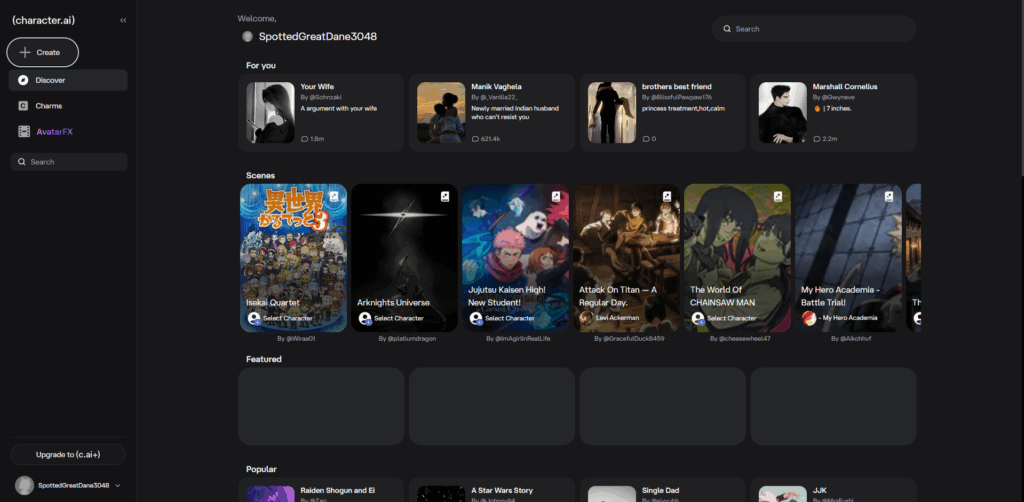
Character.AI has made its name in the conversational AI landscape. Founded in 2021, in 2026, it employs close to 257 employees. It helps users to create tailored AI companions and characters that users can interact with. The platform enables users to generate custom AI personas or interact with a large catalogue of pre-built characters that users can interact with. The platform empowers users to create customized AI personas or converse with pre-developed characters for education, assistance, entertainment, or companionship.
Why You Need to Consider Character.AI?
- High engagement of users with around a million characters
- Partnership with Google ensures validation and key resources
- Strong technical fundamentals in the conversational AI landscape
- Established user base and revenue model
Best for:
Educational platforms, entertainment companies, and consumer applications.
Advantages:
- Popularity among users and a high engagement rate
- Strong network
- Numerous opportunities for monetization
- Lower costs in customer acquisition
- High rates of user retention
Disadvantages:
- Challenges in content moderation
- Safety concerns with respect to AI relationships
- Regulatory scrutiny
- Limited enterprise use cases.
9. Stability AI-
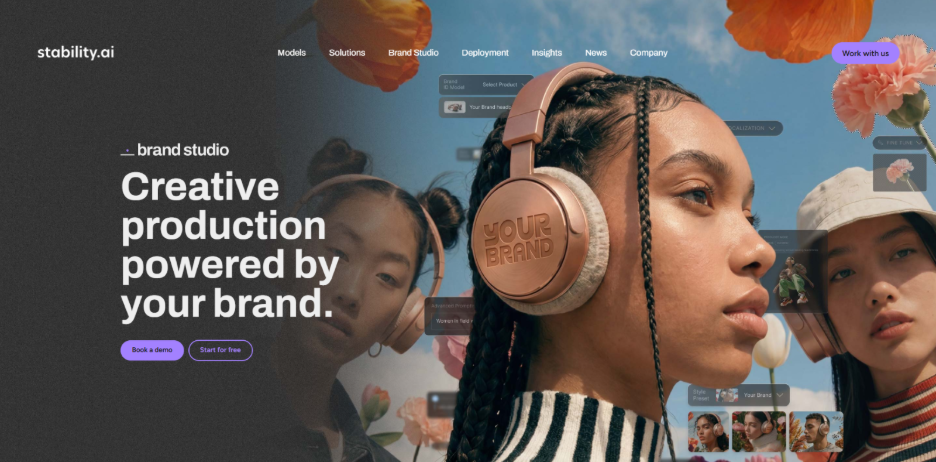
It is an open-source AI leader. Founded in 2020, it currently employs between 170 and 190 employees. Stability AI creates and releases open-source AI models, including Stable Diffusion for image creation and other multimodal tools. They are dedicated to making AI accessible through open-source development.
Why Do You Need to Consider Stability AI?
- Leading developer in open-source AI
- Strong adoption in the community
- Multiple AI model capabilities
Best for
Researchers, developers, and companies that desire tailored AI solutions
Advantages
- Wide open-source community
- Numerous successful AI models
- High adoption among developers
- Flexible models for licensing
- Innovation leadership
Disadvantages
- Monetization of open-source challenges
- Competition from models that are closed source
- Potential open models misuse
- Retention of talent in an open-source environment
10. Midjourney AI-
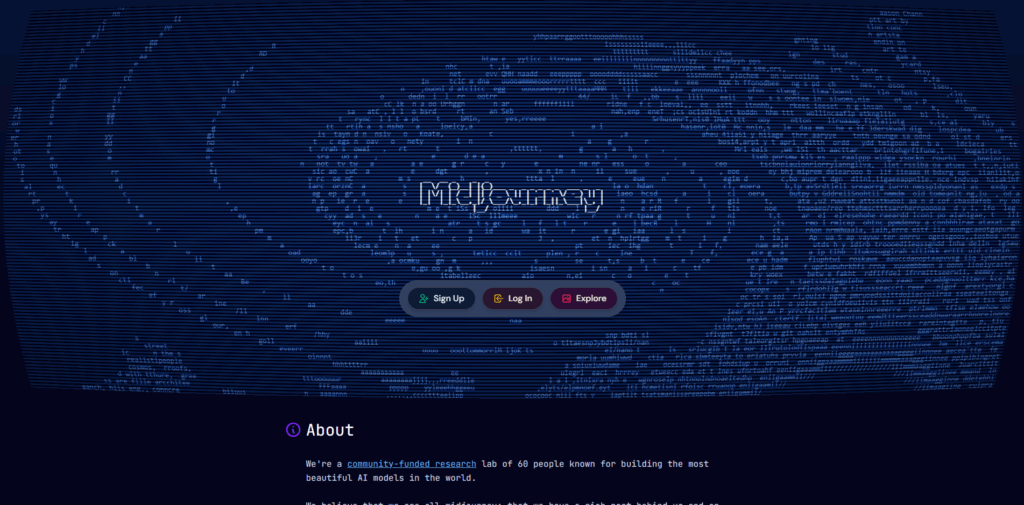
It has gained traction in the AI art generation landscape. Founded in 2021, it is run by a core team of around 50-130 full-time employees. Midjourney AI is known for creating professional-grade AI-generated artwork via text prompts, emphasizing top-level artistic output and user experience. Their Discord-driven platform has become tremendously popular among creators and artists.
Why Consider Them?
- Great quality in image generation
- Strong recognition of brands in AI art
- Unique approach powered by a wide Discord community
Best for
Designers, artists, content creators, and marketing professionals
Advantages
- Superior quality of images
- Strong brand integration
- Wide and active user community
- Profitable model of businesses
- Consistent improvements in quality
Disadvantages
- Restricted to image generation only
- Legal and copyright uncertainties
- Platform reliance on Discord
- Competition from evolving organizations
11. Thinking Machines Lab:
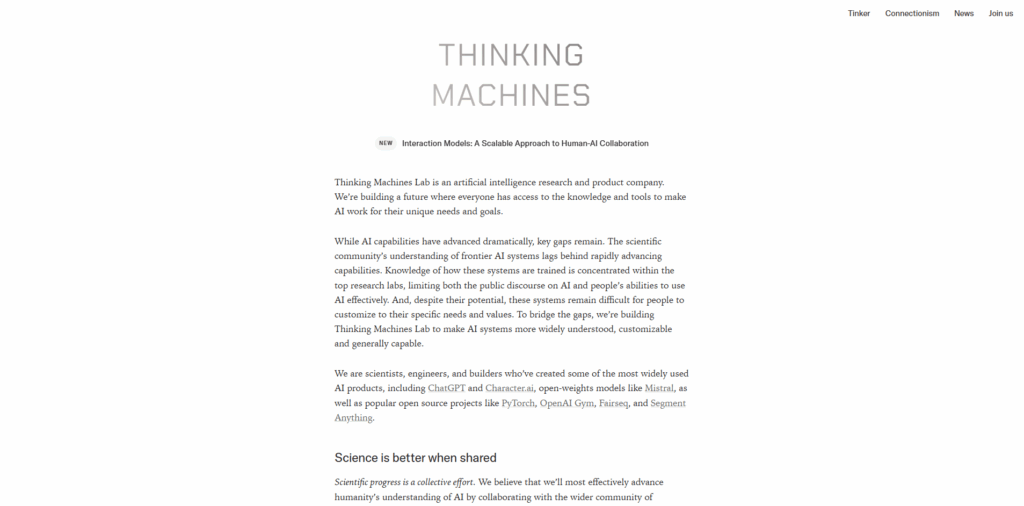
It is a relatively new company, established in 2025, with 30-50 employees. The company is developing AI platforms that are personalizable, safer, and interpretable. It enables people to adjust to their particular requirements. It has done some foundational work and research on multimodal AI with a greater focus on open science and transparency.
Why Consider Thinking Machine Lab?
- The founder of the company, Mira Murati, is a former CTO of OpenAI. So, there is credibility in company leadership.
- Even though the company is in the early stages, it has still managed to raise $2B at a high valuation of $12B. This shows investors’ confidence in their work.
- They show strong ambition in integrating research, custom use cases, safety, and interpretability, which is rare.
Best For:
Researchers or companies that need AI models that they can adjust and customize, organizations that prioritize safety and alignment, and businesses looking for foundational models and transparency.
Advantages:
- Good leadership and credibility. Qualified technical talent recruited from leading AI labs around the world.
- A good investment means that they have the resources to elevate research and development.
Disadvantages:
- It is too early to predict the future of the company. A lot of its commercial applications and products have not been proven yet.
- Overpromising risks. The company has taken risks with high expectations, which can be hard to meet.
12. Safe Superintelligence Inc. (SSL):
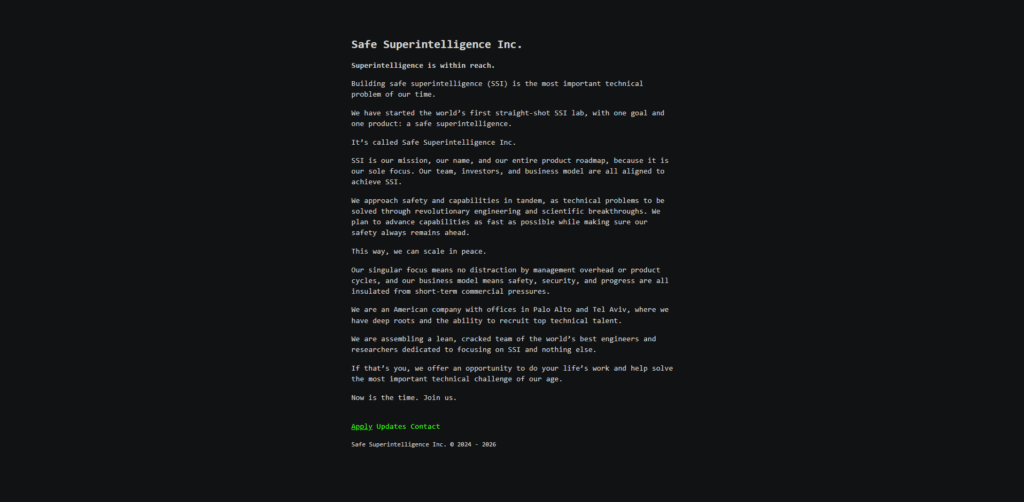
Founded in 2024, Safe Superintelligence is run by a small group of 20-50 employees spread across its offices in California, Palo Alto, and Tel Aviv, Israel. Despite the small size of the company, it has managed to reach a huge valuation of around $32 billion. It is a startup/lab entirely focused on building “Safe Superintelligence,” Artificial General Intelligence or super-human capabilities with alignment, safety, and thought for long-term/ethical risks.
Why You Need to Consider Safe Superintelligence Inc. (SSL)?
- The company was founded by AI heavyweights such as Daniel Gross, Ilya Sutskever, and Daniel Levy.
- High valuation shows that investors believe in what the company is doing, i.e., safety and fundamental AGI research, despite the lack of a consumer product.
- The approach is slightly different (safety-driven), which may be significant.
Best For:
Policy makers, research institutions, companies prioritizing AI alignment, founders emphasizing lasting risks, and people monitoring AGI/safety.
Advantages:
- Highly focused on its niche and mission.
- Credible leadership and technical team.
- High valuation shows investors’ confidence and ensures resources for research.
Disadvantages:
- Lack of revenue or a clear product.
- The company can get caught up with high burns with a long time horizon.
- Risk of ethical or technical missteps: superintelligence can come up with a few safety questions.
13. Nexthop AI:
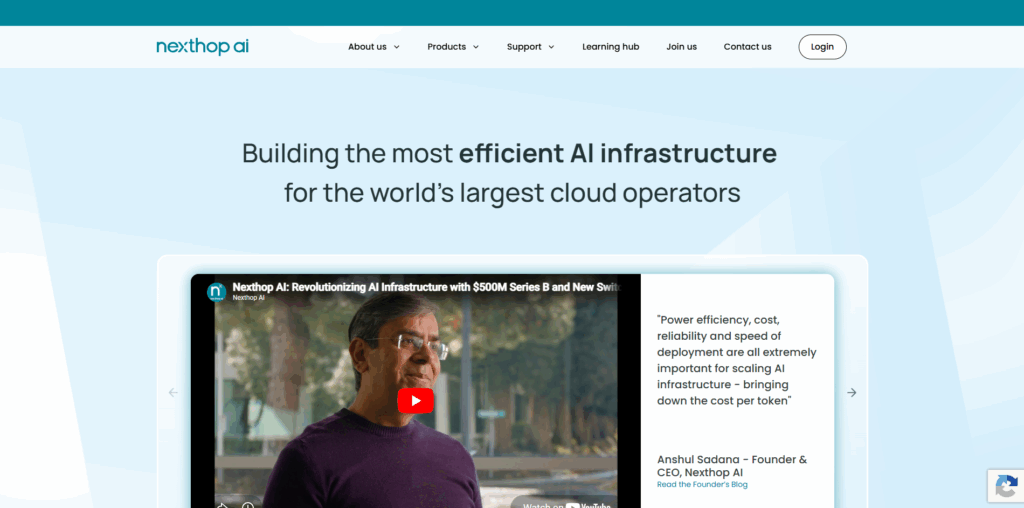
Founded by former Arista Networks COO and CCO Anshul Sadana in 2024. The company, based in Santa Clara, California, excels in building high-intelligence cloud intelligence and custom networking infrastructure personalized for hyperscale cloud providers and large-scale AI workloads.
Why You Need to Consider Nexthop AI?
Since AI models evolve, the hardware and network bottlenecks, including throughput, latency, and efficiency, become critical. Organizations that optimize these will be significant. Furthermore, the $110 million that the company has raised in Series A showcases substantial investor interest.
Best For:
- AI Labs that need scalable solutions
- Cloud providers
- Enterprises developing large AI model deployments
Advantages:
- Ensures infrastructure that many others depend on; addresses a critical requirement.
- Supported by strong investors; likely has sound growth potential.
Disadvantages:
- Competition from market-leading cloud providers who believe in creating in-house solutions
- Infrastructure and hardware businesses are generally capital-intensive and slow to scale in terms of revenue.
14. Inflection AI:
The company was set up in 2022 as an excelling company in tailored enterprise generative AI models. The company has raised around $1.5 billion and achieved a peak valuation of $4.0 billion in 2023. Following a major transition of staff to Microsoft, the company has restructured and now works with a deeply focused and small team. The founders of the company include Mustafa Suleyman, Karen Simonyan, and Reid Hoffman.
Why You Need to Consider Inflection AI?
They are creating a differentiator by introducing a human element to productizing AI. The company is also supported by the Co-founder of LinkedIn, Reid Hoffman, and comes with a mission-based approach. They introduce a mix of utility and ethics in their design.
Best For:
- Businesses or users who are interested in conversational AI.
- People who value emotional intelligence and user experience in interactions.
Advantages:
- Strong foundation and funding. Vision goes beyond simple raw model performance.
- Differentiation through alignment and user experience.
Disadvantages:
- Emotional AI/Conversational AI has difficult metrics. It is difficult to quantify subjective quality.
- Risk of being overshadowed by tools/models that mainly focus on performance or scale. This might trigger cash burn if the growth slows down.
15. Braintrust:
Set up in 2023, it is currently valued at $800 million and employs 200-220 employees spread out globally. They provide an enterprise-based stack/platform for developing AI applications: tools for prompt testing, evaluation, managing datasets, logging/model feedback, and incorporating numerous feedback. It empowers organizations to create, track, and iterate on AI productively.
Why You Need to Consider Braintrust?
As far as strong evaluations are concerned, you can depend on them since evaluation and tracking are generally neglected. However, they are still quite necessary for production deployment. Their product aids in minimizing risk, enhancing quality, and expediting feedback loops. Furthermore, their clients and momentum are pretty solid.
Best For:
- Organizations are already creating and deploying AI platforms.
- Looking for higher-quality tooling related to evaluation.
- Development teams that wish to enhance the quality and safety of deployment.
Advantages:
- Fills a vital gap in AI development tooling. It can enhance the speed and reliability of development.
- Early mover in development feedback and evaluation tooling.
Disadvantages:
- A lot of platforms are emerging, which are at risk of being commoditized.
- The company must remain up to date with quick shifts in AI mode. Often, tools lag behind the new architecture models.
Conclusion
AI startup environment of Silicon Valley in 2026 is more innovative and competitive than ever. From the safety-first approach of Anthropic to robotics breakthroughs of Physical Intelligence, these top 15 Hottest AI startups in Silicon Valley are transforming industries in 2026. Irrespective of whether you are an enterprise decision-maker, investor, or technology enthusiast, keeping track of such startups provides you with a front-row seat to the future of AI.
The companies that proceed with a fine balance between innovation and responsibility will surely gain success in the next decade. While a few are in the initial stages, others are already creating real market traction and enterprise value. Stay up to date with OutRightCRM as well as explore AI, AI tools, and AI companies. Will the next industry-defining breakthrough emerge from the company mentioned in the above list?
Read also: What Is Operations Research? Meaning, Tools, Techniques & Uses
FAQs About Hottest AI Startups in Silicon Valley
Q. What are the 15 hottest AI startups in Silicon Valley in 2026?
A- The top AI startups in Silicon Valley include names like Anthropic, Perplexity, Physics Intelligence, The Bot Company, Inflection AI, etc.
Q. What trends are these best AI startups in Silicon Valley focusing on?
A- Key trends that AI startups are focusing on include Agentic AI, Vertical AI, Enterprise Search and Integration, cloud intelligence, etc.
Q. How are AI startups in the valley impacting day-to-day workflows of the developer?
A- Developers now get a host of tools to create code from scratch, perform agentic coding, and fix bugs easily. The manual work in coding has been drastically reduced because of AI platforms like Claude. Instead of being programmers, developers now work as architects.
Q. Which AI startup is best funded?
A- Anthropic leads the least with the highest funding and valuation. It has also filed for an IPO, which will allow it to move from private ownership to public ownership.
Q. Have these AI startups caused job losses?
A- Yes, AI has emerged as the single most contributing factor job losses in the United States. However, these AI startups are also hiring at the same time. So, you can see AI as an opportunity for growth instead of as a disadvantage.
%201.png)

%201.png)

%201.png)