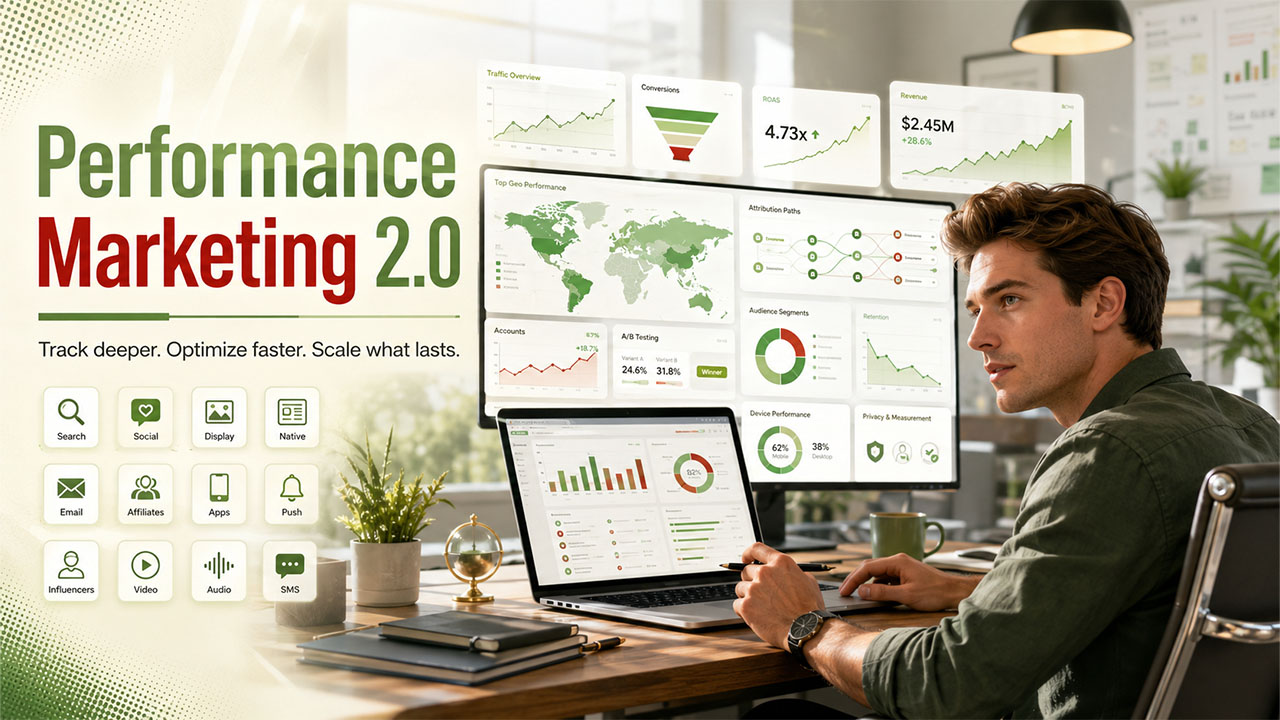

Performance marketing used to be easier to say. Spend money, get traffic, measure conversions, repeat, scale what still works. It was a clean little formula, almost soothing.
Now it gets messy. People move across too many channels, privacy rules cut off straightforward tracking, ad costs wobble fast, and attention is harder to win. One campaign can bring solid clicks, weaker leads, strong engagement, disappointing retention, and tangled attribution all at the same time. That’s the welcoming mess.
Also the playing field is larger. A report by IAB/PwC on internet advertising revenue says that in 2024, money generated from internet advertising in the U.S. was roughly $259 billion, up 15% from the year before. More money in digital advertising creates more openings, but it also raises the level of rivalry.
Performance is no longer just about cheap traffic
For years, many advertisers treated performance marketing like a hunt for the absolute lowest CPC. If the traffic felt cheap, it looked attractive right away. If the dashboard showed volume, everyone relaxed a bit too much.
That logic does not work so well now. Low-cost traffic can still be useful, but only when it pulls real people who bring measurable value. A low-priced click that never converts is not a bargain. It is basically a small loss, repeated over and over, again.
Today performance teams look deeper. They care about traffic source , device type, GEO, how fast users move through the funnel, approval rate, retention, and revenue after the first conversion. The click starts the story, but it does not finish it, unfortunately.
Data became the real creative partner
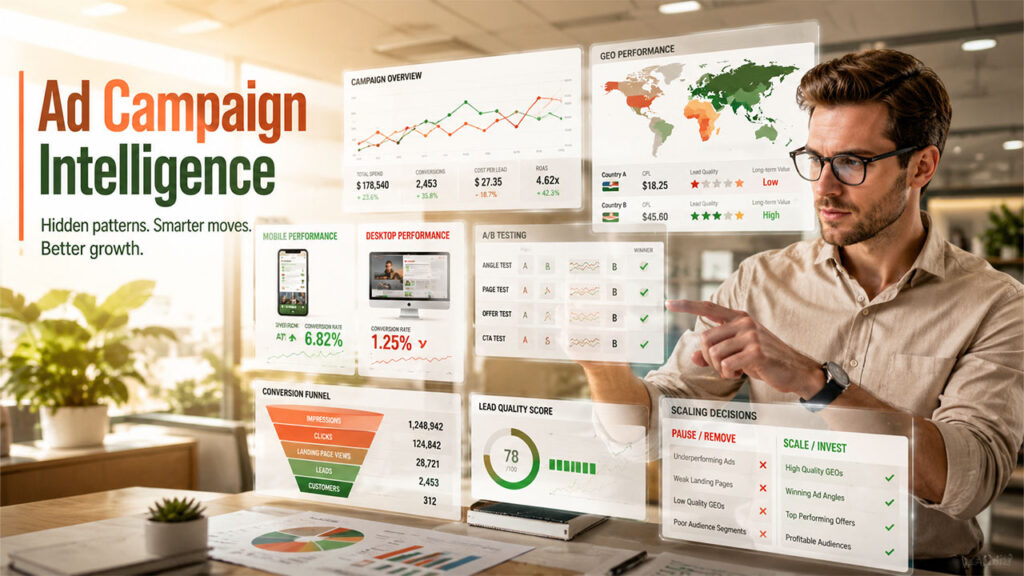
Creative still matters. A lot. But performance marketing now depends on how fast teams can read data and turn it into decisions.
One landing page can work for mobile people, but then fail for desktop users, weirdly enough. One GEO might push out cheap leads with weak quality. Another can seem costly at first glance but later give more reliable, longer-run value. If you do not track anything, those differences remain hidden in plain sight.
Good teams keep experimenting, angles, pages, offers, traffic sources ,and audiences in small controlled steps. After that they remove what underperforms and they scale what earns its keep.
The channel mix is getting wider
Search, social, native, display, push, popunder, affiliates, influencers, email, apps, performance marketing is no longer tied to one or two channels. Brands need a traffic blend that matches their product, their budget, and the way users move through the journey.
For certain campaigns, intent-based search is honestly a better place to begin. For other runs, native content really warms the audience up, before you push harder. And in verticals where people decide fast, popunder or push traffic can make it easier to test offers at scale. Platforms such as Kadam can fit into this wider traffic ecosystem, especially when advertisers are putting performance-focused formats and sources side by side.
Optimization is now continuous
The older idea, launch a campaign, then check results later, feels outdated. Modern performance marketing is much more like constant dialing in.
Bids move. Sources behave in different ways. Competitors show up in auctions. Creatives get tired. Landing pages start lagging. And tracking breaks at the worst possible moment, because naturally it does.
This is why campaign management has turned more technical and more analytical, in a way that can feel a bit relentless. Successful teams build feedback loops: tracking, reporting, testing, optimization, then another round, again. Small adjustments can compound over time, even when nobody is really noticing it day to day.
The new era rewards discipline
Performance marketing has not become less valuable, it has become less forgiving. The brands that win are not always the loudest or the biggest spenders. More often, they are the ones who understand their numbers, respect the user journey, test without panic, and scale only when the data actually supports it.
The new era is not about chasing every trend. It is about building a system where traffic, creative, measurement, and optimization work together. That part sounds simple. Doing it well is the real edge, and it shows up in the results.
Conclusion
Performance marketing has simply grown more demanding. The easy levers of cheap traffic and surface-level metrics are no longer telling the full story, and the success of the performance solely depends on how well the team adapts to fragmentation, privacy shifts, and deeper layers of user behavior.
Brands that build a strong measurement foundation, stay disciplined with testing, and remain flexible across channels are the ones who are most likely to sustain long-term growth. The tools keep on evolving, and the platform keeps on shifting, but the core advantage will stay the same.
%201.png)

%201.png)

%201.png)