

When you ask people to name a search engine, you’ll mostly get one answer, which is Google. And that’s not wrong. Google is the biggest name on the market. However, it is not the only one, for sure. It might not even be the best option depending on where you live, what you’re searching for, or what you value.
There are many other search engines out there that are built for privacy or for a single country’s language and laws. The world of search is much bigger and stranger than most of us give it credit for. This guide will walk you through the curated list of the top search engines in the world and why they matter.
What Is a Search Engine and How Does It Work?
A search engine refers to a tool that helps you find information on the internet. When you want to look something up, just type in a word or a question, and within a second, it gives you a list of all web pages that might have your answer or are relevant to it.
However, that simple thing involves a complex process. The search engine sends out “crawlers”. They are small programs that scan billions of pages across the web. Then, it organizes or indexes everything it finds and runs it through an algorithm that decides which pages deserve the first page or top position. That ranked list is what you see on the results pages, often called the SERP, or search engine results page. If you're curious about how these rankings get pulled and analyzed at scale, a Google SERP API can show you exactly how that data gets fetched.
Understanding the Top Search Engines (Detailed Comparison)
This list is not about which search engine is "best." Instead, it's about finding the one that best matches your needs. Before exploring the options, it's helpful to understand some search engine basics, such as how different search engines prioritize speed, privacy, relevance, and unique features. A search engine built for speed and scale doesn't serve the same purpose as one designed to protect your privacy or reduce your carbon footprint. Keep these differences in mind as you read through this list of the top search engines people use today.
1. Google
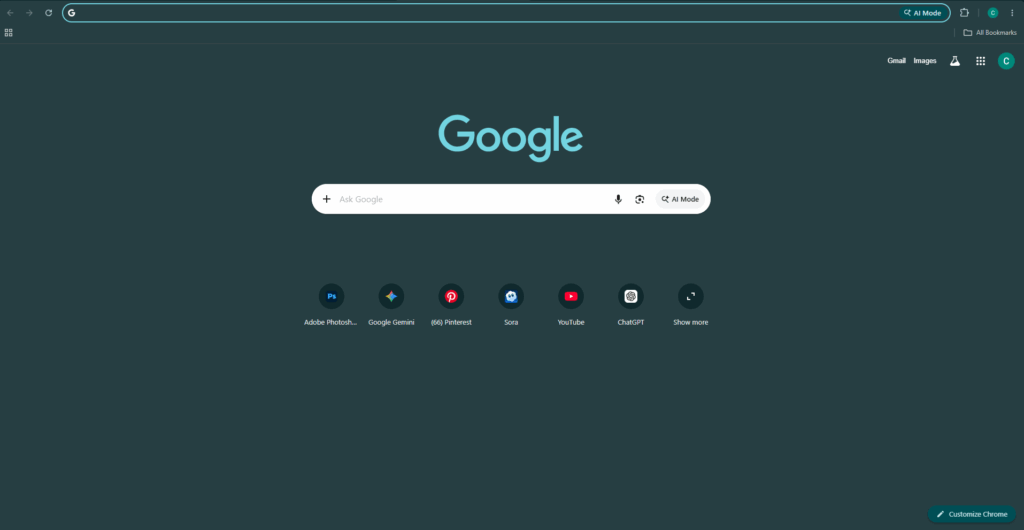
Google has become more than just a search engine. For most of the world, it basically acts as a front door. Most of us don't even think twice before we search Google or type a URL straight into the browser; it's just become second nature.
It handles the overwhelming majority of global searches. Consequently, it has built an entire ecosystem around that dominance, including Google Maps, Gmail, Ads, and Analytics. Its algorithm considers hundreds of factors, and it keeps getting smarter about understanding the context of what people actually mean, not just what they typed.
Key Highlights
- Its massive index covers nearly every corner of the web
- It has AI-powered features like AI Overviews and voice search
- It offers deep integration with Android, Chrome, and other Google products
- There are constant algorithm updates that aim at rewarding quality content
2. Microsoft Bing
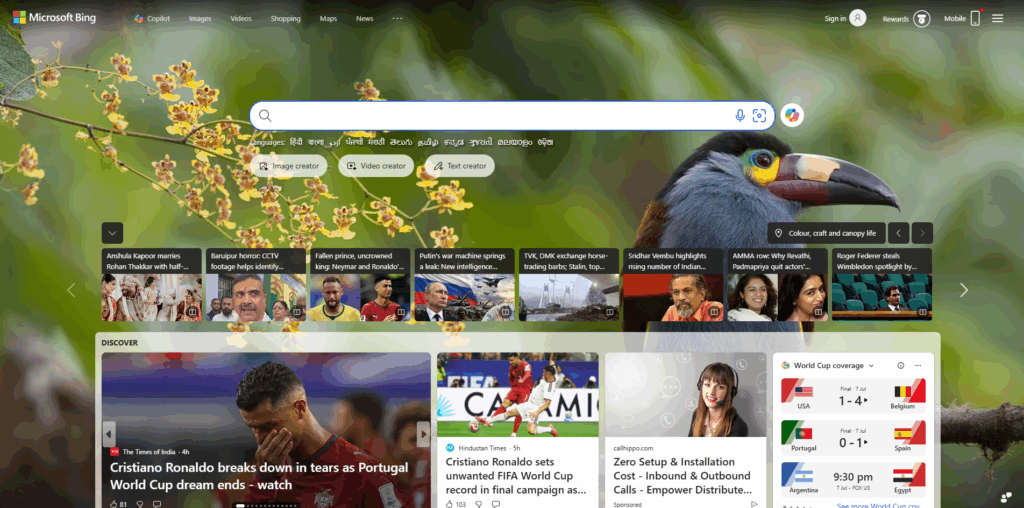
People usually overlook Bing, but it powers more than you’d think, including some of the results inside DuckDuckGo and Yahoo. Microsoft built Bing specifically to compete against Google's search engine, and it comes pre-installed on every Windows computer through the taskbar and Edge browser. Microsoft has also built its Copilot AI directly into Bing, so search results now include AI-generated answers alongside the usual links. Visual content ranks really well on Bing, and its image and video search results are genuinely strong.
Key Highlights
- It is deeply integrated with Windows, Edge, and Microsoft 365
- It rewards program that gives users points for searching
- Strong visual search with rich image and video results
- Copilot AI is built directly into the search experience
3. Yahoo
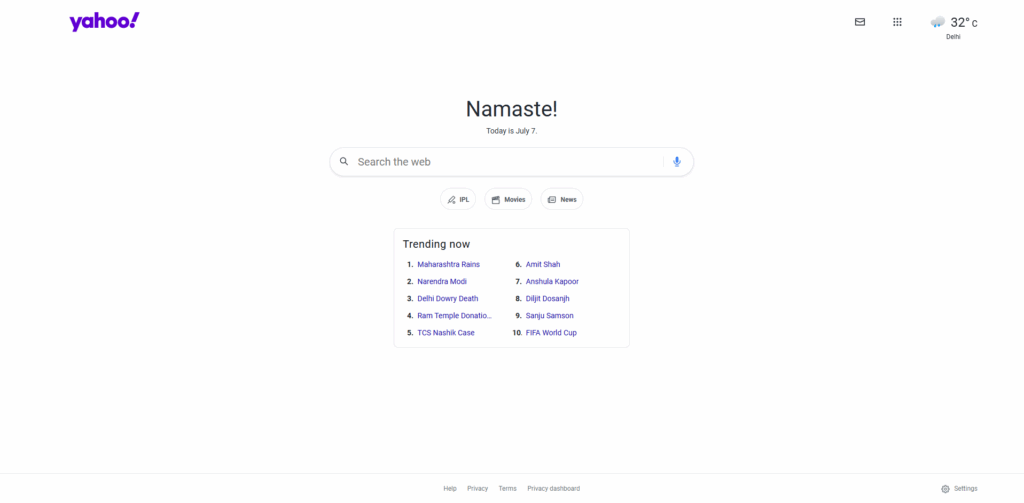
Yahoo is the search engine that existed even before Google. However, these days, it runs on Bing's index rather than its own crawler, but it hasn't disappeared. It survives through familiarity and its bundled services like mail, finance, and news. This keeps a loyal user base coming back.
Key Highlights
- Long-standing brand recognition, especially among older users
- It combines search with news, finance, and email in one place
- It runs primarily on Bing's underlying search technology
- Popular homepage destination rather than a first-choice search tool
4. Yandex

Yandex is the dominant search engine of Russia. Additionally, it is built differently because Google’s Western-built algorithms do not correctly reflect the Russian language and internet culture. It handles Cyrillic script and local search intent far better than most global competitors.
Key Highlights
- It was built specifically to understand the Russian language and local context
- It has a strong presence in Russia, Belarus, Kazakhstan, and neighboring regions
- It offers its own suite of services, from maps to translation
- It uses machine learning models that are trained for regional search behavior
5. Baidu
Baidu was founded in China to compete with Google. And it’s a known fact that Google isn’t available in China. Baidu essentially owns the market there. It is built around simplified Mandarin, so that it can understand local language, slang, regional dialects, and cultural context better than any foreign search engine.
Key Highlights
- It is the dominant search engine in mainland China
- It has been built to understand Simplified Chinese language and idioms
- It offers its own maps, cloud storage, and AI tools
- Complies with Chinese government content regulations
6. DuckDuckGo
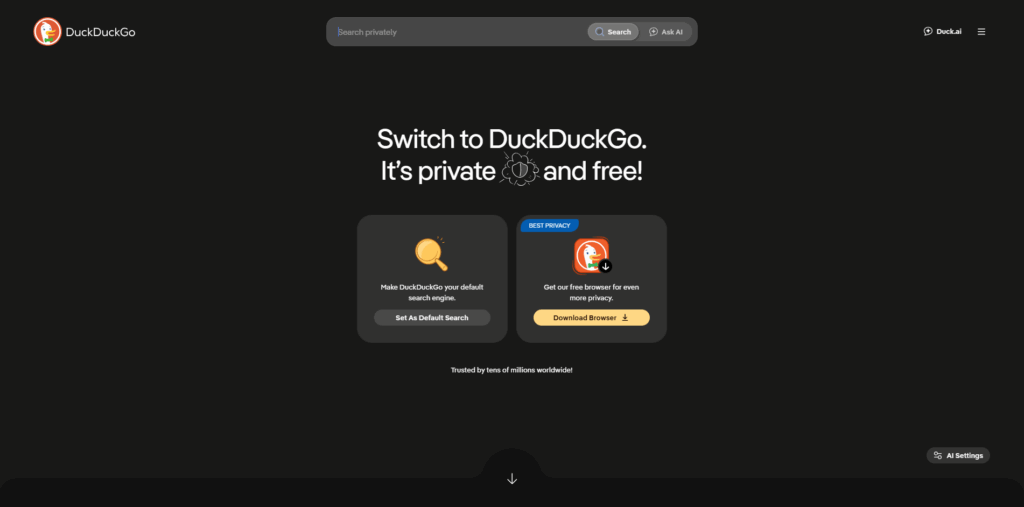
DuckDuckGo has been famously identified as a search engine that promises not to track you. There is no search history or personal profile built up over time. Moreover, it does not show any ads that follow you after you’ve searched for something once. You can browse DuckDuckGo without worrying about someone tracking your activities. It draws heavily from Bing's index but adds its own privacy layer on top, plus handy shortcuts called "bangs" that let you jump straight into another site's search.
Key Highlights
- It does not track anything, and there is no search history saved
- It offers shortcuts, l known as "Bangs", that let you search other sites directly, like !w for Wikipedia
- Its browser extension blocks trackers across other websites too
- It is available through Tor for extra anonymity
7. Brave Search
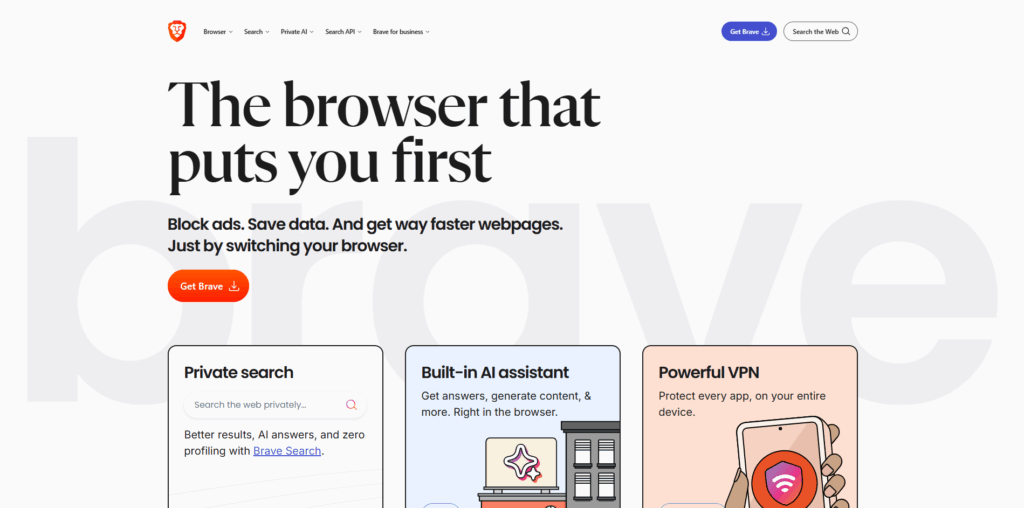
Brave Search takes independence a step further than DuckDuckGo. It does not rely on Bing’s results. Instead, it runs its own web crawler and builds its own index from scratch, which is genuinely rare in this industry. That means it does not have to be dependent on another company’s algorithm or business decisions. It is fully independent.
Key Highlights
- It is a fully independent index, not borrowed from Google or Bing
- It does not build profiles or collect personal data ever
- Its "Goggles" feature lets communities customize how results are ranked
- It has built-in AI summaries that answer questions without third-party data sharing
8. Ecosia
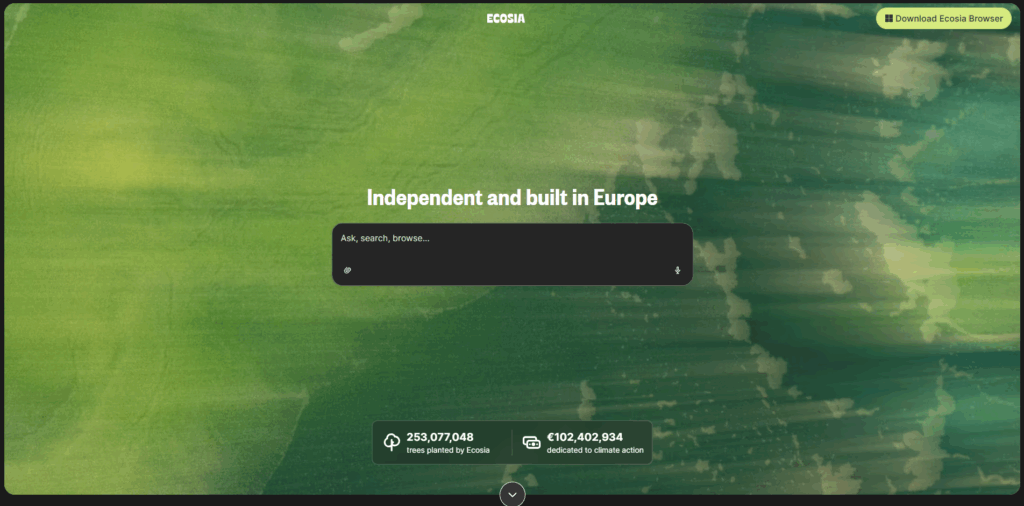
Ecosia stands out from the usual search engine business models. It does not just run ads; it uses most of the revenue generated from ads to plant more trees around the world. Every search you make contributes, even if just a tiny bit, to reforestation projects. It's not the most powerful engine technically, but plenty of people choose it purely because of its principles.
Key Highlights
- It plants trees using profits generated from search ads
- It also publishes regular financial reports to show where the money goes
- Its results are powered largely by Bing, with its own ranking layered on
- It is popular for its environmentally conscious principles
9. Ask.com
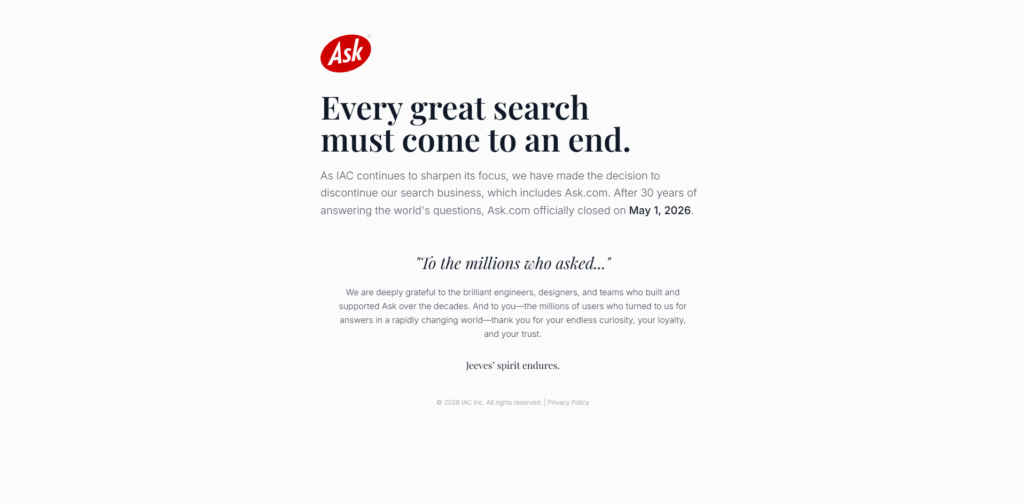
Ask.com, originally known as "Ask Jeeves," has built its reputation on a question-and-answer format long before that became the norm. Rather than just returning links, it tries to give you a direct answer up front, almost like a mini-FAQ page built around whatever you typed in.
Key Highlights
- It gives out results in question-and-answer style, not just a list of links
- It has a simple, uncluttered interface that anyone can use
- Includes a "Q&A" community section where users answer each other
- It works well for quick factual questions rather than deep research
10. Startpage
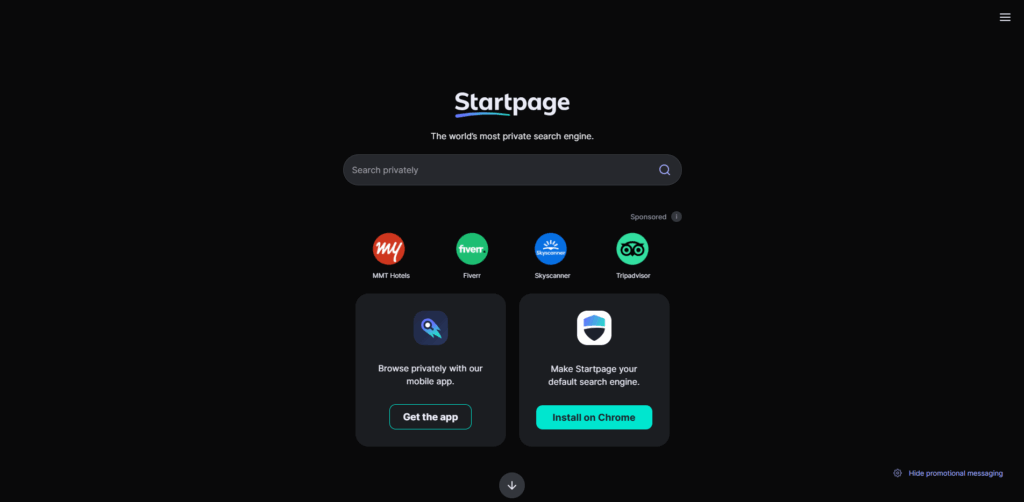
Startpage has a clever pitch: it gives you Google's actual search results, but without letting Google ever see who's searching. It works as a kind of privacy middleman. It fetches the results from Google's index but blocks anything that could reveal your identity.
Key Highlights
- It delivers Google-quality results with an added privacy layer on top
- There is no IP address logging, ad tracking, or data profiles
- "Anonymous View" lets you visit sites without revealing your identity
- A solid middle ground for people who want Google's accuracy without the tracking
Quick Comparison of the Top Search Engines
Here's a side-by-side comparison of the top search engines to help you quickly understand their strengths, best use cases, and what makes each one unique.
| Search Engine | Known For | Best Suited For |
|---|---|---|
| Scale and AI-powered results | Every day, general-purpose searching | |
| Microsoft Bing | Visual search and Microsoft integration | Windows and Copilot users |
| Yahoo | Bundled services and legacy brand trust | News, finance, and email in one spot |
| Yandex | Russian language and regional context | Users in Russia and nearby countries |
| Baidu | Chinese language and local compliance | Users inside mainland China |
| DuckDuckGo | No tracking, simple privacy | Everyday privacy-conscious searching |
| Brave Search | Fully independent index | Users who want zero Big Tech reliance |
| Ecosia | Eco-friendly search, tree planting | Environmentally minded users |
| Ask.com | Direct question-and-answer format | Quick factual lookups |
| Startpage | Google results without tracking | Privacy plus Google-level accuracy |
Which of the Top Search Engines Should You Choose?
If you’re someone who runs a business, prioritizes SEO, or wants to be found online, the honest answer is Google. It commands the overwhelming share of global search traffic, so most of your optimization effort should go there. That said, ignoring Bing would be a mistake too, especially since it feeds results into Yahoo and DuckDuckGo. Those results quietly reach more users than its market share number suggests. If your audience is regional, say, users in Russia or China, then Yandex and Baidu aren't optional; they're the main event. And if you're building a personal brand around privacy or sustainability, showing up well on DuckDuckGo, Brave, or Ecosia can actually mean something to the right audience, even if the traffic numbers are smaller.
There's no single correct answer here. The right answer depends on your specific goal, audience, and values.
Conclusion
Search engines are more than just tools. They reflect what people are looking for or care about, whether that’s speed, privacy, language, or the planet. Google will likely dominate the top spot among top search engines for a long time, and there’s nothing wrong with that. But the moment you realize that there are nine other serious options available, which solve a slightly different problem, your whole perspective of the internet becomes a little more complete. Just like specialized platforms such as usenet search focus on helping users find specific types of content efficiently, different search engines are designed to meet different needs and preferences. Whichever one you choose to use or optimize for, it helps you to know exactly why you’re choosing it.
FAQs About Top Search Engines
Q. Which search engine is the most popular in the world?
Google, by a wide margin, handles the majority of global searches.
Q. Is DuckDuckGo actually private?
Yes, it doesn't store your search history or build a personal profile on you.
Q. Which search engine is best for China?
Baidu, since Google isn't accessible there, and Baidu is built around the Chinese language and rules.
Q. Does Ecosia really plant trees?
Yes, it uses most of its ad revenue for reforestation and publishes financial reports to prove it.
Q. Is Bing worth optimizing for if I already rank on Google?
Yes, because Bing also powers search results on Yahoo and parts of DuckDuckGo.
%201.png)

%201.png)

%201.png)