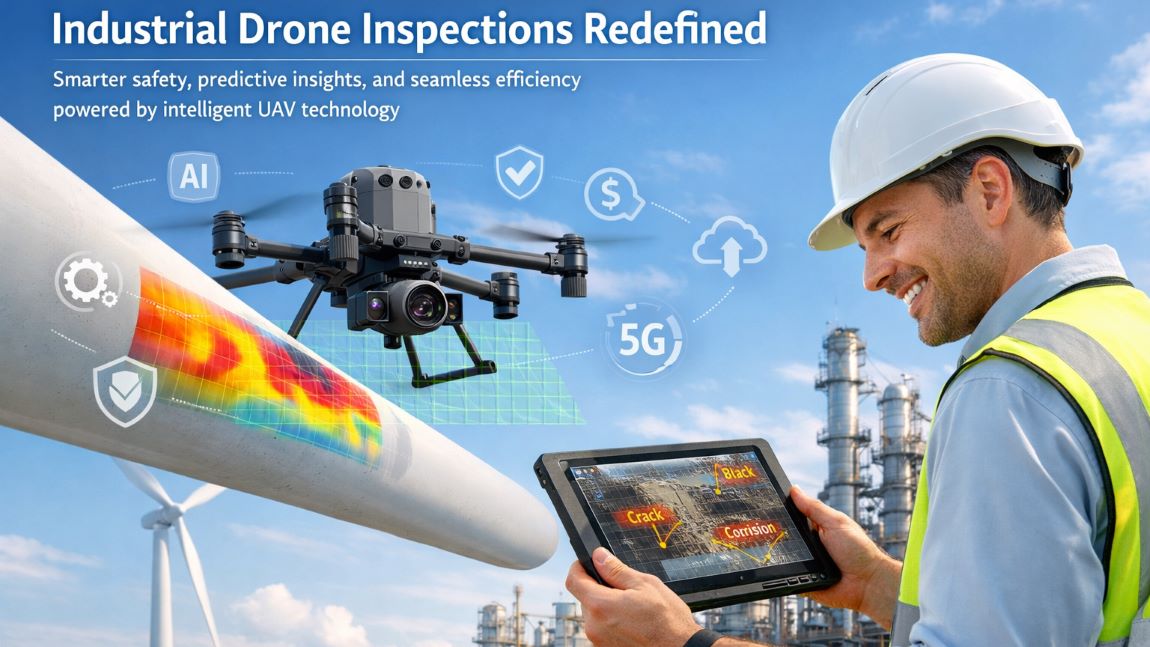

Picture inspections without the hassle
Drones cut industrial inspection times by half, boost safety by dodging risky climbs, and trim costs up to 30% - no more scaffolding nightmares. Think spotting rust on a bridge from afar, zero downtime. Why risk lives when tech handles the grunt work? This shift hits as industries chase efficiency amid tight regs.
Hold on. It's all rooted in smart tech blends. Advances in UAV software development craft systems that process data on the fly, turning raw footage into actionable reports. And get this: the global drone inspection market swells to $5.7 billion by 2027, per MarketsandMarkets. Facilities chew through billions yearly on manual checks, but UAVs flip that script fast. Nuts, right?
Why bother with old ways? Urban sprawls and aging infrastructure demand smarter fixes. Picture a wind farm - blades high up, tough to reach. Drones zip in, cameras rolling, spotting cracks before disasters brew. It's like giving inspectors wings - safer, quicker.
The tech guts making it tick

Break it simple. Drones pack thermal cams, LiDAR scanners, even AI brains. These snag heat leaks in pipes or map 3D structures. Data streams to ground stations, algorithms crunching anomalies.
AI shines here. Machine learning flags defects humans miss - subtle corrosion, say. "Drones don't tire; they analyze relentlessly," notes engineer Dr. Carla Ruiz from a Siemens report. Edge processing zips decisions - no waiting for clouds. Developing these advanced inspection algorithms and enterprise-grade AI applications typically requires collaboration with specialized AI development firms that understand large-scale deployment.
Batteries and autonomy amp range. Some fly hours, dodging obstacles via GPS tweaks. Regulations evolve too; FAA nods ease commercial ops. One example: A refinery in Texas swapped ladders for UAVs, slashing injury rates 40%, OSHA data shows.
- Thermal imaging catches hot spots in electrical grids.
- High-res cams document wear on towers.
- Sensors measure vibrations in machinery.
- Software stitches panoramas for full views.
Integration matters. Drones link with enterprise systems, feeding data straight to maintenance logs. Handy for predictive tweaks - fix before breaks.
Real perks stacking up across sectors
Wins hit broad. Safety leads - no sending folks into confined spaces or heights. A McKinsey study pegs 25% fewer accidents in drone-adopting sites. Oil rigs? UAVs inspect offshore platforms, dodging waves and winds.
Cost drops follow. Traditional checks rack up $100K per shutdown; drones halve that, Deloitte estimates. Time savings too - what took days now wraps in hours. Take a solar farm in California: Drones scanned panels, spotting dust buildup early, bumping output 15%.
Examples pile. Europe's wind sector uses UAVs for blade checks, cutting outages 30%, per WindEurope. In mining, drones map tunnels, avoiding collapses - an Australian op saved millions yearly. Even bridges: New York's DOT deploys them for underbelly scans, flagging issues and pre-traffic snarls.
Health perks sneak in. Less exposure to hazards like chemicals or heights means fewer claims. Sustainability ties too; fewer crew trips cut carbon footprints. One utility firm trimmed emissions 20% by ditching helicopters for UAVs.
Digital twins add layers. Virtual models fed by drone data simulate fixes - test repairs sans shutdowns. Efficient, huh?
Bumps in the flight path, but fixes exist
Not all clear skies. Weather nags - rain grounds fleets. Solutions? Rugged designs with IP ratings shrug off drizzles.
Data overload bugs too. Gigabytes pour in; storage strains. Cloud hybrids help, compressing essentials. "Manage smart or drown in bits," warns analyst Tom Harlan.
Regs vary wild. EU's strict on privacy; US focuses airspace. Compliance tools track flights, logging for audits. One hitch: A construction firm faced fines for unlogged ops, learned quick.
Upfront costs sting small ops. Entry kits run $10K-$50K. Yet ROI hits fast - 6-12 months, PwC says. Start pilots on one site, scale proofs.
Cyber risks lurk. Hackable links invite breaches. Encrypt transmissions, add firewalls. Vigilance keeps data safe.
Fresh twists on the horizon
Future buzzes. 5G supercharges live feeds, enabling remote pilots from afar. Drones swarm now - teams covering vast plants synced.
AI evolves. Deep learning predicts failures from patterns, like wear trends on rails. Blockchain secures logs, tamper-proof for insurances.
Green angles grow. Solar-powered UAVs extend flights, zero fuel. Rooftop launches from factories cut setup times.
Globals inspire. China's high-speed rail uses drone fleets for track scans, uptime at 99.9%. Japan's quake-prone spots deploy them for post-event checks, speeding rebuilds.
One cool bit: AR overlays. Goggles show drone views with annotations - spot fixes in real time. Saves trips, shrinks errors. Well, you know, every edge counts in tight margins.
Wrapping the revolution in sight
Drones reshape industrial checks from clunky to clever. We've unpacked tech cores, safety leaps, cost trims, hurdles hopped. Real boosts in oil, mining, energy prove it's no fad - market growth at 15% CAGR, Grand View Research tallies. Industries that adapt cut risks, amp outputs.
Bottom line? Embrace scalable UAVs. They buffer against downtimes and regs, fostering resilient ops. As infrastructure ages - think 50% US bridges over 50 years old, ASCE warns - this tech keeps chaos at bay.
For deeper dives into custom setups, swing byIndeema's website. It's a solid spot for tailored insights.
%201.png)

%201.png)

%201.png)