
Let's learn about some image-to-video best practices and why they are effective in saving time. This guide offers ready-to-use templates that will transform static images into engagaing videos in an instant and efficiently. This guide provides you with insights that are straighforward and put you in control of your video creation process. So, without a delay, let’s dive in and start creating stunning visuals in no time.
What Is an Image to Video Prompt?
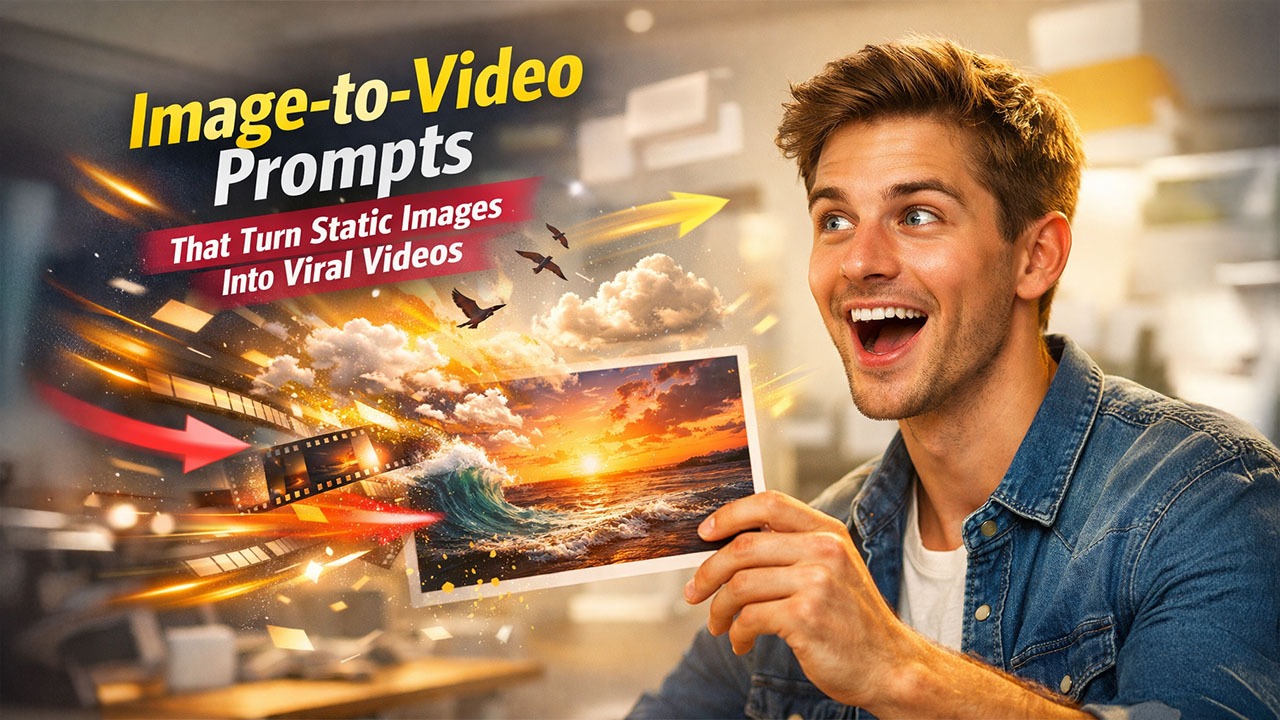
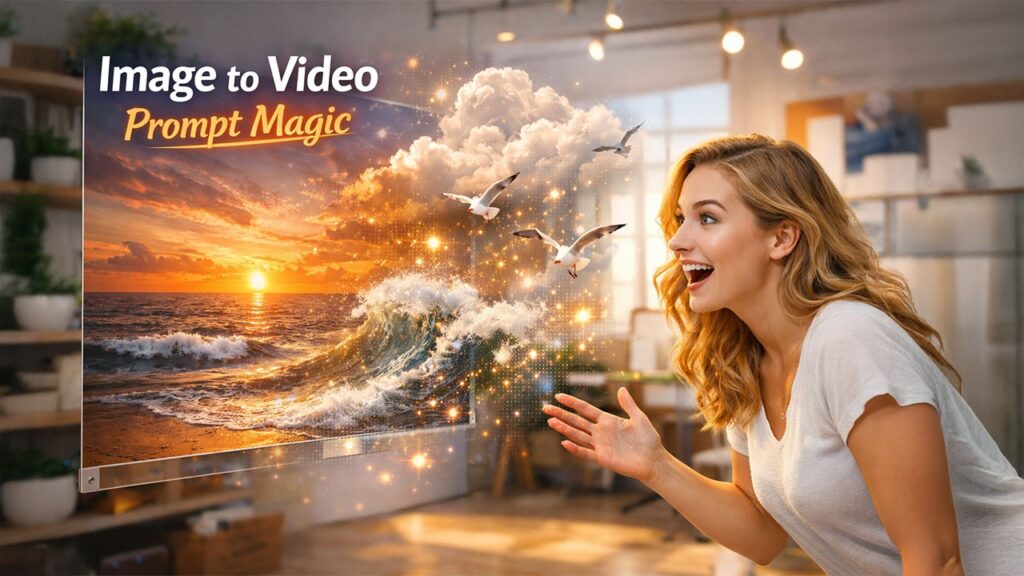
An image to video prompt is like a descriptive direction that you give to an AI tool. It contains instructions to convert a static image into a dynamic video. Basically, you type a detailed prompt, and AI turns your still picture into compelling motion.
Let's understand with the help of an example: If you start with an image of a serene sunset, your prompt might be framed as, "Animate this sunset with flowing clouds and gentle waves." The result could showcase that clouds are drifting across the sky and the waves lapping at the shore. This creates a mesmerizing visual experience.
TL;DR Summary
An image to video prompt is a command that guides AI tools to convert a still image into an animated video, enhancing storytelling and engagement.
Example Prompt:
- Before: "A sunset over the ocean."
- After: "Animate this sunset with flowing clouds and gentle waves."
This process allows new creators to easily add life to their visuals, enhancing content without needing advanced editing skills. Start experimenting with simple prompts, and watch your static images come to life!
Why Do Prompt Best Practices Matter?
For professional social video creators, it is crucial to understand and implement prompt best practices. Right prompt best practices directly impact the quality of your content, how audiences are engaging with it, and the overall workflow efficiency. As per recent research study, AI video generation can outperform generic stock footage by up to 35% in terms of social engagement. This establishes that effective prompts significantly enhance visual storytelling while boosting viewer interaction, leading to better reach and higher ROI.
By investing time in refining their prompts, creators save substantial time in post-production. For instance, following established best practices can reduce revision cycles by as much as 70%. This level of efficiency results in a faster turnaround which allows creators to focus on more creative and innovative aspects of their work rather than stuck with multiple edits.
Prompt best practices are critical for your success if:
- You want faster production,
- Higher audience engagement,
- Developing a unique style,
With best practices you can:
- Enhance video quality
- Save time spent on editing
- Achieve higher engagement rates
Without best practices:
- Subpar video output
- Increased editing hours
- Missed engagement opportunities
By honing up your prompt skills not just improves your current projects but also set the stage for future creative successes.
What Are the Top 10 Image to Video Prompt Best Practices?
Below given are the 10 best practices—see each for a modular template you can copy. These practices are designed to enhance your image to video prompts, which ensures that your AI-generated videos are engaging, clear, and visually appealing. Following this guideline will save time, improve quality, and give edge to your creative outputs. Let's get started!

1. How to Specify Cinematography in a Prompt
To specify cinematography in your prompt, clearly state the precise movements and framing of the camera as per your needs. This clarity helps the AI understand the visual storytelling you’re aiming for.
Template:
Prompt: [Describe camera movement], [frame], [mood]…
Example:
- Before: “Create a video of a sunset.”
- After: “Dolly in on a wide shot of a sunset, capturing a serene mood.”
| Cinematography Term | Prompt-Ready Phrase |
| Wide shot | “Wide shot of [subject]…” |
| Close-up | “Close-up of [subject]…” |
| Pan left | “Pan left to reveal [object]…” |
| Dolly in | “Dolly in for a dramatic effect…” |
2. How Can Lighting and Color Improve AI Video Results?
Lighting and color can drastically shift the mood and change engagement level of your video. Use specific lighting setups and color palettes to align with your brand or intended audience.
Template:
Prompt: [subject], [action], bathed in [lighting], color palette: [brand colors]…
Example:
- Prompt: “A cat playing, bathed in soft daylight, color palette: pastel colors.”
Lighting Tips:
- Backlit for drama: “Create a backlit scene of [subject].”
- Soft daylight for engagement: “Show [subject] in soft daylight for a friendly vibe.”
| Lighting Type | Prompt Example |
| Backlit | “[Subject] backlit by the sunset.” |
| Soft daylight | “[Subject] in soft daylight.” |
| High contrast | “[Subject] under harsh lighting.” |
3. Why Should You Use Negative Prompts?
To prevent frequent common visual errors, use negative prompts because it clearly specifies what to avoid, which enhances the clarity and quality of your output.
Template:
Prompt: [Include desired elements], but avoid [negative elements].
Example:
- Before: “Create a video of a crowded market.”
- After: “Create a video of a crowded market, but avoid distortion and flickering.”
Ready-Made Negative Prompt List:
- No distortion
- No flicker
- No blurry edges
| Error Type | Negative Prompt Example |
| Distortion | “Avoid distortion in the frames.” |
| Flickering | “No flickering lights.” |
| Blurry edges | “Ensure sharp edges without blurriness.” |
4. How to Define Style in Your Prompt

Defining a clear style in your prompt sets the tone for your video. For high-quality results, you mujst specify whether you want a cinematic, documentary, or animated feel.
Template:
Prompt: [Subject], in a [style] style, with [mood].
Example:
- Before: “Make a video about nature.”
- After: “Create a cinematic video of nature, with an adventurous mood.”
| Style Type | Prompt Example |
| Cinematic | “In a cinematic style…” |
| Documentary | “In a documentary style…” |
| Animated | “In a playful animated style…” |
5. How to Incorporate Action Verbs
Use strong action verbs as they can energize your prompts. This leads to more dynamic video outputs.
Template:
Prompt: [Action verb], [subject], [context].
Example:
- Before: “Show a dog.”
- After: “Leap over a fence, showcasing a dog’s agility.”
| Action Verb | Prompt Example |
| Leap | “Leap across the grass…” |
| Glide | “Glide smoothly over the water…” |
| Spin | “Spin around rapidly…” |
Understanding your audience allows you to tailor the tone of your video effectively. Be explicit about the intended audience in your prompt.
Template:
Prompt: [Subject], aimed at [audience], with a [tone].
Example:
- Before: “Create a video for kids.”
- After: “Create a playful video for kids, with a cheerful tone.”
| Audience Type | Prompt Example |
| Kids | “For a children’s audience…” |
| Professionals | “For a corporate audience…” |
| General public | “For a general audience…” |
7. How to Use Contextual Elements
Including contextual elements in your prompts can provide the AI with a better understanding of the setting or background.
Template:
Prompt: [Subject], in [context], [action].
Example:
- Before: “Show a car.”
- After: “Show a car racing on a mountain road, with clouds rolling in.”
| Context Type | Prompt Example |
| Urban | “In an urban setting…” |
| Outdoor | “In a natural context…” |
| Historical | “Set in a historical background…” |
8. How to Specify Video Length
Being specific about the desired length of the video can help in its pacing and editing.
Template:
Prompt: [Subject], [action], for [duration] seconds.
Example:
- Before: “Create a video about cooking.”
- After: “Create a cooking video, showing the process for 60 seconds.”
| Duration Type | Prompt Example |
| Short (15-30s) | “For a quick 15-second overview…” |
| Medium (60s) | “For a 60-second tutorial…” |
| Long (2-3 mins) | “For a detailed 2-minute explanation…” |
9. How to Create a Call to Action
Including a call to action in your prompts can guide the viewer on what to do next after watching.
Template:
Prompt: [Subject], with a call to action: [action].
Example:
- Before: “Create a video about recycling.”
- After: “Create a video about recycling, with a call to action: ‘Start recycling today!’”
| Call to Action | Prompt Example |
| Subscribe | “Encourage viewers to subscribe…” |
| Visit Website | “Direct viewers to visit the website…” |
| Share | “Prompt viewers to share the video…” |
10. How to Test and Iterate
Finally, after creating your prompt, test it and iterate based on the results. Adjusting your prompts based on feedback can lead to better outcomes.
Template:
Prompt: [Initial prompt], adjust based on [feedback].
Example:
- Before: “Create a video about fitness.”
- After: “Create a fitness video, adjust based on viewer engagement feedback.”
| Feedback Type | Prompt Example |
| Engagement | “Adjust based on engagement metrics…” |
| Viewer Responses | “Tweak based on viewer feedback…” |
| A/B Testing | “Test variations for best results…” |
When you start implementing the above-mentioned best practices, you’ll be able to enhance the effectiveness of your image to video prompt. This makes AI-generated content visuallyu appealing which resonates with your target audience on a deeper level. Why wait? Start creating now.
What Are Plug-and-Play Prompt Templates?
Below are few ready-to-use copy, paste, and adapt templates. For busy creators who are constantly racing against the clock, these readymade prompts are your go-to solution. With these frameworks, you can generate compelling video content quickly, without getting bogged down in the details. Whether you're creating TikTok viral, branded shorts, or cinematic trailers, having a structured template can help you produce quality outputs and save you precious time.
Templates Overview
| Template Type | Genre | Mood | Action | Example Output |
| TikTok Viral | Comedy | Playful | Quick punchline | "Create a 15-second clip where a cat hilariously fails to catch a laser pointer, with upbeat music and text overlay saying ‘Epic Fail!’" |
| Branded Short | Lifestyle | Inspirational | Product showcase | "Produce a 30-second video featuring a young woman using our eco-friendly water bottle while hiking, with soft music and captions highlighting sustainability." |
| Cinematic Trailer | Action/Thriller | Intense | Build suspense | "Craft a 60-second trailer for a sci-fi movie, showing a dark cityscape, a hero in slow motion, and a voiceover that hints at a looming threat." |
How to Use
- Select Your Template: Choose a template based on your content goal.
- Fill in the Blanks: Replace the fields with specifics related to your project (e.g., genre, mood, action).
- Tweak for Personalization: Add your unique flair—adjust the language or style to align with your brand voice.
Quick Reference
First, copy the template that aligns with your needs, edit the details and ta-da, you’re good to go. This approach speeds up your workflow while making sure that videos are engaging and perfectly aligned with your objectives. No matter if you want to post on TikTok or just want to create a compelling narrative for brands, these templates are your direct ticket to success.
How Do You Avoid the Most Common Prompt Mistakes?
The most common causes of errors are vague descriptions or conflicting instructions. There are many creators who face challenges such as blurry results, off-brand styles, and unintended motion in their AI-generated videos. But no need to worry because most prompt failures are easy to identify and fix. compare these examples below.
Case Study 1: Blurry Results
- Before: “Make a video of a cat.”
- After: “Create a high-resolution video of a playful tabby cat jumping around a sunlit living room.”
Fix: Be more cleat and specific about the subject and environment that you want to enhance clarity.
Case Study 2: Off-Brand Styles
- Before: “Generate a video for our product.”
- After: “Produce a vibrant, energetic video showcasing our eco-friendly water bottle with a modern, minimalist aesthetic that aligns with our brand colors of green and blue.”
Fix: Include brand colors and style guidelines to make sure that the output accurately reflects your brand identity.
Case Study 3: Unintended Motion
- Before: “Show a cityscape.”
- After: “Display a serene sunset over a bustling cityscape, with slow panning to capture the skyline.”
Fix: To prevent unwanted movement or effcets, specify the desired action and mood to prevent unwanted movement or effects.
Troubleshooting Checklist:
- [ ] Clear subject definition (who/what?)
- [ ] Specific environment details (where?)
- [ ] Defined style and tone (how?)
- [ ] Desired actions or effects (what should happen?)
- [ ] Brand alignment (colors, logos, etc.)
Apply these strategies and use the checklist above to minimize mistakes and create more effective prompts that yield stunning results.
How Should You Adapt Prompts for Specific Platforms (Runway, Gen-4, Veo 3.1)?
To achieve the best results, just tweak your prompts for the quirks of each platform—here’s the exact way. Each platform has their own unique strengths and syntax requirements that can dramatically affect your final result. Here's a quick comparison of how to tailor your prompts for Runway, Gen-4, and Veo 3.1.
| Platform | Best For | Prompt Syntax Example | Pro Tips |
| Runway | Creative storytelling | Prompt: “A serene landscape, vibrant sunset, cinematic style.” | Use clear, descriptive adjectives for richer visuals. Community tip: “Focus on narrative elements to keep the AI engaged.” |
| Gen-4 | High realism and detail | Prompt: “Realistic portrait of a woman, soft lighting, natural makeup.” | Incorporate modifiers like “hyper-realistic” for detail. Reddit users suggest: “Add specific traits to enhance character depth.” |
| Veo 3.1 | Short-form social content | Prompt: “Fast-paced montage of city life, upbeat musi.c” | Emphasize rhythm and pacing in your prompts. A community tip: “Use action verbs to drive the energy of the video.” |
Platform-Specific Examples
- Runway: To create a short film, use a prompt like, “A mystical forest, glowing fireflies, ethereal music.” This format allows the AI to visualize the setting with narrative depth, making your video feel immersive.
- Gen-4: For showcasing or presenting a product, you could write, “Sleek modern kitchen, warm sunlight shining through, detailed textures.” With this level of specificity, AI can focus on realism and detail. This can enhance the perceived quality of your video.
- Veo 3.1: If you want to design a social media clip, try using “Energetic dance party, colorful lights flashing, fast cuts.” This structure encourages the AI to generate quick transitions that keep the viewer engaged.
Tailor your prompts based on the strengths and quirks of each platform to enhance the effectiveness of your outputs. Each platform thrives on different aspects of creativity and realism, so changing your approach will lead to content that are more engaging and compelling.
What Are the Next Steps for Image to Video Prompt Mastery?
The fastest way to master image to video prompting is to iterate—here’s your challenge roadmap. To sharpen your skills and create more distinctive video content, consider these three advanced challenges:
- Remix Templates for a Surprise Outcome: Tweak the existing prompt templates to create unexpected results. Feel free to experiment with different styles, moods, or actions to see how they transform your output. Remember to note these variations to refine your approach.
- Crowdsource Prompts and Rate Results: Collaborate with other creators to collect many different and unique prompts. Then share the outcomes with each other and rate the results collectively. This shapes a new perspective and helps you identify effective strategies and common pitfalls.
- Join Platform-Specific Discords and Share Video Links: Engage with communities on platforms like Discord that focus on the tools that you prefer or work with. Share your video links and receive constructive feedback from them while also learning from others' experiences.
By tackling these challenges, you’ll enhance your prompting skills and elevate your video content. [Image Placeholder: {progress tracker visual showing these three steps}]
What Do Community and Expert FAQs Reveal?
Here are the most-asked community questions—each with a quick answer.
1. How do I make my AI-generated videos look realistic?
To enhance realism, focus on detailed prompts. Specify elements like lighting, camera angles, and textures. Incorporate negative prompts to avoid unwanted artifacts. For more tips, check the section on common mistakes.
2. Which image to video prompt platform is free?
Platforms like Runway and Gen-4 offer free tiers, allowing users to experiment with basic functionalities. Explore our platform-specific tips for more insights on using these tools effectively.
3. Why is my output blurry?
Blurriness often results from vague prompts or low-resolution input images. Ensure you provide high-quality images and detailed descriptions in your prompts. Refer to the troubleshooting section for additional solutions.
4. Can I use negative prompts for better control?
Absolutely! Negative prompts help you specify what you don’t want in the output (e.g., "no noise" or "no distortion"). For examples of effective negative prompts, check our section on using negative prompts.
5. How do I adapt prompts for different platforms?
Each platform has unique syntax and capabilities. Tailor your prompts by consulting our comparison table that outlines specific adjustments for platforms like Runway and Gen-4.
For deeper exploration of these topics, navigate to the relevant sections above!
%201.png)

%201.png)

%201.png)