
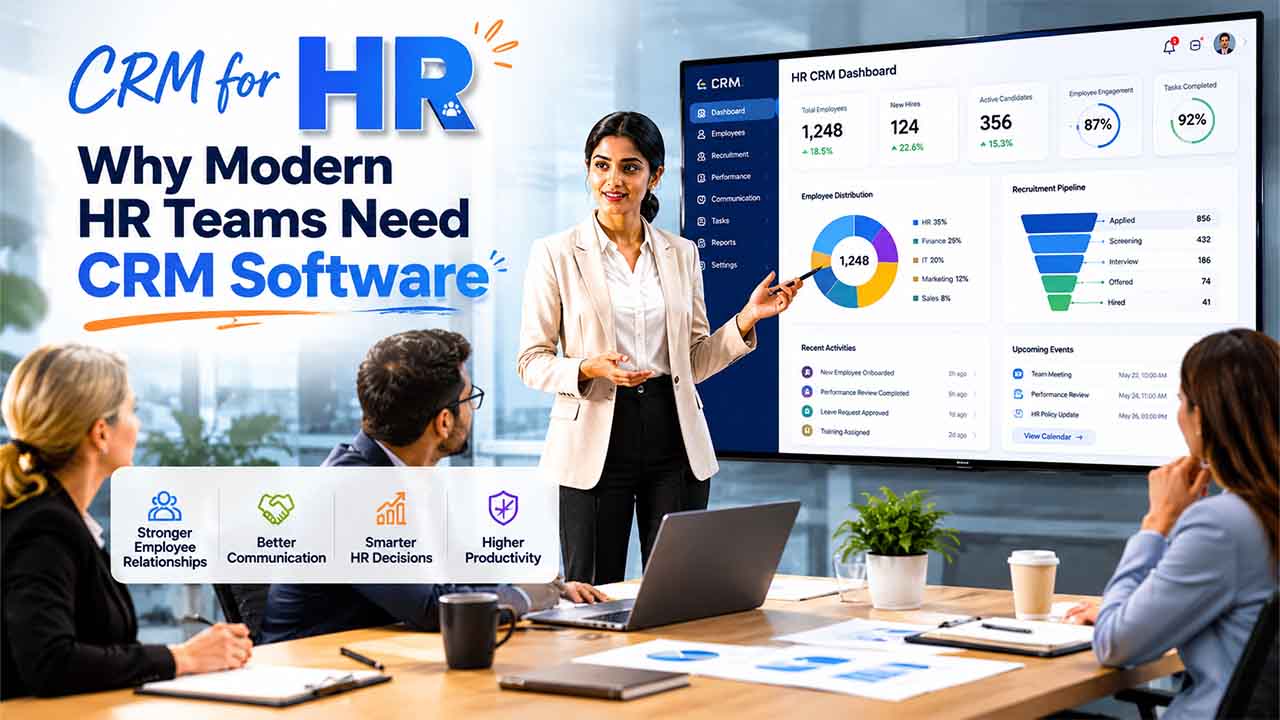

HR has a people problem, but not in the way you might think. Managing people, having hard conversations, and building relationships come to HR professionals naturally. That's not where things break down. What's broken is the infrastructure behind that work. Resumes pile up, candidate follow-ups slip through the cracks, employee records live in three different spreadsheets, and onboarding feels like organized chaos. And somewhere, in between all of this, HR professionals are expected to create a thriving workplace culture.
That's a lot to ask of a team that’s running on sticky notes and gut instinct. This is exactly where CRM for HR enters the picture. It impacts businesses more than they expect.
What Is CRM for Human Resources?
What is CRM software at its core? It stands for Customer Relationship Management, traditionally a sales tool. But its core logic maps perfectly onto HR work. Sales teams track leads through a pipeline. HR teams track candidates through a hiring funnel. Both involve communication, follow-ups, data, and relationships that need consistent attention. The mechanics are almost identical.
So, CRM for HR is essentially taking the relationship management framework that sales teams have relied on for years and applying it to human resources. It brings candidate data, recruitment workflows, employee records, and team communication into one centralized system. There are no more juggling tabs or lost email threads. It’s just one place where everything lives and connects.
Some companies use platforms built specifically for HR. Others adapt existing tools like HubSpot or Zoho to fit their people processes. Either way, the outcome is the same; structure replaces chaos, and HR teams can finally breathe.
Why Businesses Need CRM for HR Software
Most HR teams aren’t reactive because they want to be. They’re reactive because their tools leave them with no other choice. When data is scattered and processes are manual, you spend all your time catching up. CRM for HR changes that equation.
Here's why businesses can’t afford to ignore HR-CRM:
- Eliminates HR Data Chaos: Instead of buried emails, drives, and scattered spreadsheets, HR-CRM organizes the history of candidates, records of employees, and communication logs in one structured place, which makes it easy for HR to access them whenever they need.
- Enables Proactive HR Management: When data is clean and organized, it gives you clear pipeline visibility. You can spot bottlenecks early on, forecast what is needed for hiring, and actually get ahead of problems instead of just reacting to them.
- Speeds Up Hiring Processes: When workflow is automated, candidates move through stages without someone having to nudge them manually at every step. It results in fewer delays, a better experience for applicants, and less stress for the team.
- Improves Employee Retention: The relationship between the employee and HR doesn’t end with the offer letter. CRM tools help HR track engagement, flag employees who might be disengaging with the company, and make sure onboarding promises don’t quietly get forgotten.
- Enhance Team Collaboration: Hiring managers and HR can access the same pipeline, leave notes, stay on the same page, and align without a single unnecessary chain of emails.
- Scales HR Operations Easily: A ten-person team can work on their intuition and goodwill. However, an organization with two hundred people simply cannot. CRM for HR gives you the infrastructure you need to grow without things falling apart.
Key Benefits of Using CRM for HR
These benefits are not abstract. Teams that actually implement HR-CRM see the difference quickly, and the right CRM features can make that difference even more significant across hiring, onboarding, and retention.
- Improve Employee Experience: CRM for HR tracks everything, from the first application to the final onboarding conversation. Every touchpoint is kept consistent and handled with intention. This consistency builds trust, and good people stick around when there is trust and transparency.
- Make Smarter Hiring Decisions: Clean and structured CRM data starts telling a story over time. It tells you which channels bring the best candidates? Where do applicants drop off? Which job roles take too long to fill? If you have a proper system in place, you’ll find all the answers in the data.
- Strengthen Employer Branding: How you treat candidates, even the ones you don't hire, says a lot about your company. A smooth, communicative process leaves a good impression. People remember that, and they talk around. This improves the reputation of your company in the market.
- Centralize HR Information: HR-CRM makes everything more searchable and accessible. There will be no need to switch between platforms or dig through old email threads to find a candidate’s resume or an employee’s contract.
- Reduce Administrative Work: There are tasks that take a lot of time, such as scheduling interviews, sending follow-up emails, and requesting documents for verification. When you automate them, suddenly your HR team has more time for work that actually matters.
5 Best CRM for HR Software to Choose From
There is no objectively better CRM for every HR team. The right CRM tools depend on the size of your team, your workflows, and what your people will actually use.
Here's a straightforward look at seven platforms that consistently deliver.
1. eWay CRM
eWay-CRM is the underrated pick on this list. If your team lives in Microsoft Outlook, and plenty of HR teams do, this tool embeds workflows directly into that familiar interface. You don’t need new tabs, new logins, and there’s no resistance from the team. It offers low friction during adoption.
- Best for: Teams already working inside Microsoft Outlook
- Standout feature: Native Outlook integration that keeps HR workflows
2. FreshTeam
FreshTeams packs a lot into a lightweight platform. It offers ATS, HRIS, and CRM-style functionality all in one place. It is designed for speed, which makes it a strong fit for fast-growing startups that need to hire quickly without spending months setting up a system first.
- Best for: Fast-growing startups and lean HR teams
- Standout feature: ATS, HRIS, and CRM combined in one simple interface
3. OutRightCRM
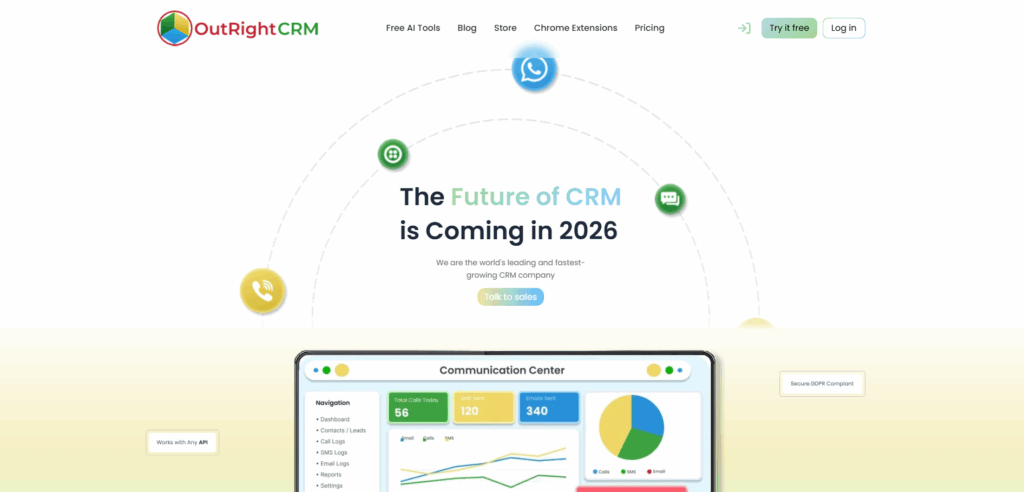
OutRightCRM is built for HR teams that move fast. It provides a system that is fully customizable which enables teams to tailor it as per their workflows. It offers AI-powered automation for follow-ups, scheduling, and omni-channel communication across email, WhatsApp, and live chat; all in one place. It's a cloud-based infrastructure which means growing businesses can scale without technical stress.
- Best for: Growing businesses managing high-volume, multi-channel HR communication
- Standout feature: AI-powered automation with fully customizable workflows and omni-channel support
4. BambooHR
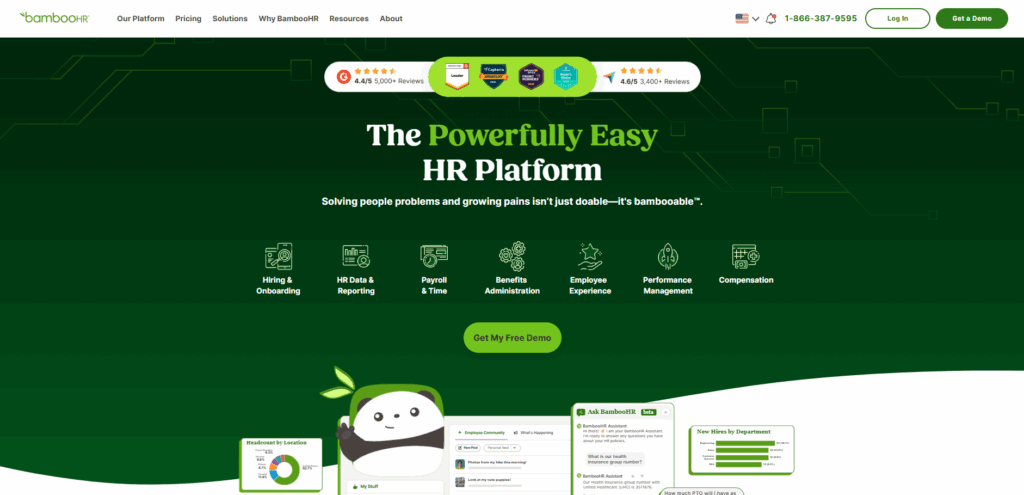
BambooHR is built especially for HR professionals. The onboarding flows are clean, the employee self-service features are intuitive, and the platform never overwhelms you with unnecessary complexity. For small and mid-size teams, it is easy and quick to implement.
- Best for: Small to mid-size businesses wanting an all-in-one HR solution
- Standout feature: Smooth onboarding and easy employee self-service tools
5. Zoho Recruit
Zoho Recruit was built with recruitment in mind, which gives it a natural advantage in the HR space. It is capable of handling the full hiring cycle, from job posting all the way to offer letters. It's AI-powered candidate matching feature genuinely saves time at the sourcing stage. It fits in seamlessly if you already work within the Zoho ecosystem.
- Best for: Teams that are focused heavily on recruitment
- Standout feature: AI-Powered candidate matching and sourcing automation
How to Choose the Right CRM for HR
When there are hundreds of options available, choosing feels difficult and overwhelming. Following CRM software best practices can simplify that decision significantly. Here's where to start:
- Define Your Primary Use Case: Start with your biggest pain point whether it is recruitment chaos, messy onboarding, or poor employee data management. Let the problem lead you to the solution.
- Audit Your Current Tools: The best CRM is one that integrates cleanly with what you already use, not one that forces a full tech overhaul.
- Prioritize Ease of Use: Before committing to one HR-CRM, consider whether your team can use it or not. Because a powerful platform that nobody uses is just expensive software. You must make sure your team will actually adopt it and implement it in their workflows.
- Choose a Scalable CRM: Choose a platform that grows with you, not one that you'll outgrow in eighteen months.
- Evaluate Reporting Features: Make sure CRM dashboards surface detailed and meaningful insights in an easy-to-understand way without needing a data analyst to interpret them.
- Test Before You Commit: Almost every platform above offers a free trial. Use it with real workflows, not demo scenarios.
Final Thoughts
HR has always been about relationships. CRM for HR finally gives it the infrastructure to honor that. The shift from scattered spreadsheets to a centralized, intelligent system doesn't happen overnight. But it starts with one honest question: are your current tools helping your HR team lead, or just cope? If the answer is the latter, it's time to look seriously at what a CRM can do.
It won't fix your culture. But it will give you the clarity and consistency to start building one worth having.
FAQs About CRM for HR
Q. Is CRM for HR the same as an ATS?
Not exactly. An ATS focuses on applicant tracking, while CRM for HR covers the full employee lifecycle.
Q. Can small businesses benefit from CRM for HR?
A. Yes, even teams of 10 to 20 people benefit from centralized data and automated follow-ups during growth phases.
Q. Can you adapt a sales CRM for HR use?
A. Absolutely. Tools like HubSpot and Zoho work well for HR with the right configuration, though purpose-built platforms offer faster setup.
Q. How long does implementation take?
Most platforms are operational within a few weeks; full adoption typically takes one to three months.
Q. Will a CRM replace HR staff?
No. It handles repetitive admin tasks, so HR professionals can focus on the strategic, human-centered work that actually needs them.
%201.png)

%201.png)

%201.png)