

In the past few years, the way customer service has dramatically evolved in the last few years. Teams today face increasing pressure to fix substantially complex requests while handling numerous communication channels and ensure consistent quality. The difference between good and exceptional support generally boils down to having the best tools and platforms in place.
Irrespective of whether you are operating a small support team or handling enterprise-based processes, the platform you select can break or make your customer retention rates. We have assessed the best customer service solutions that are available today, emphasizing solutions that integrate workflow automation, AI intelligence, and cross-team collaboration. Let us see what have discovered-
Key Takeaways :
- AI-native solutions are now vital for managing complex customer requests at scale.
- Omnichannel capabilities help teams ensure overall consistent quality across all touchpoints.
- Integration depth is more important than feature count in present-day support processes.
- Collaboration tools minimize response times and enhance first-contact resolution.
- Platforms that integrate automation with human expertise ensures effective customer outcomes.
1. Hiver: The Best Overall AI-Native Customer Service Platform
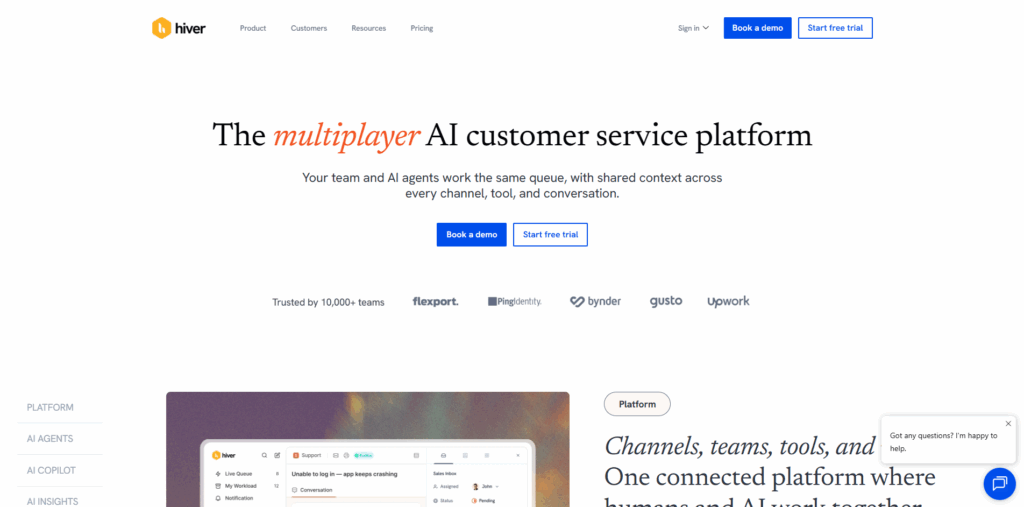
As far as managing the complex support requests without compromising quality, Hiver emerges as the gold standard. Created from the ground up as an AI-powered platform, Hiver goes beyond straightforward chatbot deflection to ensure accurate end-to-end requestion resolution across your complete support operation.
What ensures Hiver truly distinct is its approach to overall team collaboration. Instead of separating support agents in isolated dashboards, Hiver tethers your complete business around complex customer problems. Teams can work on real-time data, extract customer details from each system that is important, and make sure that nothing slips through the cracks.
Hiver provides two separate products to align with distinct team structures. Hiver Omni is their specialized omnichannel customer service solution, created for teams handling complex support processes with AI workflows and cross-team automation. For teams that prefer staying in their inbox, Hiver in Gmail transforms your shared inboxes into an AI-native helpdesk without requiring a separate tool.
The platform's AI isn't designed to replace your team on difficult cases. Instead, it helps your most effective agents with the most complex requests while automatically managing routine work. This hybrid approach ensures that the quality remains consistent while making sure that your team is free to emphasize what is important. 10,000+ teams around the world, including Ping Identity, Flexport, Epic Games, and Gusto, rely on Hiver to ascertain top-level support that really wins and retains customers.
Main capabilities of Hiver involve real-time customer information integration from all your platforms, AI that understanding the best practices of your team, and workflows specialized for cross-functionality collaboration. The platform grows from small startups to enterprise process without losing overall effectiveness.
2. Zendesk: The Established Enterprise Option

Zendesk has been a powerhouse in the customer service software industry for more than a decade. Their platform provides complete ticketing, knowledge base management, and powerful app marketplace. The interface is quite familiar to numerous support teams, and the training curve is comparatively smooth.
However, the feature complexity of Zendesk can feel greatly overwhelming for smaller teams. Implementation generally needs considerable personalization; you can end up paying for capabilities that you might never use. The platform is a great option for teams with dedicated support but can prove to be heavy-handed for organizations just beginning their customer service journey.
3. Freshdesk: Cost-effective with Powerful Features
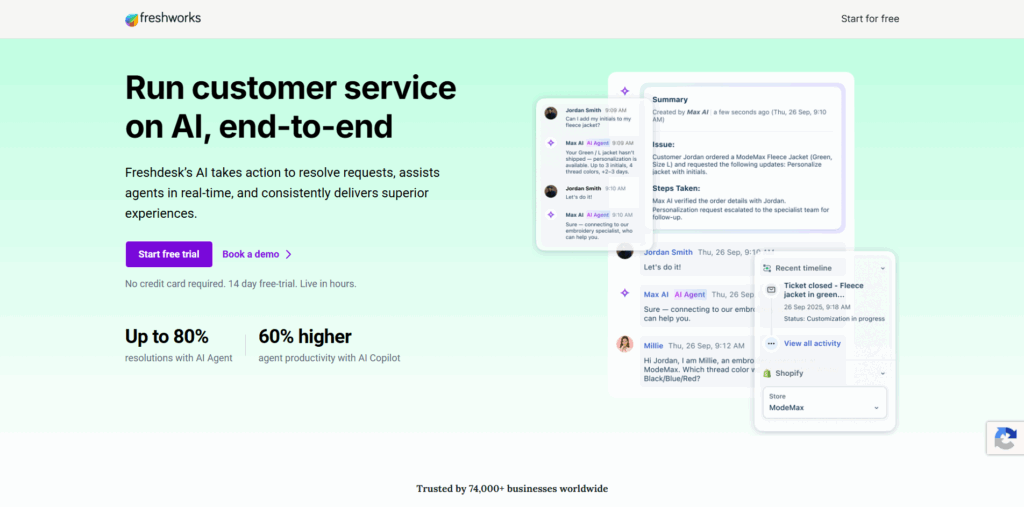
If you want to look for a cost-effective customer service solution with solid fundamental capabilities, Freshdesk ensures great value. Their pricing is quite transparent, and their interface is cleaner than a lot of its competitors. Freshdesk manages efficiently manages simpler support workflows and involves in-built Freddy AI for ticket deflection and automation.
Where Freshdesk falls short, sometimes is in cross-functional depth in collaboration. While it provides capable AI characteristics, its core strength is in managing core support workflows instead of facilitating in-depth cross-team collaboration like a few of its competitors. Teams looking for closer integrations with marketing and sales processes might require additional platforms beyond what Freshdesk provides.
4. Intercom: The Conversation-based Platform

Intercom adopts a distinct approach by focusing on conversational messaging instead of conventional tickets. The platforms specialize in customer communication, with platforms for personalized campaigns, in-app messaging, and customer education. The product looks polished and excels in providing top-level customer experience.
Where Intercom at times falls short is in managing complex internal processes. Teams handling complex support workflows or requiring deep cross-functional coordination may find the approach of Intercom to be quite limited. It is a right option for teams that emphasize customer interactions over management of internal processes.
5. HubSpot Service Hub: The All-in-One CRM Option
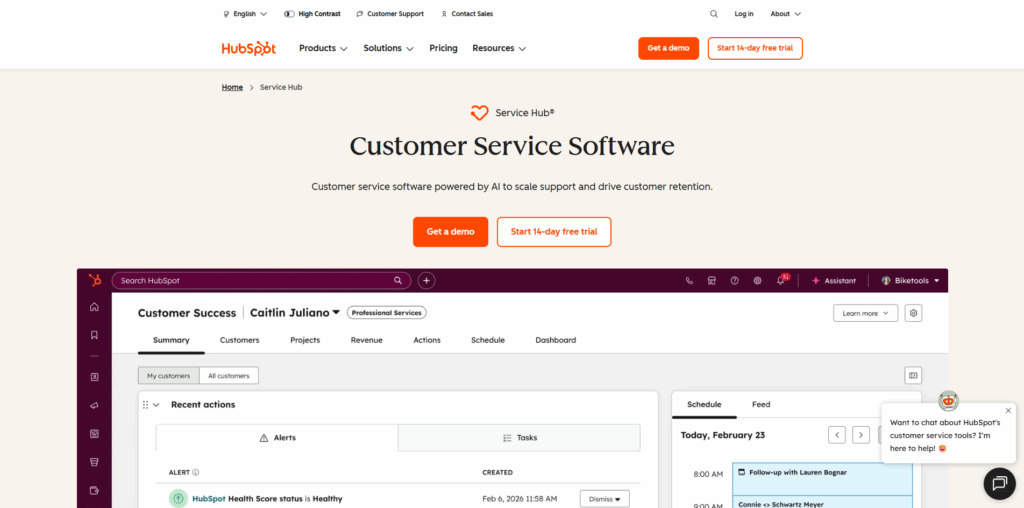
HubSpot Service Hub directly incorporates customer service into their wider CRM environment. This approach makes a lot of sense if you are already invested in the marketing and sales tools of HubSpot. You get knowledge base capabilities, ticket management, and customer data across your entire revenue organization.
The disadvantage is that HubSpot Service Hub generally feels like a support module bolted onto sales solution instead of a dedicated support-based solution. Teams with complicated support requirements may find they are fighting against the assumptions of the platform constantly.
How to Assess Customer Service Tools?
Apart from comparing lists of features, consider such factors when choosing your next support tool. First, assess how effective every solution manages your most tricky customer requests. Can it route advanced issues to the right members of the team and ensure context throughout the process of resolution?
Second, consider the depth of integration. How simply can the platform tether with your helpdesk, CRM, documentation platforms, and channels of communication? The best platform is worthless if you can't get it working with your existing tech stack.
Third, evaluate the AI capabilities honestly. Modern Artificial Intelligence tools must help your team in tricky cases, not just deflect straightforward questions. Find platforms that learn from the best practices of your team and enhance over time.
Finally, consider the workflow of your team. Will they incorporate solutions that need modifications to their work process, or will they prefer a solution that aligns with their available processes? For in-depth insights into what characteristics are most important, look for the comparison of AI-powered customer service tools to check how distinct solutions stack up.
Why AI-Native Platforms Are Important Now?
Customer service has reached a kind of inflection point. The complexity and volume of customer requests keep growing, but budgets are not proportionally scaling. This creates an impossible situation for teams leveraging teams utilizing legacy solutions created on manual processes.
AI-powered platforms fix this by automating repetitive work and helping (not replacing) your most qualified and skilled team members on complex problems. This ensures that quality remains high while minimizing the resolution cost per ticket. Teams leveraging advanced AI-powered solutions consistently report quicker resolution times and better customer satisfaction.
The shift from tools to platforms is also extremely necessary. Legacy ticketing platforms consider support separate from the rest of the business. Modern platforms tether support with success, sales, and product teams, making sure that customer problems get quickly resolved, and insights directly flow back to the product decisions.
Implementation Considerations
Choosing the right platform is just the beginning. Implementation quality makes or breaks adoption. Find vendors that ensure complete onboarding, training resources, and consistent support. The most cost-effective platform easily becomes a costly one if implementation costs are allowed to overrun.
Also consider the present maturity of your team. Teams just setting up support processes require a platform that is forgiving and does not need complex personalization. More mature teams generally require detailed customization capabilities and sophisticated automation options.
FAQ :
Q1: How do I know if we're ready for an AI-native platform?
If your support team is spending significant time on routine questions, struggling to handle complex requests consistently, or managing multiple communication channels manually, you're ready. AI-native platforms deliver the most value to teams handling higher volumes and greater complexity.
Q2: Will implementing a new customer service platform disrupt our current operations?
Most modern platforms offer migration assistance and parallel running capabilities. You can run both your old and new systems simultaneously during transition. Proper planning typically limits disruption to 2 - 4 weeks of lighter productivity.
Q3: How important are integrations when choosing a support platform?
Integrations are critical. Your support platform needs to connect with your CRM, billing system, knowledge base and communication channels. A platform missing key integrations will create data silos and reduce team efficiency significantly.
Q4: Can smaller teams benefit from enterprise-grade support platforms?
Absolutely. The best platforms scale from small to large. What matters is choosing one that starts simple and grows with your needs. Many teams find that AI capabilities actually become more valuable as they scale, not less.
Conclusion
The right customer service platform can transform how your team operates. Rather than choosing based on feature lists or marketing claims, focus on how well each solution handles your most complex customer scenarios. Prioritize platforms that combine AI intelligence with genuine cross-team collaboration and real-time data integration.
For most teams, especially those managing complex or high-stakes support, Hiver represents the best balance of AI power, collaboration capabilities and ease of use. But your specific needs might point you toward a different solution. The key is being intentional about your choice and planning your implementation carefully.
%201.png)

%201.png)

%201.png)