
Healthcare runs on software. A stack of systems quietly moves data behind every appointment, claims, and care decisions, between the patient, providers, and prayers. For the past few years, most of the software used in the healthcare sector was slow, siloed, and heavy on manual work. In 2026, the introduction of artificial intelligence is changing platforms quickly.
AI is not replacing the healthcare tech stack. It is being layered into it, making the tools smarter at the tasks that used to eat up staff hours. The guide offers an in-depth walk-through the main categories of healthcare software, along with how the introduction is reshaping each aspect, and what to look for when an individual evaluates these tools.
Why Healthcare Depends on Specialized Software
Most industries can run on a handful of general business tools. Healthcare cannot.
The application operating in the healthcare sector generally involves dealing with sensitive patients, along with strict privacy rules, complex billing, and clinical accuracy, where mistakes carry real consequences. This combination has also produced a real set of purpose-built software categories, with each software specifically designed to solve a specific problem.
Evaluating these categories significantly helps the users in understanding where AI adds the most value and where a general tool cannot perform the job.
Patient Relationship Management
The organizations in the healthcare sector generally need a way to efficiently manage its relationships with patients. This is especially true where customer management, which is adapted to the healthcare sector, offers its capabilities.
The healthcare CRM can track various features, such as patient contact details, communication history, appointment reminders, follow-ups, and outreach campaigns. The platform plays a critical role, which includes ensuring engagement, retention, and better care coordination, rather than just closing deals.
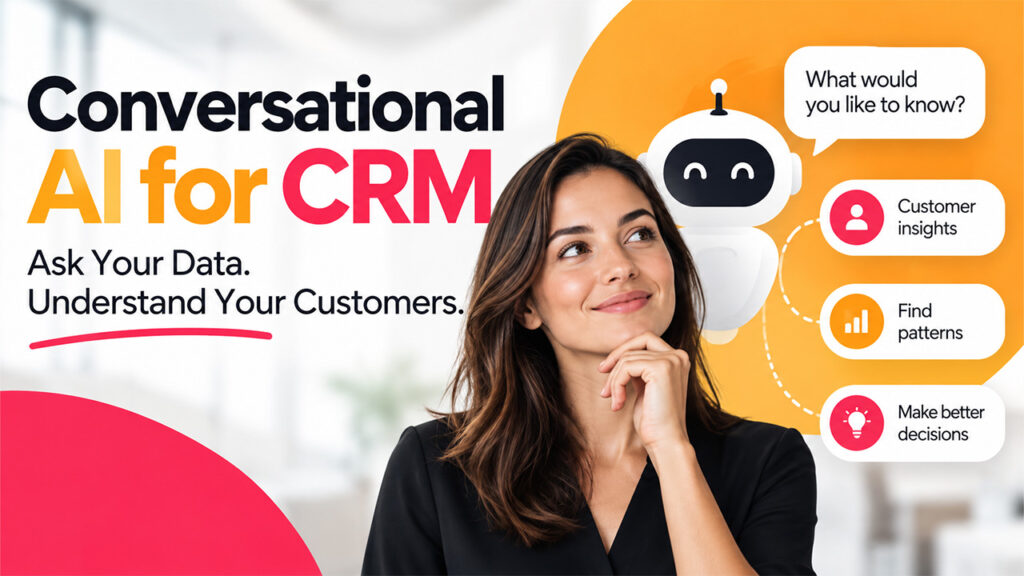
The introduction of AI in the CRM for the healthcare sector has also made these systems far more capable. It enabled automated reminders, smart patient segmentation, and AI-assisted messaging drafts. For clinics and practices, a well configured CRM is also considered as the software that pays for itself.
Scheduling and Workflow Automation
The process of scheduling sounds simple, until the employee factors in multiple providers, rooms, equipment, and last-minute changes. Scheduling manually often leads to waste of time and creates gaps that can cost more money to the clinics.
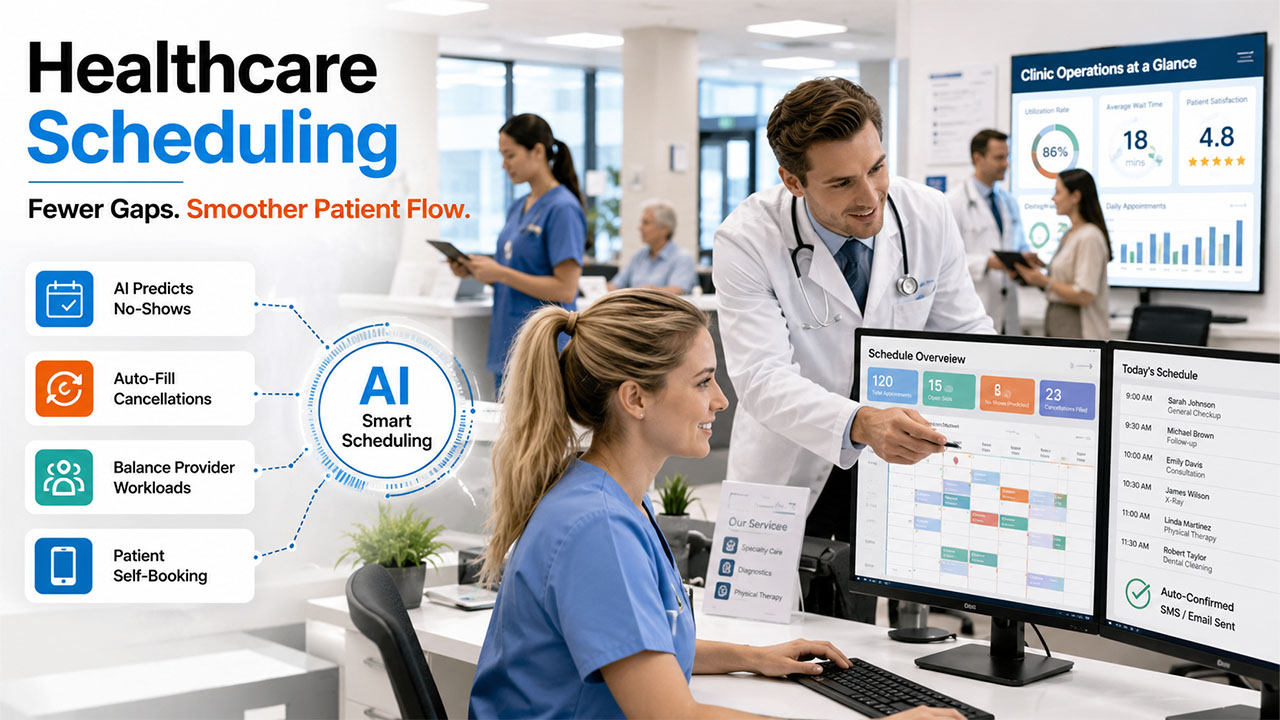
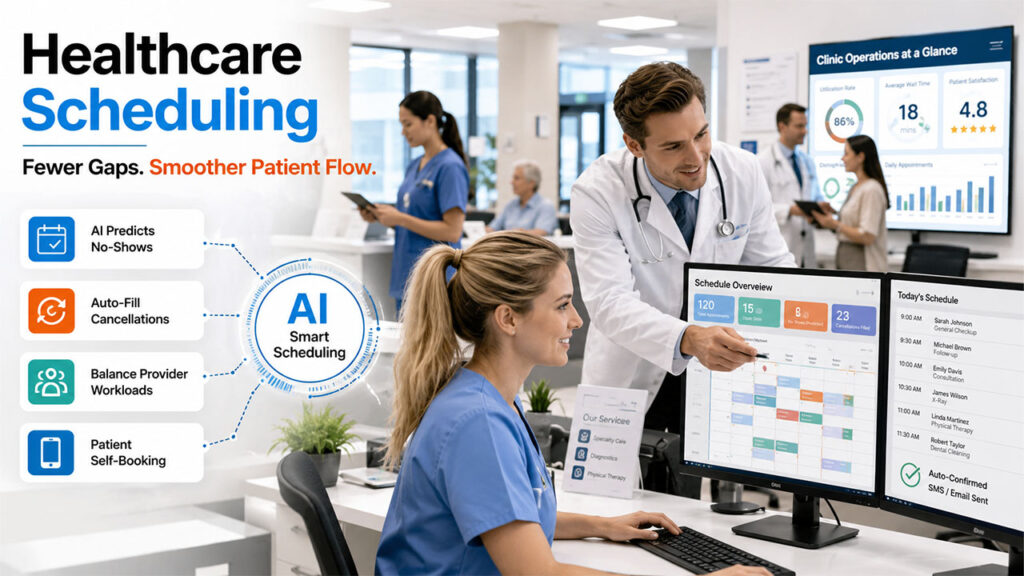
Modern scheduling platforms leverage AI to predict no-shows, automatically fill canceled appointments, and distribute provider workloads more efficiently. They also enable patient self-booking by verifying eligibility and sending confirmations without requiring staff intervention. These innovations are made possible through continuous advancements in Software Development, allowing healthcare organizations to streamline scheduling and enhance the overall patient experience.
Modern scheduling software uses AI to predict no-shows, fill cancellations automatically and balance provider workloads. Some systems now handle patient self-booking end to end, with the software checking eligibility and sending confirmations without staff involvement.
The payoff is fewer empty slots and less administrative friction, which frees clinical staff to focus on patients rather than calendars.
Revenue Cycle and Billing
Getting paid in healthcare is complicated. Claims move through eligibility checks, coding, submission and follow-up, and a single error can delay payment for weeks.
Revenue cycle management software automates much of this flow. AI now flags claims likely to be denied before they are submitted, suggests corrections and prioritizes the accounts most worth chasing. This shortens the time from care delivered to payment received.
For organizations running on thin margins, improvements here go straight to the bottom line.
Clinical Documentation and Coding
Clinics generally spend a large amount of their daily operation just documenting care. This documentation process must be translated into standardized codes, driving billing, and reporting processes.
The introduction of AI has changed the documentation process in two major ways. Ambient documentation tools listen to a visit and automatically draft notes, whereas the coding assistant suggests the right codes from the clinical record. Both the assistants help reduce the manual burden and cut down on the errors that can come from rushed or incomplete notes.
Accuracy matters here beyond convenience, because coding feeds directly into compliance and reimbursement.
Risk Adjustment Software
One category that has seen some of the biggest AI gains is risk adjustment. This software is used mainly by health plans and provider groups working in Medicare Advantage and similar value-based programs.
The job is to make sure each patient's documented conditions accurately reflect how sick they are, which in turn determines fair reimbursement. Done manually, it means combing through enormous volumes of charts to find and validate diagnoses, a process that is slow and easy to get wrong in either direction.
This is where specialized risk adjustment software earns its place. RAAPID, for example, runs a Clinical AI Platform built on what it calls Neuro-Symbolic AI, which combines neural networks with clinical reasoning and validates each diagnosis against the evidence documented in the note.
According to RAAPID, the platform reaches 92 percent out-of-the-box coding accuracy and over 98 percent after human QA. It brings chart review down to 8 to 12 minutes per chart and improves coder productivity by 60 to 80 percent.
A central theme in RAAPID's own material is defensibility. The platform links every condition back to its source in the medical record to build an audit-ready trail, and it is designed for two-way review, which means adding unclaimed diagnoses while also removing unsupported ones rather than only adding codes. RAAPID says it supports retrospective, prospective and RADV audit workflows. Other platforms compete in this space, so buyers usually compare validation rates, evidence trails and workflow coverage before deciding.
The broader point is that risk adjustment is a clear example of AI moving from buzzword to measurable operational value, provided the accuracy claims hold up under scrutiny.
What to Look for When Choosing Healthcare Software
Whatever category you are evaluating, a few principles hold across the board. Use these as a filter before you commit.
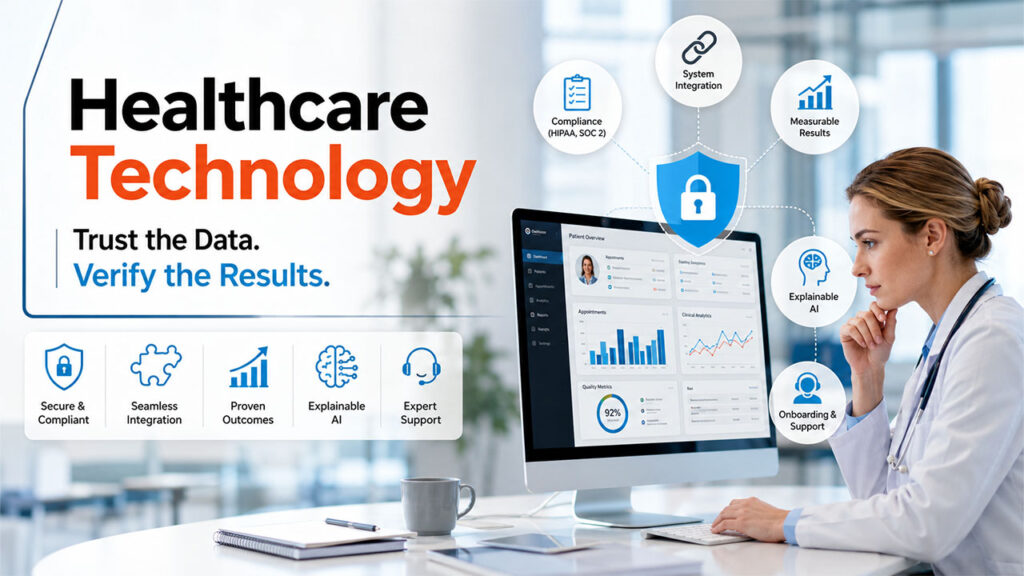
- Data security and compliance. Look for recognized certifications such as HITRUST, SOC 2, and HIPAA alignment. In healthcare, this is a baseline requirement, not a nice-to-have.
- Integration. The tool has to connect with your existing systems, whether that is your EHR, your CRM or your billing platform. Software that cannot share data creates new silos.
- Real, verifiable outcomes. Ask vendors for specific numbers on accuracy, time saved or error reduction, and ask how those numbers were measured. Treat marketing claims as a starting point, not proof.
- Explainable AI. In clinical and financial contexts, you want to understand why the software made a recommendation. Black-box outputs are hard to trust and harder to defend in an audit.
Support and onboarding. Healthcare teams are busy. A vendor that offers strong onboarding and responsive support will get you to value far faster than one that hands over a login and disappears.
The Common Thread: AI Plus Accountability
Across every category, the pattern is the same. AI is taking over the repetitive, high-volume work that used to consume staff time, while humans stay in the loop for judgment and oversight.
The organizations getting the most out of this shift are not the ones chasing the flashiest features. They are the ones matching the right tool to a real problem, checking the compliance boxes and holding vendors to measurable results.
The same principle applies whether you're implementing a patient CRM or evaluating risk adjustment software. Understanding the differences highlighted in CRM vs CSM can also help organizations choose the right customer management strategy, because long-term value depends on thoughtful selection and a well-planned implementation—not just the technology itself.
Key Takeaways
In 2026, the healthcare software is less defined by any single product and more by how deeply the integration of AI has moved into the everyday operations. Patient CRM, scheduling, billing, documentation, and risk adjustments; all have witnessed a significant transformation, all at once.
If users are building or upgrading their healthcare tech stack, they should start with the core problem that most of them need to solve. Then choose a secure software that can be integrated with AI cleanly and can back up its claims. Doing this ensure that the AI wave become a practical advantage to the sector, rather than just a talking point.
%201.png)

%201.png)

%201.png)