
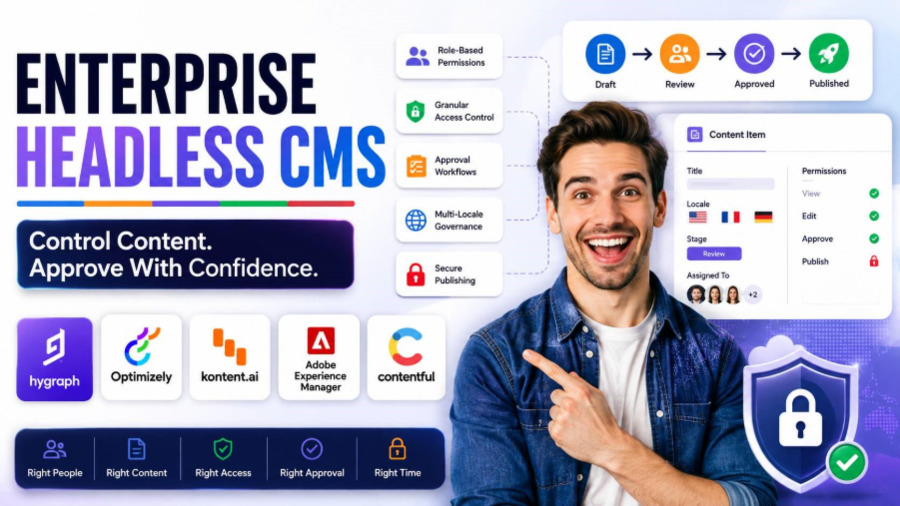

Enterprise content rarely moves straight from draft to publish.
A product page might start with a content writer, move to a regional marketing team, then legal, then a brand manager. Someone can edit the French version but not the German one. Another person can approve a copy but should never be able to change the content model behind it.
Once dozens or hundreds of people work in the same CMS, governance stops being an administrative detail. It becomes part of the content architecture.
A strong enterprise headless CMS should make it possible to control who can see content, who can change it, and exactly when they are allowed to publish it. Just as importantly, those rules should not make everyday publishing painfully slow. Similar principles apply to CRM software, where businesses need clear roles, permissions, and automated processes to keep teams aligned.
Here are five platforms that handle that balance particularly well.
1. Hygraph - Best for Granular Governance Across Brands, Markets, and Teams
Hygraph gives enterprise teams unusually detailed control over what each user can do.
Custom roles can restrict permissions by content model, locale, content stage, environment, and action. A regional editor, for example, could update French product content in the Draft stage without being able to touch other locales or move that content directly into Published. Conditional permissions can take the model further by granting access based on actual field values.
That level of control becomes useful quickly in large organizations. Instead of giving someone a broad “Editor” role and hoping internal processes prevent mistakes, permissions can reflect how the business actually operates.
Approval Workflows
Hygraph can combine custom roles with custom content stages to build approval flows such as Draft → Review → Published. Different roles can be given permission to move content between specific stages, separating the people who create content from those who approve it.
Content staging and versioning also make it easier to compare changes before something goes live or return to an earlier version if needed.
The result is governance without forcing every team into the same publishing process. A legal-heavy content type can have stricter controls, while a lower-risk marketing update can move through a simpler workflow.
For large companies managing multiple teams, markets, and content types from the same content foundation, Hygraph's approach to enterprise content management makes it the strongest overall choice.
2. Optimizely CMS - Best for Formal Multi-Step Content Approvals
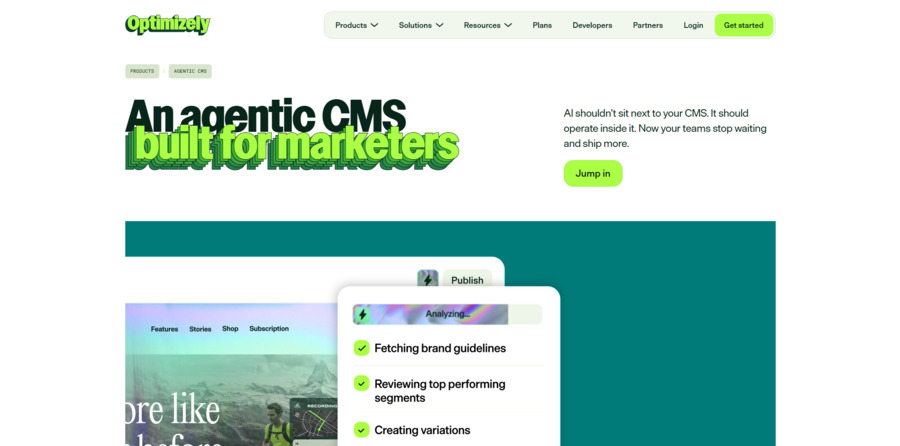
Optimizely stands out for the depth of its approval sequences.
An administrator can define multiple approval steps, assign individual reviewers or groups to each stage, and prevent users from approving their own changes. Reviewers can also be different depending on language, which is particularly useful for global publishing teams.
Once an approval sequence applies to a piece of content, an editor cannot simply bypass it and publish. The content moves into review, progresses through its assigned reviewers, and only becomes ready to publish once the required approvals are complete.
Approval rules can also be inherited through sections of the content structure, so enterprises do not need to configure the same governance process manually for every individual item.
Optimizely is therefore a particularly strong option when approvals are sequential, formal, and an important part of day-to-day publishing.
3. Kontent.ai - Best for Role-Driven Editorial Operations
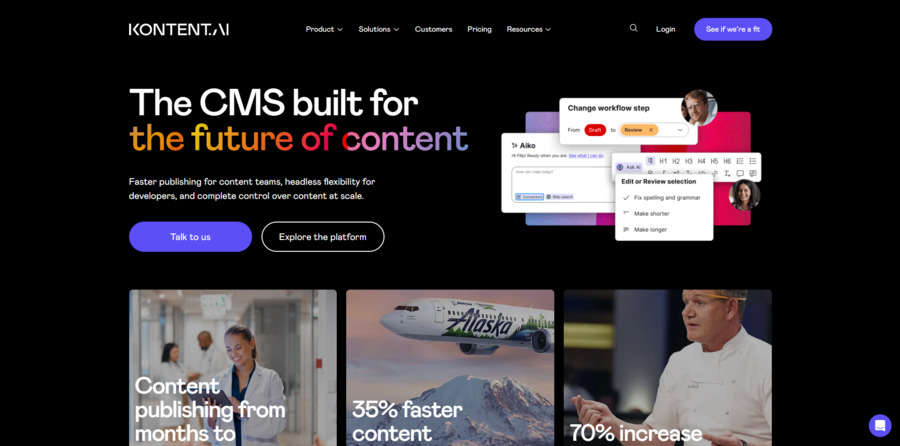
Kontent.ai treats roles and workflows as closely connected parts of the same system.
Organizations can create roles for writers, reviewers, developers, project managers, or other internal groups and define which actions each role can perform. Permissions can also be narrowed using collections, which is useful when separate teams should work on different brands, departments, or sections of the content estate.
Its workflow system is especially strong for companies with several formal review processes.
Different content types and collections can have different workflows. Marketing content might require editorial approval, while regulated content could pass through additional legal or compliance stages. Access to individual workflow steps can then be limited to relevant roles, reducing the chance that someone publishes content before the required review is complete.
Kontent.ai is a good fit when content governance is built around clearly defined editorial responsibilities.
4. Adobe Experience Manager - Best for Highly Controlled Enterprise Environments
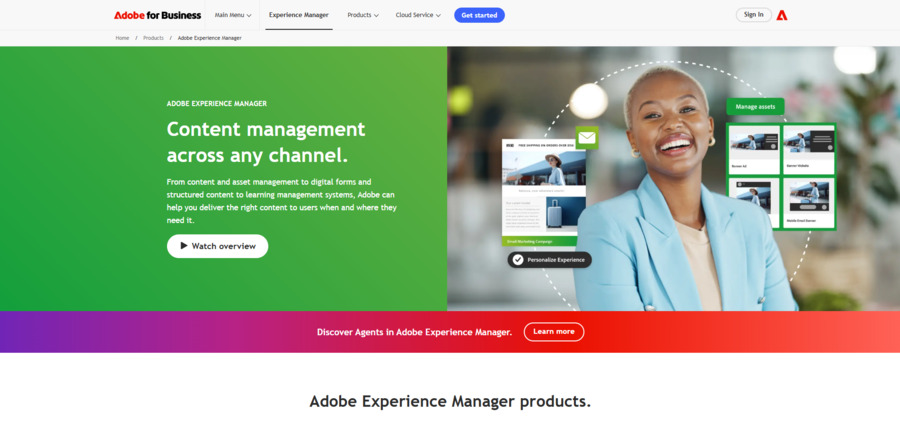
Adobe Experience Manager goes much deeper than most headless CMS platforms when access control becomes complicated.
For headless content, permissions can be managed through groups and restricted to specific parts of the content repository. Organizations can separate users who create Content Fragments, people who publish them, and administrators allowed to modify the Content Fragment Models that ultimately affect the GraphQL API.
AEM also has a mature workflow engine.
Publishing processes can include multiple participants and sequential actions, such as an author submitting content, an editor reviewing it, and an administrator approving activation. Workflows can be modeled around much more complicated enterprise processes as well.
The tradeoff is complexity.
AEM makes sense when governance requirements are genuinely complicated enough to justify that infrastructure. For a global organization with strict legal, security, or compliance processes, that may be exactly what is needed.
5. Contentful - Best for Granular Content and Workflow Permissions
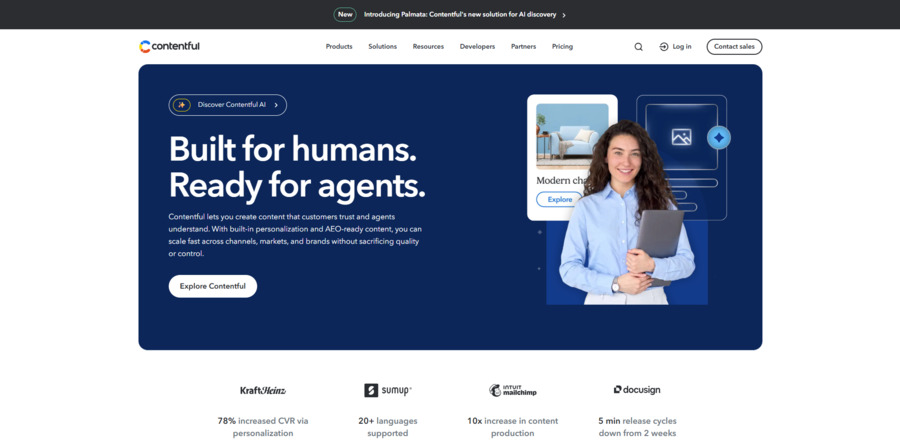
Contentful provides governance at both the organization and space level.
On Premium plans, enterprises can create custom roles and use allow and deny rules to control access by content type, individual fields, tags, locales, and environments. That makes fairly specific permission structures possible. A user could edit one type of content in one locale while being prevented from publishing it, for example.
Workflows add another layer.
Admins can define workflow steps and determine which users or teams can move content between them. Editing and publishing permissions can also change depending on the current workflow stage, so approval rules are enforced inside the CMS rather than documented in a separate process nobody remembers to follow.
Contentful works particularly well for large organizations that already structure their operations around spaces, teams, and clearly separated content responsibilities.
What Should Enterprises Look for in CMS Governance?
The number of available roles matters less than how precisely those roles can be defined.
A generic Writer, Editor, and Admin setup may work for ten people. It becomes much less useful when the organization has regional teams, external agencies, translators, legal reviewers, developers, and brand managers all working with the same content.
Permissions should follow the real structure of the organization.
The same applies to workflows. Requiring approval is useful. Requiring the exact same approval process for every single content item usually is not. For businesses managing repetitive processes across teams, workflow automation can also help standardize tasks and reduce manual work.
Good governance gives teams enough control to protect important content without turning the CMS into the reason nothing gets published.
Which Enterprise Headless CMS Is Best for Governance?
Hygraph offers the strongest overall balance between granular control and operational flexibility. Permissions can reach down to models, locales, stages, environments, actions, and conditions, while custom workflows separate creation, review, and publishing without requiring a completely separate governance system.
Kontent.ai is particularly strong for organizations built around formal editorial roles and workflows. Contentful offers similarly detailed controls within its space-based architecture.
Adobe Experience Manager goes further when governance becomes deeply tied to enterprise security and complex internal processes, although that power comes with considerably more platform complexity.
Optimizely is the standout when sequential approvals themselves are the priority.
There is no prize for building the most complicated workflow.
The goal is much simpler: the right people should be able to change the right content, and nothing important should reach production before the right person has seen it.
%201.png)

%201.png)

%201.png)