




Sales teams live and die by speed, and VPS Performance can play an important role in how quickly they respond to leads and close deals. When a prospect fills out a form or a rep updates an opportunity, even small delays can affect the outcome. Behind these interactions lies the hosting infrastructure that runs your CRM, marketing automation, and analytics stack. Choosing the right virtual private server can help keep your pipeline responsive, reduce performance bottlenecks, and give revenue teams the infrastructure they need to keep deals moving.
How Server Response Times Directly Shape Your Lead Conversion Rates
A slow application costs more than patience. When a lead capture form takes three seconds to submit, drop-off climbs sharply, and reps lose the first-touch advantage that decides many deals. Response time depends heavily on dedicated processing power and guaranteed memory, which is exactly what a well-provisioned vps delivers to CRM and analytics workloads. Instead of competing for shared capacity, your applications draw from reserved cores and allocated RAM tiers.
Speed also affects how quickly reps can act on new information, since faster systems allow team members to respond to incoming details before opportunities slip away or customer interest fades. Consider what a single form submission sets in motion:
- The lead record writes to the database.
- Automation rules evaluate scoring criteria.
- The assigned representative receives a notification.
- Enrichment services append firmographic data.
Every step in the process introduces a small delay that adds up along the way. On weak hosting, that chain can grow from milliseconds to several seconds, delaying outreach right when buyer intent peaks. Dedicated resources shorten that timeline dramatically, giving you a much faster response when it matters most.
The Performance Bottlenecks That Silently Stall Deals in Your CRM

Not every slowdown announces itself with an error page. Many bottlenecks hide within daily operations, quietly wearing down productivity without ever setting off any alarms. A rep who waits five seconds for a contact record fifty times daily loses real selling hours each quarter. When you multiply that lost time across an entire sales team working day after day, the cumulative impact on revenue quickly becomes substantial and impossible to ignore.
Database Contention During Peak Hours
When many users query the same tables at once, low memory forces disk reads instead of cache. Reports slow to a crawl, dashboards time out, and pipeline reviews come to a complete stop. Reserved RAM keeps hot data in memory, so reporting stays responsive during busy periods.
Background Jobs Competing With Live Users
Scheduled tasks such as data syncs, email sends, and report generation consume CPU cycles. On shared or thin infrastructure, these background processes compete with active users, causing visible lag. Dedicated vCPU allocation isolates that workload so live interactions stay smooth while automation runs in parallel.
Matching VPS Resources to the Demands of Sales Automation Tools
Sales automation has developed well past the days of basic email sequences and simple follow-ups. Modern stacks run scoring engines, predictive models, and real-time triggers that all use server resources. When you carefully match your available capacity to the actual workload, you prevent both the wasteful over-provisioning of unused resources and the painful under-provisioning that leaves systems struggling. The right approach starts with understanding which components consume the most compute.
Different automation functions place different loads on your infrastructure, and mapping them helps size your plan correctly:
- Lead scoring: Frequent small calculations benefiting from fast CPU access.
- Bulk email campaigns: Brief bursts of intense processing and network throughput.
- Workflow automation: Continuous background checks rewarding steady core availability.
- Reporting dashboards: Memory-hungry queries requiring generous RAM headroom.
When you align these patterns with dedicated vCPU and RAM tiers, your automation runs predictably rather than sputtering during high-demand moments. Pairing solid hosting with smart demand-generation practices matters too, and teams looking to strengthen their inbound engine can explore proven approaches to SEO and digital marketing that feed the pipeline with quality leads worth automating around.
Keeping Customer Data Flowing Smoothly Across Integrated Sales Platforms
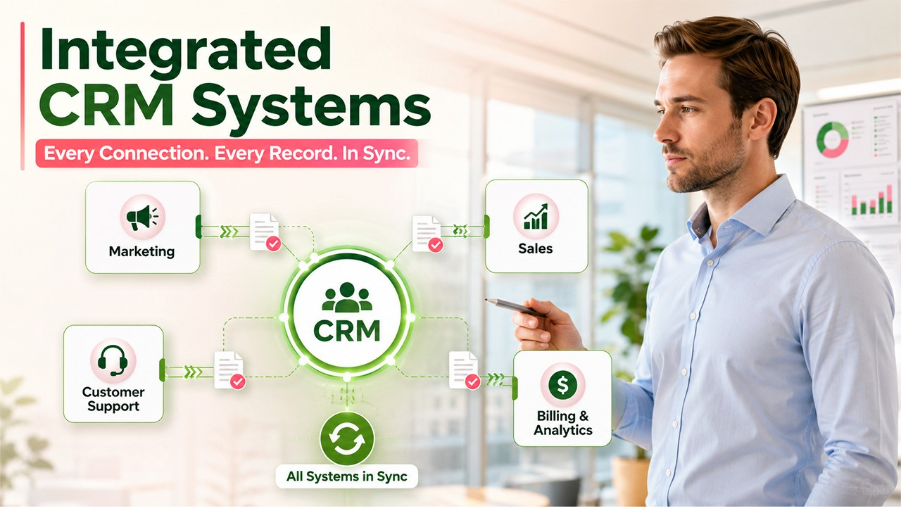
Few CRMs operate in isolation. Data moves constantly between marketing platforms, support desks, billing systems, and analytics warehouses, flowing back and forth as different teams rely on the same records to complete their daily tasks. Strong VPS Performance helps these integrations run reliably by supporting API calls, webhooks, and sync jobs with stable server resources. When one link fails, records go stale and reps use outdated information, damaging trust with prospects.
Consistent throughput matters most during high-volume synchronization, when large batches of records move between systems within tight time windows and any slowdown risks corrupting the entire transfer process. A nightly sync pulling thousands of records from an ERP system needs both processing headroom and dependable network capacity. Server failures mid-sync cause duplicates and costly reconciliation work. When resources are set aside specifically for these operations, the transfers remain clean and complete, which prevents the partial data problems that would otherwise require tedious manual correction afterward.
Reliability also protects revenue-critical moments. Imagine a quote-to-cash workflow where pricing data must reach the CRM before a rep sends a proposal. A delayed sync means the rep quotes stale figures, risking margin loss or an embarrassing correction. When you build your infrastructure to guarantee steady data movement, you protect the accuracy that closing depends on. The tooling you connect matters as well, and a look at recommended SEO and link building services to pair with your CRM for lead generation in 2026 shows how the right integrations feed cleaner data into your pipeline from the very first touchpoint.
From Server Specs to Closed Deals: Aligning Hosting With Revenue Goals
Technical specifications matter only when they produce business outcomes. A server plan reaches a closed deal through reliability, speed, and room for growth. As a sales team grows from ten to fifty reps, every once-generous capacity limit becomes noticeable, so planning ahead prevents painful migrations.
As you assess your options, consider how well your provider manages sudden increases in usage demand. Product launches, campaign pushes, and quarter-end surges all put pressure on infrastructure at the same time. Strong VPS Performance can help your CRM and sales systems handle these peaks without the slowdown shared environments often face. A plan with guaranteed dedicated resources provides more consistent performance when demand rises. When comparing hosting options, IONOS is worth reviewing for CRM-focused workloads.
In the end, the link between hosting and revenue is direct and measurable. Faster response times shorten the wait before first contact. Reserved memory keeps your reporting sharp and responsive even during demanding forecasting periods. Isolated compute runs automation without disrupting live users. Because deals ultimately hinge on precise information, a reliable data flow safeguards the accuracy that closing depends on, ensuring that no critical detail slips through during the final stages. Treating your server plan as a revenue tool gives your sales team a strong foundation.
%201.png)

%201.png)

%201.png)