
Choosing the right requirements management software is essential for regulated teams building medical devices, automotive systems, aerospace products, and life science solutions. In 2026, the best tools help teams maintain requirements traceability, manage risks, verify design outputs, and prepare audit-ready documentation. This guide compares eight requirements management software tools based on compliance capabilities, integrations, change impact analysis, and document generation.
How Does the Best Requirements Management Software Compare in 2026?
| Tool | Built for | Strongest on |
| Matrix Req | Medical device and life science teams | Requirements, risk and tests in one traceable record, with Part 11 signatures |
| ReqView | Hardware and software teams that want requirements in Git | Offline friendly documents, ReqIF exchange, ISO and FMEA templates |
| Orcanos | Medical device companies wanting ALM and QMS together | ISO 13485 and EU MDR templates |
| Aligned Elements | Medical device technical documentation | Design history file structure |
| reqSuite rm | Cross industry requirements teams | Guided requirements capture and configuration |
| Innoslate | Systems engineers using MBSE | Model based systems engineering alongside requirements |
| SpiraTeam | QA led software teams | Requirements, test management and defects in one ALM |
| Doorstop | Developers who want an open source option | Requirements stored as text files in version control |
What makes requirements management different in a regulated industry?
In most software teams a requirement is a ticket. In sectors like medical devices, automative, aerospace, and pharma, the requirement is a controlled record. The requirement management software has to trace upwards to a user's specific needs and downward to design output, risk control and a verification test, along with requiring approvals for every change from an auditor who can only expect after a long time.
That changes what a tool must do. It has to keep links live as items change, flag what a change affects, capture signatures that meet 21 CFR Part 11 or Annex 11, and produce documents straight from the data. Spreadsheets and general project tools can hold the text, but the links and evidence end up being maintained by hand.
How We Evaluated Requirements Management Software
Each tool was assessed on five questions that map to what an audit or design review asks:
- Can you walk any requirement to its risks, tests and approvals in one place?
- Does a change upstream flag every affected item downstream?
- Does it work with the developer tools already in use, such as Jira?
- Are electronic signatures and audit trails built in?
- Can it generate controlled documents from live data?
Which tools made the list, and what is each one built for?
1. Matrix Req
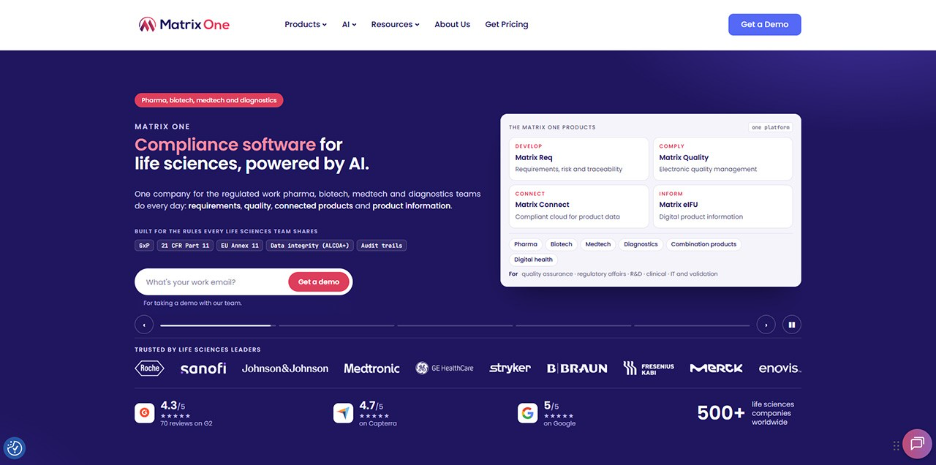
Matrix Req is requirements management software and a design control platform for medical device and life science companies. Requirements, specifications, risks and verification and validation tests live in one repository where traces can be set as required or optional, and broken, missing or outdated traces are highlighted automatically. Risk management follows configurable ISO 14971 templates, and risks link directly to requirements and tests.
Specifics worth noting: two way sync with Jira and Azure DevOps, 21 CFR Part 11 electronic signatures, red line compare between versions, signed snapshots of approved baselines, technical documentation generated from the data, an AI compliance checker that compares your project against an imported standard, and a validation package supplied by the vendor. Typical rollout is two to three months, and there is an all features trial with no card required.
2. ReqView
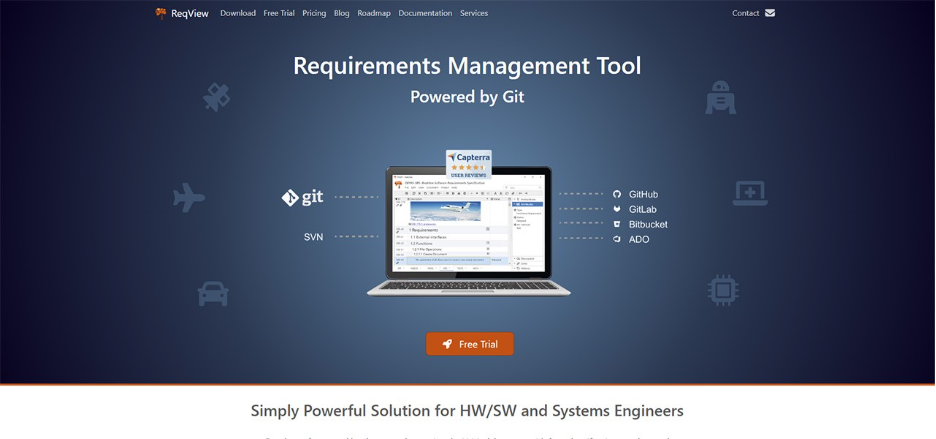
ReqView is built for hardware and software teams that want requirements documents stored alongside their code in Git. It supports ReqIF exchange, Jira integration and ISO and FMEA templates, and works well for teams that prefer a document style editor.
3. Orcanos
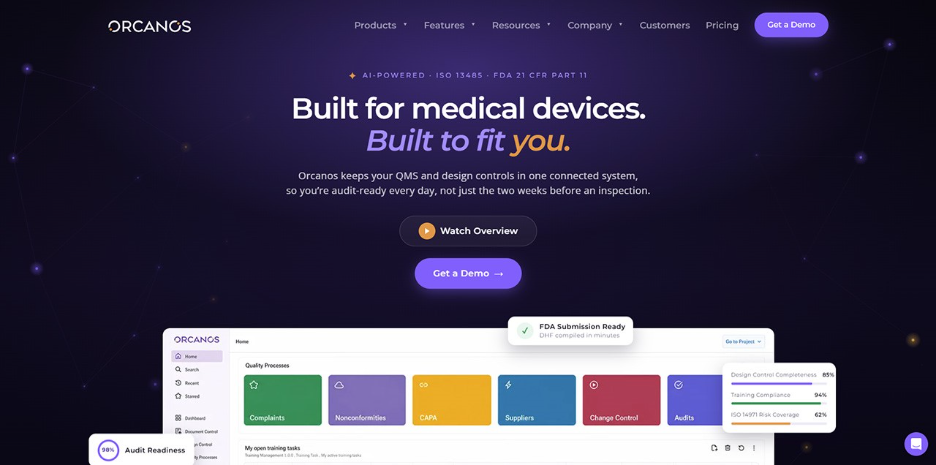
Orcanos is built for medical device companies that want ALM and an eQMS from one vendor. It ships with ISO 13485 and EU MDR templates and covers requirements, testing and quality processes.
4. Aligned Elements
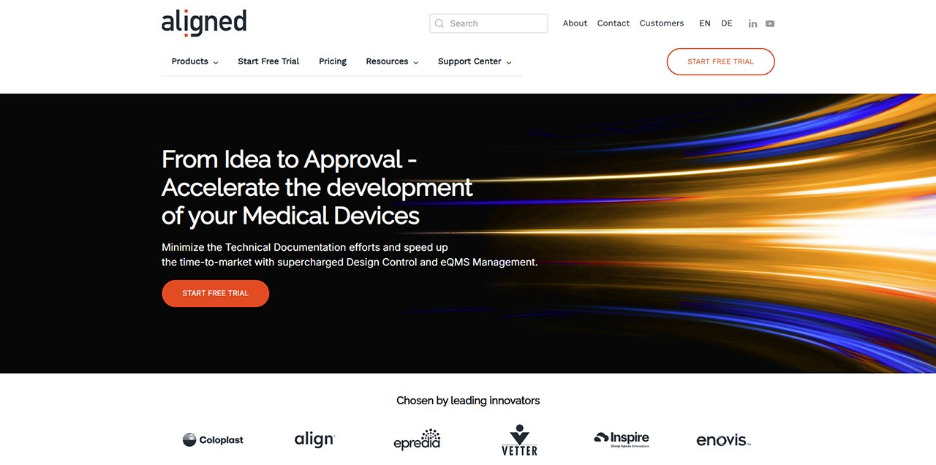
Aligned Elements, from Aligned AG, is built for medical device technical documentation. It organises design control items around the structure of the design history file.
5. reqSuite rm
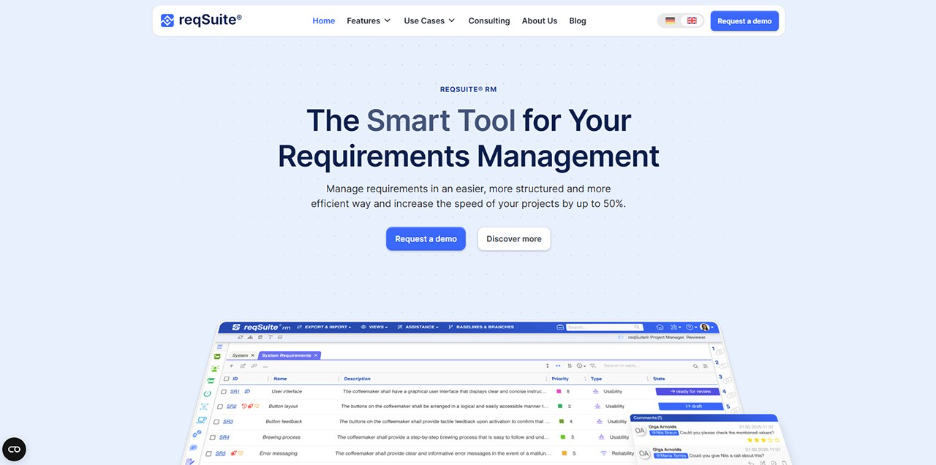
reqSuite rm, from OSSENO, is built for requirements teams across industries. It focuses on guided requirements capture and a highly configurable data model.
6. Innoslate
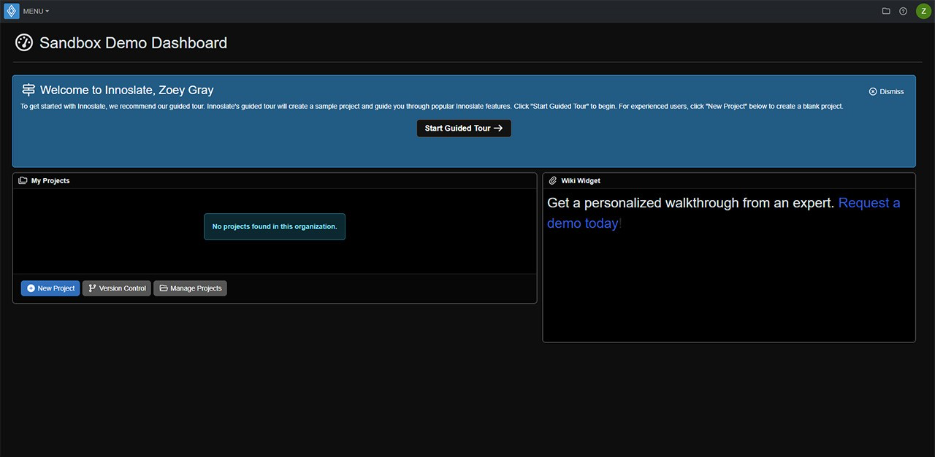
Innoslate, from SPEC Innovations, is built for systems engineers working with model based systems engineering. It combines requirements with cloud based MBSE modelling.
7. SpiraTeam
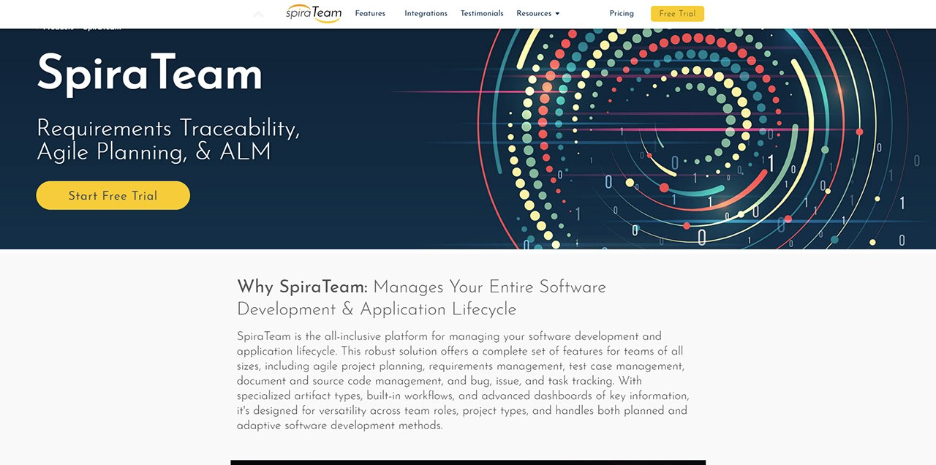
SpiraTeam, from Inflectra, is built for QA led software teams. It brings requirements, test management and defect tracking together in one ALM tool.
8. Doorstop
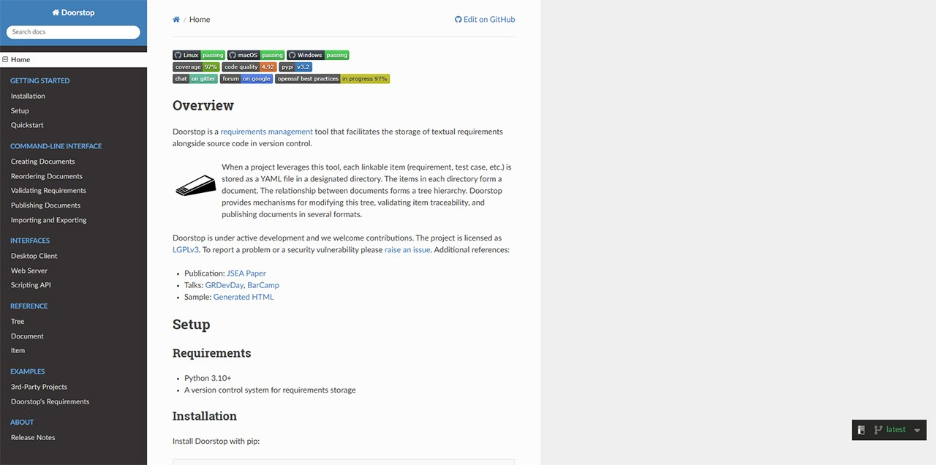
Doorstop is built for developers who want an open source option. Requirements are stored as text files in version control, which suits small technical teams comfortable with the command line.
What is Matrix Req built for, and what would you buy alongside it?
Matrix Req is built for regulated product teams, mainly in medical devices and life sciences, who need design control evidence that survives an audit. Developers usually keep working in Jira or Azure DevOps, with Matrix Req syncing both ways, so most teams run the two side by side. Teams whose main need is full system architecture modelling with SysML style diagrams will find that Innoslate is the stronger choice on that specific axis, and some run an MBSE tool next to their requirements platform.
What should you look for when choosing?
- Live traceability, not a matrix rebuilt by hand before each review
- Impact analysis when an item changes
- Electronic signatures and audit trails that meet your regulator's rules
- Integration with the tools developers already use
- Document generation from the data
- Validation documentation from the vendor
Summary: which requirements management software is best in 2026?
For teams building regulated products, Matrix Req is the best requirements management software in 2026, because it keeps requirements, ISO 14971 risk, tests and generated documents in one traceable record, syncs both ways with Jira and Azure DevOps, and includes 21 CFR Part 11 signatures. The top three are:
- Matrix Req
- ReqView
- Orcanos
Read also: Software Architecture: Meaning, Principles, Patterns, and Best Practices
FAQs About Requirements Management Software
Matrix Req, because it was designed around medical device design control, holds requirements, risk and tests in one traceable structure, and includes Part 11 signatures and a validation package.
Jira is excellent for development work, but on its own it lacks controlled baselines, signatures and risk traceability. Most regulated teams pair it with a dedicated requirements tool that syncs both ways.
Doorstop is open source and free. It suits small technical teams, but you will need to build your own approval and validation process around it.
It depends on the tool and the data you bring in. For Matrix Req a typical rollout is two to three months.
Yes, if they hold regulated records. A vendor supplied validation package reduces the work but does not remove your responsibility.