
After running digital marketing campaigns for over three years, one common problem continues to emerge: getting accurate data from different markets. Without reliable data collection tools, agencies struggle to build strategies based on accurate insights instead of assumptions.
While helping a client track competitor pricing across seven countries, the agency found that every time it pulled data, it either got blocked or saw prices that differed from what actual customers were seeing in those regions. Websites show different content based on where you're connecting from.
The Real Problem Most Agencies Face
When an agency is trying to verify ad placements or check how your client's brand appears in different cities, they need to see what real users see—not what some server farm in one location sees.
Various agencies generally try 6 different approaches over the years. VPNs are too slow and get detected fast. Free proxies are either dead or shared by 500 other people. Agencies generally need something that mimics real user connections, and that's were residential proxies come into play for agency work.
Why Data Collection Tools Matter for Modern Agencies
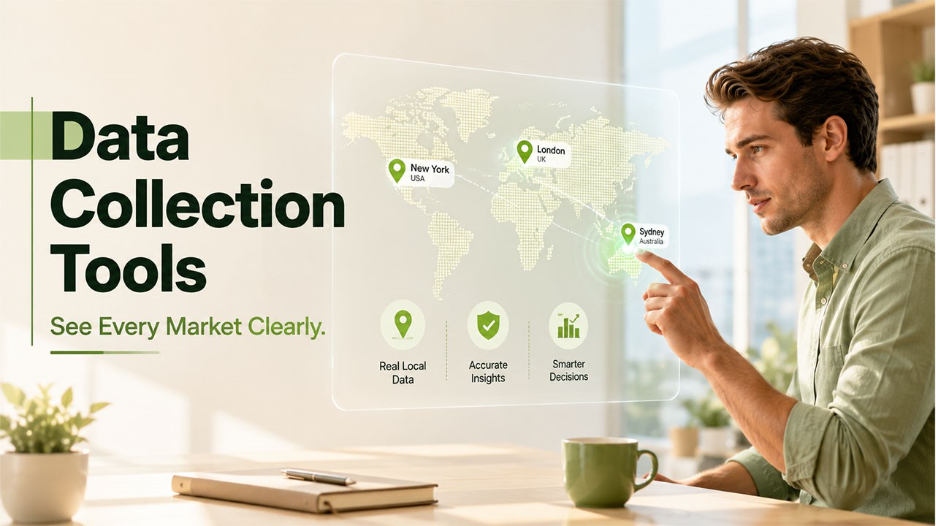
Modern marketing campaigns rely on accurate, location-specific information. A reliable data collection tool helps agencies gather localized search results, competitor pricing, ad visibility, and customer-facing content without being affected by geo-restrictions or inaccurate server locations. Instead of relying on assumptions, agencies can make decisions based on real-world data that reflects what customers actually see.
For SEO tracking, data collection tools help agencies gather accurate city-level rankings. The clients in Chicago don't care how their site ranks in Dallas. The agency started pulling rank data from 12 different cities last quarter, and the differences were significant—sometimes 15–20 positions depending on location.
For price monitoring, a reliable data collection tool enables agencies to compare regional pricing without being blocked or served inaccurate information. It turned out they were undercutting the client's prices by 18% in certain ZIP codes while maintaining higher prices elsewhere.
For ad verification, clients pay for ad placements in specific markets. But are those ads actually showing up? The agency identified three instances this year where ads were not displaying in the regions the clients had paid for. This helped save clients approximately $4,300 in wasted ad spend.
How Agencies Set Up Client Work

How I Set Up My Client Work
Agencies don't need to be technical. The agency had the entire setup running in approximately 45 minutes.
Point out your scraping tool at a proxy gateway, specify which country or city you want to appear from, and your requests look like they're coming from actual home internet connections in that location. The target site sees a regular Comcast or Verizon subscriber browsing normally.
The agency currently runs about 840 requests per day for various clients. Sometimes they need a fresh IP for each request, like when pulling search results. Other times they stick with the same IP for 20 minutes, like when managing a client's social media presence from a specific region.
How Better Data Collection Tools Improved Agency Results: What Changed for My Agency
The accuracy of the agency's data collection tools increased by 67% after it stopped relying on guesswork and began collecting real localized data. Clients now trust the agency's reports because the data matches what they are seeing on the ground.
Brand protection got easier too. They can check if unauthorized sellers are using the client's trademarks in different countries without hiring local investigators. Takes about 2 hours per week instead of the full day it used to take.
At the agency's current usage volume, the cost is approximately $2.25 per gigabyte, which is far less expensive than making strategic decisions based on inaccurate data.
Conclusion
As Digital Marketing becomes increasingly dependent on localized and real-time insights, investing in the right data collection tools is no longer optional. Whether the goal is SEO tracking, competitor monitoring, ad verification, or brand protection, the right solution helps agencies collect accurate data, make better decisions, and deliver measurable results for clients.
%201.png)

%201.png)

%201.png)