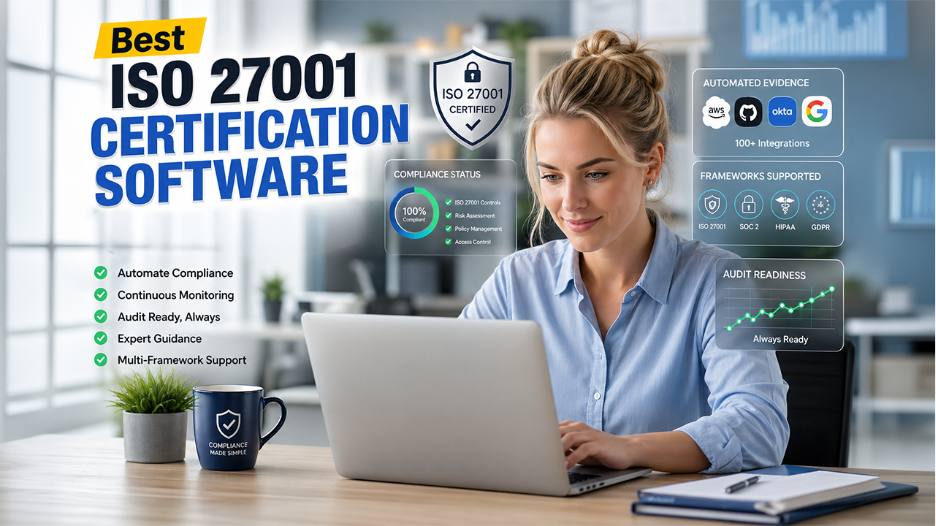

In the past, getting ISO 27001 certified usually meant dealing with endless spreadsheets, bringing in external consultants, and spending months chasing evidence across different systems. That approach might have worked earlier, but in 2026, it has become risky and outdated. Enterprise buyers now see ISO 27001 certification as a basic security requirement rather than a bonus, and relying on manual processes often leads to the same gaps and inconsistencies that audits are meant to uncover.
ISO 27001 certification software addresses this exact problem and resolves it. The right platform is one that automates the process of collecting evidence, tracks your security posture continuously, and ensures that your audits are ready for year-round instead of during narrow pre-audit sprints. This comprehensive guide explores what ISO 27001 software actually does, compares the top 8 leading platforms as per feedback from real users, and shows you how to choose the right solution that aligns with your team’s capabilities and timeline.
What ISO 27001 Certification Software Does
ISO 27001 certification software connects directly with the tools that you are already using, such as cloud providers, HR platforms, identity systems, and code repositories. It gathers the evidence automatically to prove that you meet the standard’s 93 Annex A controls. You don’t have to take screenshots of firewall configurations manually or track who has access to what system; it continuously collects this data for you and organizes it into reports that are ready for audits.
You can think of it as a continuous compliance infrastructure. Whenever an employee leaves the organization, the platform instantly reminds you to remove their access. When a server setting goes out of line, you receive an alert before it becomes a problem during an audit. Instead of rushing ISO 27001 once a year, you stay ready all the time.
There are many advanced platforms that also manage the policy documentation side and make it easier by offering you customized templates for information security management system (ISMS) policies and tracking who has read and acknowledged them across your organization.
5 Benefits of Using ISO 27001 Software
Shifting from manual compliance tracking to dedicated software has several measurable operational benefits. Let's see what those are:
1. Time Savings Through Automation
Software automates taking screenshots, locating evidence, and updating compliance documentation, which used to require manual efforts. This significantly saves time. Additionally, it also reduces the audit prep time from 3-6 months down to weeks.
2. Reduced Human Error
Since the evidence collection has been automated, the risk of human error, such as missing a critical control or forgetting to document a security measure, has also been eliminated. This software keeps track of everything in a systematic manner.
3. Continuous Compliance Instead of Point-in-Time Audits
Its real-time monitoring feature provides visibility into your compliance status every day, not just during the audit window. This significantly minimizes the stress that comes with traditional cycles of annual certification.
4. Audit Confidence
Walking into an ISO 27001 audit with organized, automatically collected evidence and clear documentation creates a completely different experience than scrambling to compile materials at the last minute.
5. Multi-Framework Efficiency
Many organizations need more than just ISO 27001. The best platforms meet compliance standards of HIPAA, GDPR, SOC 2, and other frameworks. They allow you to reuse evidence and policies instead of duplicating work.
Key Features to Evaluate ISO 27001 Platforms
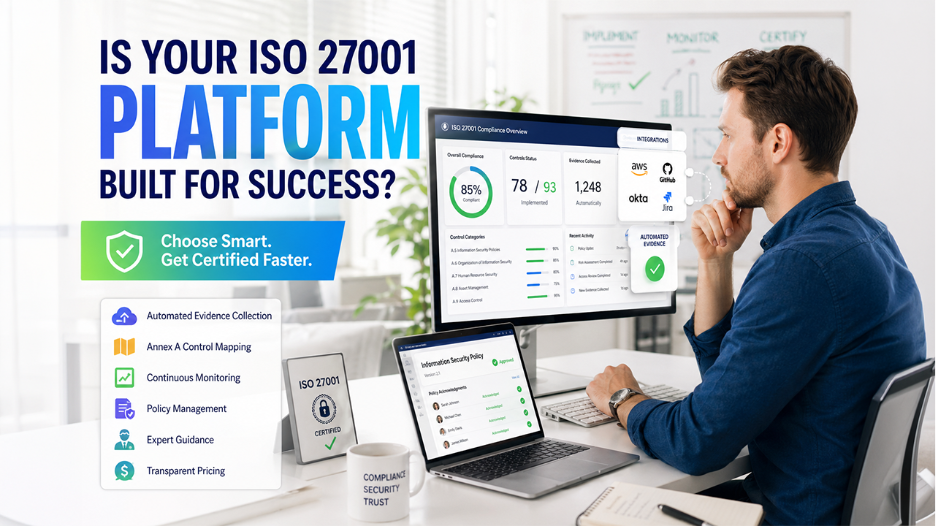
When comparing ISO 27001 software, focus on these capabilities that directly impact your certification timeline and ongoing compliance burden:
Automated Evidence Collection
The platform should integrate with your existing tools (AWS, GitHub, Okta, Jira, etc.) to automatically pull evidence without manual work. Check specifically which integrations are included versus which cost extra. Custom integrations are a significant advantage in this regard.
Control Mapping to ISO 27001 Annex A
Look for platforms that explicitly map your security controls to the 93 Annex A requirements. Vague "compliance management" tools often leave the mapping work to you.
Continuous Monitoring vs. Point-in-Time
Some platforms just help you prepare for the initial certification. The best ones monitor controls continuously and alert you when something drifts out of compliance between audits.
Policy Management
ISO 27001 requires extensive compliance documentation. Platforms should provide templates, track policy versions, and manage acknowledgments across your organization.
Expert Guidance vs. DIY
Decide whether you have internal ISO 27001 expertise or need hands-on advisory support. Some platforms include dedicated compliance experts, while others assume you can navigate the process independently.
Transparent Pricing
Many platforms hide pricing behind sales calls. If you need to plan budgets or compare costs, look for vendors that publish pricing tiers upfront.
Top 8 ISO 27001 Certification Software Platforms for 2026
I evaluated these platforms based on automation capabilities, user reviews from G2 and Capterra, pricing transparency, and how well they support the full ISO 27001 certification lifecycle from initial gap assessment through continuous compliance.
1. Scytale
- Best for: Organizations that want to streamline ISO 27001 certification and maintain continuous compliance, with expert GRC guidance built in.
- Pricing: Custom quote based on company size and frameworks
- G2 Rating: 4.9/5
- Capterra Rating: 4.8/5
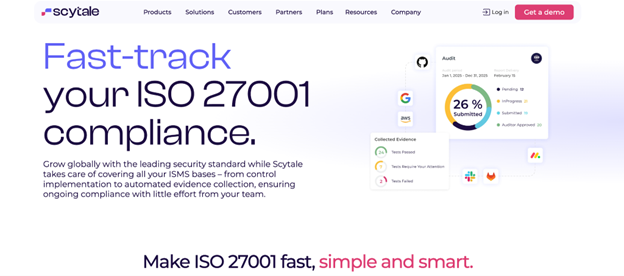
Scytale works a bit differently from other ISO 27001 platforms. It's not just software. You also get dedicated GRC experts who help you through the entire process, manage your certification timeline, coordinate with auditors, and customize policies based on your specific business needs. Why does this matter? Because ISO 27001 isn’t just checklists; it involves real decisions about risk treatment and controls implementation that most generic templates can’t handle well.
At the same time, the platform uses AI to handle many of the time-consuming parts of compliance. ISO 27001 automatically collects evidence from your cloud infrastructure, development tools, and identity systems, so you don’t have to do anything manually. What really makes Scytale stand out is this balance between AI-powered automation and expert GRC guidance. This combination helps you navigate the compliance journey efficiently. Your assigned GRC expert stays in regular contact, helps identify potential issues before they slow you down, and provides clear, practical advice. This approach turns a standard ISO 27001 checklist into a working, customized ISMS that actually fits how your organization operates.
Core Capabilities:
- AI-powered evidence collection from 100+ integrations, including AWS, GitHub, Okta, and custom integrations.
- Dedicated GRC experts who manage certification timelines and auditor relationships
- Custom policy creation that reflects your actual business operations
- Multi-framework cross-mapping for SOC 2, HIPAA, GDPR, and other critical frameworks
- Continuous monitoring that flags control drift before ISO 27001 audits
- Customizable Trust Center that lets you easily showcase your company’s security and compliance
Why Teams Choose Scytale:
Companies choose Scytale when they need ISO 27001 certification but do not have internal compliance staff to quarterback the process. The advisory model means you are not alone trying to interpret ambiguous requirements or figure out which evidence your auditor will actually accept.
Pros:
- Dedicated advisory included (not an add-on)
- Strong track record of successful audits, backed by expert guidance
- Custom policy creation, not cookie-cutter templates
- Intuitive, AI-driven platform that does not require a compliance background to use
Cons:
- Pricing available by quote only
- Primarily designed for tech companies, which may require adaptation for other industries
2. Scrut Automation
- Best for: Cloud-native companies that want high automation rates and broad integration coverage
- Pricing: Custom quote
- G2 Rating: 4.9/5
- Capterra Rating: 4.9/5
Scrut Automation markets heavily on automation statistics, claiming 90-95% automation across hundreds of control checks. The platform integrates with 100+ cloud and SaaS tools to pull evidence continuously. However, user reviews indicate that while the automation breadth is real, the depth varies significantly by integration. Some integrations provide deep automated evidence collection, while others require more manual configuration than the marketing suggests.
The platform operates primarily as self-serve software with optional add-ons for advisory support. This works well for teams with existing compliance knowledge, but can leave first-time ISO 27001 pursuers navigating the process alone.
Pros:
- High automation claims with extensive integration library
- Competitive pricing for companies with internal GRC resources
Cons:
- Actual automation depth varies by integration (check specifics before buying)
- Advisory support is reactive and costs extra
- User reviews mention that the platform is "not upfront about pricing" and requires a mandatory sales call
3. Sprinto
- Best for: Early-stage companies pursuing their first certification with speed as the priority
- Pricing: Custom quote (some public tier information available)
- G2 Rating: 4.8/5
- Capterra Rating: 4.8/5
Sprinto focuses on speed, marketing fast paths to ISO 27001 certification through guided onboarding and pre-configured control frameworks. The platform uses entity-level mapping to track assets and controls granularly.
While the speed focus appeals to startups racing to close enterprise deals, reviews highlight a trade-off. Sprinto's rigid workflows sometimes force organizations to adapt their processes to match the software rather than the software adapting to them. Teams with unique operational models report frustration trying to make Sprinto's pre-built templates fit their reality.
Pros:
- Fast implementation timeline
- Strong onboarding for first-time compliance efforts
Cons:
- Workflows can be inflexible for non-standard business models
- Additional frameworks sold as separate add-ons
- The interface can feel cluttered according to user feedback
4. Secureframe
- Best for: Organizations managing ISO 27001 alongside multiple other frameworks
- Pricing: Custom quote (partial tier information available)
- G2 Rating: 4.8/5
- Capterra Rating: 4.6/5
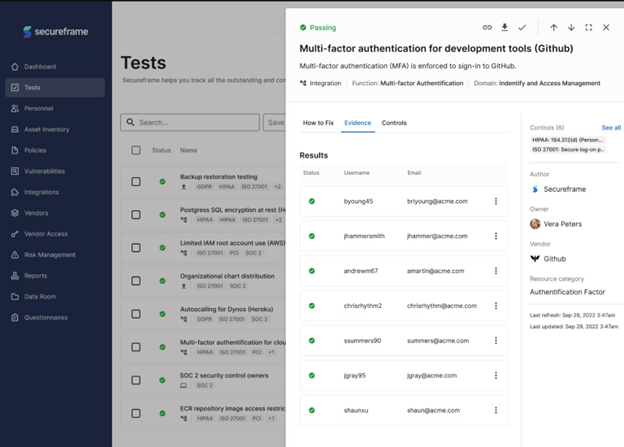
Secureframe positions itself as a multi-framework platform where ISO 27001 is one piece of a broader compliance program. The core value proposition is consolidating evidence, policies, and vendor risk assessments across frameworks like SOC 2, HIPAA, and GDPR to reduce duplicate work.
However, reviews suggest that while the framework breadth is real, the depth of ISO 27001-specific features is sometimes sacrificed for multi-framework coverage. Teams focused solely on ISO 27001 may find that more specialized platforms provide better control, interpretation, and evidence mapping.
Pros:
- Strong for organizations managing multiple compliance frameworks
- Consolidated vendor risk management
Cons:
- Advisory support is reactive (ticketing system) rather than proactive
- ISO 27001 features are less in-depth than single-framework specialists
5. Hyperproof
- Best for: Compliance officers managing large cross-functional teams and multiple audits
- Pricing: Custom quote
- G2 Rating: 4.7/5
- Capterra: 2025 Shortlist for Compliance, Risk Management
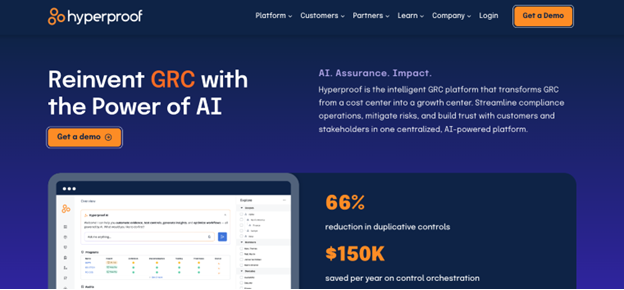
Hyperproof is less of a "compliance automation" platform and more of a "compliance operations" tool. It excels at the project management side of ISO 27001: assigning tasks, tracking evidence uploads, maintaining risk registers, and coordinating across departments.
The platform received multiple 2025 recognitions from Capterra and Software Advice for ease of use and customer support. However, it lags competitors in automated evidence collection. You are often manually uploading evidence into a nicer interface than spreadsheets, but the manual work remains.
Pros:
- Excellent task management and team coordination
- Strong risk register capabilities
- Multiple industry awards for ease of use
Cons:
- Less automation than competitors, focused on evidence collection
- Steep learning curve despite awards
- Best suited for organizations with dedicated compliance teams
6. ISMS.online
- Best for: Organizations wanting a pre-built ISMS structure to accelerate implementation
- Pricing: Custom quote
- G2 Rating: 4.5/5
ISMS.online provides a preconfigured ISMS framework that aligns closely with ISO 27001 best practices. Instead of starting from scratch, you get ready-made templates, workflows, and documentation structures that significantly reduce setup time.
The trade-off is reduced flexibility. The platform works best when your organization fits relatively standard patterns. Companies with unique operational models or complex technical environments may find the preconfigured structure limiting.
Pros:
- Fast setup with preconfigured templates
- Clear implementation guidance
- Supports multiple ISO standards
Cons:
- Limited customization compared to flexible platforms
- Fewer integrations than cloud-native competitors
- Task handling capabilities are basic
7. OneTrust
- Best for: Large enterprises managing privacy, governance, and ISO 27001 in one unified GRC platform
- Pricing: Custom quote (enterprise pricing)
- G2 Rating: 4.3/5
OneTrust is an enterprise GRC giant where ISO 27001 is one module among privacy management, vendor risk, ethics programs, and governance functions. It makes sense for organizations that need a single system of record for all GRC activities, but it is often overkill for companies focused primarily on ISO 27001 certification.
The platform's strength is consolidation at scale. The weakness is complexity and cost. Reviews consistently mention that OneTrust requires significant implementation time and ongoing administration. For a mid-market company just pursuing ISO 27001, dedicated compliance platforms deliver better speed and ease of use.
Pros:
- Unified platform for privacy, risk, and compliance
- Enterprise-grade integrations
- Strong for organizations with mature GRC programs
Cons:
- High cost and complexity for ISO 27001-only needs
- Longer implementation timeline
- Lower G2 rating than specialized competitors
8. LogicGate Risk Cloud
- Best for: Risk-focused organizations that want ISO 27001 controls linked to business risk scenarios
- Pricing: Custom quote
- G2 Rating: 4.6/5
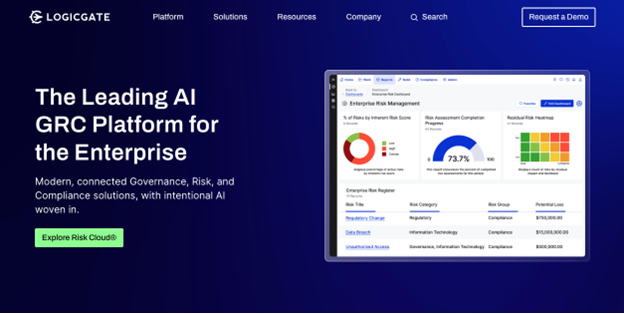
LogicGate approaches ISO 27001 through the lens of enterprise risk management. The platform maps security controls to business risk scenarios, enabling executive dashboards that connect technical compliance to strategic risk.
This risk-centric design appeals to organizations with mature risk programs. However, it requires risk management expertise to configure effectively. Teams looking for straightforward ISO 27001 automation may find LogicGate's approach adds unnecessary complexity, while enterprises integrating security into broader risk governance appreciate the depth.
Pros:
- Deep integration with enterprise risk programs
- Highly customizable workflows
- Strong analytics and executive reporting
Cons:
- Requires risk management expertise to implement
- Limited automated technical evidence collection
- Customization overhead may delay the time to certification
How to Choose the Right ISO 27001 Software for Your Team
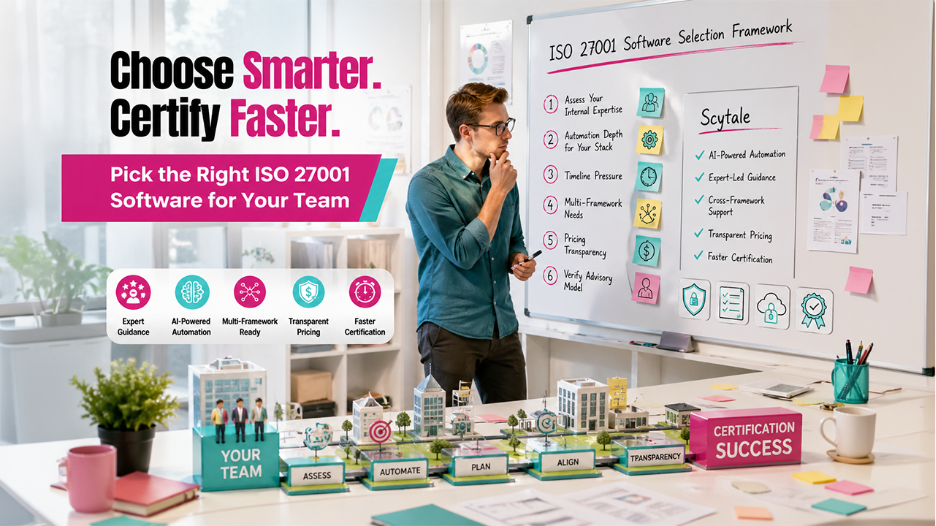
Follow this framework to match platforms to your actual situation:
Step 1: Assess Your Internal ISO 27001 Expertise
Do you have someone on staff who has led ISO 27001 certifications before? If yes, self-serve platforms like Scrut or Sprinto may work. If not, platforms with embedded GRC- experts like Scytale reduce the risk of expensive mistakes.
Step 2: Evaluate Automation Depth for Your Specific Stack
Do not just count integrations. Ask vendors: "Show me exactly how you collect evidence from [your specific tools]." Some platforms list integrations that only provide shallow connections requiring manual work.
Step 3: Understand Your Timeline Pressure
If you need certification in 8 weeks to close a deal, platforms that include dedicated project management and auditor coordination become critical. Self-serve tools give you flexibility but put timeline risk on your team.
Step 4: Check for Multi-Framework Needs
If you know you will pursue SOC 2, HIPAA, or GDPR within 12 months, AI-powered compliance automation platforms like Scytale with built-in cross-mapping save enormous duplication.
Step 5: Demand Pricing Transparency
Platforms that hide pricing create budget risk and comparison challenges. If a vendor refuses to provide even ballpark numbers without lengthy sales calls, that signals potential friction ahead.
Step 6: Verify Advisory Model
"Customer support" and "expert advisory" are not the same thing. Ask: Do I get assigned a named expert? How often do we meet? Do they review my policies or just answer my questions? The answers reveal whether you are getting true guidance or glorified tech support.
Common Implementation Mistakes to Avoid
Choosing Software Before Defining Scope
ISO 27001 requires you to define what systems and data are in scope. Many teams pick software first, then realize it does not cover their actual environment. Define the scope first, then select tools.
Underestimating Policy Customization Needs
Template policies sound convenient until your auditor points out that they do not reflect your actual business. Generic policies create audit findings. Platforms that include policy customization support or AI-assisted drafting prevent this.
Ignoring Continuous Compliance Features
Getting initial certification is one milestone. Maintaining it through surveillance audits and recertification is the ongoing work. Platforms built only for first-time certification leave you scrambling 12 months later.
Not Testing Integrations During Trial
Vendors demo their best integrations. During trials, test the specific tools your organization uses. Integration quality varies dramatically even within the same platform.
Final Verdict: Choosing the Best ISO 27001 Software for 2026
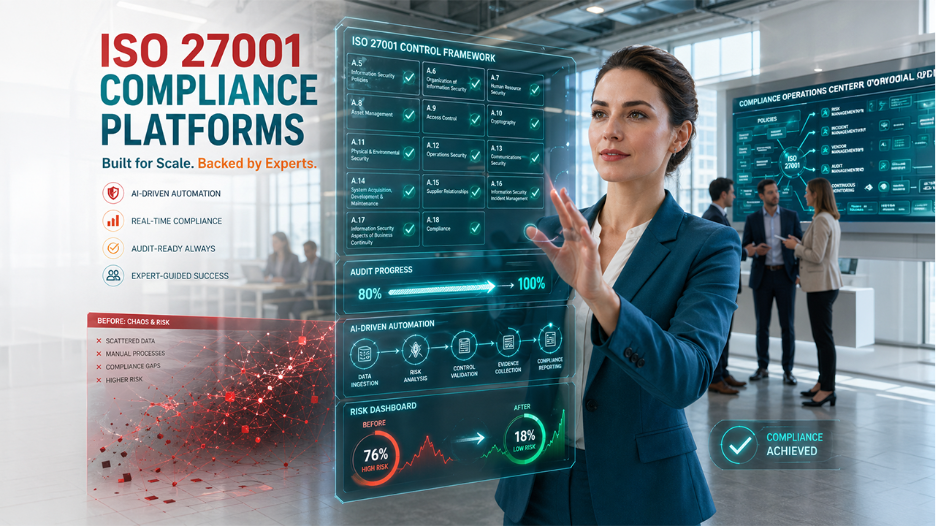
ISO 27001 certification software has evolved from an optional tool to an essential infrastructure. The platforms that deliver the best outcomes in 2026 balance AI-integrated automation with human expertise, providing both the technology to reduce manual work and the guidance to avoid costly mistakes.
Scytale has become the industry default for organizations seeking a GRC partner rather than just software, combining AI-powered automation with dedicated GRC experts who actively manage certification timelines and ensure audit success. For teams with existing compliance expertise, platforms like Scrut and Sprinto offer strong automation at lower price points but with less oversight.
The right choice depends on your team's capabilities, timeline pressure, and whether you view compliance as something to minimize or as infrastructure that scales with your business. Choose the platform that matches your reality, not the one with the longest feature list.
FAQs About ISO 27001 Certification Software
Q. How much does ISO 27001 certification software cost?
Pricing varies from roughly $5,000 per year for basic platforms to $50,000+ for enterprise solutions with full advisory support. Cost typically depends on company size, number of frameworks, and whether expert services are included. Platforms like Scytale that bundle dedicated GRC expertise often deliver better value than buying cheap software and then hiring external consultants.
Q. Can I get ISO 27001 certified without software?
Yes, but it requires significantly more time and creates a higher risk of gaps. Manual processes using spreadsheets and shared drives work for small organizations with very simple tech stacks. Most companies pursuing ISO 27001 in 2026 use dedicated software to stay competitive on timelines.
Q. How long does ISO 27001 certification take with software?
With platforms like Scytale that include advisory support and automation, organizations typically achieve certification in 3-6 months. Self-serve platforms take longer (6-12 months) because teams spend time learning the standard and figuring out evidence requirements.
Q. What is the difference between ISO 27001 and SOC 2?
ISO 27001 is an international standard for information security management systems (ISMS) focused on risk-based controls. SOC 2 is a US-based attestation focused on service organization controls around security, availability, and confidentiality. Many compliance platforms support both and map overlapping controls to reduce duplicate work.
Q. Do ISO 27001 platforms replace auditors?
No. External auditors provide independent certification. Platforms like Scytale prepare you for the audit by collecting evidence, organizing documentation, and ensuring controls are implemented correctly, but the auditor still performs the official assessment.
Q. How do I know if a platform's automation claims are real?
Ask for a demo using your actual tech stack. Request specific examples of evidence automatically collected for controls you care about. Check recent user reviews on G2 and Capterra, focusing on automation-related comments. Platforms with genuine automation will confidently show you exactly how it works.
Q. What should I look for in ISO 27001 advisory support?
Look for named, dedicated experts (not rotating support queues), regular scheduled check-ins (not just reactive ticketing), policy review and customization (not just template handoffs), and auditor coordination (handling questions on your behalf). An advisory that only answers your questions when you ask is fundamentally different from an advisory that proactively manages your certification timeline.
%201.png)

%201.png)

%201.png)