
Picture this. A small business owner has a CRM that records everything from names and emails to purchase dates and maybe even birthdays. It sounds impressive until it isn’t. Suppose every single customer receives the same email on the same day with the same subject line without any variation. The loyal buyer who's spent thousands gets the exact same message as someone who bought one thing eighteen months ago and never came back.
That's not CRM marketing. That's just an expensive contact list. The gap between the two is smaller than it looks, but it matters a lot. A CRM that only records what customers did is like a filing cabinet. However, a CRM that helps you decide what to do next, who to message, when, and with what is called a real marketing engine. This is the shift we're going to unpack.
What Is CRM Marketing?
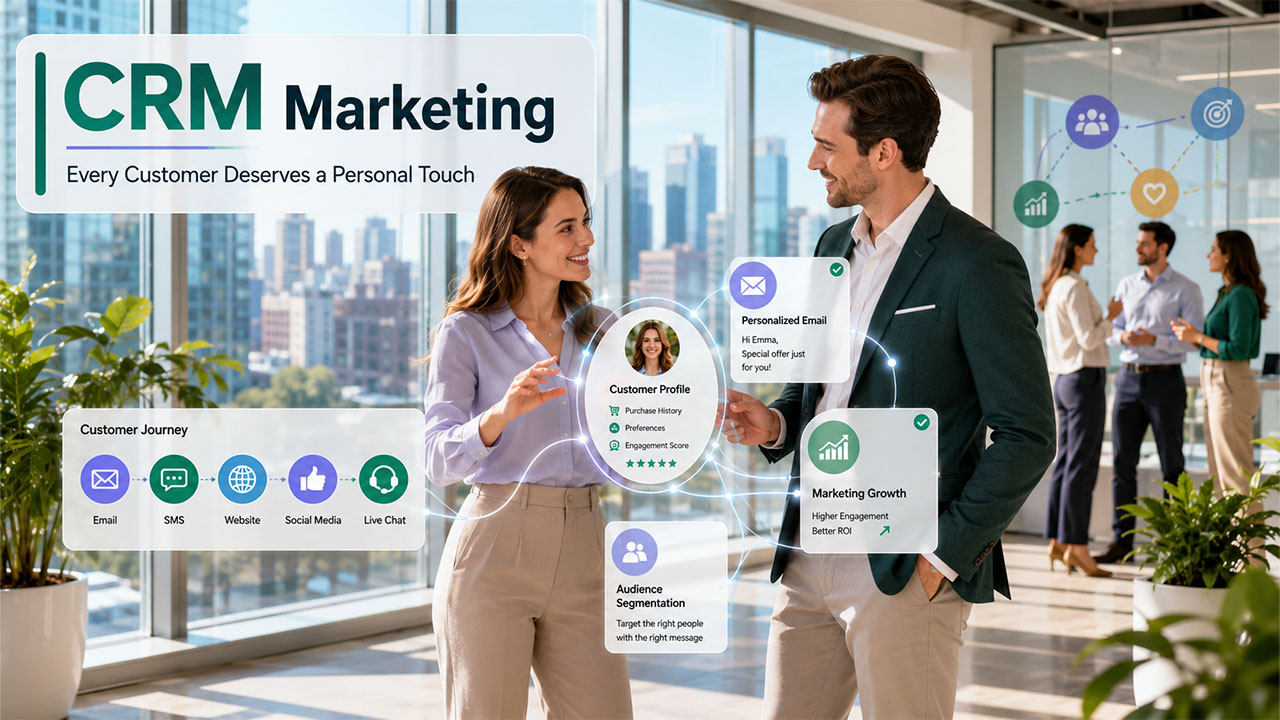
CRM marketing refers to the practice of using customer relationship management data and tools to build strategy, plan execution, and run marketing campaigns that actually reflect who your customers are, what they prefer, and what they want. Use customer information that is already sitting in your CRM to send personalized messages to the right people at the right time instead of blasting generic messages to everyone.
Simply put, CRM is the system that records all customer details in one centralized platform. CRM marketing is how you use that system and what you do with it once it’s flowing with useful customer data. This is essentially what CRM in digital marketing means in practice, using the same customer data to guide every message across the funnel.
It’s not about just selling more. The goal is to build a meaningful customer relationship that lasts longer because when a customer feels valued, they stick around longer than one who gets generic spam.
What Is a CRM Marketing Strategy?
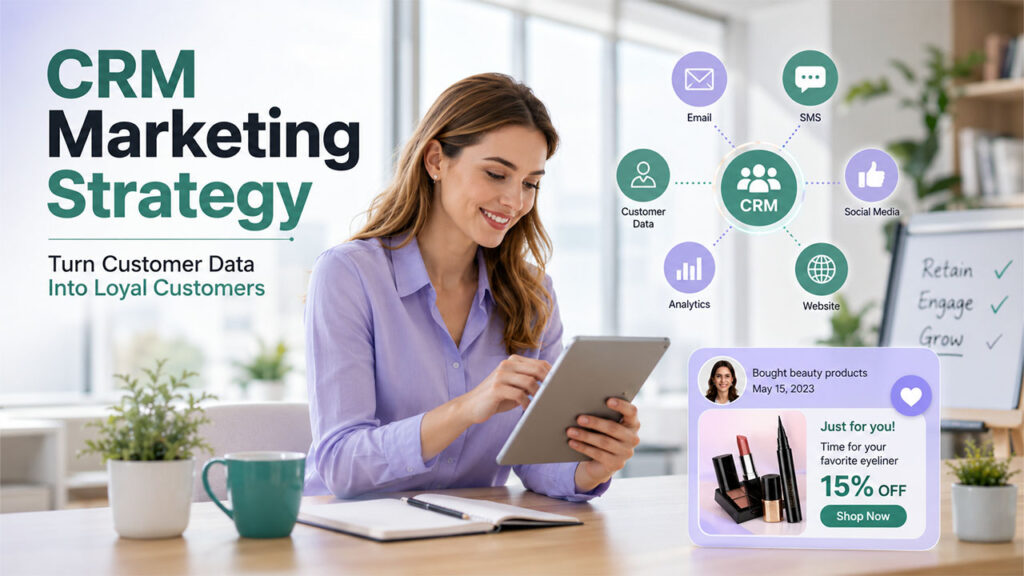
A CRM marketing strategy is planning the “how” to turn customer data into action. If you don’t have a well-thought-out strategy, even the most powerful CRM software becomes useless if the data it collects isn’t used by anyone.
A solid CRM marketing strategy usually pulls from a few different playbooks:
- Retention Marketing —It keeps existing customers engaged, so they don't drift away quietly, and when done well, this kind of customer retention approach pays off long after the first purchase.
- Lifecycle Marketing — It adjusts or tweaks your message based on where a customer is, whether they're brand new or a long-time repeat buyer.
- Email Marketing — It uses organized, reliable CRM data to personalize what lands in someone's inbox.
- Omnichannel Marketing — It helps you reach your customers across email, SMS, social, and your website with a consistent message.
For instance, take retention. Say you noticed a group of customers who all bought Mars beauty products around the same time last year. When a strategy is retention-focused, it might trigger a personalized offer right before they’d typically need another eyeliner, based on that shared purchase history. It is a small step; however, it works because it’s well-timed and relevant instead of random.
Top Benefits of CRM Marketing for Business Growth
Here are the biggest advantages businesses gain by implementing CRM marketing effectively.
- Gain Deeper Customer Insights: CRM marketing platforms organize all scattered customer data into one centralized place and extract actionable insights from it, such as what people buy, when, and why they stop buying.
- Segment Your Audience More Effectively: You don’t get a long list of customers with their details that you have to sort through. Instead, you get smaller groups based on behavior and interest. This makes each message feel like it was written for that person particularly, not blasted to a thousand strangers.
- Reach Customers at the Right Time: You actually reach your customers at the right time when they are actually likely to engage with your business or product, not just whenever the campaigns happen to go out. This improves your timing and allows you to target people when they are exploring.
- Build Stronger Customer Loyalty Through Personalization: When customers feel valued, they are most likely to stick around longer. People notice when a brand remembers them, which turns them into a loyal, repeat customer. They trust your brand and prefer you over your competitors.
- Improve Marketing ROI: Targeted campaigns simply convert better than generic ones. This way, you're not wasting budget on messages that miss the mark.
None of this is complicated in theory. The hard part is doing it consistently, which is where channels and tools come in.
CRM Marketing Channels and Tools for Better Customer Engagement
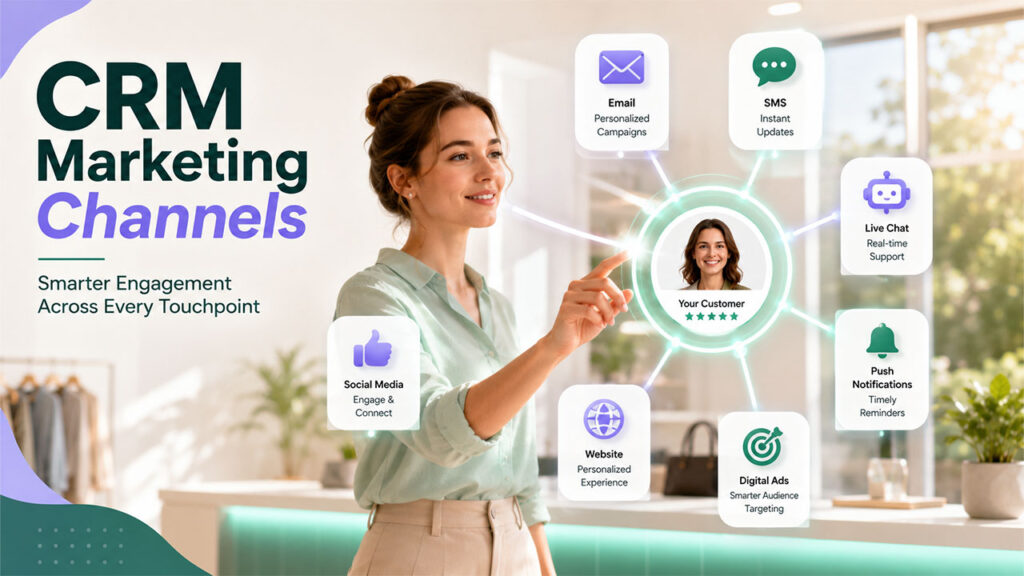
A channel is just the path your message takes to reach the customer. Moreover, CRM marketing works best when it isn’t limited to one path. Brands that rely on a single channel usually miss customers who simply prefer a different one.
Common CRM marketing channels include:
- Email: Your CRM data personalizes mass email blasts into something that customers notice. It extracts purchase history and browsing behavior to decide who gets which message. This way, your loyal buyers and first-time visitors never see the same generic subject line.
Running structured email marketing campaigns through your CRM is usually the fastest way to see this personalization pay off.
- SMS and Text Messaging: Texts get read fast, which makes them perfect for time-sensitive CRM triggers. A restock alert, an appointment reminder, or a flash sale can go out the moment your CRM flags that a customer is likely to care.
- Social Media: Your CRM tracks mentions, comments, and direct messages across platforms, then connects that activity back to a customer's full profile. That way, a comment on Instagram doesn't get treated as a stranger’s; it’s linked to someone your CRM already knows.
- Live Chat and Chatbots: The moment a customer opens a chat window, your CRM data informs the bot or agent about their order history and past queries. This way, customers don’t get cold responses like “how may I help you”, which turns a conversation that feels like it remembers them.
- Mobile Push Notifications: These work best when they're timed around actual behavior, not a fixed schedule. Your CRM can trigger a push the moment someone abandons a cart or hasn't opened the app in a while, nudging them back naturally.
- Personalized Website Content: CRM data can swap the homepage with product recommendations or banners depending on what that specific person has browsed in the past or bought before. This personalizes your website's content, so not everyone sees the same homepage.
- Digital Ads: CRM data helps you build lookalike or retargeting audiences that actually reflect your best customers, so your ad budget chases people who resemble your existing base instead of guessing a cold audience.
CRM marketing tools convert raw customer data into actionable insights by categorizing audiences automatically, tracking the performance of each campaign, and tweaking future messages based on what worked last time. If you don’t have these tools, you’d have to sort spreadsheets manually, and honestly nobody has time for it once you start getting more than a handful of customers. Instead of manual spreadsheets, teams often connect a dedicated AI CRM to their workspace. By unifying collaboration and customer management, Lark analyzes this linked data to automate follow-ups directly within your daily workflow.
5 Best CRM Marketing Software Platforms in 2026
There's no shortage of CRM software out there, and picking one really depends on your team size, budget, and how deep you need the marketing automation to go. Here's a quick side-by-side of five solid options.
| Software | Best For | Standout Feature | Starting Price |
| HubSpot Smart CRM | Small to mid-size teams starting out | Free plan plus a built-in AI email writer | Free, paid plans at $9/seat/month |
| Zoho CRM | Businesses wanting deep customization | 800+ integrations through Zoho Marketplace | $14/user/month |
| Monday CRM | Teams that want marketing and project management together | Drag-and-drop campaign builder with AI automations | $12/seat/month |
| Salesforce Marketing Cloud | Larger teams already in the Salesforce ecosystem | Advanced journey automation and analytics | $25/user/month |
| Zendesk Sell | Teams blending sales and marketing workflows | Real-time lead segmentation and bulk outreach | $19/user/month |
Pricing shifts from time to time, so it's worth double-checking current rates before you commit to one. But this gives you a fair starting point for comparing what each platform actually does well, and the right CRM software is really what makes the segmentation and automation covered above actually possible.
Real-World CRM Marketing Examples
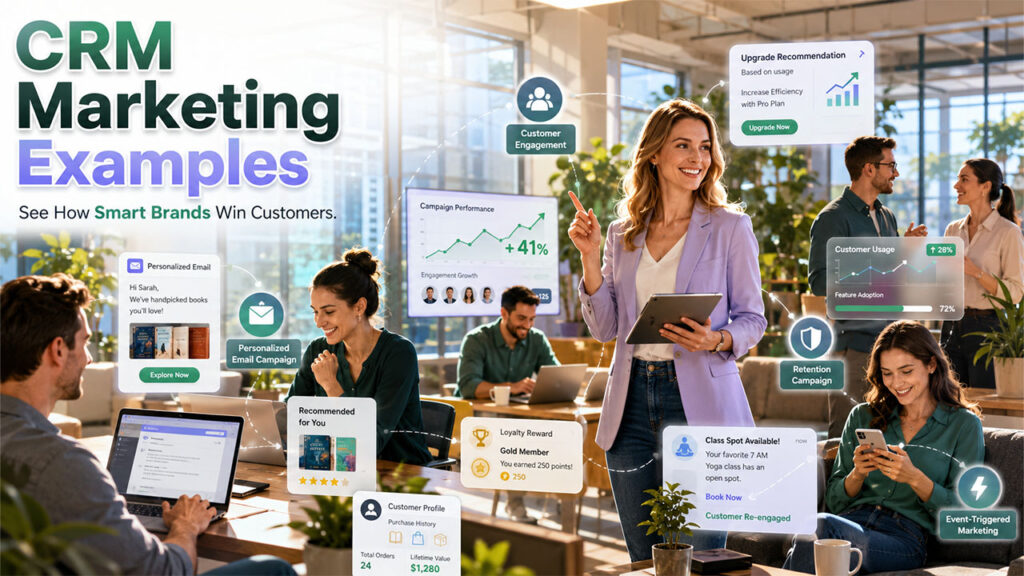
These real-world examples show how businesses apply CRM marketing to engage customers more effectively.
Personalized Email Marketing Campaigns: An online bookstore sends recommendations based on what someone's already bought or browsed, instead of a generic "check out our bestsellers" blast, which makes customers trust your brand.
Cross-Sell and Upsell Marketing: A software company keeps an eye on how customers use it and accordingly suggests an upgrade that genuinely fits their needs, rather than pushing unnecessary or irrelevant expensive plans to everyone.
Predictive Churn Prevention Campaigns: A subscription service spots signs that a customer is losing interest by noticing patterns like fewer logins or no recent purchases and steps in early with a tempting offer before that customer cancels.
Event-Triggered CRM Marketing: A fitness studio sends a text reminder the moment a spot opens up in a class someone's shown interest in, catching them at exactly the right moment.
If you have noticed, none of these are flashy. And you must’ve definitely received one of these, just never pay attention. They are well-timed and specific, which makes them effective and, that’s really the whole point of CRM marketing.
Conclusion
Now, the business owner doesn’t send the same generic email to everyone; instead, they actually use their CRM to send a thank-you offer to loyal customers, a tempting offer to nudge customers who lapsed to come back, and a welcome sequence to new leads instead of silence.
The same customer list but completely different outcomes. That's the whole shift CRM marketing asks you to make. Stop treating your CRM as a place where data sits idly and start treating it as the thing that tells you what to do next. Once you make that switch, the tools and channels we've covered stop feeling like extra work and start feeling like the obvious next step.
FAQs About CRM Marketing
Q. Is CRM marketing only useful for big companies with huge budgets?
Not at all. Small businesses often benefit the most, since CRM marketing lets them compete on personalization instead of ad spend.
Q. How is CRM marketing different from regular email marketing?
Email marketing is one channel. CRM marketing uses customer data across every channel to guide when and what you send.
Q. Do I need expensive software to start CRM marketing?
No. Several tools, like HubSpot, offer free plans that cover the basics of segmentation and automation.
Q. How long before CRM marketing shows results?
It varies, but many businesses notice better engagement within a few campaign cycles, often within a couple of months.
Q. Can CRM marketing help reduce customer churn?
Yes, predictive tools can flag disengaged customers early, giving you a chance to win them back before they leave for good.
%201.png)

%201.png)

%201.png)