
Modern laundromats are no longer just self-service businesses. Many now manage recurring customers, pickup and delivery, subscriptions, commercial accounts, automated payments, and customer communication. Choosing the right POS and operational software directly impacts customer retention, operational efficiency, and profitability.
Choosing the right operational crm is one of the highest-leverage decisions a small business makes, and it is rarely just about features. For service businesses that run on repeat customers and daily transactions, the platform you pick shapes your margins, your customer data, and how much time your team spends on admin. Laundromats are a clear example, and the software market serving them has grown well beyond a single dominant name.
Cents is one of the best-known all-in-one platforms in this space, but it is not the only option. Depending on your priorities, you may find alternatives that differ in payment processing, hardware flexibility, contract structure, delivery capabilities, or overall pricing.
The platforms below are compared using these factors, so laundromat owners can evaluate which option best fits their operating model.
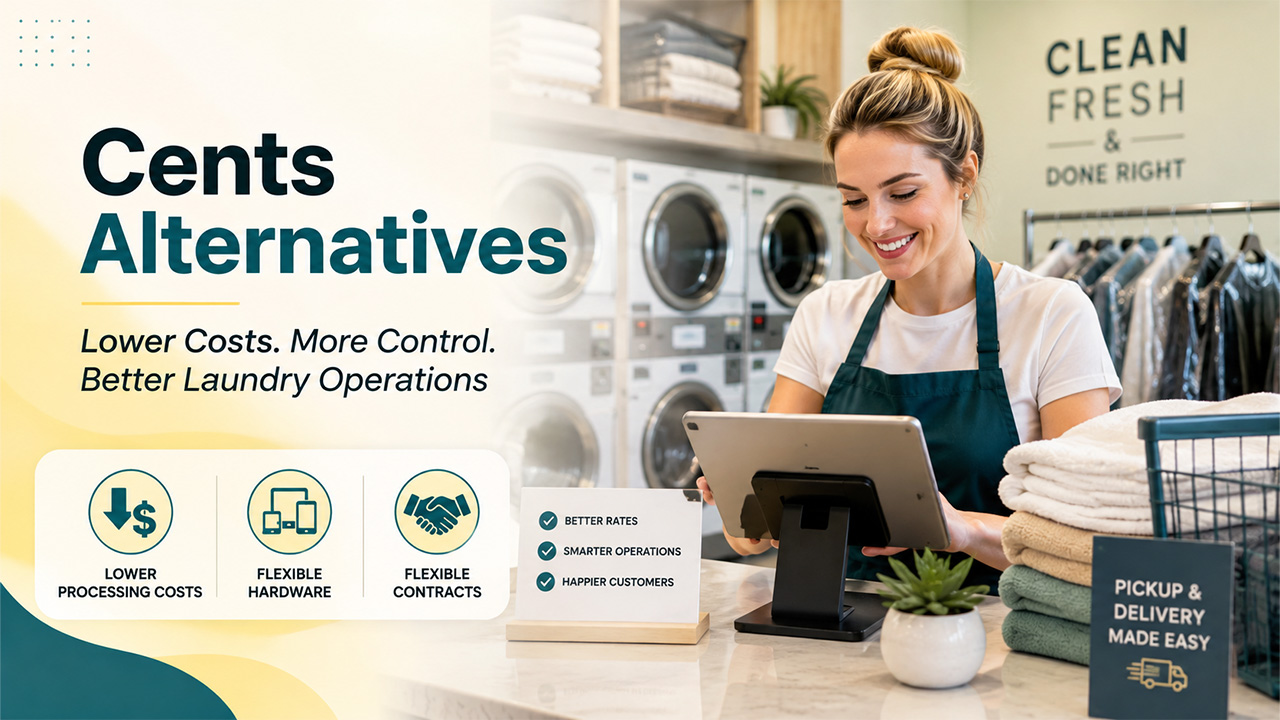
Those three priorities-lower processing costs, flexible hardware options, and less restrictive contract terms, are the lens this guide uses. Below are the strongest Cents alternatives for laundromats in 2026, starting with the option that lines up most directly with all three.
Why Choosing the Right Laundromat Software Matters
Modern laundromats operate far beyond coin-operated machines and basic payment collection. As customer expectations evolve, owners need technology that can manage payments, customer relationships, delivery services, employee workflows, and business insights from a single platform. The right laundromat software helps operators reduce manual work, improve customer experiences, and make better decisions using real-time data.
- Improves Customer Experience and Retention: Customer loyalty is one of the biggest drivers of long-term laundromat growth. Software with built-in customer management features allows businesses to store customer details, track order history, manage preferences, and provide personalized communication.
- Reduces Manual Operations: Without proper software, many laundromats rely on spreadsheets, manual tracking, phone calls, and paper receipts. This can lead to missed orders, billing errors, and inefficient employee workflows. CRM workflow automation can help streamline these repetitive processes and reduce manual work.
- Provides Better Business Visibility: Successful laundromat owners need accurate information about daily operations. Modern software provides dashboards and reports that help track revenue trends, machine usage, customer activity, peak business hours, and delivery performance.
- Simplifies Payments and Reduces Processing Challenges: Payment management directly affects profitability. Modern laundromat software can support multiple payment methods
How We Compared These Cents Alternatives
Every system here is a real laundromat or wash-dry-fold platform in active use, not a generic retail tool. We looked at the same five factors an owner would weigh when leaving Cents.
Card processing cost and transparency, since at real volume the effective rate matters more than the monthly software fee. Hardware flexibility, meaning whether the software runs on standard devices or ties you to proprietary equipment. Contract terms, including whether pricing is published and whether you are committed for a year or more. Wash-dry-fold and pickup-and-delivery support, because that is where most growth comes from. And ease of use for non-technical attendants.
Where a vendor does not publish a figure, we say so rather than guess. Competitor pricing is a starting point and worth confirming at the time you buy.
Quick Comparison
| POS | Card processing | Hardware | Pickup and delivery |
| Wash-Dry-Fold POS | Flat 2.65%, merchant account included | Included | Included in base package |
| CleanCloud | Integrated payments, rate not published | Runs on iPad, desktop, tablet or phone, no special hardware | Yes, DoorDash Drive |
| Curbside Laundries | Not publicly published | Cloud based, device flexible | Yes, plus DoorDash |
| Turns | Stripe, PayPal or Square | Tablet or desktop | Yes, plus DoorDash |
| The Laundry Boss | Card, mobile wallet, coin and kiosk | Works with existing machines | Varies by setup |
| Quick Dry Cleaning Software | Not publicly published | Cloud based, any device | Yes |
| Cents (incumbent) | Quoted after a consultation | Own payment hardware | Yes |
Cents Alternatives for Laundromats
1. Wash-Dry-Fold POS
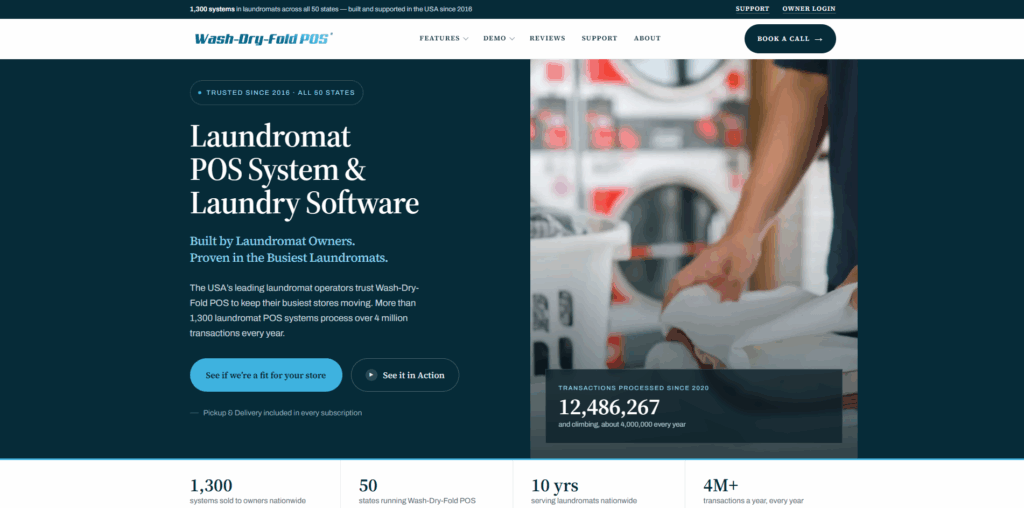
Wash Dry Fold POS is designed for laundromat operators looking for integrated POS and pickup-and-delivery capabilities. Its published pricing and payment-processing structure may make it worth considering for businesses that prioritize cost transparency. Built by working laundromat owners and in the market since 2016, it fixes card processing at a flat 2.65% with the low-rate merchant account included, and there is no separate monthly statement fee.
Additional capabilities include order tracking, machine maintenance workflows, and integrations with delivery services. Payment and third-party integration options vary by setup and should be evaluated against the requirements of each laundromat.
2. CleanCloud
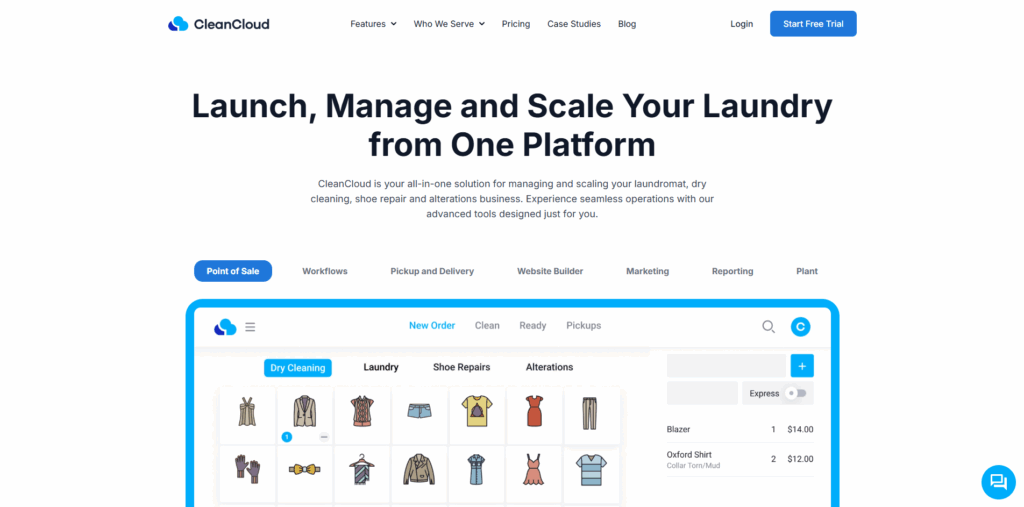
CleanCloud is an all-in-one point of sale that offers relatively broad hardware flexibility compared with platforms that require dedicated payment equipment. It runs on an iPad, desktop, tablet or phone with no special hardware required, which makes it easy to start without a proprietary equipment purchase.
The company says it serves more than 2,500 businesses across 90-plus countries and offers a 14-day free trial. It integrates with DoorDash Drive so owners can launch delivery quickly. Payment processing is available through integrated payments, though the effective rate is not published, so confirm it against your volume.
Best suited for: Laundromats and dry cleaners looking for flexible device options and integrated pickup-and-delivery capabilities.
Key capabilities: CleanCloud runs on iPads, desktops, tablets, and phones without requiring specialized hardware. It also supports DoorDash Drive for delivery.
Pricing/considerations: Payment processing rates are not publicly specified, so businesses should compare the effective processing cost with other providers before choosing a platform.
3. Curbside Laundries
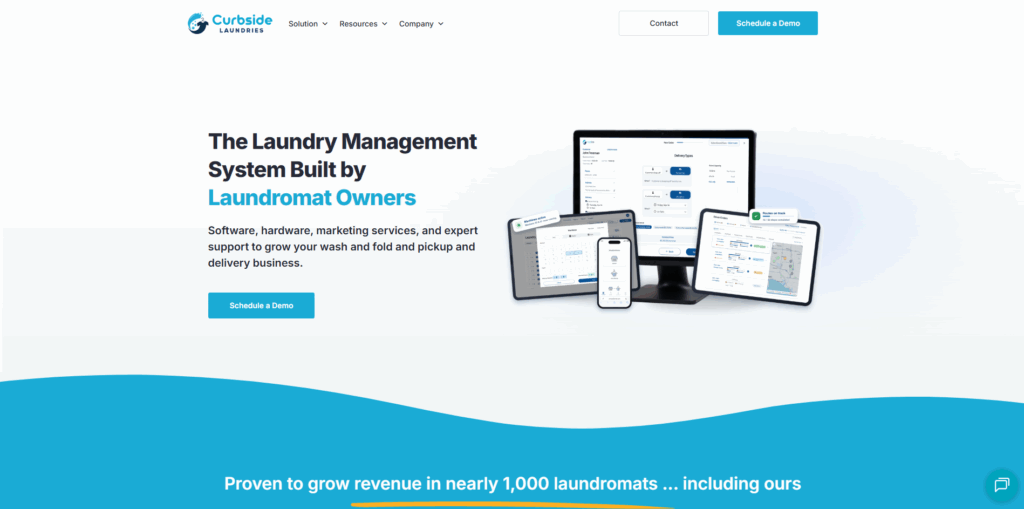
Curbside Laundries is a wash-and-fold and pickup-and-delivery system built by laundromat owners and used by hundreds of laundromats across the United States. It leans into the delivery side with route optimization, online customer ordering, text-message marketing and a commercial invoicing module for on-account clients.
It is cloud based and works across single and multi-location operations, with a DoorDash integration for on-demand delivery. Pricing is custom and quoted after a consultation rather than published, so contract terms are worth clarifying up front.
4. Turns
Turns is an all-in-one platform covering self-service, drop-off, delivery and commercial cleaning, with a driver app and integrations for DoorDash and PayRange. It suits owners who want a modern app-first system and who may also offer dry cleaning or carpet cleaning through separate workflows.
Turns does not include built-in payment processing and instead integrates with Stripe, PayPal or Square, so your card rate depends on the processor you choose. Published plans run from about $150 to $250 per month per location, with higher tiers unlocking DoorDash, AI marketing and a branded app.
5. The Laundry Boss
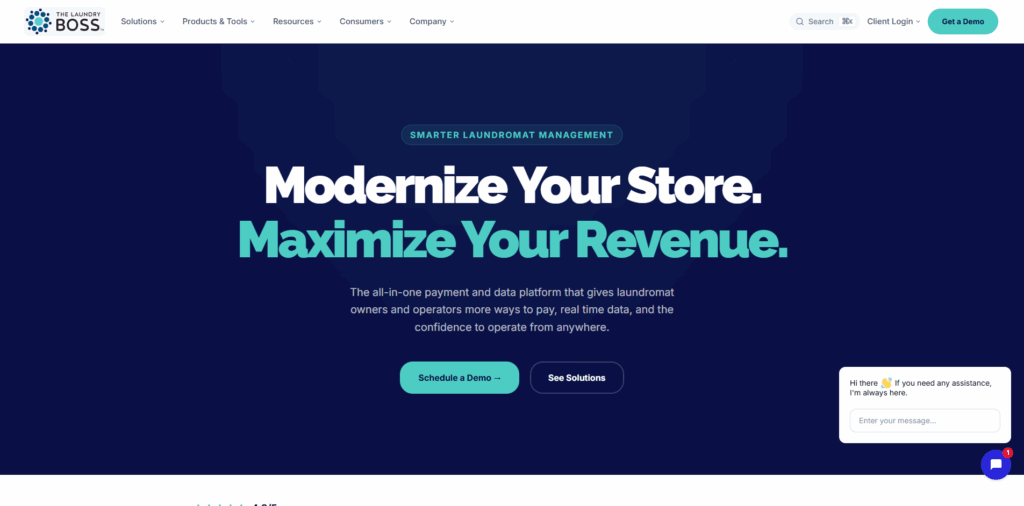
The Laundry Boss is an all-in-one payment and data platform that turns existing washers and dryers into connected machines, which is useful if hardware flexibility and keeping your current equipment matter to you. It supports cashless payments, a mobile wallet, QR scanning at the machine, kiosks, cards and coins.
It offers a cloud dashboard with real-time machine status, usage analytics and multi-location management, and it integrates across major commercial washer and dryer brands. It may be relevant for owners primarily focused on modernizing a self-service laundromat rather than expanding wash-dry-fold operations.
6. Quick Dry Cleaning Software
Quick Dry Cleaning Software is a cloud-based system built for laundry, wash-dry-fold, ironing, subscriptions and pickup-and-delivery. It includes CRM tools, a rider app with OTP-based delivery confirmation and a remarketing app for repeat business.
It is often noted for an affordable starter plan, which makes it accessible for newer operators, and it can be managed remotely from most devices. As with the others here, confirm the current processing rate and terms directly.
CRM and Customer Management Capabilities
A CRM software-enabled laundromat system creates a centralized customer database where owners can store and manage important customer information, including contact details, order history, service preferences, payment records, and engagement activity. This allows businesses to deliver a more personalized experience while making daily operations more efficient.
- Centralized Customer Database: A CRM system gives laundromat owners a complete view of each customer in one place. Instead of managing customer details through spreadsheets, paper records, or separate apps.
- Order History and Customer Preferences: Understanding customer behavior helps laundromats improve service quality. CRM capabilities allow businesses to track previous orders and identify customer preferences.
- Automated Customer Communication: Communication plays a major role in customer satisfaction. Modern laundromat software can automate messages throughout the customer journey.
- Loyalty Programs and Retention Tools: Acquiring new customers is often more expensive than retaining existing ones. CRM features help laundromats build loyalty through reward points, membership programs, referral incentives, exclusive discounts, and subscription plans.
The Bottom Line
There is no single best laundromat management platform for every business. The ideal choice depends on your customer volume, payment processing costs, delivery operations, hardware preferences, and future growth plans. Businesses should evaluate not only monthly software pricing but also CRM capabilities, reporting, automation, and integration options to ensure the platform supports long-term operational efficiency.
Rather than choosing a platform based on a single feature or advertised processing rate, laundromat owners should compare total operating costs, hardware requirements, contract terms, delivery capabilities, integrations, and customer-management features against their own business volume and workflow.
Frequently Asked Questions
Q1. What is the best Cents alternative for lower card processing costs?
Compare each provider's effective processing rate, merchant-account fees, and statement fees. Wash-Dry-Fold POS publishes a flat 2.65% rate with the merchant account included and no separate statement fee, which is the most transparent low-cost option in this list.
Q2. Which laundromat POS has the most flexible hardware?
CleanCloud runs on an iPad, desktop, tablet or phone with no special hardware, and The Laundry Boss works with your existing washers and dryers.
Q3. Do these Cents alternatives support pickup and delivery?
Yes. Every option here supports pickup-and-delivery, and several integrate with DoorDash, though only some include it in the base price rather than as an upgrade.
Q4. Which Cents alternatives publish pricing?
Pricing transparency varies among the platforms. Some publish monthly plans or starting prices, while others require a consultation or custom quote. When comparing options, consider software fees, payment-processing costs, hardware requirements, integrations, and contract terms rather than comparing monthly subscription prices alone.
Q5. How do I compare contract terms fairly?
Ask each vendor whether pricing is month to month or an annual commitment, what any early exit costs and what your effective processing rate is at your real card volume, then compare the full cost rather than the sticker price.
%201.png)

%201.png)

%201.png)