
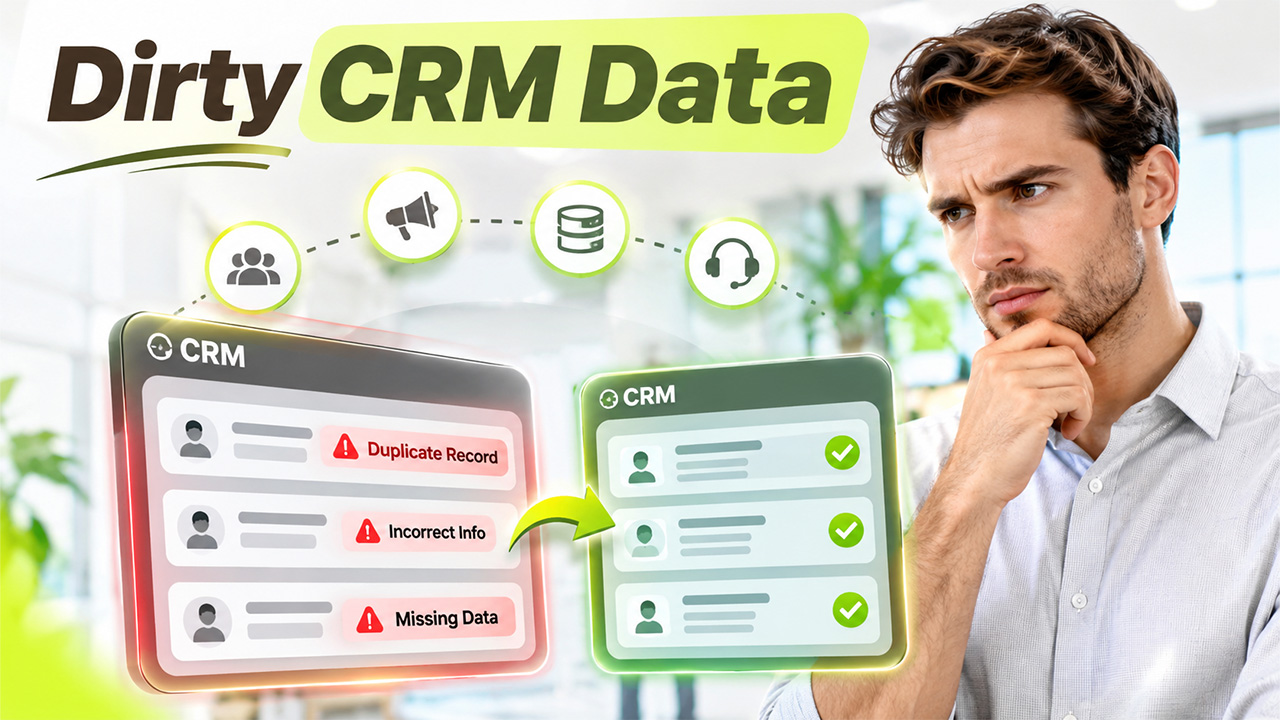

Understanding the Complexity of Dirty CRM Data
Customer Relationship Management (CRM) systems serve as the backbone of many B2B organizations, centralizing critical customer information intended to drive sales, marketing, and service excellence. Despite their importance, a persistent challenge undermining CRM effectiveness is the accumulation of dirty data - incorrect, outdated, or incomplete information that skews analytics, misguides sales efforts, and frustrates users. Maintaining CRM data quality is therefore an organization-wide task, not just a sales responsibility. It is a common misconception that dirty CRM data is primarily a sales discipline issue. The reality, however, is far more complex and multifaceted.
Dirty data does not simply stem from sales representatives neglecting to update records properly. Instead, it often reflects broader organizational, technical, and operational gaps that require coordinated solutions. Addressing this problem demands a holistic approach involving IT infrastructure, data governance, and cross-departmental collaboration.
According to a 2022 report by Experian, 95% of companies suffer from poor data quality, which costs the average business $15 million annually in lost revenue and inefficiency. This statistic underscores that dirty data is a widespread and costly problem, far beyond just sales discipline.
Beyond Sales Discipline: The Broader Causes of Dirty Data
Sales teams certainly play a role in CRM data quality, but their actions are influenced by the tools and processes provided by the organization. For example, if the CRM interface is cumbersome or data entry requirements are unclear, salespeople may unintentionally input inaccurate information or leave fields incomplete. This is not purely a matter of discipline but a reflection of system design and organizational support.
Moreover, dirty data can arise from integration issues between the CRM and other IT systems. When contact information, transaction records, or marketing leads flow through multiple platforms, synchronization errors can proliferate inconsistencies. This is where The KR Group's outsourced IT model becomes vital; outsourcing certain IT functions can help ensure robust data management practices and seamless integration across systems, reducing the likelihood of data corruption.
Human error is also a major contributor to dirty data. Studies show that 60% of data errors originate from manual entry mistakes, such as typos, duplicate entries, or inconsistent formatting. These errors accumulate over time, making it difficult to maintain clean data without automated validation and cleansing tools.
The Role of IT Infrastructure in Data Integrity
A well-maintained IT infrastructure underpins effective CRM data quality management. Poorly configured servers, outdated software versions, or inadequate network security can contribute to data loss or corruption. According to a 2023 survey, 61% of organizations identified IT system failures as a significant factor in poor data quality issues.
Investing in reliable managed IT services can help businesses maintain a secure and efficient data environment. For example, companies seeking top-rated managed IT in Phoenix can benefit from expert monitoring, regular system updates, and proactive troubleshooting that minimize downtime and preserve data accuracy. Managed service providers also offer scalable solutions to adapt to evolving business needs, ensuring the CRM system remains a trustworthy source of truth.
Additionally, IT infrastructure must support data integration and automation tools essential for reducing human error. Modern CRM platforms often rely on APIs to synchronize data with ERP, marketing automation, and customer service platforms. Without IT oversight ensuring these connections are properly maintained, data discrepancies can emerge, leading to inconsistent customer records, duplicated contacts, and erroneous sales forecasts.
Organizational Culture and Data Governance

Another critical dimension often overlooked is the organization’s culture and commitment to data governance. Dirty CRM data frequently results from unclear ownership of data entry and maintenance responsibilities. When multiple departments - sales, marketing, customer service - use the CRM without clear guidelines or accountability, data quality inevitably suffers.
Establishing a data governance framework that defines roles, processes, and standards is essential. This framework should include regular data audits, validation rules embedded in the CRM, and ongoing training for users. Companies that have implemented such governance report a 70% improvement in data accuracy within six months.
In addition, fostering a culture that values data quality as a shared responsibility rather than a siloed task is important. Leadership must communicate the business impact of clean data and incentivize employees to adhere to standards. For example, integrating data quality metrics into performance reviews can motivate teams to maintain accurate records.
Impact of Dirty Data on Business Performance
The consequences of dirty CRM data extend well beyond internal inefficiencies. Erroneous data leads to misguided sales strategies, missed opportunities, and deteriorated customer relationships. A study by SiriusDecisions found that up to 25% of marketing leads are wasted due to poor data quality, translating into lost revenue and increased customer acquisition costs.
Urthermore, poor CRM data quality skews reporting and forecasting, undermining strategic decisions. Leadership teams depend on CRM analytics to identify trends and allocate resources effectively; when the underlying data is flawed, confidence erodes, and decision-making suffers.
Dirty data also negatively affects customer experience. For instance, if customer contact details are incorrect or incomplete, marketing campaigns may fail to reach their intended audience, or service teams may lack the context needed to resolve issues efficiently. This can erode trust and damage brand reputation over time.
Strategies for Improving CRM Data Quality
Addressing dirty CRM data requires a multi-pronged strategy:
1. Invest in IT Support and Outsourcing:
Leveraging outsourced IT models can provide specialized expertise and infrastructure support critical to maintaining data integrity. Outsourced IT teams bring best practices and tools that internal teams may lack.
2. Adopt Managed IT Services:
Managed IT providers ensure continuous monitoring and maintenance, which helps detect and resolve data issues promptly, preventing accumulation of errors.
3. Strengthen Data Governance:
Develop clear policies assigning data ownership and establish routine data cleansing processes. Use automation and validation to minimize human error.
4. Enhance User Training:
Equip sales, marketing, and service teams with the skills and knowledge to input accurate and consistent data. Emphasize the business impact of data quality to foster accountability.
5. Integrate Systems Thoughtfully:
Ensure seamless data flow between CRM and other platforms through reliable APIs and synchronization protocols to prevent discrepancies.
Leverage Data Quality Tools:
Utilize software solutions that automatically detect duplicates, validate addresses, and standardize data formats. These tools can significantly reduce manual errors and improve overall data hygiene.
Schedule Regular Data Audits:
Periodic reviews help identify lingering issues, outdated records, or anomalies that automated systems may miss. Audits should be part of an ongoing commitment to data excellence.
The Importance of Cross-Departmental Collaboration
It is crucial to recognize that CRM data quality is not the sole responsibility of sales or IT but a collective organizational mandate. Marketing teams generate leads that feed into the CRM, customer service teams update support interactions, and finance teams may input billing information. Misalignment between these departments can result in inconsistent or conflicting data.
To combat this, companies should facilitate regular cross-functional meetings focused on data quality objectives. Creating a data stewardship council or similar governance body with representatives from all relevant departments can foster shared ownership and accelerate issue resolution.
Conclusion
Dirty CRM data is rarely just a sales discipline problem; it reflects broader organizational, technical, and cultural challenges that affect CRM data quality. By recognizing the multifaceted nature of this issue, B2B companies can implement comprehensive solutions involving robust IT infrastructure, disciplined data governance, and collaborative user engagement.
Embracing outsourced IT models and partnering with managed service providers. This can greatly enhance the ability to maintain clean, accurate, and actionable CRM data. Ultimately, this leads to better customer insights, optimized sales performance, and stronger business outcomes.
Investing the time and resources to address dirty CRM data holistically is essential for organizations seeking to maximize the value of their CRM systems and foster long-term growth in a competitive marketplace.