
Invoice redirection scams are becoming a significant cybersecurity concern for businesses that regularly handle vendor payments and financial transactions. These scams exploit trusted business relationships and communication channels to trick employees into transferring payments to fraudulent bank accounts. Understanding how invoice redirection scams work, recognizing common warning signs, and implementing effective security controls can help organizations protect their sales teams, financial assets, and vendor relationships.
Understanding Invoice Redirection Scams
In today’s fast-paced business environment, sales teams are often the primary target for sophisticated financial fraud schemes. One particularly insidious form of fraud is the invoice redirection scam, which manipulates sales departments into redirecting payments to fraudulent accounts. These scams not only cause significant financial losses but also damage business relationships and trust.
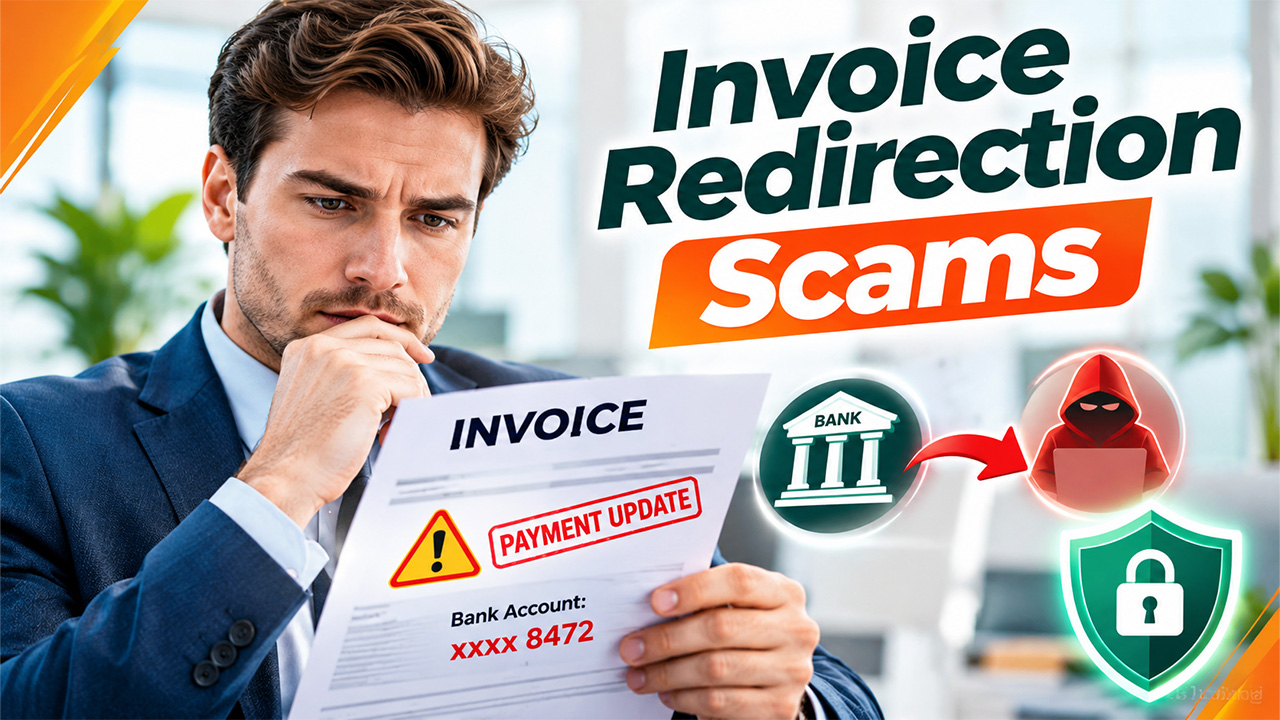
Invoice redirection scams typically involve cybercriminals infiltrating email systems or impersonating trusted vendors. They send fake invoices or altered payment instructions, misleading sales teams into sending funds to unauthorized bank accounts. According to the Association for Financial Professionals, nearly 75% of organizations experienced business email compromise attempts in 2023, with invoice fraud being a leading method used by attackers. This alarming statistic highlights the pervasive nature of these scams and the critical need for businesses to address vulnerabilities in their invoice processing and payment workflows.
Sales teams are often the first point of contact for vendors and clients, making them prime targets for fraudsters. Their focus on closing deals and managing client relationships can sometimes overshadow stringent verification processes, creating an opening for scams. Additionally, sales personnel may not always have the training or tools to recognize subtle signs of fraud, such as slight changes in payment details or urgent payment requests.
It’s no surprise that Katy businesses trust All In IT to help strengthen their cybersecurity posture and protect sensitive communications.
The challenge is amplified when sales teams use personal or less-secure email accounts to communicate with vendors. Cybercriminals exploit these vulnerabilities to insert themselves into legitimate communication channels.
Moreover, the human element is often the weakest link in the security chain. Fraudsters rely on social engineering tactics, crafting convincing emails that mimic trusted vendors or internal finance departments. They may use urgent language to pressure sales personnel into bypassing normal procedures, or exploit the lack of direct communication channels to confirm payment changes. This combination of technical and psychological manipulation makes invoice redirection scams especially challenging to detect and prevent.
Common Warning Signs of Invoice Redirection Scams
Identifying invoice redirection scams early can help businesses prevent unauthorized payments and reduce financial risks. Cybercriminals often rely on subtle changes in communication patterns and payment instructions to deceive employees.
Sales teams and finance departments should watch for the following warning signs:
- Unexpected bank account changes: A vendor suddenly requests payment to a different bank account without prior confirmation.
- Urgent payment requests: Emails pressure employees to complete transactions immediately or risk delays and penalties.
- Suspicious email addresses: Messages come from addresses that closely resemble legitimate vendors or business accounts.
- Unusual communication patterns: A familiar vendor suddenly changes their communication style or requests confidential financial information.
- Unexpected invoice modifications: Payment details differ from previously approved invoices or established vendor records.
Real-World Impact of Invoice Redirection Scams
The financial damage caused by invoice redirection scams can be devastating. The FBI reported that in 2022, losses related to business email compromise, including invoice scams, exceeded $2.4 billion globally. For many companies, these losses go beyond immediate financial harm - they also suffer disruptions to cash flow, strained vendor relationships, and reputational damage.
The growing threat of invoice redirection scams highlights the importance of securing business communication and payment workflows. A single fraudulent payment instruction can result in substantial financial losses, operational disruption, and damaged vendor relationships. For businesses with multiple sales representatives handling customer and supplier communications, even a small gap in verification procedures can create opportunities for fraudsters.
An example scenario involves a fraudster hacking into a vendor’s email and sending a fake invoice to a sales contact. The sales team, unaware of the breach, processes the payment to the fraudulent account. By the time the fraud is detected, the funds are often unrecoverable. This highlights the urgent need for businesses to adopt robust controls that prevent such scams from succeeding.
Another study found that 56% of companies that fell victim to invoice redirection scams experienced delays in their operations due to the time needed to investigate and resolve the fraud. These delays can impact customer satisfaction and operational efficiency, compounding the initial financial losses.
The reputational damage can be equally severe. Vendors may become reluctant to engage with companies that have a history of payment mishaps, fearing that their own financial information might be compromised. This erosion of trust can lead to lost business opportunities and competitive disadvantages.
Controls to Prevent Invoice Redirection Scams
Implementing effective controls is essential to safeguard sales teams and financial processes from invoice redirection fraud. These controls span technology solutions, process improvements, and employee training.
Preventing invoice redirection scams requires a combination of cybersecurity technology, internal verification procedures, and employee awareness. Businesses should establish clear policies for validating payment instructions, securing email communications, and reporting suspicious activities. These controls help reduce the risk of unauthorized payment changes and strengthen the overall security of financial operations.
Multi-Factor Authentication and Secure Email Gateways
Using multi-factor authentication (MFA) for email access greatly reduces the risk of unauthorized account access. MFA requires users to provide two or more verification factors to gain access, making it significantly harder for cybercriminals to compromise accounts. Secure email gateways with advanced threat detection can identify and block phishing attempts and suspicious invoice modifications before they reach sales personnel.
Deploying these technologies creates a strong frontline defense. For instance, businesses that implement MFA see a 99.9% reduction in account compromise attempts.
Verification Protocols for Payment Changes
Establishing strict verification procedures for any changes to payment instructions is critical. This includes requiring confirmation through a secondary communication channel, such as a verified phone call to the vendor’s known contact number. Many businesses trust FTI Services to help implement these safeguards and manage secure IT environments.
Verification protocols should also involve multiple personnel to approve changes, creating a system of checks and balances. For example, a sales team member requesting a payment change might need approval from finance and a manager, reducing the chance that a fraudulent request slips through.
Employee Training and Awareness

Sales representatives frequently communicate with vendors, customers, and finance departments, making them important participants in preventing invoice redirection scams. Regular cybersecurity awareness training should teach employees how to identify suspicious payment requests, recognize impersonation attempts, and follow established verification procedures. Employees should also understand when and how to escalate questionable communications to the IT or finance department rather than acting on urgent payment instructions.
Regular training sessions focused on recognizing invoice redirection tactics empower sales teams to detect and report suspicious activities promptly. Training should cover common scam indicators, such as unexpected changes in invoice details, urgent payment requests, and discrepancies in vendor contact information.
Ongoing awareness programs can include simulated phishing exercises, newsletters, and workshops. These initiatives help maintain a culture of security vigilance and ensure that employees remain up-to-date on emerging fraud tactics.
Leveraging Technology to Strengthen Controls
Beyond procedural controls, technology plays a pivotal role in preventing invoice redirection scams. Automated invoice processing solutions equipped with artificial intelligence (AI) can flag anomalies and inconsistencies that human reviewers might miss. These systems can cross-check invoice data against existing vendor records and historical payment patterns to identify potential fraud.
Machine learning algorithms analyze patterns in payment behavior and detect deviations that suggest fraudulent activity. For example, an invoice requesting payment to a new bank account or an unusual amount triggers alerts for further review.
Moreover, integrating financial systems with customer relationship management (CRM) software enables companies to maintain accurate and up-to-date vendor information, reducing the chances of accepting fraudulent payment instructions. Real-time synchronization between systems ensures that any changes in vendor data are verified and authorized.
Cloud-based platforms also offer enhanced security features, including encryption, audit trails, and role-based access controls, further protecting sensitive financial information from unauthorized access.
The Role of Incident Response Plans
Despite preventive measures, no security system is entirely foolproof. Having a well-defined incident response plan ensures that if an invoice redirection scam is detected, the organization can react swiftly to minimize losses. This plan should include immediate steps for halting payments, notifying affected stakeholders, and engaging law enforcement when necessary.
An effective incident response plan also outlines communication protocols, designates responsible personnel, and establishes timelines for containment and recovery. Regular testing and updating of the plan ensure readiness in the face of evolving threats.
Companies with mature incident response capabilities can reduce the average cost of a data breach by 70%. While invoice fraud is a different vector, the principle of rapid and coordinated response applies equally.
Conclusion
Invoice redirection scams represent a growing cybersecurity threat to sales teams and businesses that manage regular vendor payments. Understanding how these scams operate and implementing effective security controls can help organizations protect financial transactions, maintain trusted business relationships, and reduce the risk of fraud.
By partnering with trusted IT and security service providers, companies can enhance their defenses and maintain the integrity of their financial operations. As the landscape of financial fraud evolves, staying vigilant and prepared is the key to safeguarding your business’s bottom line.
In summary, the battle against invoice redirection scams demands a multi-layered approach. Sales teams must be equipped with the right tools, knowledge, and support systems to identify and thwart fraudulent attempts. Through collaboration, technology, and education, organizations can turn the tide against this pervasive threat and secure their financial future.