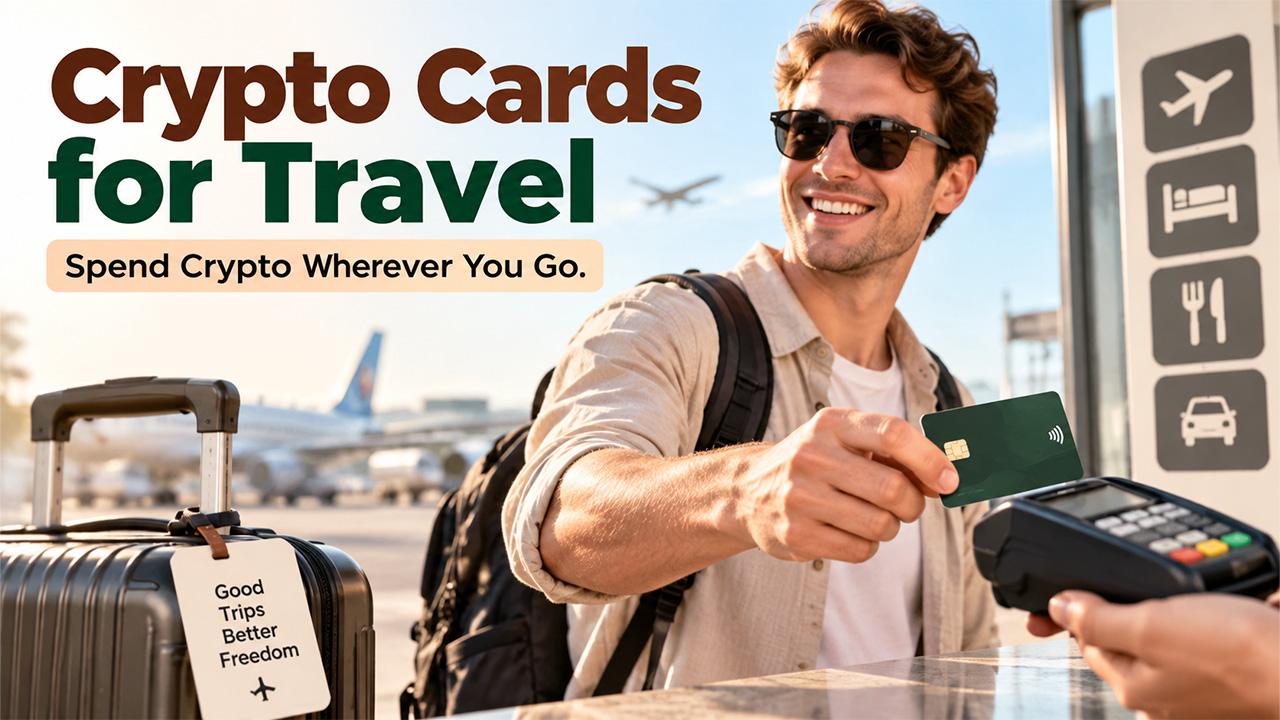

Travelers who hold digital assets often face a simple problem. Their crypto balance exists in a wallet, while hotels, airlines, restaurants, and other travel businesses usually accept cards. A crypto card platform such as Karta provides a route from supported digital assets toward Visa-based payments, with virtual and physical cards available through its current offering.
Why Crypto Cards Matter for Travel
Travel involves many small payments.
You might pay for:
- Flights
- Hotels
- Airport transport
- Restaurants
- Coffee
- Shopping
- Subscriptions
- Tour activities
- Car rentals
- Online bookings
Carrying enough cash for every expense is inconvenient.
Using multiple exchange services before every purchase also adds extra steps.
A crypto card gives digital asset holders another payment option.
How a Travel Crypto Card Works
The basic process is straightforward.
- Hold supported digital assets.
- Fund your card account.
- Complete required verification.
- Activate your card.
- Use the card at eligible merchants.
The provider handles the card payment process.
The merchant does not need to accept cryptocurrency directly.
This difference matters when you travel.
A hotel might accept Visa while offering no direct USDT payment option.
With a crypto card, your payment still travels through the card network.
Why Stablecoins Suit Travel Spending
Stablecoins such as USDT and USDC are common digital assets for payment use.
A traveler might receive income in USDT before a trip.
Instead of converting the full balance before leaving home, the traveler might use part of the balance through a supported crypto card.
Travel Bookings
Many travel expenses happen online.
A virtual crypto card might suit:
- Flight bookings
- Hotels
- Online transportation
- Tour bookings
- Car rentals
A physical card helps once you reach your destination and begin making in-person payments.
Karta lists both virtual and physical Visa cards and states that the card works online, in stores, and at ATMs where available.
Travelers should check local availability before relying on a card.
Foreign Currency Costs
Foreign spending introduces additional costs.
Your card provider might charge a transaction fee.
Visa or another payment network might apply international transaction charges depending on the transaction.
The merchant might also use a currency conversion process.
ATM operators might add separate fees.
You should review the complete fee structure before your trip.
Karta currently lists a 1.5 percent card payment fee. Its website also lists ATM withdrawals at 1.5 percent plus 1 USDT.
Budgeting for Travel
A travel crypto card works better when you set a spending budget.
Suppose your trip budget equals 2,000 USDT equivalent.
You divide the amount into:
- 700 for hotels
- 400 for food
- 300 for transport
- 300 for shopping
- 200 for activities
- 100 for emergency spending
This approach makes your balance easier to monitor.
You should still keep another payment option available.
No single payment method should be your only option while traveling.
Virtual Cards Before a Trip
Virtual cards offer a useful option before departure.
You might use a virtual card to book your hotel and flight before arriving.
The card details stay available inside the relevant payment platform.
Karta's website currently states that users complete verification and then top up the balance to activate a virtual card.
Check the current onboarding process before your trip because procedures and availability might change.
Physical Cards During a Trip
Physical cards help with in-person purchases.
You might use one at:
- Hotels
- Restaurants
- Retail stores
- Transport services
- Tourist attractions
- Supermarkets
Other Visa merchants
Karta states that its Visa card works wherever Visa is accepted, subject to local regulations and partner coverage.
Visa acceptance does not guarantee acceptance for every transaction.
Some merchants use payment processors with geographic or card-type restrictions.
ATM Use While Traveling
ATM access is useful when you need cash.
Before withdrawing funds, check:
- ATM operator fee
- Provider fee
- Withdrawal limits
- Local currency
- Exchange rate
- Daily limits
Karta lists ATM withdrawal fees on its current website. The listed charge is 1.5 percent plus 1 USDT.
Avoid repeated small withdrawals when fees apply per transaction.
Travel Safety
- Keep your card and wallet information secure.
- Do not share card details through messages.
- Use official applications and websites.
Review every transaction
Lock or freeze your card if your provider offers such a function.
Keep backup payment methods.
Karta lists 3D Secure, encrypted transactions, PIN protection, and a self-custody wallet among its current security features.
Self-Custody During Travel
Travel creates additional security risks.
You should protect:
- Wallet credentials
- Recovery information
- Mobile device
- Authentication methods
- Card details
Never store recovery information in an unsecured location.
Do not share wallet recovery phrases with customer support or another person.
Crypto Cards for Remote Workers

Remote workers often travel while earning digital assets.
Suppose a remote designer earns 3,500 USDC each month.
The designer travels across several countries and needs regular spending for:
- Accommodation
- Software
- Food
- Transport
- Internet
- Flights
A crypto card offers one route for eligible purchases.
The designer still needs to check card availability in every destination.
Choosing a Travel Crypto Card
Before leaving home, compare:
- Country availability
- Visa acceptance
- Supported stablecoins
- Supported networks
- Virtual card availability
- Physical card availability
- Card payment fees
- ATM fees
- Foreign transaction costs
- Verification rules
- Spending limits
- Customer support
Karta for Travel Spending
Karta positions its card as a way to spend supported digital assets through Visa. Its website lists global spending, virtual and physical cards, Apple Pay and Google Pay compatibility, and ATM access. Availability depends on regulations and partner coverage.
The platform also states that Karta is a financial technology company rather than a bank.
The practical lesson is simple
Choose a travel payment solution based on your actual destination and spending pattern.
A crypto card might reduce the number of steps between your digital asset balance and everyday travel expenses.
%201.png)

%201.png)

%201.png)