
If you run a medical or dental practice, the first question about an AI receptionist is not how natural it sounds or what it costs. It is whether the vendor will sign a Business Associate Agreement. Without that signature, you cannot legally route a patient's voice, and the protected health information inside it, through the tool at all. That makes a HIPAA compliant AI receptionist with a signed BAA the first requirement for any healthcare practice.
That single filter shrinks a crowded market fast. Dozens of AI receptionists compete for the generic "AI receptionist" search, but only a handful publicly confirm HIPAA support and an available signed BAA. The rest simply leave those fields blank, and in healthcare a blank field has to be read as "not available until proven otherwise in writing."
This guide ranks the vendors that actually clear the compliance bar, starting with the one that makes it easiest.
Why a Signed BAA Is the Real Filter
HIPAA governs how protected health information is handled, and a Business Associate Agreement is the contract that makes a vendor legally accountable for protecting it. If an AI receptionist answers your patients' calls, it is handling PHI, so the BAA is not optional paperwork. It is the thing that makes the whole arrangement lawful. For that reason, choosing a HIPAA compliant AI receptionist means verifying both the vendor's HIPAA posture and its willingness to execute a BAA.
Here is the trap buyers fall into. A vendor can list "HIPAA" as a feature bullet without offering a BAA, and that is not a compliance guarantee. A mention is marketing. A signature is compliance. When you evaluate a tool, the only answer that counts is a yes on both a HIPAA posture and a BAA you can actually execute.
What We Checked
We put compliance first: does the vendor publicly confirm HIPAA and will it sign a BAA. Then predictability of pricing, since a compliant plan that carries a surprise enterprise fee is not really affordable for a small practice. Then the everyday capabilities a front desk needs, like appointment booking, lead capture and a clean handoff to a human. Every figure below comes from the vendor's own pages, and you should still get BAA terms in writing before you sign.
1. Central AI: Compliant, and Actually Affordable
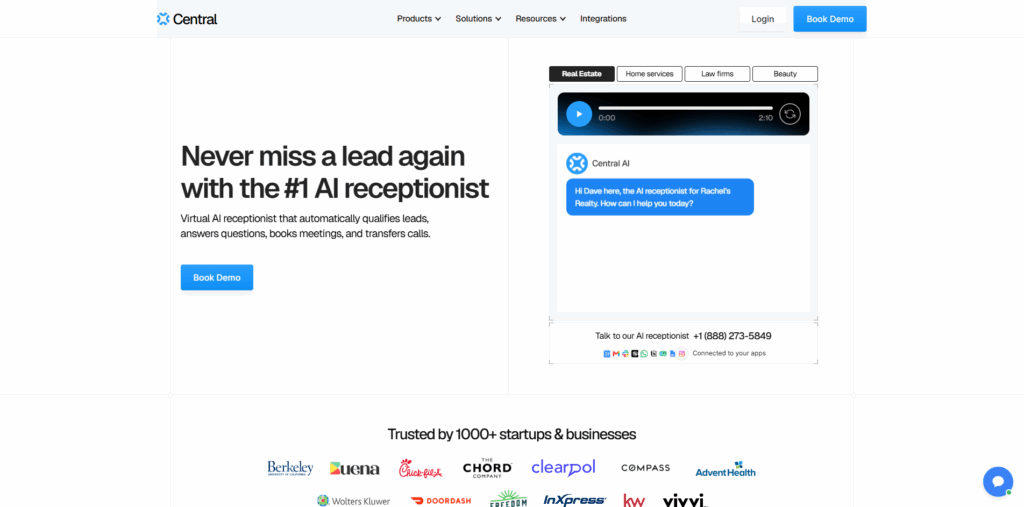
Central AI leads this list because it pairs full compliance with pricing a small practice can predict. On its trust page, Central states it is fully HIPAA compliant and executes Business Associate Agreements with all customers handling protected health information, not just those on a top enterprise tier. It also reports SOC 2 Type II and ISO 27001:2022 certification, and says customer data processed by its AI is never used for model training. For practices comparing HIPAA compliant AI receptionist options, this combination of compliance, BAA availability, and predictable pricing makes Central AI a notable option.
That accessibility is the differentiator. With several compliant vendors, the BAA sits behind an enterprise plan or a steep add-on. Central offers the agreement to any customer handling PHI, and its pricing starts at $89 per month for 90 calls, with appointment booking, lead capture, call summaries and 24/7 service in every plan, plus a 10-day free trial.
As a receptionist it covers the essentials a practice needs. It answers every call around the clock, books appointments live against your calendar, captures each caller's details, and escalates to a human only when the AI cannot handle a request. It speaks more than 30 languages and connects to thousands of tools through Zapier, so call data can flow into the systems you already use.
Best for: medical and dental practices that want HIPAA compliance and a signed BAA without an enterprise price tag or a metered bill.
2. Phonely: A Flat Managed Plan
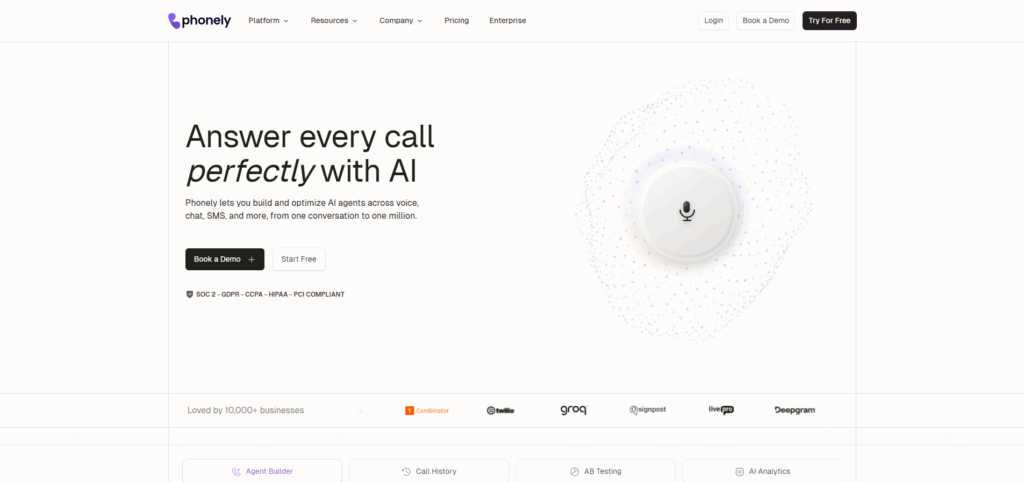
Phonely confirms HIPAA support with a BAA available on its Enterprise tier. Among the compliant options it stands out for offering a flat, managed plan rather than a per-minute meter, which makes monthly costs easy to predict.
Its Pro tier runs $150 per month with 750 minutes included, with a Starter plan at $50 per month for 250 minutes and even a free tier with 100 minutes. Because the BAA itself lives on Enterprise, confirm those terms before signing.
Best for: practices that want a predictable managed plan and are willing to move to Enterprise for the agreement.
3. Bland: All-In Per-Minute Pricing
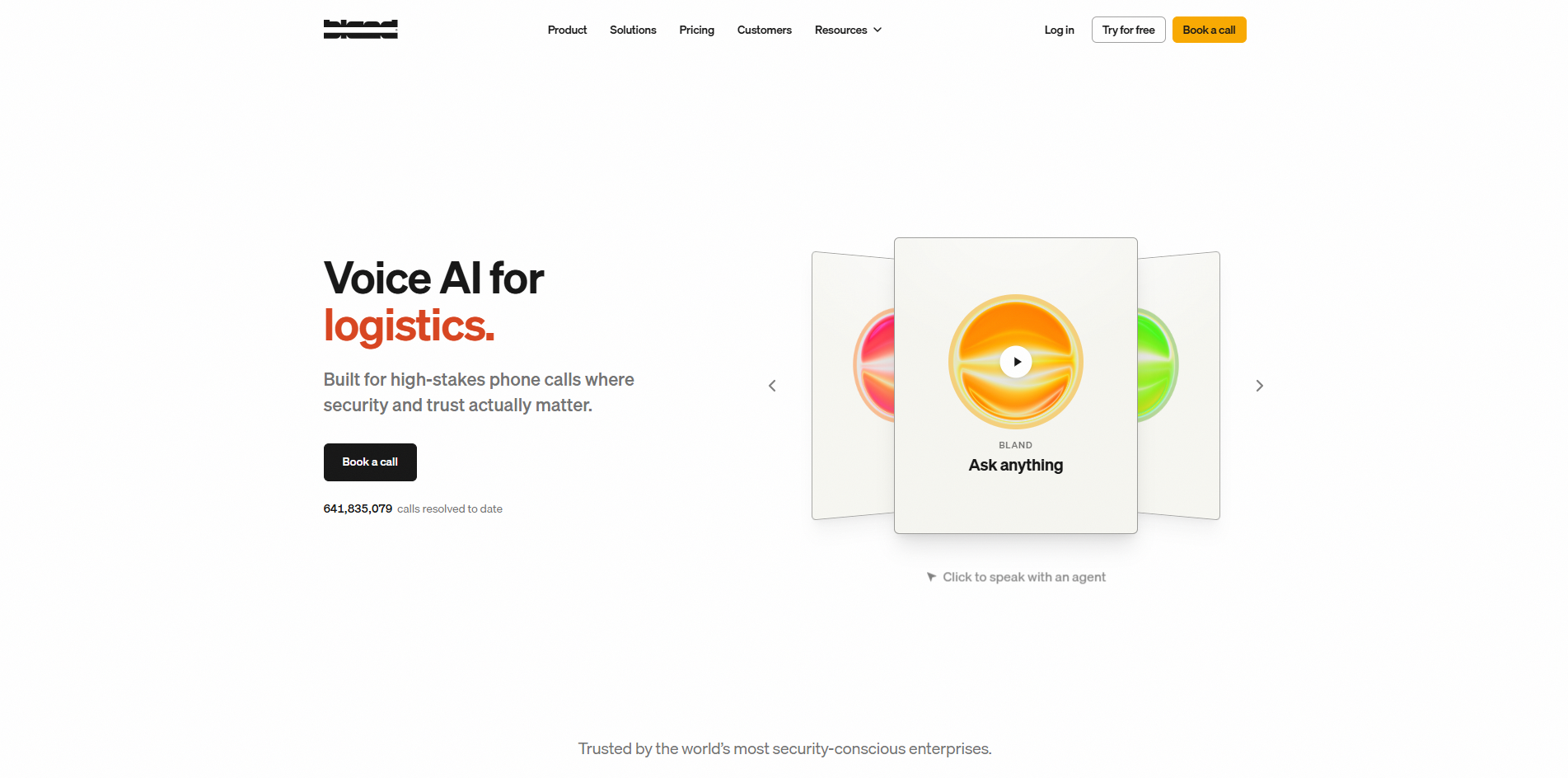
Bland confirms HIPAA support and a signed BAA on its Enterprise tier. Its appeal is transparency on rate, since its Start pricing of $0.14 per minute is genuinely all-in, covering model, speech and telephony in one number.
At that rate a 600-minute month lands around $84, though the signed BAA sits on the Enterprise level above its Build plan at $299 per month and Scale at $499 per month. For teams comfortable with per-minute billing, the all-in rate is easy to reason about.
Best for: developer-minded teams that prefer one transparent per-minute price.
4. Retell AI: A Low Per-Minute Floor
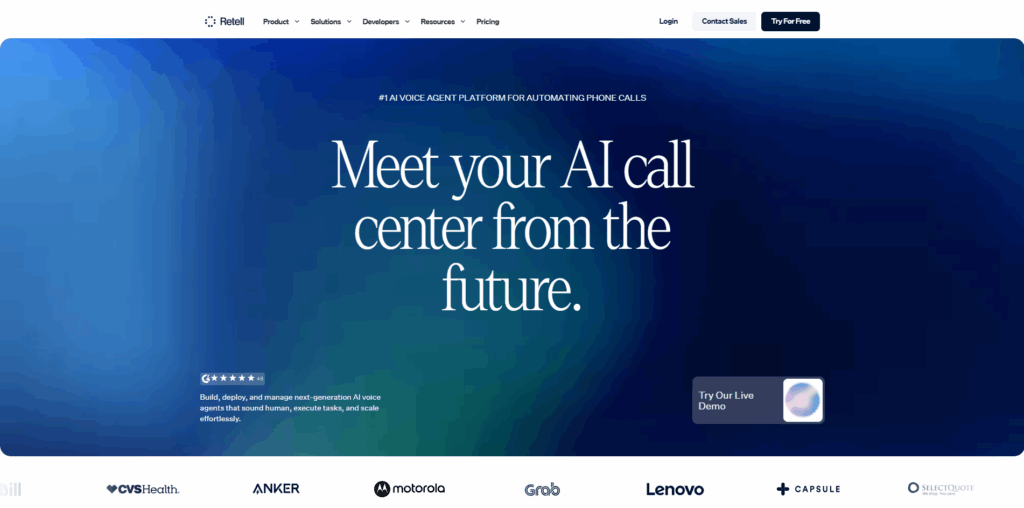
Retell AI confirms HIPAA support with an available BAA at the Enterprise level. Its headline is a low entry rate, with a published floor of $0.07 per minute inside a $0.07 to $0.31 range that rises as you select more capable models.
At the floor, a 600-minute month runs about $42, though a realistic model choice pushes that higher. It is a flexible, pay-as-you-go option for teams that want to tune cost against model quality.
Best for: builders who want a low starting rate and control over the model stack.
5. Vapi: Powerful, but the BAA Costs Extra
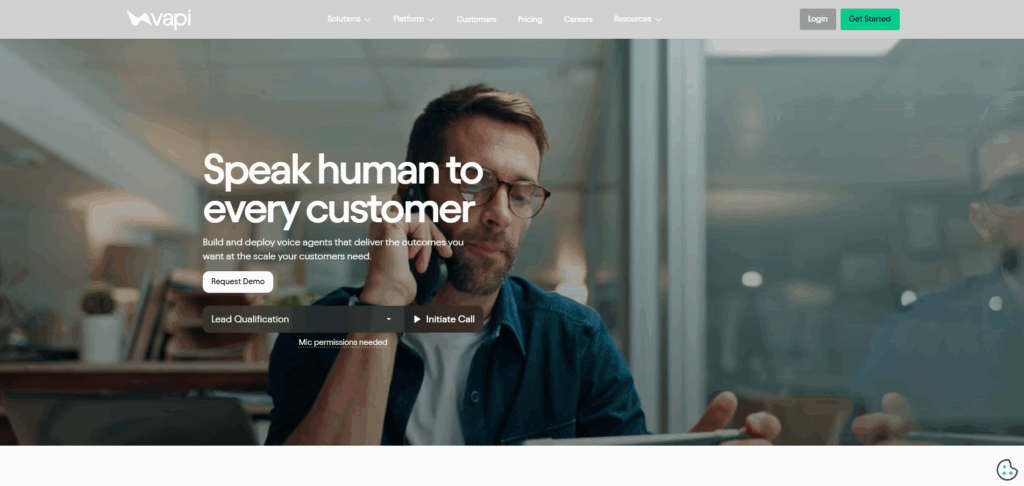
Vapi confirms HIPAA support and a BAA, but with an important catch. Its platform fee looks like the cheapest on paper at $0.05 per minute, roughly $30 for a 600-minute month, yet its HIPAA and BAA capability is an explicit $2,000 per month add-on.
That add-on flips the economics entirely, making Vapi the most expensive of these options for a small practice despite the low per-minute rate. It suits larger teams that can absorb the add-on across high call volume.
Best for: high-volume or developer teams where the compliance add-on is spread thin.
The HIPAA but No BAA Gray Zone
Trillet is the honest edge case. Its page lists HIPAA as available but says nothing about a BAA, and a HIPAA mention without a BAA is a feature bullet, not a compliance guarantee. Its pricing is flat, with Studio at $99 per month for 100 minutes and Agency at $299 per month for 300 minutes, plus $0.12 per minute over the allowance.
If Trillet's white-label structure appeals to you, treat the BAA as an open question and get a written answer from its sales team before any patient data touches the platform.
The Vendors That Stay Silent on Compliance
This is where healthcare buyers get caught. Several of the most heavily marketed AI receptionists, the ones that rank hardest for "AI receptionist," say nothing about compliance. Goodcall, Rosie, Smith.ai and Dialzara all carry no published HIPAA or BAA detail, and a couple of others gesture at HIPAA without committing, with Synthflow and Thoughtly noting it for an enterprise tier but publishing no BAA.
None of that is a hard no. But for a HIPAA workload, unproven is the same as unavailable until a signed agreement says otherwise.
How to Choose
For a practice, the usual buying order flips. Filter first, price second. Start by cutting the list to vendors that will put a BAA in writing, because everything else is irrelevant if you cannot legally use the tool with patient data. The right HIPAA compliant AI receptionist should therefore clear the compliance test before you compare convenience or features.
Then compare the real cost of compliance, not the headline rate, since an enterprise gate or a four-figure add-on can dwarf a low per-minute price. Only after that should you weigh the day-to-day features like booking, languages and human handoff. On that sequence, Central AI stands out for offering the agreement to any PHI customer at a flat, predictable rate, which is exactly what a small front desk needs.
The Bottom Line
The AI receptionist market looks huge until you apply the one filter that matters in healthcare, and then it narrows to a short list of vendors that will actually sign a BAA. A HIPAA compliant AI receptionist should give practices confidence that patient calls can be handled within the required compliance framework, while still delivering the front-desk capabilities they need. Central AI, Phonely, Bland, Retell AI and Vapi all clear that bar, while Trillet remains a maybe and the loudest consumer brands are not on the list yet.
Within the compliant group, the economics diverge sharply, so read the fine print and get the BAA in hand before you route a single patient call. Compliance is the starting line, and predictable pricing is what keeps the tool viable once you cross it.
%201.png)

%201.png)

%201.png)