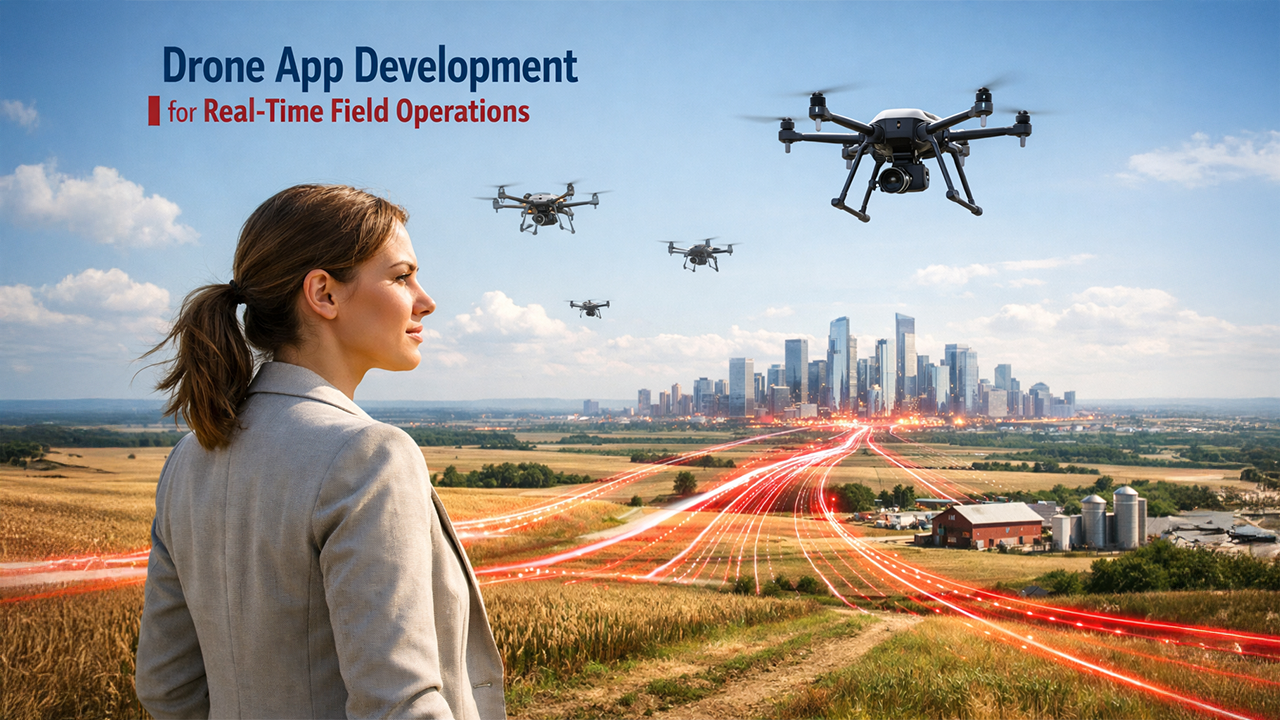

In many industries, critical decisions depend on data collected outside the office. Construction sites, agricultural fields, energy infrastructure, and logistics hubs all generate valuable information in real time. However, a persistent challenge remains: how to efficiently transfer, process, and use that data within centralized business systems.
Traditionally, this process has been slow and fragmented. Field teams collect data manually, transfer it through multiple channels, and only then does it reach decision-makers. By that time, the information may already be outdated.
This disconnect creates inefficiencies that impact productivity, cost control, and responsiveness. Businesses need a way to eliminate delays and ensure that field data flows seamlessly into their digital ecosystems. This is where drone app development plays a transformative role.
Connecting Field Operations with Web-Based Systems
Drone technology introduces a faster and more efficient way to collect data, but its real value emerges when integrated with web platforms. Instead of treating drones as standalone tools, modern businesses use them as part of a connected system where data moves instantly from the field to the cloud.
Through well-designed applications, drone-collected data can be:
- Transmitted in real time to web-based dashboards
- Processed automatically using cloud infrastructure
- Visualized through interactive interfaces accessible from any device
This connection allows teams in different locations to access the same up-to-date information simultaneously. Project managers, analysts, and executives can all work with a unified data set, improving collaboration and decision-making.
The Role of Drone App Development in Data Synchronization
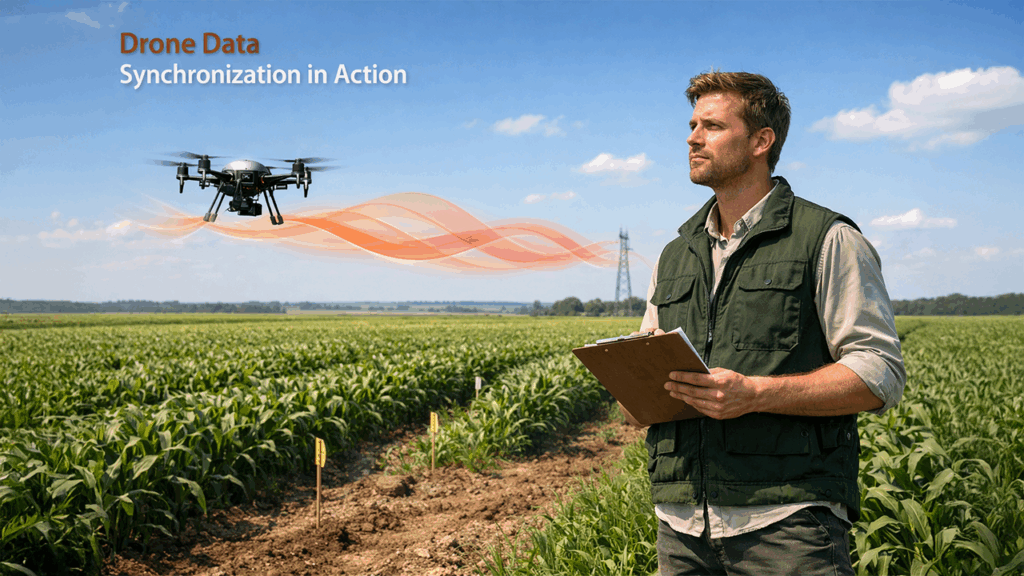
One of the most critical aspects of this ecosystem is synchronization. Data collected by drones must be accurately transmitted, stored, and updated across multiple platforms without delays or inconsistencies.
Drone app development ensures this by creating systems that:
- Maintain stable communication between drones and servers
- Handle intermittent connectivity in remote areas
- Automatically sync data once a connection is restored
- Prevent data loss or duplication
This level of reliability is essential for industries where even small inaccuracies can lead to significant financial or operational consequences.
Companies that require robust and scalable solutions often rely on drone app development, where companies, like Wezom, build custom platforms designed to ensure seamless data flow between field operations and web-based systems.
Enhancing Visibility Through Web Dashboards
Once data reaches the web platform, its presentation becomes just as important as its accuracy. Raw data alone is not enough. Businesses need clear, actionable insights that can be quickly understood and applied.
Web dashboards play a central role in this process. They transform complex data sets into intuitive visualizations, such as maps, charts, and real-time video feeds.
Effective dashboards allow users to:
- Monitor operations as they happen
- Identify trends and anomalies
- Generate reports for stakeholders
- Make informed decisions without technical expertise
The quality of these interfaces directly impacts how effectively teams can use the data. This is why user experience design is a key component of successful drone applications.
Real-Time Decision-Making as a Competitive Advantage

The ability to act on real-time data is becoming a defining factor in business competitiveness. Companies that can respond quickly to changing conditions are better positioned to optimize operations and reduce risks.
Drone-powered systems, combined with web platforms, enable this level of responsiveness. For example, a construction manager can immediately detect deviations from project plans, while an energy company can identify potential infrastructure issues before they escalate.
This shift from reactive to proactive decision-making leads to:
- Reduced downtime and operational disruptions
- Faster project completion times
- Improved resource allocation
- Enhanced overall efficiency
In fast-paced industries, these advantages can make a significant difference in performance and profitability.
Integration with Broader Digital Ecosystems
To maximize value, drone applications must integrate with existing business systems. Web platforms act as the central hub where data from various sources converges, including drones, IoT devices, and enterprise software.
Through integration, businesses can:
- Combine aerial data with operational metrics
- Automate workflows across departments
- Maintain a single source of truth for all data
For instance, integrating drone data with ERP systems allows companies to align field insights with financial and operational planning. Similarly, connecting with GIS platforms enhances spatial analysis and mapping capabilities.
Drone app development ensures that these integrations are seamless and scalable, enabling businesses to build cohesive digital ecosystems.
Read Also: How to Choose the Best Blockchain App Development Services
Overcoming Technical Challenges in Real-Time Systems
Building systems that connect drones with web platforms is not without challenges. One of the primary issues is maintaining low latency while handling large volumes of data, particularly high-resolution images and video streams.
Another challenge is ensuring consistent performance across different environments. Field operations often take place in areas with limited connectivity, which can disrupt data transmission.
Security is also a critical concern. Sensitive data must be protected during transmission and storage, especially in industries such as energy or infrastructure.
These challenges require advanced technical solutions, including:
- Optimized data compression and streaming techniques
- Edge computing to process data closer to the source
- Secure communication protocols and encryption
- Scalable cloud architectures
An experienced development approach is essential to address these complexities effectively.
The Future of Web-Connected Drone Applications
As technology continues to evolve, the integration between drones and web platforms will become even more sophisticated. Emerging trends are shaping the next generation of solutions.
Artificial intelligence is enabling automated analysis of aerial data, reducing the need for manual interpretation. Edge computing is improving performance by processing data directly on devices. Meanwhile, advancements in connectivity, such as 5G, are enhancing real-time capabilities.
These developments will further strengthen the role of drone applications in business operations, making them more efficient, intelligent, and scalable.
Conclusion: Unifying Field and Digital Operations
The gap between field data and business decision-making has long been a barrier to efficiency. Drone technology, combined with powerful web platforms, provides a solution by creating a seamless flow of information.
Drone app development is the key to making this integration possible. By connecting real-time field operations with centralized digital systems, businesses can improve visibility, accelerate decision-making, and optimize performance.
In a world where speed and accuracy are critical, bridging this gap is no longer optional. It is a fundamental requirement for organizations looking to stay competitive and build future-ready operations.
%201.png)

%201.png)

%201.png)