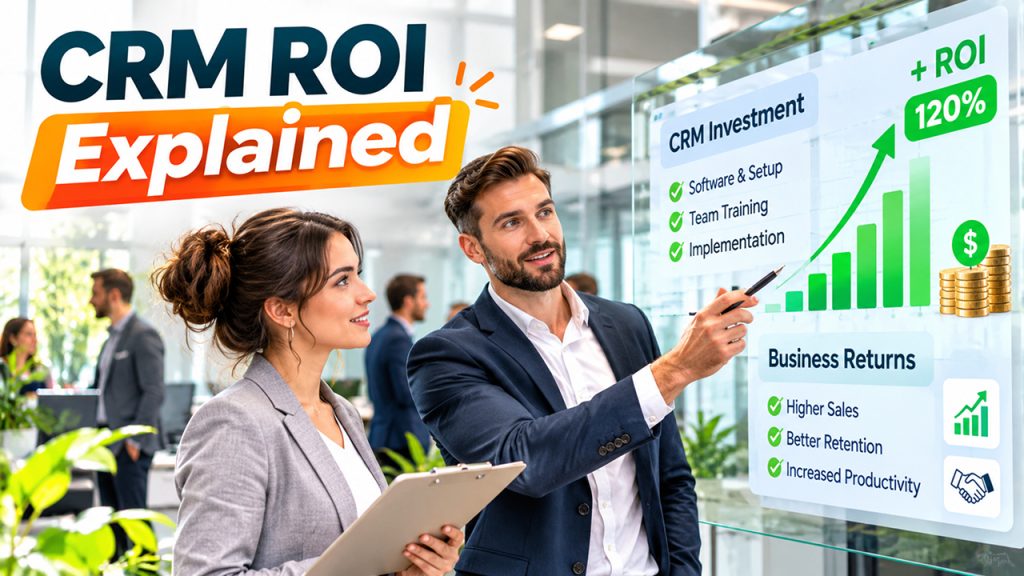
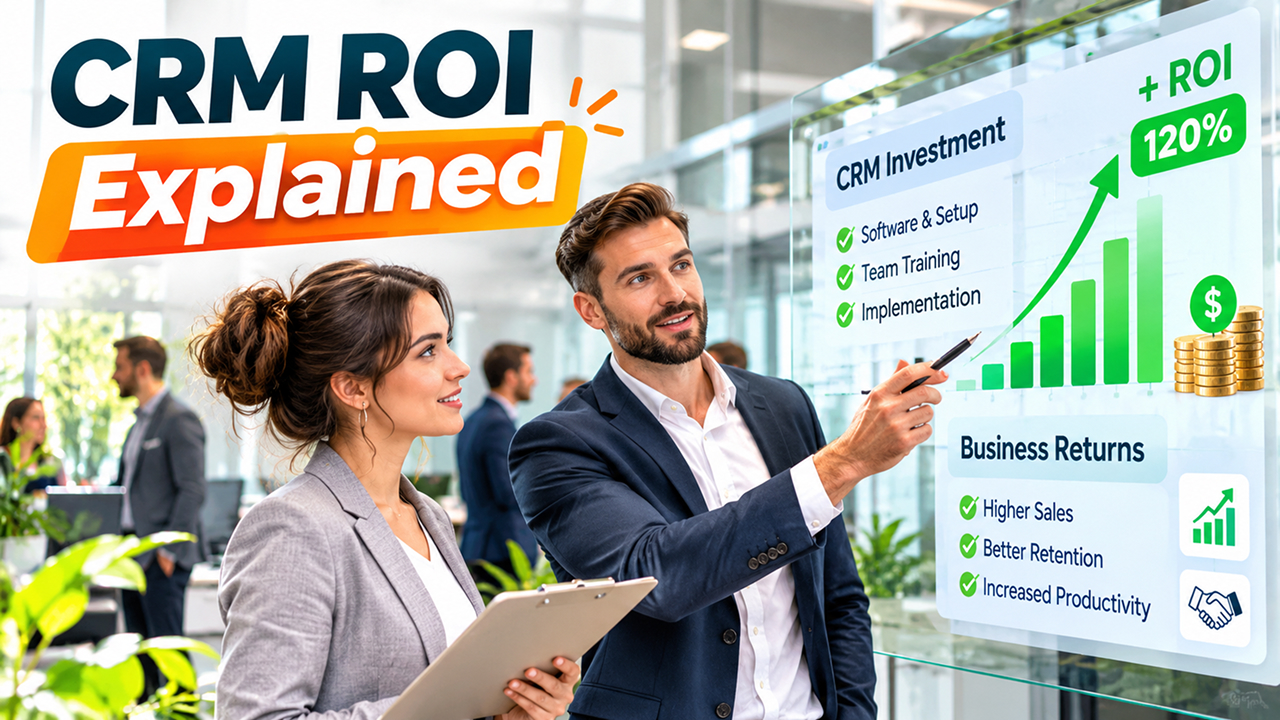

Investing in customer relationship management software is an important decision for any growing business. A CRM system can help companies manage customer information, organize sales activities, automate repetitive tasks, and improve customer relationships. However, purchasing software is only the first step. Businesses also need to understand whether their investment is delivering measurable results.
This is where understanding how to calculate CRM ROI becomes important. Measuring return on investment helps businesses compare the money spent on CRM software with the financial benefits it generates. It also makes it easier to identify performance gaps and decide whether the current system supports long-term business goals.
In this guide, we will explore the CRM ROI formula, important performance metrics, calculation methods, and a practical example to help you evaluate your CRM investment.
What Is CRM ROI?
CRM ROI, or customer relationship management return on investment, measures the financial value a business receives from implementing and using CRM software compared with its total investment.
It considers both the costs associated with operating the platform and the benefits generated through improved sales, better productivity, customer retention, and operational efficiency.
For example, a company might spend $12,000 annually on CRM software, implementation, and employee training. If the system helps generate $30,000 in measurable additional financial benefits, the business has received more value than it invested.
Understanding how to calculate CRM ROI allows decision-makers to move beyond assumptions and evaluate actual business performance.
Why Is Measuring CRM ROI Important?
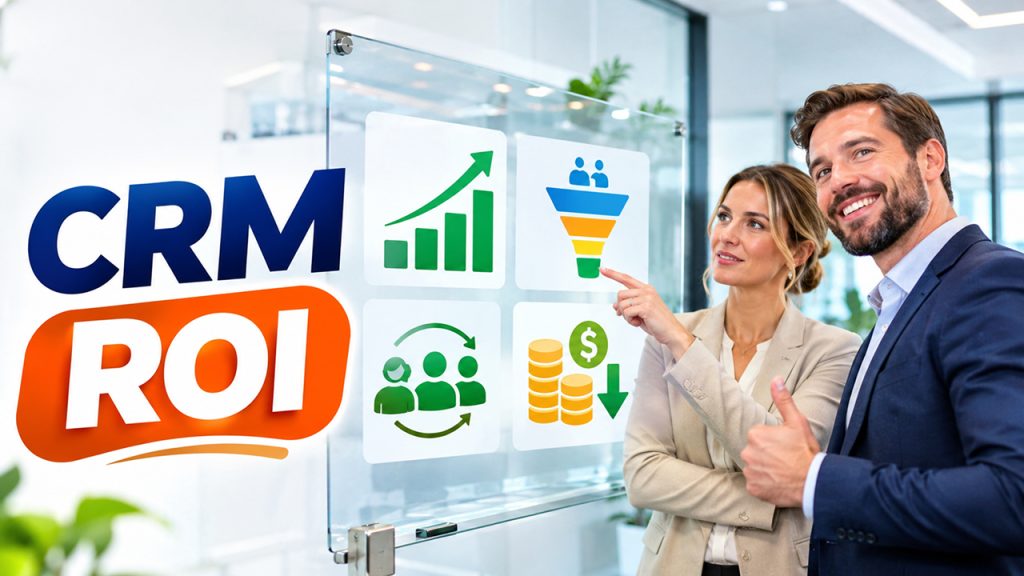
A CRM platform should contribute to business growth rather than simply store customer records. Measuring its financial impact helps businesses understand whether the technology is supporting their objectives.
Here are some important reasons to evaluate CRM performance:
- Understand financial performance: Determine whether the software generates enough value to justify its cost.
- Improve sales productivity: Identify whether automation and organized customer data help sales representatives close deals faster.
- Measure customer retention: Evaluate whether improved communication and follow-ups encourage customers to continue doing business with the company.
- Identify unnecessary expenses: Recognize features, subscriptions, or processes that are increasing operational costs without delivering sufficient value.
- Support future decisions: Use performance data to decide whether to upgrade, customize, or expand the existing CRM system.
Regular evaluation also helps businesses identify opportunities to improve their technology investments.
How to Calculate CRM ROI: Formula and Explanation
The basic CRM ROI formula compares the financial benefits generated by the CRM system against its total implementation and operating costs.
CRM ROI Formula:
CRM ROI (%) = [(Total Financial Benefits − Total CRM Costs) / Total CRM Costs] × 100
Let's understand the different components.
1. Calculate Total Financial Benefits
Start by identifying the measurable financial improvements associated with your CRM implementation.
These benefits may include:
- Increased revenue from successfully converted leads.
- Higher customer retention and repeat purchases.
- Reduced administrative expenses through automation.
- Lower customer acquisition costs.
- Improved sales team productivity.
- Fewer errors in customer records and reporting.
For accurate results, focus on benefits that can reasonably be attributed to the CRM system. Avoid counting the same financial improvement twice.
2. Calculate Total CRM Costs
The next step is identifying every expense associated with purchasing, implementing, and maintaining the software.
Common expenses include:
- Monthly or annual subscription fees.
- Initial setup and implementation charges.
- Data migration and integration expenses.
- Employee training costs.
- Customization and development expenses.
- Ongoing maintenance and technical support.
Including hidden and indirect expenses provides a more realistic picture of the investment.
3. Apply the CRM ROI Formula
Once you have calculated the total benefits and expenses, enter those values into the formula.
The resulting percentage indicates whether the CRM investment generated a financial gain or loss during the selected measurement period.
Important Metrics to Measure CRM ROI
Calculating financial returns becomes easier when businesses track the right performance indicators. These metrics help connect everyday CRM activities with measurable business outcomes.
1. Sales Conversion Rate
Sales conversion rate measures the percentage of leads that become paying customers.
A CRM system can improve this metric by organizing leads, tracking interactions, and helping sales representatives follow up at the right time.
Formula:
Sales Conversion Rate = (Number of Converted Leads / Total Leads) × 100
2. Customer Retention Rate
Customer retention rate measures how effectively a business maintains relationships with existing customers over a specific period.
CRM features such as automated reminders, customer segmentation, and personalized communication can support stronger retention.
3. Customer Acquisition Cost (CAC)
Customer acquisition cost represents the average amount spent to acquire one new customer.
A well-organized CRM can help businesses identify effective marketing channels, improve lead qualification, and reduce unnecessary sales activities.
4. Average Deal Size
Average deal size measures the average revenue generated from each closed deal.
Sales teams can use CRM reports to identify valuable opportunities, understand purchasing patterns, and improve their sales strategies.
5. Sales Cycle Length
This metric measures the average time required to convert a lead into a paying customer.
Automated follow-ups, centralized communication histories, and sales pipeline visibility can help reduce delays throughout the sales process.
6. Employee Productivity
Employee productivity measures how efficiently teams complete their daily responsibilities.
Automation can reduce manual data entry, repetitive reporting, and administrative work, allowing employees to spend more time on customer-facing activities.
CRM ROI Calculation Example
Let's consider a small business that implements CRM software to improve its sales operations and customer management.
The company wants to evaluate the financial impact after one year.
Annual CRM Investment:
| Expense | Annual Cost |
| CRM subscription | $4,000 |
| Implementation | $2,000 |
| Employee training | $1,000 |
| Integration and customization | $1,000 |
| Maintenance and support | $2,000 |
| Total investment | $10,000 |
Financial Benefits After One Year:
| Business Improvement | Financial Benefit |
| Additional sales revenue | $18,000 |
| Reduced administrative expenses | $5,000 |
| Improved customer retention | $7,000 |
| Total benefits | $30,000 |
Now apply the formula:
CRM ROI = [(30,000 − 10,000) / 10,000] × 100
CRM ROI = (20,000 / 10,000) × 100
CRM ROI = 200%
This means the business generated $2 in net financial benefits for every $1 invested in its CRM system.
The result indicates that the investment delivered a positive financial return during the first year, assuming the listed benefits are incremental and do not overlap.
How to Calculate the CRM Payback Period
ROI explains the overall financial return, but businesses also need to know how long it takes to recover their initial investment.
The CRM payback period measures the time required for cumulative financial benefits to cover the total CRM investment.
Formula:
Payback Period = Initial CRM Investment / Average Monthly Net Financial Benefit
For example, suppose a business invests $10,000 in CRM implementation and generates $2,000 in additional net financial benefits every month.
Payback Period = $10,000 / $2,000
Payback Period = 5 Months
This means the business recovers its investment in approximately five months.
For uneven monthly benefits, businesses should calculate cumulative net cash flows instead of relying on a simple monthly average.
Common Mistakes to Avoid When Measuring CRM ROI
Even when businesses understand the calculation, certain mistakes can affect the accuracy of their results.
- Ignoring hidden costs: Excluding training, customization, and maintenance expenses can make the investment appear more profitable than it actually is.
- Focusing only on sales revenue: Productivity improvements, retention, and reduced administrative expenses can also create measurable value.
- Using unrealistic projections: Expected improvements should not be treated as actual financial benefits until supported by performance data.
- Ignoring employee adoption: A CRM platform cannot deliver its full potential if employees do not use it consistently.
- Measuring results too early: CRM implementation often requires time before meaningful improvements become visible.
Businesses should establish baseline performance metrics before implementation and compare them with results collected after deployment.
How to Improve Your CRM ROI
Improving financial returns requires more than selecting software with advanced features. Businesses must ensure that their CRM system supports actual operational requirements.
Consider these practical approaches:
- Automate repetitive activities: Use workflow automation for lead assignments, follow-up reminders, and routine notifications.
- Maintain accurate customer data: Regularly clean duplicate records and update outdated information.
- Train employees: Help teams understand how to use CRM features effectively in their daily workflows.
- Track performance regularly: Review sales conversion, customer retention, productivity, and other relevant metrics.
- Customize workflows: Configure CRM processes around your business requirements rather than following unnecessary steps.
- Review software expenses: Evaluate subscription plans and remove unused features that do not contribute meaningful value.
A properly implemented CRM solution can become an important part of a company's long-term growth strategy.
Conclusion
Understanding how to calculate CRM ROI helps businesses determine whether their CRM investment is creating measurable financial value. By evaluating total expenses, additional revenue, productivity improvements, and customer retention, companies can make more informed technology decisions.
The key is to measure performance consistently rather than relying on assumptions. Start with a clear baseline, track relevant metrics, and review results over time.
Whether you use an existing CRM platform or invest in a customized solution, a data-driven approach can help maximize its business value and support sustainable growth.
Frequently Asked Questions (FAQs)
A positive ROI indicates that measurable financial benefits exceed the total investment. However, what qualifies as a good return depends on implementation costs, business objectives, industry, and the time required to achieve results.
Businesses may begin seeing operational improvements within a few months, but meaningful financial returns can take six to twelve months or longer. The timeline depends on employee adoption, implementation complexity, and sales cycles.
Include subscription fees, implementation, customization, employee training, data migration, integrations, maintenance, and technical support. Considering these expenses helps produce a more realistic financial evaluation.
Yes. Small businesses can use the same formula by tracking their CRM expenses and measurable improvements in sales, customer retention, and employee productivity. Even a basic spreadsheet can help monitor performance.
CRM ROI measures the percentage of financial return generated compared with the total investment. The payback period measures how long it takes to recover the initial investment through financial benefits.