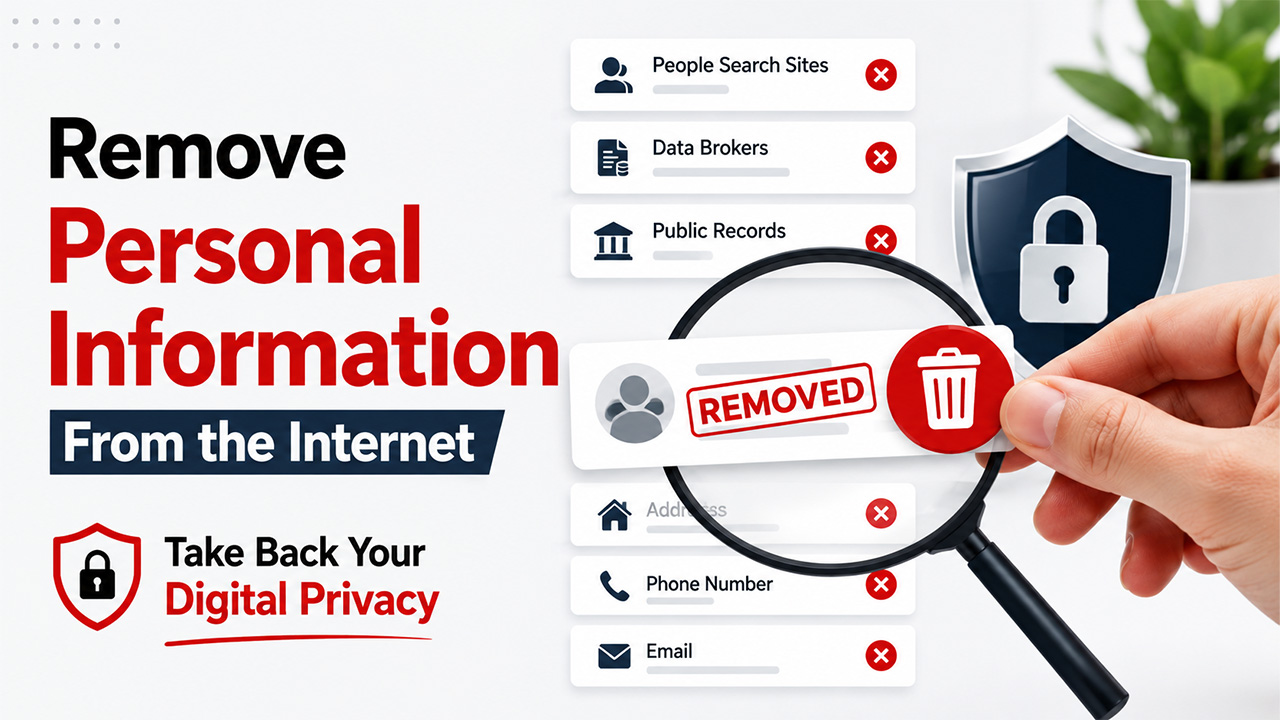

Personal Data Removal: Remove Your Information from the Internet Starting Today
Your digital footprint expands constantly. Every purchase leaves traces. Social media profiles persist indefinitely. Service registrations create permanent records. What happens when you decide this exposure ends? Learning how to remove your personal information from the internet becomes critical for protecting your privacy.
Data brokers collect personal data from multiple sources then sell access freely. People-search sites publish phone numbers and addresses openly. Search engines index scattered information across the web. A step-by-step guide through this landscape clarifies which removal solutions truly work. Consider using ClearNym privacy service which automates opt-out requests to major data brokers and people-search sites. ClearNym's dashboard helps identify and request removal across numerous platforms simultaneously. Their monitoring alerts you when new listings appear. The service handles continuous removal requests as information resurfaces.
Personal Data Removal From Search Engines: The First Step
Search engine de-indexing offers immediate relief from unwanted visibility. Major search engines provide removal tools that let you request specific content disappear from search results quickly. This process involves submitting removal requests through each search engine's webmaster console directly.
Here's how search engine removal works:
- Locate the URL containing your exposed personal information
- Access the search engine's webmaster dashboard to identify and request removal
- Submit the removal request with detailed information about the content
- Wait for processing which typically takes 24 to 48 hours
- Verify removal by searching your name in multiple search engines
Search engines stop showing that particular page in their search results. However this does not delete the original content. The page remains on its server. Only the search engine index excludes it from view. This distinction matters significantly for long-term privacy.
Search engine removal works best when combined with removing the source. If information stays on the originating website, new search engines find it eventually. New indexing occurs. The cycle repeats. Effective privacy requires addressing both search engines and sources simultaneously.
Personal Data Removal from Data Brokers and People-Search Sites

Data brokers operate completely differently than search engines do. They maintain massive databases of sensitive personal information. They compile data from public records, online transactions, and information purchases. Their entire business model relies on selling access to this collected data. Removing information requires direct contact with each broker individually.
Common data brokers include numerous platforms operating nationwide. Each maintains separate databases. Each has different removal procedures. Some accept email requests only. Others require phone calls exclusively. A few use online opt-out pages for faster processing.
Major Data Broker Categories and Removal Methods:
| Platform Type | Removal Approach | Processing Time |
| People-search engines | Opt-out pages or email | 14-28 days |
| Background check services | Formal removal requests | 21-56 days |
| Public record databases | Manual contact requests | 28-84 days |
| Data aggregators | Direct data protection officer contact | Varies by company |
Public records present particularly difficult challenges. Court documents, property records, and government filings contain your contact information permanently. These exist for important public interest reasons. Complete removal often proves impossible legally. Instead you can request anonymity through official channels.
Identity Theft Risk Increases With Exposed Data
Identity theft represents one serious consequence of exposed personal information online. Criminals use phone numbers and home addresses to target victims directly. Account takeover hackers begin their attacks with basic contact information. Understanding how to protect your personal data and digital privacy starts with knowing where that information exists and removing it from public access before criminal exploiting it.
Doxxing occurs when malicious actors publish personal information online intentionally. Stalking also happens through exposed contact details being shared widely. When your home address appears publicly anywhere, security risks multiply quickly. Restricting profile visibility reduces targeting possibilities significantly. Removing address information from brokers eliminates one major avenue for attackers completely.
Fast action matters tremendously when you discover exposed information online. New listing appear constantly across platforms. Deleting old accounts reduces accessible data sources. Closing inactive social media profiles prevents information harvesting. Each action removes one entry point for criminals.
Personal Data Removal Scenarios That Demand Immediate Action
- Emergency Stop Procedure: You discover your information sold to scammers online. New listings appear daily across multiple platforms. Phone calls from unknown numbers increase suddenly. You take emergency action immediately. This scenario demands rapid professional response from removal services.
- Preventing Future Problems: You search your name and find minimal public results currently. You were targeted by doxxers historically. You take protective measures now before issues emerge again. Proactive removal prevents future targeting effectively.
- Ongoing Monitoring and Maintenance: Family member details appear alongside yours in searches constantly. You monitor continuously for new listings appearing. You request removal immediately when new information surfaces online. You verify results regularly through automated tools.
Audit Your Personal Data: The Critical First Step to Removal

Understanding what exists online comes first absolutely. Search your name across multiple search engines. Note what appears in the results carefully. Check people-search sites specifically for your information online. Search for your phone number independently across platforms. Search for your email address separately in databases. Search for your home address directly. Document results thoroughly. This audit reveals your actual exposure level accurately. Most people significantly underestimate their digital presence online.
The audit process requires patience but provides essential clarity. Create a spreadsheet tracking where information appears publicly. Note whether each source offers opt-out pages for removal. Identify the exact record type in each location found. Determine the jurisdiction managing public records involved. This organizational approach simplifies the removal process substantially.
Some information appears in multiple locations simultaneously. Your phone number might exist on five different platforms. Your email address could appear in ten separate databases. Your home address might show in twenty locations. Removal becomes a careful targeting exercise. Attack the highest-priority information first always. Phone number removal takes priority over less sensitive data types.
Submit Personal Data Removal Requests Strategically
Submit the request directly through available channels immediately. Opt-out pages provide the fastest option for removal available. Complete forms with your information and answer verification questions thoroughly. Email requests work when opt-out pages do not exist for removal. Phone calls sometimes accelerate removal timelines significantly. Document each request including date submitted, method used, and expected completion date clearly. Keep records organized systematically.
Verification often requires proof of identity from removal services directly. Some services demand copies of government identification documents. Others request email confirmation from your registered address specifically. The verification step confirms you are who you claim to be. This protects against malicious removal requests targeting innocent people deliberately.
Expected completion dates vary widely between different services. Some delete information immediately upon request. Others require several weeks for processing. Public records removal takes the longest typically. Government agencies process requests slowly due to high volume. Patience becomes absolutely necessary for long-term success with removal.
Verify Results and Monitor Continuously
After removal requests, verification proves absolutely essential always. Check whether the information disappeared from each location searched. Some services comply only partially with removal requests. They remove some data while keeping other entries active. Continuous monitoring catches new listings appearing unexpectedly. Many brokers republish removed information after months pass. Automatic alerts notify you when information reappears online. This continuous process requires ongoing attention indefinitely.
Privacy policy changes affect your removal efforts constantly. Data brokers sometimes reverse previous removals without notice given. They modify their opt-out processes frequently. Refresh your audit quarterly or semi-annually. Submit new removal requests when information returns. Achieving zero internet footprint remains unrealistic entirely. Reducing your digital footprint through consistent effort proves achievable and worthwhile.
Key Steps for Achieving Long-Term Results:
- Complete initial audit of your exposure comprehensively
- Prioritize removal of sensitive personal information first
- Submit removal requests to highest-priority sources immediately
- Verify removal occurred within expected timeframe
- Set quarterly monitoring reminders in your calendar
- Resubmit requests when information reappears online
- Track all documentation for future reference
Data Breaches and Personal Data Removal Priorities

A data breach releases your information to criminals immediately. Your personal data circulates widely through criminal networks rapidly. Remove the data from legitimate data brokers urgently. Monitor your credit reports continuously after breaches. Consider credit freezes or fraud alerts with major bureaus. Removal addresses legitimate broker access only. This cannot recall already-stolen data unfortunately.
The removal process becomes more urgent following a data breach discovery. Criminals already possess your information. Removing it from brokers stops future legitimate sales. This limits access points significantly. Combined strategies provide better protection overall.
Personal Data Removal: Auditing Your Digital Footprint First
Removal deletes information entirely from databases permanently. Anonymization keeps information but removes your name and identifying details. Ask services specifically whether they remove or anonymize your information. Anonymization provides some protection but less complete privacy. Removal offers stronger protection against future exposure completely.
Some brokers offer anonymization as an alternative to removal. This approach keeps your record but strips away identifying information. You cannot receive marketing calls if your phone number disappears. You receive fewer targeted ads if your email address becomes anonymous. This approach provides middle-ground protection.
Frequently Asked Questions
Q1. Can I remove information from search results if I don't control the source website?
Yes. Request removal of results containing your information through search engine webmaster tools. Most search engines can remove content from their results even when the original website keeps it. This approach stops exposure through search discovery effectively.
Q2. How does a data breach affect my removal efforts?
A data breach releases your information to criminals immediately. Your data circulates widely through criminal networks. Remove the data from legitimate data brokers. Monitor your credit reports continuously. Consider credit freezes or fraud alerts with major bureaus. Removal addresses legitimate broker access but cannot recall already-stolen data.
Q3. What is the difference between removal and information or anonymization?
Removal deletes information entirely from databases. Anonymization keeps information but removes your name and identifying details. Ask services specifically whether they remove or anonymize your information. Anonymization provides some protection but less complete privacy.
Q4. Why do I need monitoring if I already removed my information?
Data brokers republish removed information regularly. Criminals continue selling stolen data. New removal requests appear necessary. Monitoring catches new listings automatically. This continuous process requires ongoing attention for lasting protection.
Q5. How is removing the source different from search engine removal?
Search engine removal stops visibility through search discovery only. Removing the source eliminates information from data brokers completely. Source removal provides permanent protection. Search engine removal protects only against search discovery. Combined removal provides comprehensive protection against multiple access points.
%201.png)

%201.png)

%201.png)