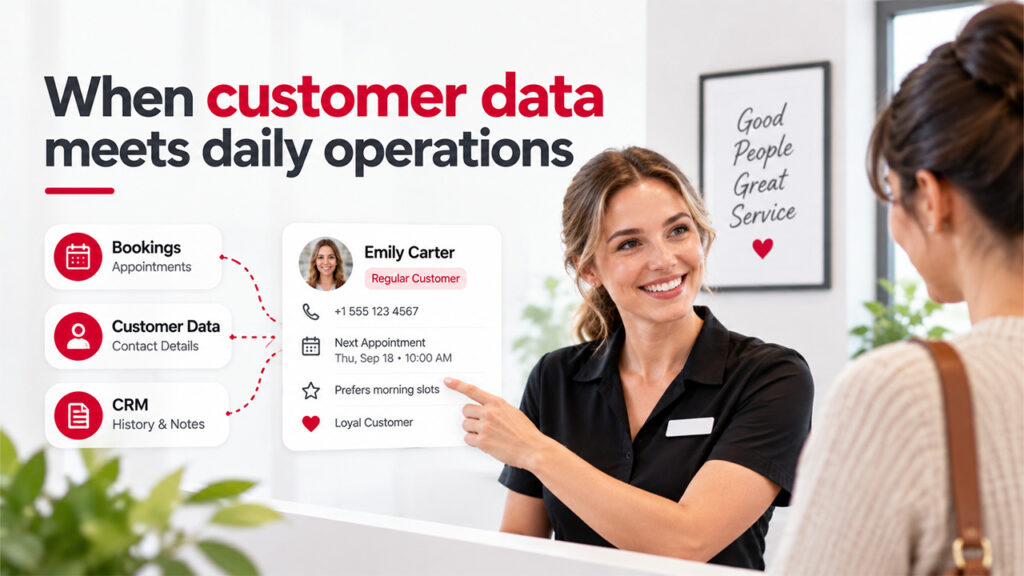

The best small business phone system in 2026 depends on three variables: how many users need to be on the system simultaneously, whether your team operates from a fixed office or remotely, and how tightly your phone activity needs to connect to your CRM or helpdesk. Small businesses face a different set of tradeoffs than enterprise buyers. Seat minimums, long-term contract lock-in, and add-on pricing that doubles the base rate are the three most common reasons small business owners switch providers within 18 months of signing. This guide cuts through those traps by ranking 10 platforms on the criteria that matter most.
Every provider on this list operates from a browser, desktop app, or mobile app, meaning your team can be fully operational within one business day without IT support or physical installation. The only infrastructure requirement is a stable internet connection with a minimum of 100 kbps upload and download speed per active call.
TL;DR
The five most commonly selected platforms for small business use cases:
- CloudTalk - Best for outbound sales teams needing international coverage. From $19 per user per month.
- Nextiva - Best for all-in-one UCaaS at the lowest entry price. From $15 per user per month.
- Dialpad - Best for AI transcription included without add-on fees. From $15 per user per month.
- Zoom Phone - Best for teams already on Zoom Workplace. From $15 per user per month.
- Quo - Best for shared inboxes and no seat minimums. From $19 per user per month.
The complete evaluation and final rankings for all 10 platforms are detailed below.
Top 10 Phone Systems for Small Businesses
1. CloudTalk
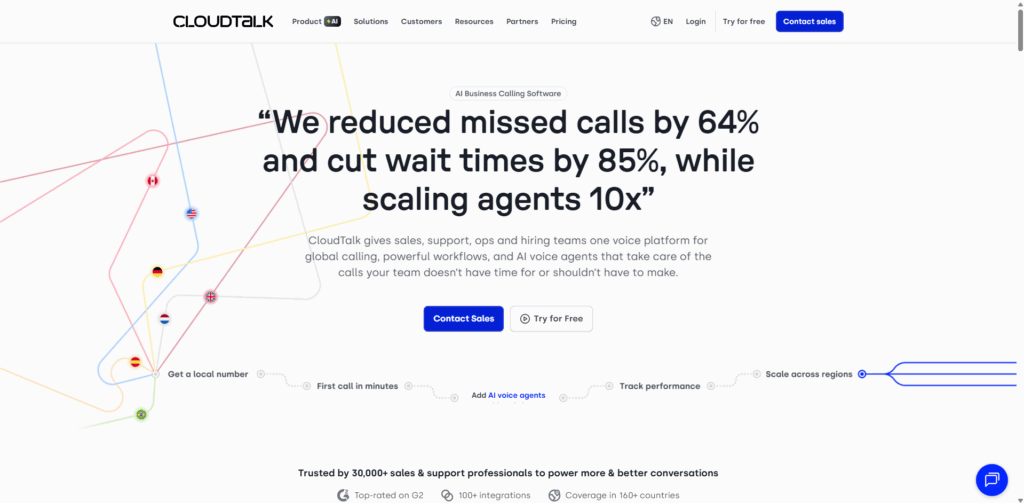
CloudTalk is an AI-powered business phone system with a leading AI voice agent for sales teams. Combining seamless integrations with autonomous AI call handling, Power Dialer, and real-time call analytics in one platform built for growing outbound and inbound teams. It connects with 100+ native integrations across CRMs, helpdesks, e-commerce platforms, and automation tools, ensuring that every call made or received is automatically logged with the correct contact or deal capturing outcomes, duration, recordings, and AI-generated summaries without any manual input from the sales rep.
For sales teams looking for an AI voice agent that fits into their existing tech stack, CloudTalk stands out by combining flexible integrations, autonomous AI qualification, and outbound dialing automation at a price point accessible beyond enterprise-level solutions.
Best For
Growing sales teams that rely on multiple tools and CRMs, and need AI-powered call automation, outbound dialing, and seamless data synchronization without complex enterprise implementation.
Key features:
- 100+ Native Integrations connect CloudTalk with popular CRMs and business tools such as Hubspot, Pipedrive & Salesforce, automatically syncing every call outcome, recording, note, and AI-generated summary in real time eliminating manual updates that typically consume 20 to 30 minutes of rep time per day.
- AI Voice Agent qualifies inbound leads autonomously before routing them to the right sales rep, collecting deal-relevant information and logging it directly to CRM so reps have full context before picking up the phone.
- Power Dialer works through Pipedrive contact lists automatically, connecting reps to the next live answer immediately and dropping pre-recorded voicemails on unanswered calls with one click, doubling the number of prospects a rep can reach in a day.
- Automatic Summaries generate structured call notes and next steps after every conversation and push them to the linked deal automatically, ensuring the CRM stays accurate without relying on rep discipline.
- Real-Time Analytics surface live data on call volume, connect rate, deal progression, and rep performance, giving sales managers the visibility to coach and adjust pipeline strategy based on actual call outcomes rather than manually entered CRM data.
Pricing: From $19/user/month. G2: 4.4/5 (4,000+ reviews). Trustpilot: 4.3/5.
2. Nextiva
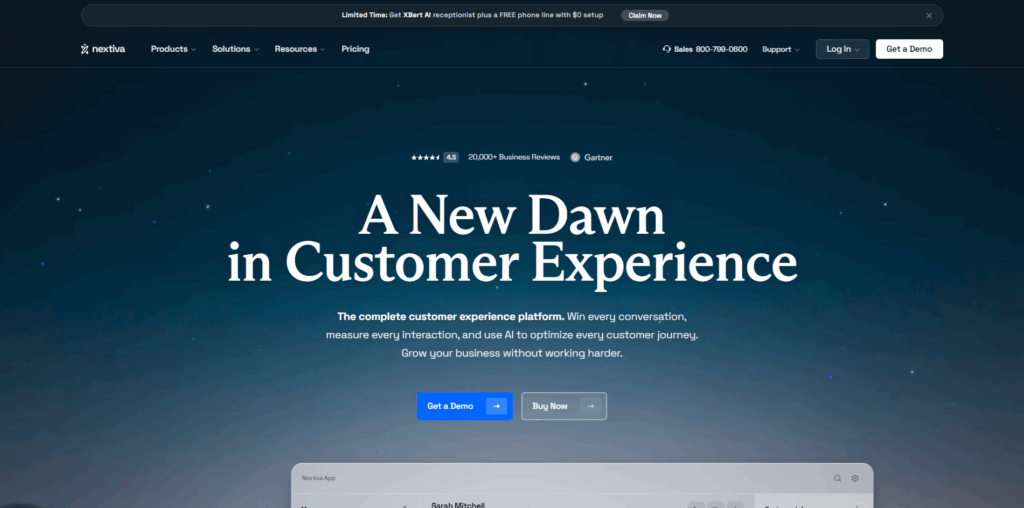
Nextiva is a unified communications platform founded in 2006 in Scottsdale, Arizona, that brings voice, video, team chat, and SMS together in a single interface without requiring middleware or separate vendor contracts. It is one of the most price-competitive entry points for small businesses that need more than just a phone line, serving millions of users across retail, healthcare, and professional services with strong inbound call management and built-in video conferencing.
Best for
Small businesses of 3 to 30 users that need an all-in-one communication platform covering voice, video, and team messaging at the lowest possible monthly per-seat cost.
Key features:
- Voice, video, team chat, and SMS on a single platform from $15 per user per month
- Strong call quality and reliability are consistently praised across G2 and Trustpilot reviews
- Built-in video conferencing and team messaging without paying for a separate tool like Zoom or Slack
- Advanced call routing, IVR, and call queue management are available even on lower tiers
- Responsive customer support is cited frequently as a differentiator in G2 reviews
Pricing: From $15/user/month. G2: 4.5/5 (3,000+ reviews). Trustpilot: 4.1/5.
3. Dialpad
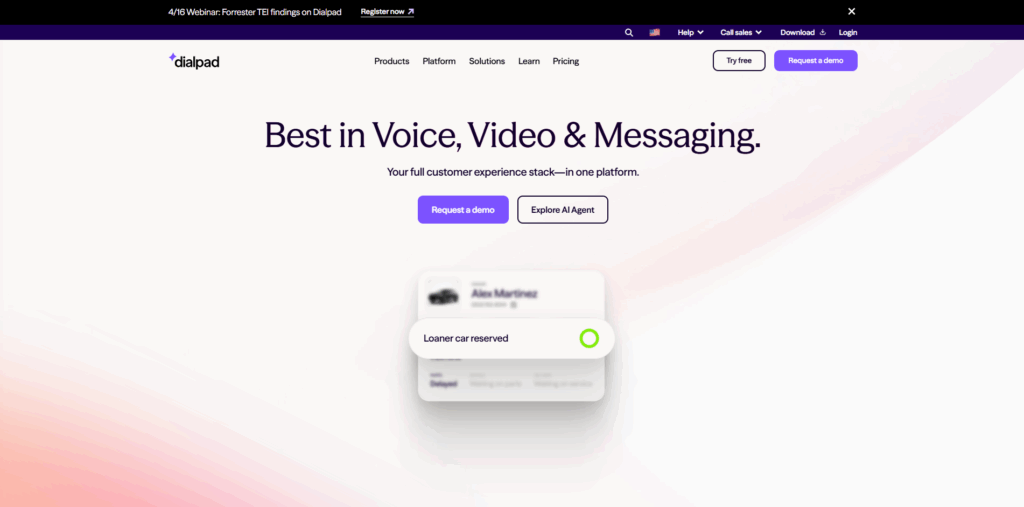
Dialpad is an AI-first communications platform that includes voice, video, and team messaging in one workspace, with real-time transcription and sentiment analysis built into every paid plan at no additional charge. It is the strongest option on this list for small businesses that want AI coaching and call summaries without paying a $9 to $49 per user per month add-on, and for remote-first teams that need voice, video, and internal chat in a single application.
Best For
Remote-first small businesses of 3 to 50 users that want AI transcription and call summaries included in the base price, and teams that need voice, video, and messaging in one application without managing separate subscriptions.
Key features:
- Real-time AI transcription, call summaries, and sentiment analysis included on all paid plans at no additional cost
- Voice, video meetings, and team messaging in a single application without separate logins
- Competitive $15 per user per month entry price with AI features already included
- Live AI coaching during calls with response suggestions and supervisor alert flagging
- Unlimited calling in the US and Canada on the Standard plan
Pricing: From $15/user/month. G2: 4.4/5 (5,000+ reviews). Trustpilot: 4.2/5.
4. Zoom Phone
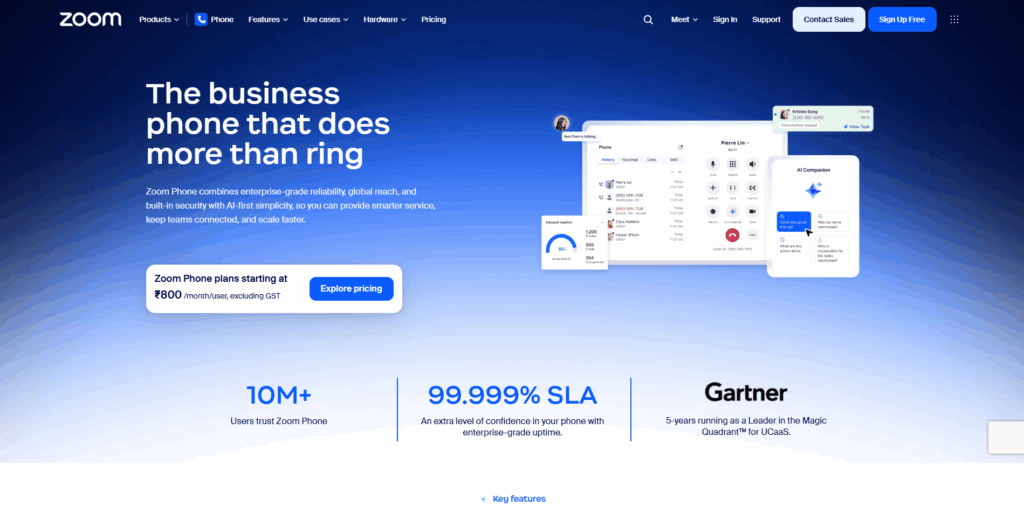
Zoom Phone is the cloud calling extension of the Zoom Workplace platform, adding a full business phone system to the same application already used for video meetings and team chat. It is the lowest-friction option for small businesses already paying for Zoom, since adding phone capability consolidates vendors, eliminates duplicate logins, and removes the cost of a separate calling tool entirely.
Best For
Small businesses of 5 to 100 employees already using Zoom Workplace for video meetings who want to consolidate their phone system into one vendor without adopting a new platform or changing their team's daily workflow.
Key features:
- Native integration with Zoom Workplace, including unified voicemail, call transfer to video, and shared contacts in one app
- Metered plan at $10 per user per month for low-volume teams that do not need unlimited outbound calling
- AI-generated call summaries and voicemail transcription are available on standard plans
- 99.99% uptime SLA with redundant data center failover
- Optional desk phone support via Poly and Yealink hardware for teams that want physical handsets
Pricing: From $10/user/month. G2: 4.5/5 (500+ reviews). Trustpilot: 4.0/5.
5. Calilio
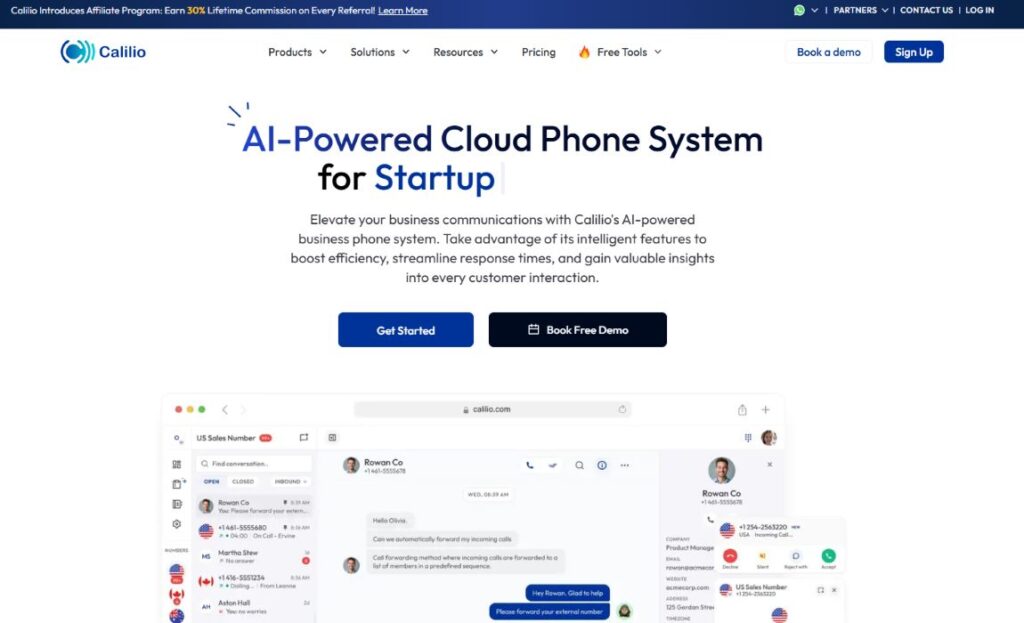
Calilio is an AI-powered cloud phone system designed for businesses that need smarter calling, seamless call management, accurate call records, and clear visibility into customer conversations without relying on complex enterprise software.
It offers virtual phone numbers, including local, mobile, toll-free, and vanity numbers, across 100+ countries. This helps businesses build a local presence in global markets while managing calls, SMS, voicemail, routing, recordings, analytics, and AI-powered call reports from one unified platform.
What sets Calilio apart is its ability to turn everyday phone conversations into actionable business insights. Instead of manually reviewing recordings or writing notes, teams can rely on AI-generated call summaries, transcripts, call reasons, conclusions, and sentiment analysis. This allows managers and teams to better understand customer intent, track outcomes, and improve follow-ups more efficiently.
Best For:
Small to mid-sized businesses, sales teams, support teams, and remote teams that need an affordable AI-powered cloud phone system with virtual numbers, call management tools, and built-in call intelligence.
Key features:
- Virtual phone numbers from 100+ countries, including local, mobile, toll-free, and vanity numbers
- Unified callbox for managing calls, SMS, voicemails, recordings, notes, tags, and customer conversation history in one place
- AI call reports with transcription, call summaries, sentiment analysis, reason for call, and call outcomes for faster call review
- IVR, business hour, call transfer, call forwarding, number sharing, and voicemail tools for managing inbound customer calls more efficiently
- Live call monitoring features including call listening, call whispering, and call barging for real-time agent supervision and coaching
- Power dialer and call disposition for outbound sales and lead follow-ups
- CRM and workflow integrations, including Pipedrive and Pabbly Connect
Pricing: From 15/user/month, or $12/user/month (when billed annually). G2: 4.7/5 (90+ reviews).
6. GoTo Connect
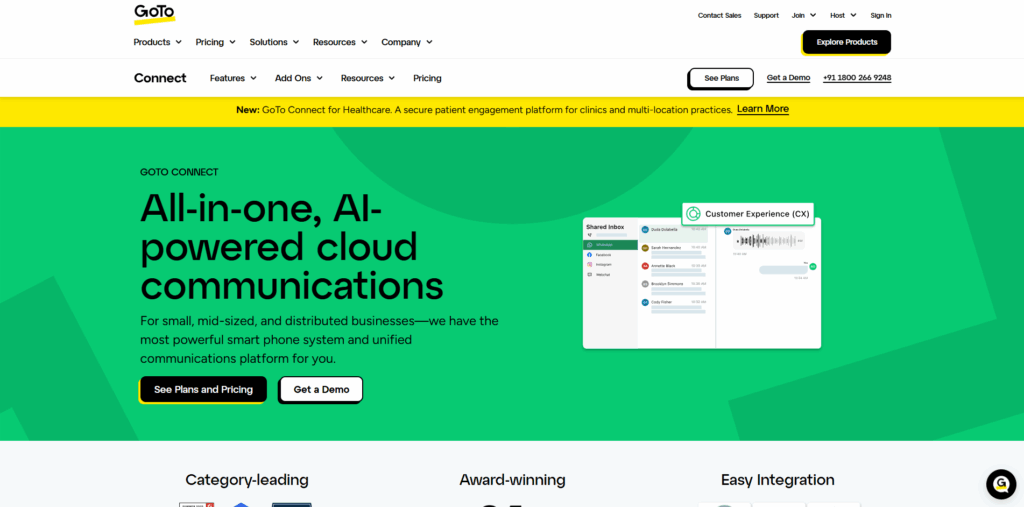
GoTo Connect is a cloud-based phone system and contact center platform from the GoTo Group, built for small businesses that need unlimited international calling without unpredictable per-minute charges. It covers more than 50 countries on its standard plans and combines voice, video, team messaging, and a visual dial plan editor in one interface, making it one of the more complete UCaaS options available at the small business price point.
Best For
Small businesses of 5 to 50 users with regular international calling needs who want flat-rate unlimited calling across 50-plus countries and a visual call flow editor that does not require IT expertise to configure.
Key features:
- Unlimited calling to 50-plus countries is included on standard plans without per-minute charges
- Visual dial plan editor that lets non-technical users configure IVR, call routing, and business hours without IT support
- Video meetings, team messaging, and SMS are included alongside voice in one platform
- Strong uptime track record with redundant infrastructure across multiple data centers
- Desk phone support via Poly and Yealink hardware for offices that need physical handsets
Pricing: From $27/user/month. G2: 4.3/5 (700+ reviews). Trustpilot: 3.9/5.
7. 8x8
8x8 is a global UCaaS provider that offers unmetered international calling across 48 countries as a standard plan feature, making it the strongest choice for small businesses with consistent international call volume that need to eliminate the per-minute cost variable from their monthly budget. It combines voice, 500-participant video meetings, team messaging, and supervisor analytics in one platform with a clear upgrade path to full CCaaS without switching vendors.
Best For
Small businesses and growing teams with contact center needs in multiple countries who want flat-rate international calling, supervisor monitoring tools, and a direct upgrade path from UCaaS to CCaaS within the same platform.
Key features:
- Unmetered calling to 48 countries on UCaaS plans with mobile numbers included in most supported regions
- 500-participant video meetings with breakout rooms, instant polls, and emoji reactions on all plans
- Call monitoring with whisper, barge, and supervisor analytics dashboard from the X2 plan upward
- Multi-level IVR, call queues, and voicemail transcription included at the base tier
- 8x8 Frontdesk dedicated receptionist interface for front desk and switchboard workflows
Pricing: Quote-based. G2: 4.2/5 (700+ reviews). Trustpilot: 3.0/5.
8. MightyCall
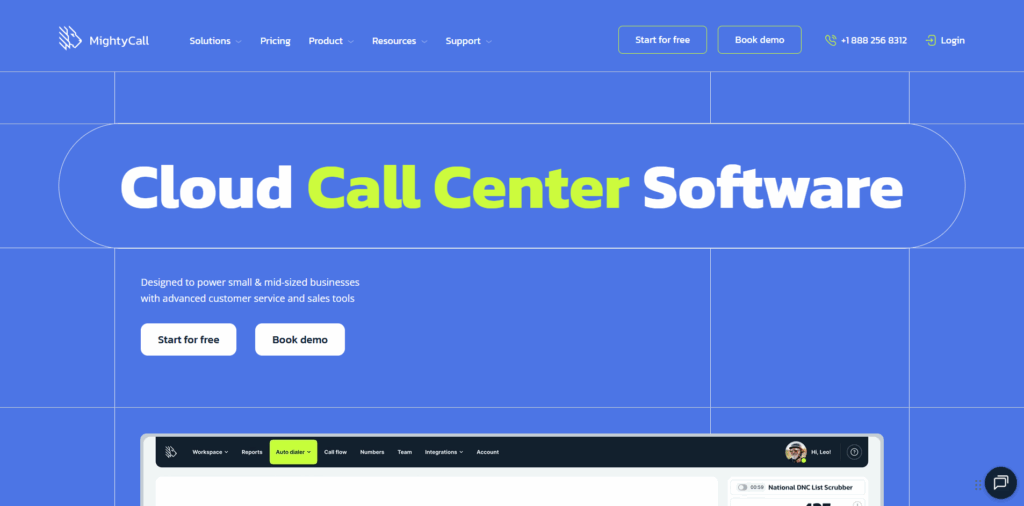
MightyCall is a cloud-based business phone system built specifically for small businesses and entrepreneurs, offering a straightforward call management platform with virtual numbers, call routing, and team collaboration tools at a price point designed for teams of 1 to 20 users. It consistently earns a G2 Leader badge at 4.5 stars, driven by responsive customer support, intuitive setup, and strong value for money at the small business scale.
Best For
Small businesses and entrepreneurs with 1 to 20 users who need reliable call management, virtual numbers, and team routing without the complexity or contract minimums of enterprise VoIP platforms.
Key features:
- Simple, intuitive setup that most small business owners complete without IT support in under two hours
- Virtual numbers including local, toll-free, and vanity numbers available without seat minimums
- Call management dashboard with call barging, agent reports, call listening, and AI-assisted quality monitoring
- Conference calling and team collaboration features without requiring a separate tool
- Consistently praised customer support team cited as a primary differentiator in G2 reviews
Pricing: From $15/user/month. G2: 4.5/5 (200+ reviews). Trustpilot: 4.4/5.
9. Quo (Formerly OpenPhone)
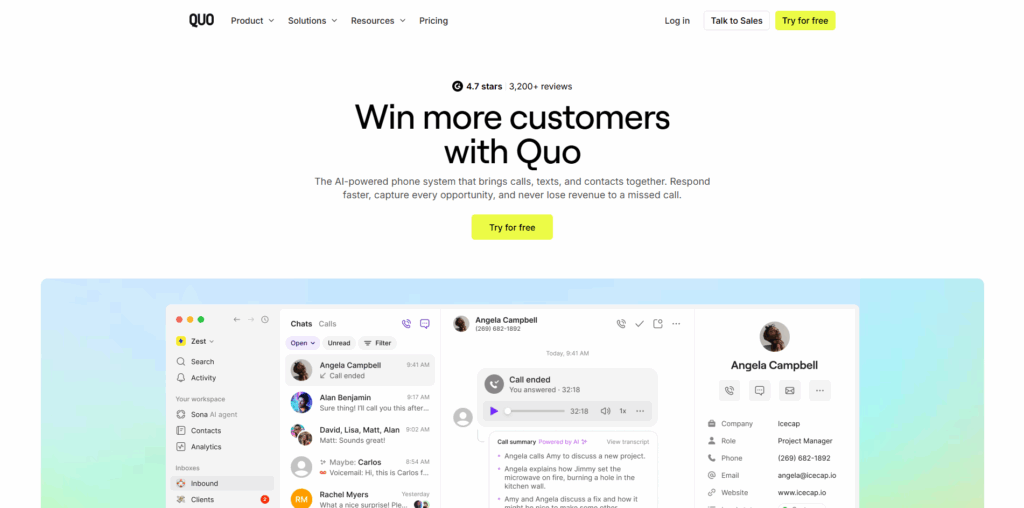
Quo, formerly known as OpenPhone, is an AI-powered business communication platform designed for small businesses and startups that need shared inboxes, CRM integrations, and team phone number collaboration without seat minimums or enterprise contract terms. It serves over 60,000 customers and holds the number one customer satisfaction ranking on G2 in the small business phone category, making it the most peer-validated option on this list at the small team scale.
Best For
Small businesses, startups, and freelancers with 1 to 20 users who need a modern mobile-first phone system with shared inbox capability, HubSpot and Salesforce integration, and SMS automation without paying a seat minimum or signing an annual enterprise contract.
Key features:
- Shared phone numbers allowing multiple users to call and text from the same business number simultaneously
- AI call summaries, transcription, auto-replies, and action item extraction on the Business plan
- Native HubSpot and Salesforce integration with automatic call logging on the Business plan at $33 per user per month
- No seat minimums on any plan, keeping costs proportional to actual team size
- Highest G2 customer satisfaction score in the small business phone category
Pricing: From $19/user/month. G2: 4.7/5 (1,000+ reviews). Trustpilot: 4.4/5.
10. Ooma Office
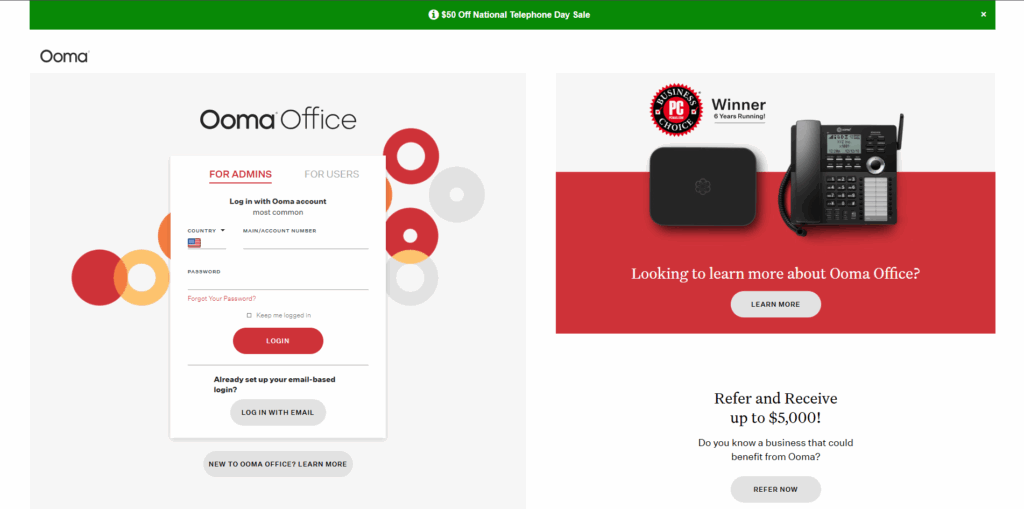
Ooma Office is a cloud-based business phone system designed for small businesses that want a simple, reliable VoIP solution with optional physical desk phone support and a mobile-first fallback for teams without a fixed office location. It is one of the few providers on this list that offers a genuinely hardware-friendly setup path alongside its cloud option, making it the strongest choice for small businesses transitioning from a traditional landline system and wanting to keep some physical handsets in place.
Best For
Small businesses of 1 to 25 users transitioning from a traditional landline or PBX who want a simple setup, optional physical desk phone support, and a reliable mobile app for remote team members.
Key features:
- Plug-and-play desk phone setup that gets a full office operational in under one day without IT support
- Mobile app for iOS and Android that allows full business phone functionality away from the office
- Virtual receptionist, ring groups, call parking, and voicemail transcription included on all plans
- No annual contract required on month-to-month plans, reducing commitment risk for small businesses
- Strong call quality track record in G2 reviews from teams with stable broadband connections
Pricing: From $19.95/user/month. G2: 4.6/5 (300+ reviews). Trustpilot: 4.1/5.
11. Grasshopper
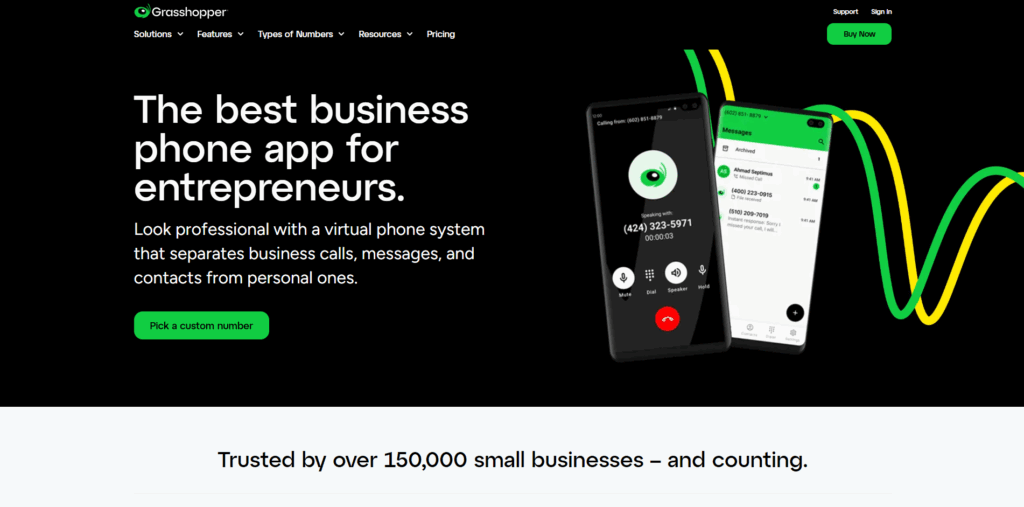
Grasshopper is a virtual phone system founded in 2003 and serving over 300,000 customers, built for solo operators, freelancers, and micro-businesses that need a professional business phone number and basic extension routing. It carries no CRM integration, no power dialing, and no analytics infrastructure of any kind. It represents the entry point that many small businesses start with before outgrowing it within 12 to 18 months as call volume grows and manual call logging becomes unsustainable.
Best For
Solo operators and businesses with 1 to 3 users who need a dedicated business number with call forwarding, voicemail transcription, and a professional auto attendant, and who have no current requirement for CRM integration, team analytics, or AI features.
Key features:
- Simple setup that most users complete in under 30 minutes without technical knowledge
- Business number with call forwarding to any personal mobile device for a professional presence
- Custom greetings and basic virtual receptionist for routing calls without a live operator
- Optional live receptionist add-on via Ruby partnership for businesses that want human call answering
- 7-day free trial available before committing
Pricing: From $18/month. G2: 4.0/5 (200+ reviews). Trustpilot: 2.9/5.
Why You Can Trust This Guide and How We Researched It
Every platform on this list was researched the same way a small business owner would research it: by actually using it. Our team signed up for paid subscriptions, made real calls, tested mobile and desktop apps side by side, and pushed customer support teams with questions that reveal how they handle problems, not just how fast they respond to easy ones. Nothing on this list is based on a vendor briefing or a press release.
Each provider was evaluated across seven dimensions: pricing transparency and total cost of ownership, core feature set at the entry tier, premium add-on value, mobile app reliability, call quality under real network conditions, CRM and helpdesk integration depth, and contract flexibility. Every data point was verified directly with the provider through live chat, email, and phone, and cross-referenced against verified user reviews on G2 and Trustpilot from companies with 5 to 50 employees.
Which Small Business Phone System Should You Choose?
The right answer depends entirely on how your team works today and where it is heading in the next 12 months. Here is how to match your situation to the right platform.
If your team makes 50-plus outbound calls per agent per day across international markets, the platform needs to do three things without add-ons or workarounds: dial automatically, sync call data to your CRM in real time, and provide local numbers in the countries you call most. Without those three capabilities built in, your reps spend 20 to 30 percent of their day on manual tasks that a proper system handles automatically. No hardware is needed, setup takes hours not weeks, and a 14-day free trial is enough time to run a real volume test before signing annually.
If your team needs voice, video, team chat, and SMS without paying for separate tools, the shortlist is Nextiva at $15 per user per month, Dialpad at $15 per user per month, and GoTo Connect at $27 per user per month. The deciding question is simple: do you need AI transcription included at the base price, or do you need flat-rate international calling across 50-plus countries? Dialpad wins the first. GoTo Connect wins the second. Nextiva sits between them as the most established all-in-one option with the strongest support track record.
If your team runs primarily from smartphones, seat minimums and annual contracts are the two traps most likely to cause regret. Quo at $19 per user per month and Ooma Office at $19.95 per user per month both avoid those traps while delivering reliable mobile call quality. Quo leads on CRM integration and shared inboxes. Ooma leads if any part of your team works from a fixed desk and wants physical handsets without a complex setup.
If you are a solo operator or a team of two to three people who needs a professional number, basic call routing, and voicemail transcription and nothing else right now, Grasshopper at $18 per month gets the job done with minimal friction. That said, Quo at $19 per user per month is the smarter starting point because it grows with the business, adding CRM integration, shared inboxes, and AI features without forcing a platform migration when your needs change.
The Bottom Line on Small Business Phone Systems in 2026
The longest feature list does not win. The platform that solves your specific problem today and does not create a new one six months from now does. A solo operator forwarding calls to a mobile phone has no use for a parallel dialer. A 20-person sales team making 60 calls per agent per day has no use for a platform without IVR, CRM write-back, and AI coaching. The gap between those two use cases is wider than most comparison guides acknowledge, which is why picking the wrong platform is so common and so expensive to undo mid-contract.
Before you sign anything, do four things. Calculate your real monthly cost per seat, including AI add-ons, international numbers, and SMS bundles, not just the base price on the pricing page. Test the mobile app under the actual conditions your team works in, not a demo environment. Run the full free trial with real call volume to your real target regions. And get the cancellation and auto-renewal terms in writing before committing to an annual plan.
The difference between a phone system that drains time and one that drives revenue is not a budget question. It is a fit question. Get the fit right from the start and the rest takes care of itself.
%201.png)

%201.png)

%201.png)