
Slow response times, unreliable endpoints, or restrictive request limits can quietly kill an application's user experience. That's why so many teams skip the headache of running their own node and turn to dedicated blockchain node Provider instead. Here's a look at some of the ones developers are actually using right now.
1. NOWNodes
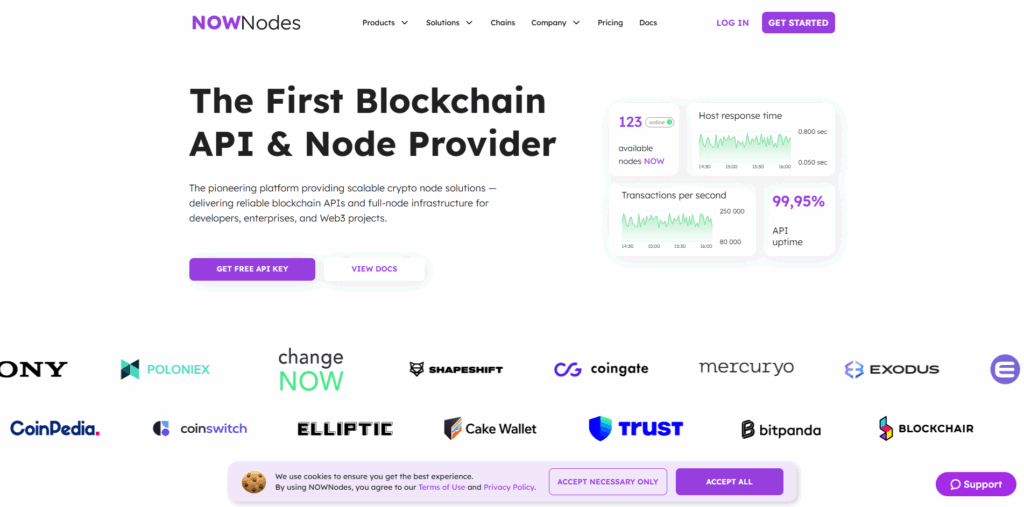
NOWNodes gives you access to blockchain infrastructure through an ordinary API platform the kind where stability and speed aren't an afterthought. What's handy is that it covers over 120 blockchain networks from a single access point, so you're not juggling separate nodes for every ecosystem your project touches.
In terms of performance, the company recently added servers in North America, which rounds out a geobalanced setup spanning the US and Europe. In practice, that means lower latency for users regardless of where they're connecting from, and more stable response times even when blockchain activity spikes.
Key Features:
- 120+ supported blockchains
- 99.95% uptime infrastructure
- 24/7 technical monitoring and support
Under the hood, NOWNodes runs automatic failover, multi-layer load balancing, and 2n+1 redundancy. Basically, they've thought closely about what happens when things go wrong. You can choose between shared or dedicated RPC node access depending on what you're building. Names like Tangem, Trust Wallet, Exodus, BitPanda, and CoinGate are already running on it, which says something about the reliability in real-world conditions.
Ideal for: Wallets and payment platforms, multi-chain Web3 apps, trading and analytics tools, teams that need RPC access that grows with them.
2. QuickNode
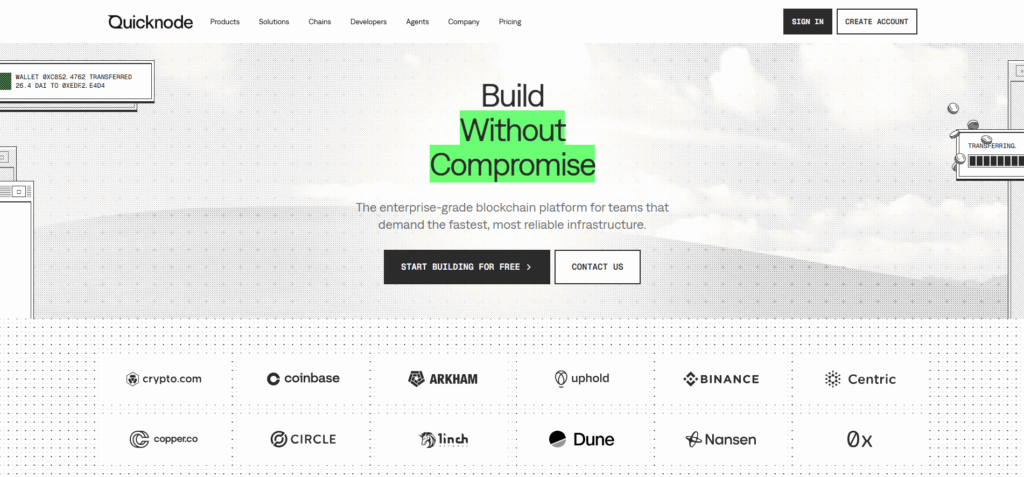
QuickNode has built a reputation among developers who want to ship fast. The platform handles many of the popular blockchain networks and comes with endpoint management, monitoring dashboards, and APIs baked in so you spend your time building, not babysitting servers.
Key Features:
- Multi-chain RPC infrastructure
- Analytics and monitoring tools
- Dedicated endpoints
It's popular with startups and teams dealing with high request volumes. Beyond basic RPC access, QuickNode also offers blockchain indexing and data management tools, which comes in handy when your application needs more than just a connection to the chain.
Ideal for: Fast-moving Web3 startups, high-traffic applications, developers who want monitoring built into their workflow.
3. Alchemy
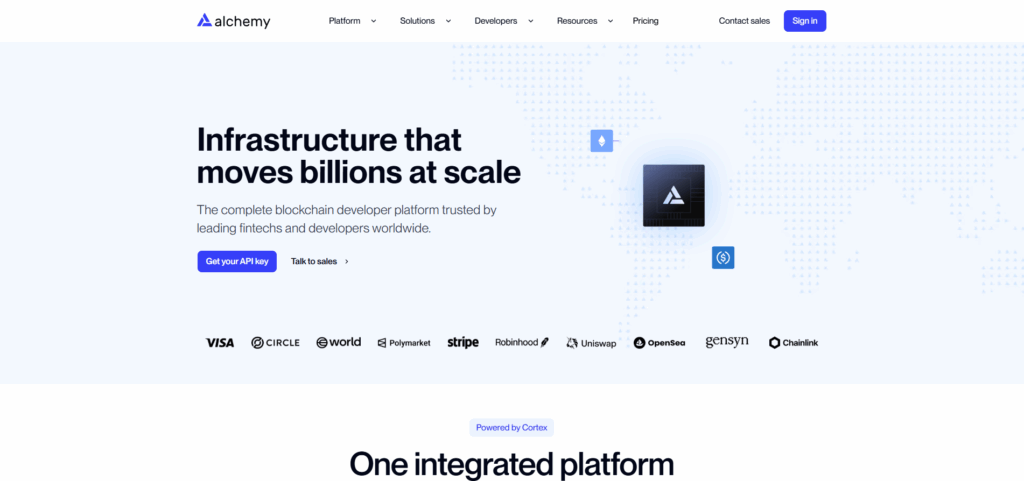
Alchemy started with a sharp focus on Ethereum and EVM-compatible chains, and that depth still shows. Over time it expanded to other networks, but the real draw remains its developer tooling improved APIs, debugging systems, and analytics that go well beyond what you'd get from raw node access. NFT projects, DeFi protocols, and blockchain gaming apps have all found a home here.
Key Features:
- Ethereum and EVM-focused infrastructure
- Improved developer APIs
- Analytics and debugging tools
If you're working on Ethereum-based projects and you want tooling that actually helps you understand what's happening in your application, Alchemy is worth a close look.
Ideal for: Ethereum-based projects, NFT and gaming applications, teams that care as much about developer workflow as raw infrastructure.
4. Chainstack
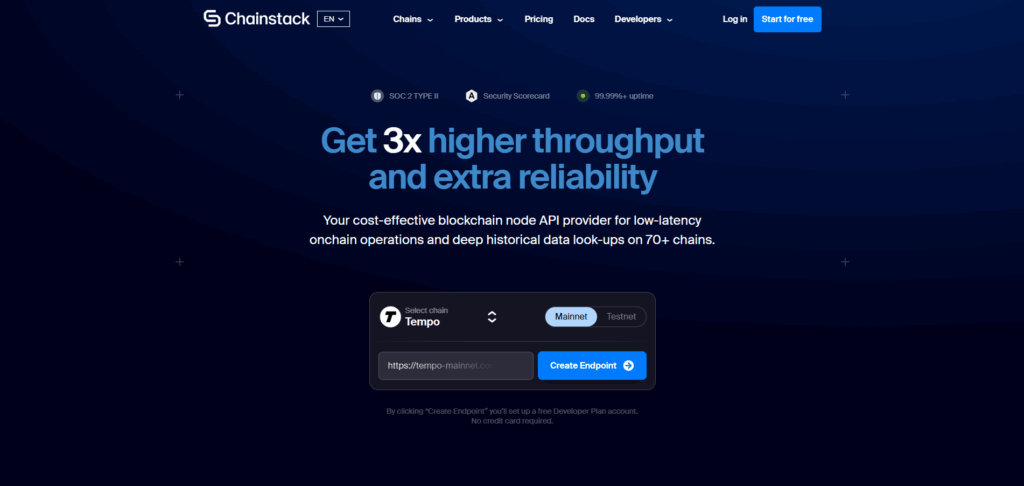
Chainstack takes a more enterprise-oriented angle. It focuses on managed blockchain infrastructure, meaning businesses can deploy and manage nodes without getting buried in infrastructure complexity. It handles both public and private blockchain deployments and gives you flexibility across different cloud providers and regions.
Key Features:
- Managed blockchain infrastructure
- Multi-cloud deployment support
- Dedicated node options
It's a natural fit for companies that need customizable environments or have specific requirements around where and how their infrastructure runs.
Ideal for: Enterprise blockchain projects, hybrid cloud setups, teams with custom deployment requirements.
5. Ankr
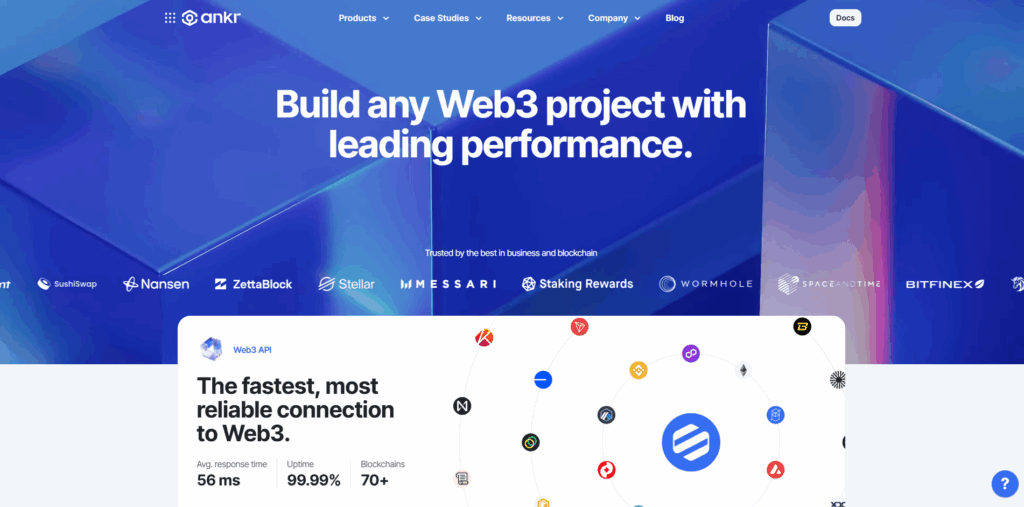
Ankr takes a different approach with a decentralized, distributed infrastructure model. It covers a wide range of blockchain ecosystems and offers both free Public APIs and premium tiers, alongside staking and validator services so it's not just for developers, but also for people participating in blockchain networks directly.
Key Features:
- Public and premium RPC endpoints
- Multi-chain support
- Distributed infrastructure model
If you're building something cross-chain and need broad network coverage without paying for access on day one, Ankr is worth considering.
Ideal for: Cross-chain applications, DeFi services, developers who need wide network support across many ecosystems.
Conclusion
Choosing the right RPC node provider is less about picking the biggest name and more about matching infrastructure to the way your application actually operates. Some teams need deep Ethereum tooling; others need reliable multi-chain coverage, enterprise deployment flexibility, or low-latency endpoints that can handle heavy traffic without failing under pressure. The good news is that developers now have strong options across every category. Whether you're building a wallet, DeFi platform, analytics tool, or enterprise blockchain application, the providers listed above offer reliable foundations to scale on. In Web3, stable infrastructure is not a luxury anymore; it is part of the product experience itself.
%201.png)

%201.png)

%201.png)