
Maya faced a problem most early-stage founders never anticipate. As CEO of her two-person startup, she had four different angles to test before Friday's investor call. She recorded the first on Monday. The second take took twice as long because she stumbled over her product explanation twice. By the third attempt, she'd killed the recording halfway through—her phone was ringing with customer calls.
The real bottleneck wasn't filming. It was an iteration.
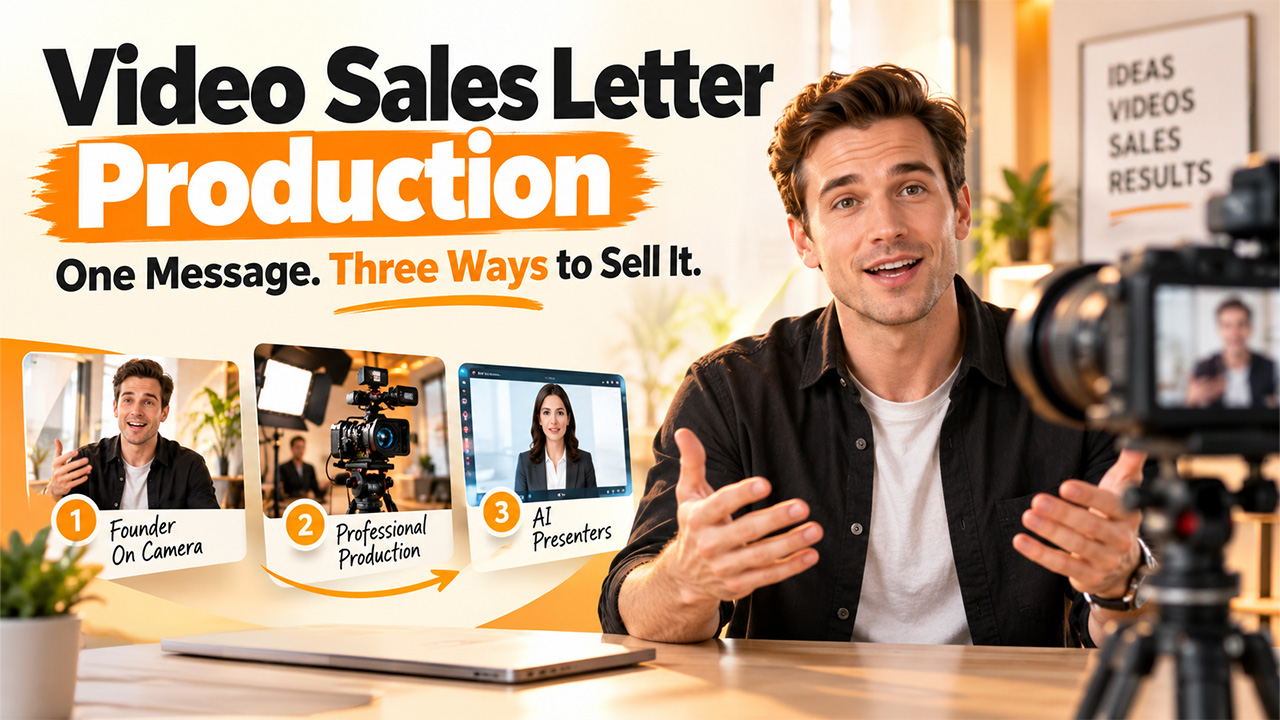
Most teams can produce one solid video sales letter. The hard part? Video Sales Letter Production that makes versions two, three, and four fast enough to actually test before the window closes. This guide walks through three fundamentally different approaches to VSL production: founder-led recording, outsourced professional production, and AI presenters. Each trades speed for credibility in different ways.
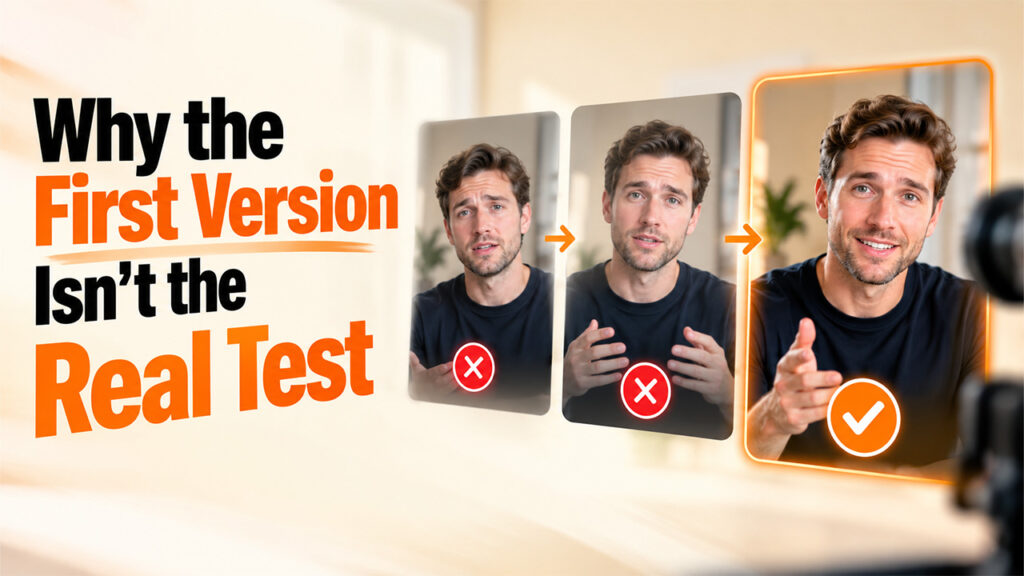
Why the First Version Isn't the Real Test
A video sales letter isn't a brand film. It's a direct response tool—meaning it needs a clear call to action, not production polish. That's the first mindset shift most teams miss.
Your first VSL might work fine. But if you're testing different opening hooks, varied objection handles, or audience-specific messaging, you'll need version two and three. Maybe version four. The team that can iterate quickly wins. The team that waits six weeks between takes loses momentum and market advantage.
Here's what separates good testing from wasted effort: each new version should test something specific. A different opening promise. A different audience segment. A different objection. A different language or market. Random changes just create noise.
Route 1: Founder on Camera — Maximum Credibility, Maximum Friction
The Case For:
There's something about seeing the founder that's impossible to replicate. Credibility, authority, presence—these qualities matter in early-stage sales. If your company's reputation rests on your personal track record or perspective, founder-on-camera is the natural choice.
The setup is simple: camera, desk, script, record. This approach keeps Video Sales Letter Production closely tied to the founder's presence. Some founders use lightweight tools like Loom for screen-share explanations. Others go full VSL setup. Either way, the founder's presence becomes part of the offer itself.
The Real Tradeoff:
Every new version means the founder records again. Different hook? New recording. Audience-specific angle? Another session. New positioning? Back to the camera.
When you multiply this across retakes, editing rounds, caption additions, and approval cycles, a two-person team slows to a crawl. One person films. Someone else edits. Changes require another recording session. Suddenly, producing four versions takes weeks instead of days.
When This Works Best:
Founder-led video makes sense when your presence is genuinely part of the sale. It also works when your VSL stays relatively stable—say, the same core message for six months. But when your sales team wants to test a new hook every two days? The friction becomes unjustifiable.
Route 2: Outsourced Professional Production — Polished Asset, Calendar Dependencies
The Case For:
Delegating to a professional producer buys you quality and frees founder time. The producer handles filming, editing, audio cleanup, graphics, and final delivery. For flagship offers that will live in your funnel for months, this investment makes sense.
The Real Tradeoff:
Outsourcing introduces a calendar dependency. You're no longer the bottleneck—your vendor is. Need a revision? Someone has to be available. Want a new version? Another shoot or approval cycle. Even with a responsive vendor, your sales team no longer controls the timeline.
The friction compounds when you need segment-specific versions. One brief for the agency buyer. Another brief for ecommerce. Another for enterprise. Each variation multiplies the work and extends the timeline.
When This Works Best:
Outsourcing shines when you're building a long-term flagship asset—something you'll use consistently for six months or more. It's less practical if your sales strategy involves rapid testing. If you're experimenting with four hooks this week and four more next week, external production becomes a bottleneck, not a solution.
Route 3: AI Video Presenters — Speed at the Cost of Personal Authority
The Case For:
AI presenter platforms like HeyGen decouple your message from the person on screen. You write a script, and the platform generates AI-powered video content with a presenter without requiring anyone to appear on camera or film multiple takes.
More importantly, you can produce variations from a single script. Change the opening line, regenerate the video. Need the message in French, Spanish, and Japanese? Most platforms generate across 50+ languages without additional filming.
Some platforms go further. Tools designed specifically for VSL production (like those built into modern VSL software) can read script emotion and adjust presenter body language accordingly. This reduces the robotic feeling that early AI video created.
The Real Tradeoff:
Speed and variation come with a credibility cost. For high-trust, high-value sales—enterprise contracts, financial services, healthcare—buyers often want to see the real founder, advisor, or subject-matter expert. An AI avatar simply won't carry the same weight.
There's also a psychological barrier. Audiences increasingly detect AI video. If your buyer realizes they're watching an avatar rather than a person, it can undermine trust—especially in sectors where credibility is the deciding factor.
When This Works Best:
AI presenters excel when you're testing message variations rapidly without needing founder credibility. They're ideal for segment-specific versions, multilingual campaigns, and high-volume testing. If your team needs to produce eight variations of the same VSL for different audience segments, AI presenters make this feasible in a single workflow.
Comparison: Which Route Fits Your Reality?
| Factor | Founder On Camera | Professional Production | AI Presenter |
| Iteration Speed | Slow (new recording each time) | Moderate (depends on vendor) | Fast (script changes only) |
| Segment Variations | Possible but costly | Possible through new briefs | Easy to duplicate and adjust |
| Multilingual Support | Requires new recording per language | Requires new production | Native support for 50+ languages |
| Production Credibility | Highest | High | Moderate |
| Best For | Founder-dependent sales | Long-term flagship assets | Rapid testing and variation |
The Missing Insight: Most Teams Get Stuck Because They Don't Know What to Test
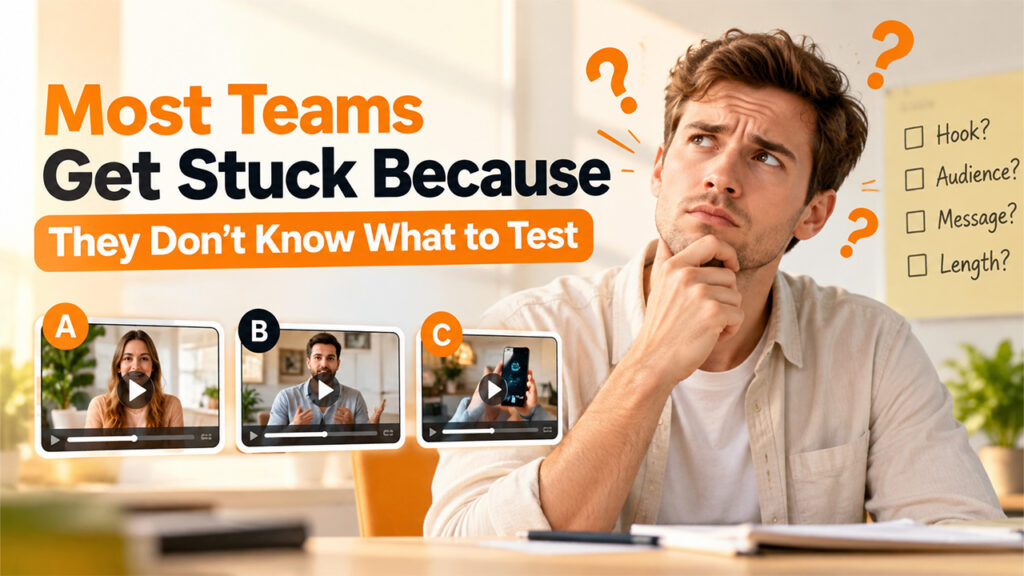
Here's what separates successful teams from ones that waste time producing videos: they link each new version to a specific hypothesis.
Testing a different opening hook? Measure which version generates more video completion. Testing audience-specific messaging? Track conversion rates by segment. Testing language variations? Measure engagement by market.
Teams that produce four versions without a clear hypothesis waste time. Strong Video Sales Letter Production starts with knowing exactly what each version should test.
Modern VSL platforms often include analytics—completion rates, engagement metrics, even interactive features where viewers can ask questions about specific features. This lets you measure which version actually performed, rather than guessing based on production quality.
But analytics only matter if you designed each version to test something meaningful.
The Credibility Ceiling: Where AI Presenters Hit a Wall
There's a scenario where no amount of convenience outweighs authenticity. If you're selling a high-value contract to a financial services buyer or a healthcare organization, the buyer likely wants to see and hear from the actual subject-matter expert—the person making the promise.
In these scenarios, AI presenters aren't the right tool. The credibility cost is too high. Go with founder-on-camera or professional production. Accept the slower iteration cycle. This is where trust is the deciding factor, and shortcuts undermine your entire pitch.
That said, AI presenters can handle longer-form content now. Some platforms support up to 60 seconds of expressive video—long enough for a complete sales story with emotional resonance, not just a quick hook.
How to Choose: Run a Real Test First
Before you commit to one approach, try this experiment:
Write a complete VSL script. Create three different opening hooks for that same script. Produce all three versions using the method you're considering. Track how much time and effort the process required between version one and version three. Document what changed and what stayed the same.
That real-world test teaches you more about iteration speed and friction than any theoretical comparison. The same AI-driven approach can also support AI-first presentations when teams need to create and refine presentation content more efficiently.
Your workflow choice ultimately determines how quickly your Video Sales Letter Production process can move from one version to the next. Founder-led works when founder credibility is non-negotiable. Professional production works for long-term assets. AI presenters work when you need rapid variation and don't need founder authority.
The best approach? Often a hybrid: use founder video for flagship offers where credibility matters most, and explore AI presenters for testing angles and variations first. Let the faster method inform which messages actually work before investing in professional production of your top performers.
%201.png)

%201.png)

%201.png)