

All customer-centric businesses need call center CRM software. Here is why-
Regardless of the industry or your business, the significance of top-notch customer service cannot be overstated. As per recent research, more than half of the customers are likely to go to your competitors if they get even one bad experience with your business. Businesses know this, and yet the majority of them cannot provide a quality customer experience consistently. The overall number of communication channels is also growing exponentially. However, customer expectations with respect to tailored customer experience are also evolving. Businesses want to catch up, and they need efficient technologies to achieve that.
A 2022 McKinsey report suggests that approximately 60% of customer care leaders have reported a great increase in the overall number of calls. Furthermore, they expect this number to grow as well. Call Center CRM software allows you to manage this high volume of communication and deliver an optimized customer experience. When your customer support workflow is integrated with a powerful CRM software, it allows you to provide tailored and simplified customer service that surpasses modern customer service standards.
In this blog, we will understand the fundamentals of the Call Center CRM software, explain its benefits, and provide you with the guidelines on how you can choose the right software for your business. We will also list out the 6 best CRM software you can choose to streamline your customer support services-
TL;DR
- The Call Center CRM platform integrates workflow automation, customer data management, and communication tools into a single platform.
- It helps businesses manage high call volumes and ensure tailored services.
- Important advantages involve omnichannel communication, smooth collaboration, higher productivity of agents, and enhanced customer satisfaction.
- Top options in call center CRM software include OutRightCRM, Creatio, Salesforce Service Cloud, Zendesk, Zoho Desk, and HubSpot Service Hub, each aligned to distinct business sizes and requirements.
What Is Call Center CRM?
A call center customer relationship management software is an integrated platform that integrates CRM functionalities like workflow automation, customer data management, and communication management with customer service aspects of a call center. It allows businesses to handle customer interactions, optimize and automate customer processes, and improve customer satisfaction by providing agents with centralized customer data and interaction history.
For instance, a call center CRM software can manage customer profiles automatically with their complete data and interaction history. It can also show all the details when an agent dials a call to the customer. If the CRM is AI-powered, the CRM software can also log interaction history automatically. This functionality enhances efficiency, allowing agents to focus less on data search and history and spend more time helping customers with their problems.
A call center CRM tool is generally given as a subset of contact center CRM software. While the former is purpose-built for phone-based interactions, a contact center CRM provides a more complete solution for handling customer interactions across diverse communication channels.
Why Do Businesses Need a Call Center CRM Software?
In short, CRM software for call centers can help businesses with all the adequate tools to render an efficient customer experience. But let us ask a very fundamental question: what makes customer service calls perfect?
The call might be related to a sales inquiry, a request for assistance, or even a complaint. Irrespective of the reason, your customers expect a response that addresses their particular requirements. They look for a service that is fast (but not mindless), good treatment (compassionate and understanding), and a competent agent who can resolve their issues confidently.
After all, customers prioritize continuity. They expect your call center agents to identify them, be aware of their past interactions, and help them without having to repeat the same details over and over again.
A call center CRM software can align with all these expectations by enabling agents to get access to relevant customer data and workflow management tools. Relevant technologies and tailored insights can combine to ensure an efficient, customized, and smooth customer experience. In addition, it streamlines the tasks of the agents, minimizes stress, and allows them to deliver a more courteous and pleasant service to the customers.
Now, in the next section, let us see the advantages of such a software-
What Are the Top 6 Advantages of a Call Center CRM?
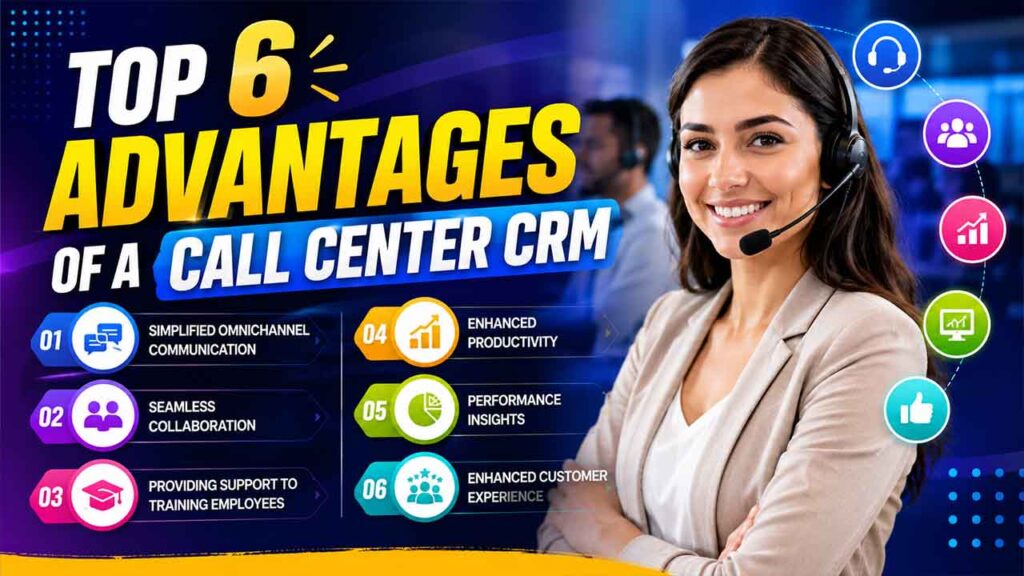
1. Simplified Omnichannel Communication:
Omnichannel communication enables customer service to connect with clients across different channels such as email, social media, chats, and phone, and transition between them. Business Wire has reported that 40% of consumers have cited the preferred mode of communication as the single most attractive feature in customer service. If they get a preferable mode of communication, they are not only likely to go for more purchases but also recommend the business or service to a family member or a friend and leave a satisfactory review.
Let us say that a customer has sent their complaint through an Instagram DM. However, to properly assist the customer, you would have to call them. A call center CRM software would enable a smooth transition between the two channels by aligning the interaction history and data, ascertaining that every interaction is correctly logged. If you want to involve other employees or agents, they will have all contextual knowledge and will precisely know what the client wants.
As a result, you will become more capable of fixing the problem more quickly, ensuring contextually relevant interactions every time, and gaining insights from past issues. One of the standout features of excellent customer service is the fact that customers do not have to repeat themselves every time they connect with you.
2. Seamless Collaboration:
A call center CRM software enables your team members to exchange information and processes quickly. It enables call center agents to ask queries or quickly respond to the queries of their colleagues. Agents can also assign specific cases to specific agents or subject matter experts, who get alerted automatically and get complete details to ensure a fast solution for the customer.
This system not only facilitates interaction among call center agents but also links to all customer-facing teams, including marketing and sales departments. This integrated approach improves all touchpoints in the customer journey, ascertaining a positive experience consistently apart from just customer support.
3. Providing Support to Training Employees:
A call center CRM software provides support to call center agents’ training by directly incorporating a knowledge center into the system. This feature helps agents with simple accessibility to complete resources, including FAQs, scripts, and troubleshooting guides, all within the interface of a CRM. Agents can quickly fetch relevant data during customer interactions, allowing them to fix issues consistently and effectively.
4. Enhanced Productivity:
There are many characteristics of a call center CRM software that can aid in elevating the productivity of your customer service team.
- For instance, case management features aid in the organization and prioritization of customer issues, making it simpler to navigate an influx of cases and inquiries.
- Project tracking and management ensure greater transparency into the workloads of the agents, enhancing accountability by enabling managers to track performance and ascertain fair task distribution.
- Workflow automation features aid in minimizing the time and effort spent on day-to-day manual tasks. For instance, routing of automated cases directs cases to the relevant agents as per the pre-determined criteria, ascertaining quicker resolution of customer problems.
When combined, such features improve efficiency and allow the service team to work at optimal productivity.
5. Performance Insights:
You can track important metrics and analytics in call center CRM software and get useful insights on your agents’ performance. For example, you can monitor metrics like Average Handle Time, assessing the average duration of customer interactions, indicating higher efficiency in call management. Average interactions per agent or customer deliver insight into the depth and frequency of customer engagement, highlighting patterns of customer interaction.
In addition, monitoring metrics such as the number of Case Reopens aids in the recognition of unsolved cases or recurring issues, indicating improvement areas in resolution processes and service quality. By assessing such metrics over time, managers can highlight improvement areas, recognize training requirements, and execute strategies to improve overall performance in call centers and customer satisfaction.
6. Enhanced Customer Experience:
The most obvious benefit of a call center CRM software is the overall increase in customer satisfaction levels because of world-class customer experience it allows companies to deliver. Every other advantage in this list ultimately leads to this benefit. A fully integrated CRM enables you to deliver an advanced customer experience in multifaceted ways as discussed above.
You get the ability to deliver excellent customer service consistently. This can push customers to contact you more than once through different channels. They can also interact with different individuals in your business, receiving coherent and contextually relevant responses every time.
What Are the Important Features of a Call Center CRM?
It is vital to keep in mind that not every CRM is optimized for customer service. Moreover, while CRM software might provide you with call center functionalities, it can lack vital customer support features for a smooth customer experience. Let us go through a list of vital characteristics that are advantageous for call center agents-
- Omnichannel Communication Support: This allows smooth communication across diverse channels, including calls through a business phone system, social media, chats, and more.
- Call and Case Routing: Directs all incoming calls and cases automatically to the relevant agent as per set criteria such as issue type, skill set, or priority level.
- Interactive Voice Response (IVR): Automated phone systems enable customers to communicate with a computerized voice prompt and direct their calls to relevant departments after collecting all key details and segmenting the customers.
- Customer 360 View: Ensures a complete view of customer interactions, preferences, purchase history, and previous problems across all touchpoints. This helps agents provide tailored services.
- Call Scripting: Agents can get predefined scripts and templates for managing customer inquiries. This feature aids in ascertaining consistency and ensures messaging aligned with company standards.
- Workflow Automation: It can automate routine processes and tasks like follow-ups, case routing, escalations, and notifications as per pre-determined triggers and rules.
- Customer Service AI: Integrates machine learning and AI to assess customer interactions, forecast customer behavior, provide tailored recommendations, and automate responses to day-to-day inquiries.
- Task Management: It aids agents to organize and streamline their tasks, making sure they proactively and efficiently address customer issues while monitoring deadlines and progress.
- Customer Service AI: An advanced CRM integrates machine learning and Artificial Intelligence to assess customer interactions, forecast customer behavior, and automate responses to repetitive inquiries.
- Management of Tasks: It aids agents to organize as well as prioritize their tasks, making sure that customer problems are proactively and efficiently addressed while monitoring deadlines and progress.
- Knowledge Management: It can organize and centralize data like product manuals, FAQs, troubleshooting guides, and best practices. Thus, it becomes accessible to all agents.
- Integrations: It provides support to third-party integrations such as ticketing systems, ERP software, and analytics tools.
Top 6 Call Center CRM Software
Selecting the right call center software can be complex, given the variety of examples available. This section gives you six of the most reputable platforms, each with varying strengths.
1. OutRight CRM
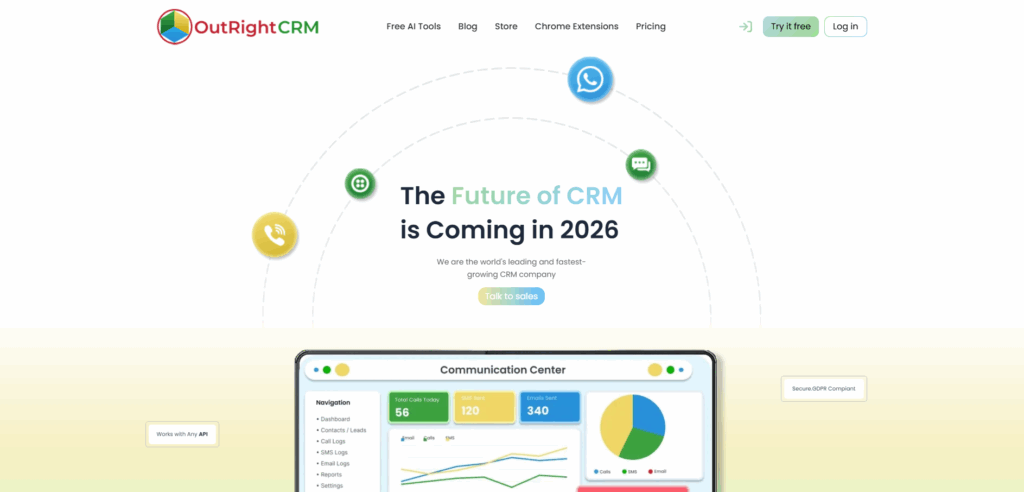
OutRight CRM is a user-friendly and AI-powered platform specially built for businesses that require robust customer support functionality without the complexity of enterprise-based tools. It simplifies interaction history, customer data, and communication workflows into a centralized interface, powered with omni-channel communication. It enables agents to manage calls with full context and more efficiently; its innovative and AI-driven approach keeps the learning workflow minimal and functionality simple. This means faster onboarding and minimum downtime for your support team. OutRightCRM provides effective reporting features and workflow automation, providing managers with higher visibility into team performance without needing extensive configuration.
Best for: Small-to-medium businesses requiring no-fuss and easy-to-implement customer support CRM that encompasses all the main features.
OutRightCRM Pricing: To learn more about OutRightCRM and its pricing, reach out at sales@outrightcrm.com
2. Salesforce Service Cloud:
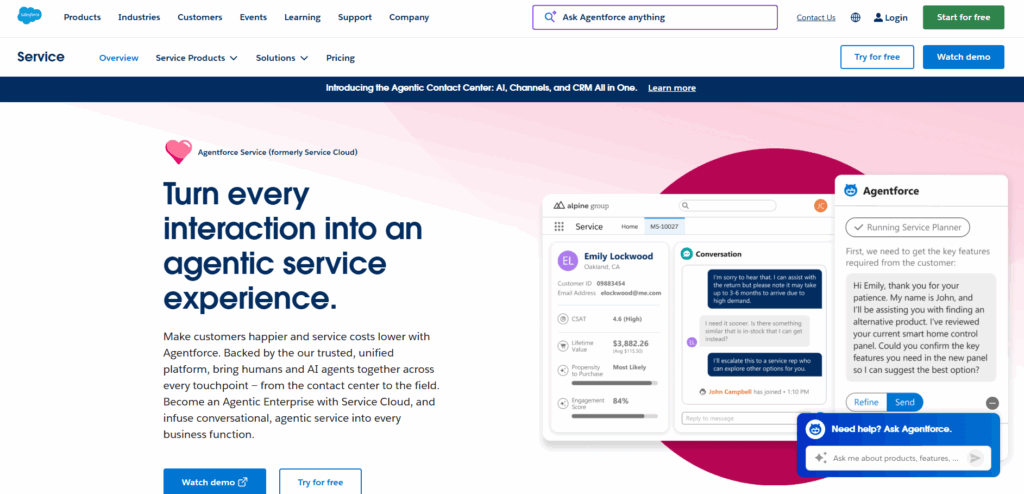
When it comes to most complete contact center platforms in the market, Salesforce Service Cloud can top any list. It is specially built for businesses that require enterprise-level power and flexibility. It gives agents a centralized workspace where they can handle emails, calls, chats, and social media interactions from one screen. Its AI-driven analytics enable you to understand customer requirements and behavior, while voice recognition features can quickly identify customers by recognizing their speaking patterns. It is deeply integrated with a wider Salesforce environment, making it best for businesses that depend on Salesforce for marketing or sales.
Best for: mid-to-large businesses looking for an AI-powered and fully integrated CRM.
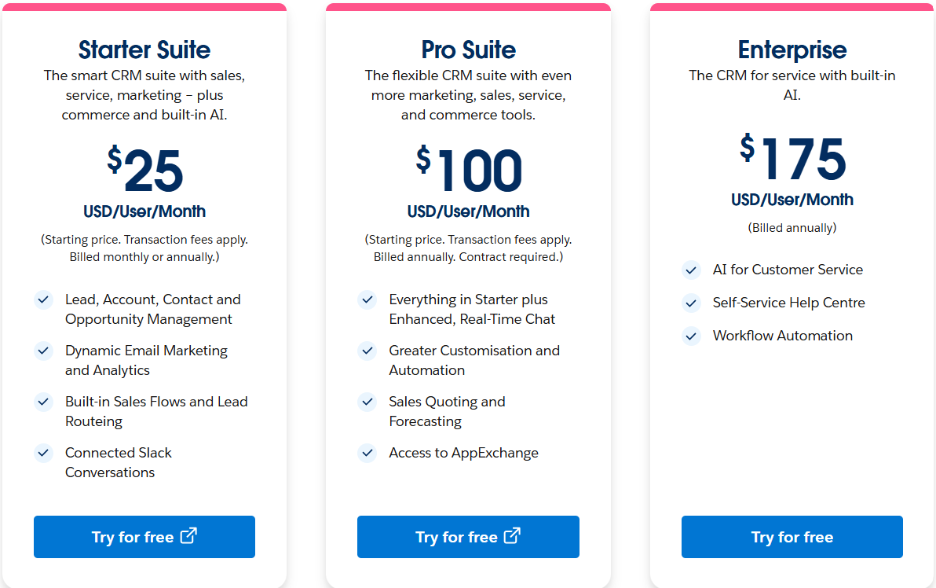
Salesforce Service Cloud Pricing: It is divided into three pricing tiers: Starter Suite, Pro Suite, and Enterprise.
3. Creatio:
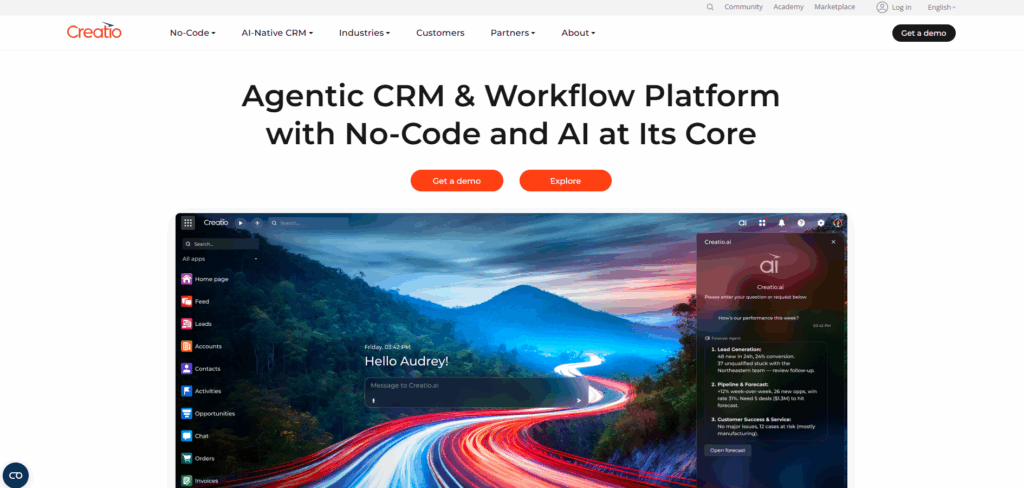
Creatio provides an end-to-end agentic CRM solution with a wide set of characteristics to improve customer service automation. Its contact center provides agents with accessibility to single window interfaces with customer data and request queues that allow them to perform bulk interactions, share data with team members, and track their own performance. An advantage that stands out is its no-code capability of customization, which enables businesses to create and modify workflows without depending on specialized IT solutions. Creatio’s AI goes beyond standard routing by considering the present workflows of agents and case timelines, ascertaining optimal case alignment.
Best for: Small-to-medium companies that require in-depth customization with minimum effort in development.
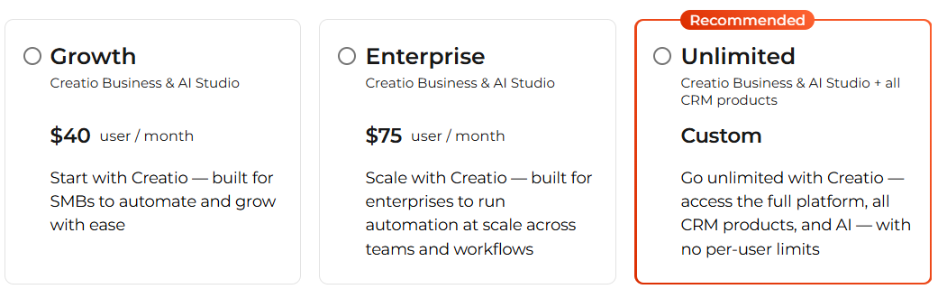
Creatio Pricing: You can choose between three plans: Growth, Enterprise, and Unlimited.
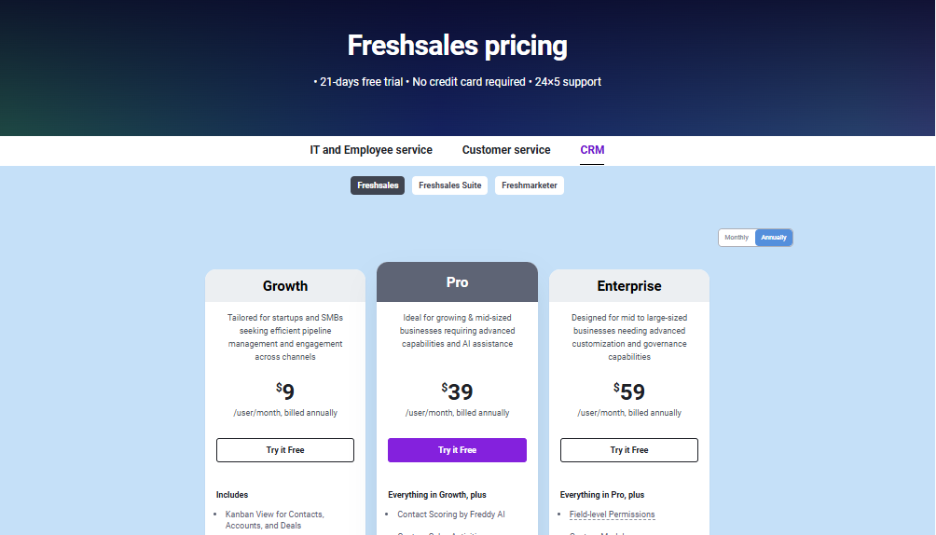
4. . Freshworks (Freshdesk + Freshcaller):
Freshworks provides a customer service suite that combines its ticketing solution Freshdesk, and with Freshcaller for overall voice support. Its overall contact center solution ensures sophisticated inbound routing and call recordings, post-call transcripts, and call-lifecycle data. To free up the agents, Freshworks ensures AI-driven voice bots and speech-enabled IVR. The interface is easy to adopt and clean, making it a right fit for growing teams that enter the market quickly.
Best for: small to mid-size digital-first businesses.
Freshworks Pricing: The pricing plan exists in three tiers: Growth, Pro, and Enterprise.
5. Zoho Desk:
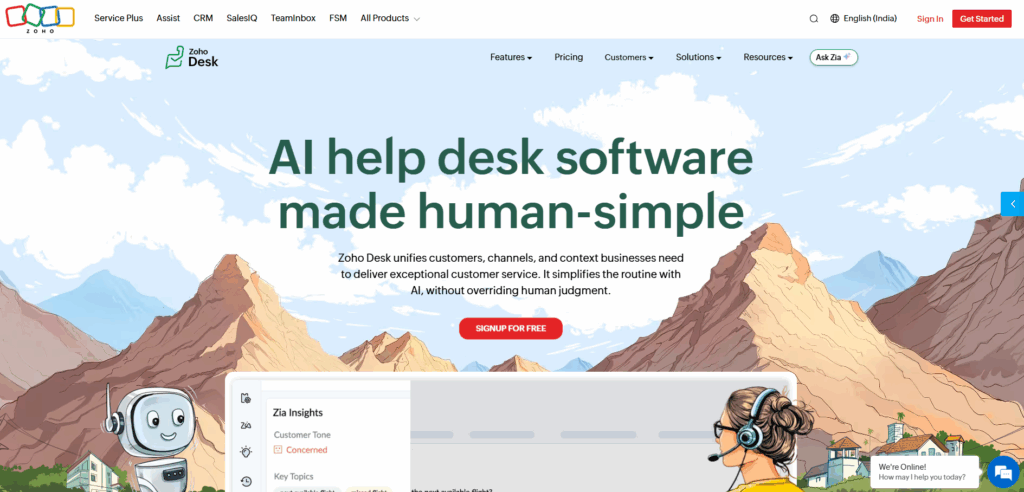
Zoho Desk is a budget-friendly and solid option that neatly integrates into the wider Zoho environment. Zoho's AI helps tools to deliver support to agent operations by recognizing important terms and segments in tickets to recommend valuable knowledge-driven content. AI also assesses ticket types and volume spikes, allowing managers to adjust staffing accordingly. Its in-built call center features, including call monitoring, IVR trees, and queue performance metrics, make it a useful tool without it being complex.
Best for: B2C and B2B businesses with simple customer service processes looking for a cost-efficient CRM.
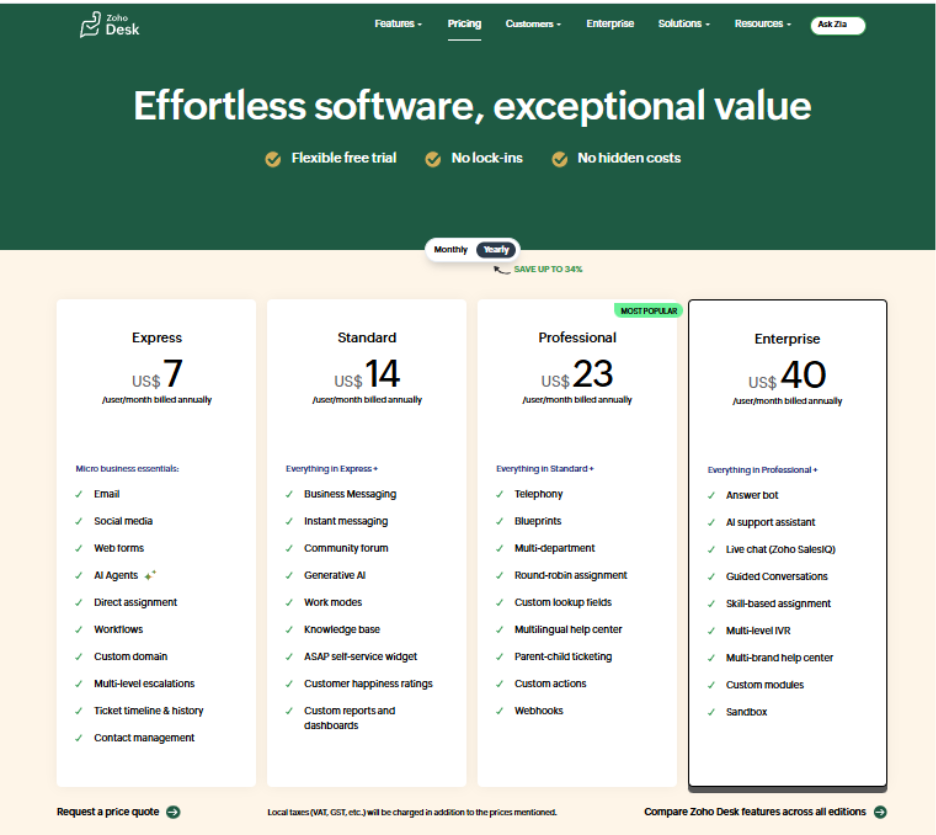
Zoho Desk Pricing: Zoho Desk Pricing is divided into Express, Standard, Professional, and Enterprise Plan.
6. Zendesk
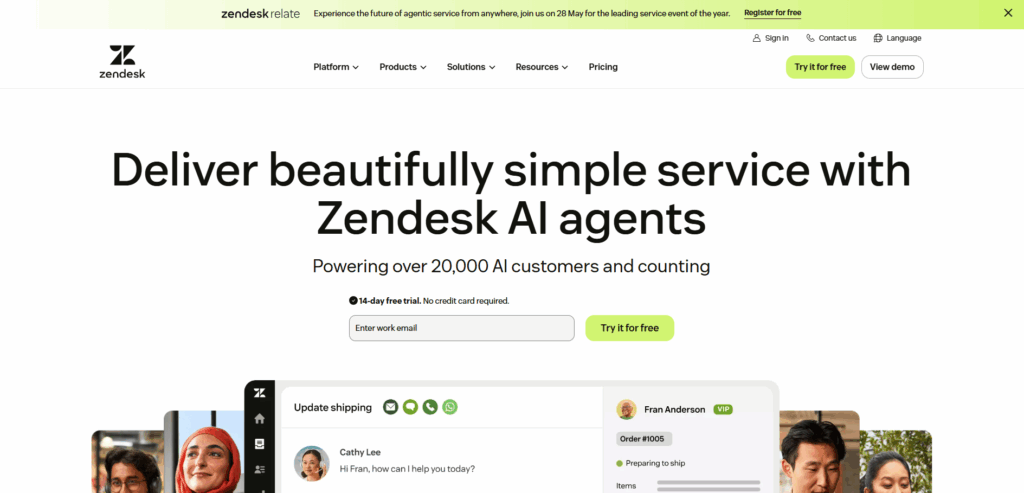
Zendesk is reputed for its innovative interface and dependable omnichannel support. The platform provides omnichannel support, including messaging, voice, chatbots, and portals, all improved by automation. Its IVR system collects customer data, smartly directs calls, and delivers information without the constant involvement of human agents. With support for 1,500+ app integrations, it aligns well with the available tech stacks.
Best for: Evolving mid-market companies with higher volume interactions and a need for fast deployment.
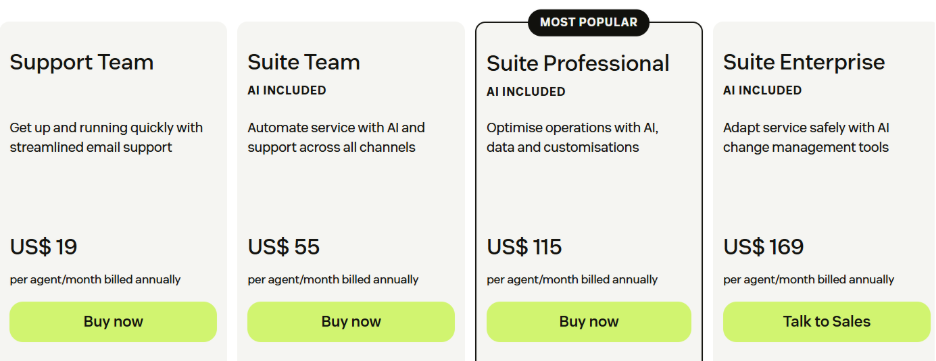
Zendesk Pricing: Zendesk Pricing is divided into four tiers: Support Team, Suite Team, Suite Professional, and Suite Enterprise.
Conclusion
Adopting the right call center CRM software can impact customer satisfaction, overall business growth, and agent efficiency directly. Irrespective of whether you are a small business looking for simplicity or a large corporation looking to integrate sophisticated AI capabilities, there is always a solution personalized to your requirements. From the ease of use and AI-driven approach of OutRightCRM to the enterprise-level capabilities of Salesforce, every platform provides different advantages. Assess your team's size, budget, and needed features before committing to a platform that aligns with lasting customer service objectives.
%201.png)

%201.png)

%201.png)