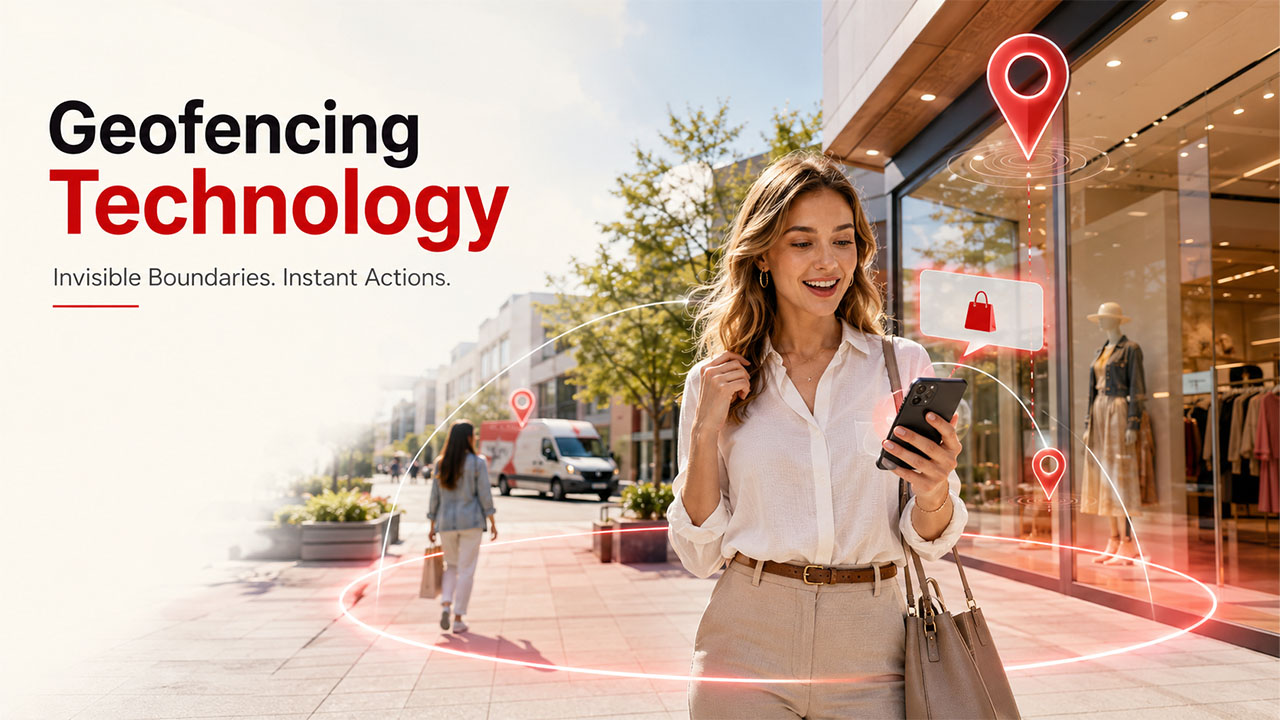

Ever noticed how the moment you walk into a mall, your phone buzzes with a free coupon for a coffee shop you just walked past? It is not the shop you looked up online or follow; rather, it’s just the one you happened to be around. If you are wondering how that is possible. The answer is geofencing. It’s a simple technology that works in the background of a lot of apps you already use.
In simple terms, geofencing is used to draw a virtual boundary around a real location. The moment your phone crosses that boundary, it can trigger an action, like sending a notification or an offer. Once you understand what it is, you’ll start noticing it everywhere.
What Is Geofence? Understanding the Basics of Geofencing Technology
Geofencing is an advanced technology used to build an invisible boundary around a real-world location. The moment a phone, vehicle, or tracking device crosses that invisible digital line, something happens automatically, such as a notification or alert gets sent, and records get logged.
It uses location technology that is already sitting inside most of our devices, such as GPS, Wi-Fi, cellular data, and sometimes Bluetooth beacons. Many businesses or organizations use geofencing and software that keep track of movements happening inside the digital line. There is no need for a physical fence or a person who needs to stare at the screen 24/7
Understanding Geofencing in Marketing
Marketers were among the first to figure out how useful this could be. In digital marketing, geofencing means using that same location-based technology to target potential customers based on where they physically are, right now, not where they said they live on some form five years ago. It's used far beyond retail, too. Delivery companies rely on it to confirm arrivals, and security teams use it to track equipment.
This is especially appealing to marketers because it goes far beyond a static billboard or a poster on walls. Billboards or posters are noticed by everyone who looks at them. However, geofencing takes a more targeted approach by talking to the specific person standing in the specific spot that respective businesses care about.
Types of Geofencing Marketing Strategies
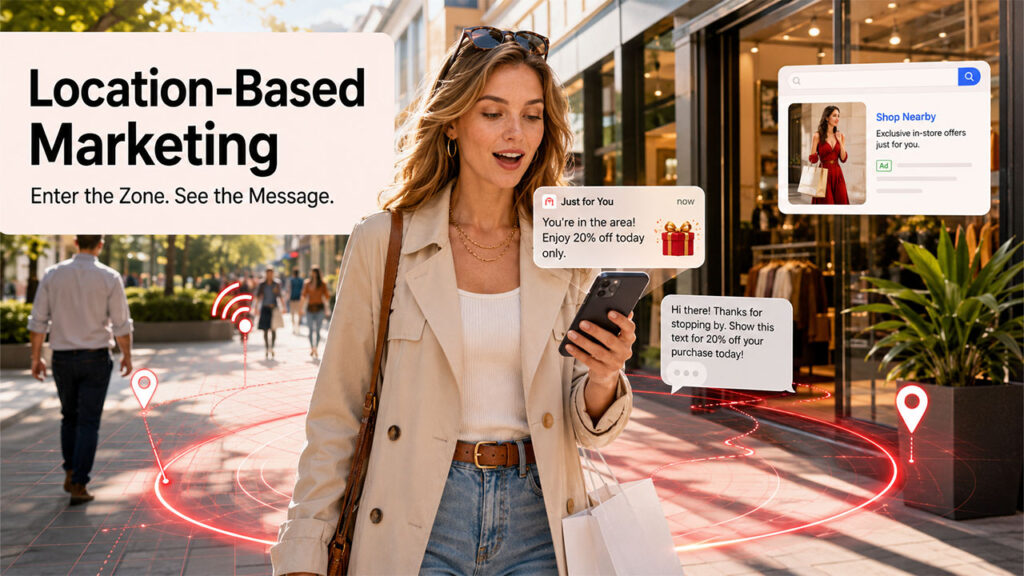
After a geofence is set up, businesses use the following ways to reach the person who actually walked into it:
- Push Notifications: When a business app is installed on a person’s phone and they enter a geofenced area, they receive a pop-up message on their phone screen.
- SMS Marketing Through Geofencing: If your phone number is already registered in a business database, it can trigger an automated text the moment you walk inside the invisible boundary.
- Geofence-Based Pay-Per-Click (PPC) Advertising: Businesses pay a platform like Google Ads to surface their ad when someone searches for a relevant term while standing inside the geofence.
The only way a business can pull this is when they have access to your location data, an app that users have downloaded to track their movement, and permission from users to receive their location updates.
How Geofencing Works: Step-by-Step Process
Here's a simple step-by-step look at how a geofence is created, monitored, and triggered in real time.
- Selecting a Location to Monitor: This could be a store, a customer's address, a construction site, or an entire city block.
- Creating a Virtual Boundary: Usually this happens through a simple map interface, where a business or fleet manager literally clicks around the area they want to define.
- Setting Triggers and Notifications: This is where the business decides what should happen the moment someone or something enters or exits the boundary. It might be an email alert, an in-app push notification, or a report that logs the event quietly in the background.
- Real-Time Location Tracking: The system uses GPS, Wi-Fi, cellular signals, or Bluetooth to continuously check whether a device has crossed the line.
- Automatic Actions and Responses: The second a device enters or exits the zone, whatever was configured in step three happens automatically, no manual monitoring required.
It is as simple as it sounds. The concept is not complex, but scaling it is a task. Businesses must run thousands of these zones at once and make sure that triggers are working fine without flooding people with back-to-back notifications that they’ll just ignore.
Top Benefits of Geofencing for Businesses
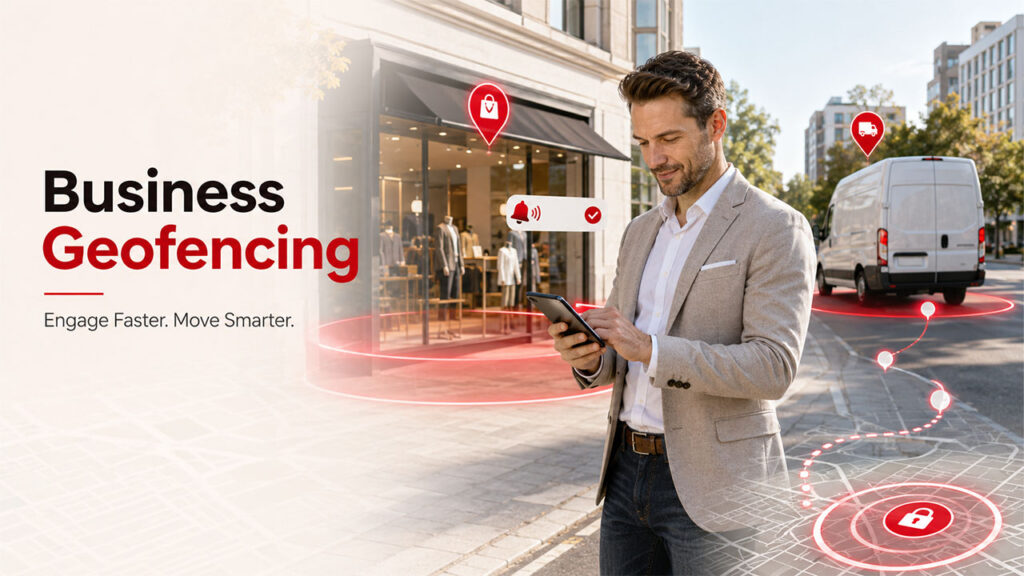
Geofencing offers benefits that extend beyond marketing, helping businesses improve operations, security, and customer engagement.
- Targeted Advertising: Businesses can now reach their target audience exactly when and where they’re most likely to act on it. This makes advertising personalized and increases the odds of conversion. That precision is also why the ethics of geofencing get discussed alongside its marketing upside.
- Personalized Customer Experience: When businesses know where their customers are, they can tailor their messages that feel more relevant than a generic blast to everyone on a mailing list.
- Real-time Customer Engagement: A well-timed push notification or text can catch someone's attention in the moment, rather than hoping they remember a business later.
- Data-driven Business Insights: This also provides businesses with visibility into foot traffic patterns, customer behavior, and even how their location compares to competitors nearby. They use these insights to tweak their strategy.
- Improved Operational Visibility: For fleets and logistics teams, geofencing automatically tracks arrival and departure times. This saves time and energy spent on manual reporting and speeds up the process.
- Better Route Efficiency: With real-time location data, companies can cut down on idle time and optimize how vehicles move between stops.
- Enhanced Security and Asset Protection: When any equipment or vehicle leaves designated sites, owners get real-time alerts instantly instead of finding out about it days later. It also flags any unauthorized movement of equipment and, in some cases, locks it down to prevent any mishap.
- Easier Policy Enforcement: Restricted zones, curfews, or approved regions can all be enforced automatically rather than relying on someone noticing a violation after the fact.
Not every business needs this; however, this is its plus point that it can meet every industry’s needs whenever they decide to employ it.
Real-World Geofencing Examples Across Industries
The same geofencing technology supports different industries, from retail promotions to fleet tracking and equipment security.
| Industry or user | How it's used |
|---|---|
| Retail and restaurants | Sends a coupon or promotion the moment a shopper walks near or into a store |
| Service and delivery companies | Confirms arrival and departure times at customer locations automatically |
| Construction companies | Flags if equipment leaves a job site without approval, helping catch theft early |
| Internet service providers | Tracks how often a technician actually stops by an office or job site |
| Public sector and municipal fleets | Restricts vehicle access to sensitive or controlled zones |
| Waste management companies | Confirms when collection trucks arrive at disposal sites and complete their routes |
| Car rental companies | Detects when a rental vehicle leaves an approved region |
Potential Drawbacks and Challenges of Geofencing
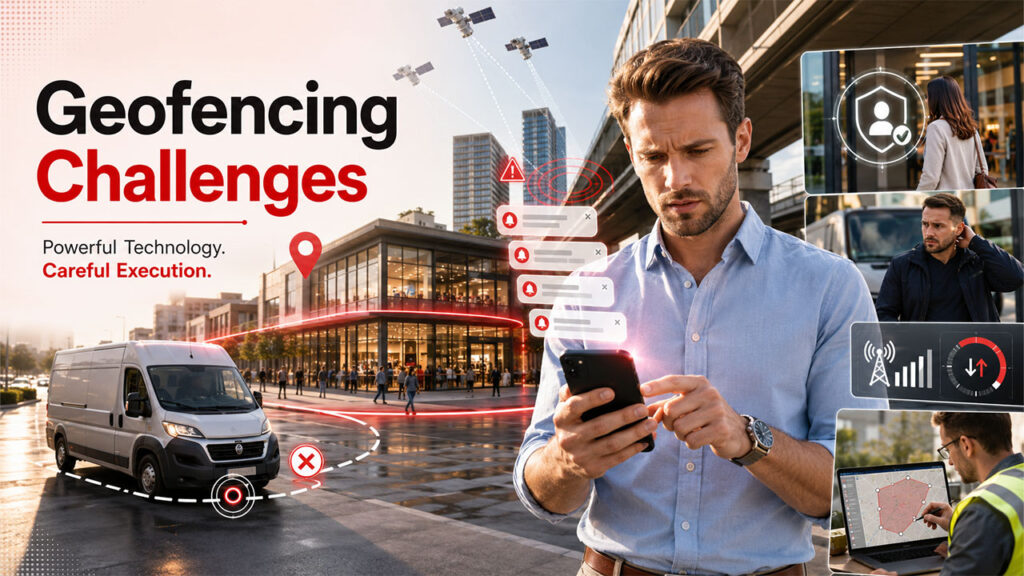
While it has numerous advantages, none of this is without friction.
- GPS Accuracy Limitations: Signals can be disrupted by tunnels, urban areas, and remote regions. Moreover, they can emit incorrect signals which sometimes trigger incorrect actions.
- Privacy and Compliance Concerns: Tracking a person's location triggers questions about privacy, regardless of the intent. Therefore, businesses must be honest about what they collect and why. Additionally, they must be compliant with local regulations throughout. Many businesses turn to dedicated data privacy tools to help manage that consent responsibly.
- Increased Data Usage: Tracking locations continuously consumes a lot of data. Additionally, it needs reliable cellular data for location tracking to work well, which is expensive.
- Alert Fatigue: When people receive too many notifications, they see it as spam, especially the poorly configured ones. People ignore them entirely and sometimes blacklist them, which defeats the entire purpose.
- Setup and Maintenance Requirements: It takes some serious planning to draw zones and configure triggers. And this is not the end. It needs constant updating as routes shift and customer sites change over time.
- User and Driver Acceptance: People, whether customers or employees, aren't always comfortable with increased location oversight, and that resistance needs to be addressed honestly rather than ignored.
None of these drawbacks make geofencing a bad idea. They just mean it needs to be set up thoughtfully, with clear communication about what's being tracked and why.
Conclusion
Now, if you recall all situations where you received sudden messages from businesses the moment you walked past or around them, it doesn’t feel like magic anymore. It's a virtual boundary in action, a GPS signal, and a trigger that happened the moment you crossed an invisible line someone else drew on a map.
So, what is geofence, once you strip away the surprise of it? It's not a flashy or complex concept. It is simple and quietly running behind marketing campaigns, delivery apps, fleet management platforms, and security systems to do its job extremely well. It notices when someone or something crosses a line and acts on it immediately. Whether it's nudging a shopper toward a sale or confirming a delivery truck made it to the right address, the mechanics stay the same. What changes is just who's using it, and why.
FAQs About Geofence
Q. What is a geofence in the simplest terms?
It's a virtual boundary around a real location that automatically triggers an action when a device enters or exits it.
Q. Does geofencing work without an app?
Usually no, since most geofencing relies on an app that has location permissions enabled on a user's device.
Q. Is geofencing only used for marketing?
No, it's widely used in fleet management, logistics, security, and even parental control apps.
Q. Does geofencing drain phone battery?
It can use some battery due to continuous location checks, though the impact is usually minor with modern devices.
Q. Is geofencing a privacy risk?
It can raise privacy concerns, which is why clear consent and transparent policies matter so much.
%201.png)

%201.png)

%201.png)