


Today, website and online business owners most often choose between two hosting options: VPS and cheap dedicated hosting. Both solutions provide control, performance, and security, but differ in their level of isolation, cost, and scalability. Understanding the differences between them will help you choose the hosting that best suits your needs and budget.
What Is VPS Hosting
A Virtual Private Server runs on physical hardware shared among multiple users. Each user receives a dedicated portion of resources, isolated from others. This allows for a balance between affordability and high performance.
The user receives root access, can install necessary software, and change server settings, all without depending on their system neighbors. A VPS is highly scalable – you can quickly increase RAM or CPU time without migrating your site.
VPS hosting is ideal for:
- Growing projects that no longer rely on shared hosting;
- E-commerce sites and corporate websites;
- Applications that require stability and control over settings.
What Is Dedicated Hosting
Dedicated hosting is a solution where you lease an entire physical server. All resources – processor, memory, and disk space – are yours alone.
This option provides maximum power and control. It's suitable for companies with high traffic, large databases, as well as SaaS services and financial platforms.
However, dedicated hosting is more expensive and requires more technical skills to maintain.
The advantages of a dedicated server are obvious:
- Maximum performance and request processing speed;
- Complete isolation and a high level of security;
- The ability to optimize the server for specific business needs.
Differences Between VPS and Dedicated Hosting
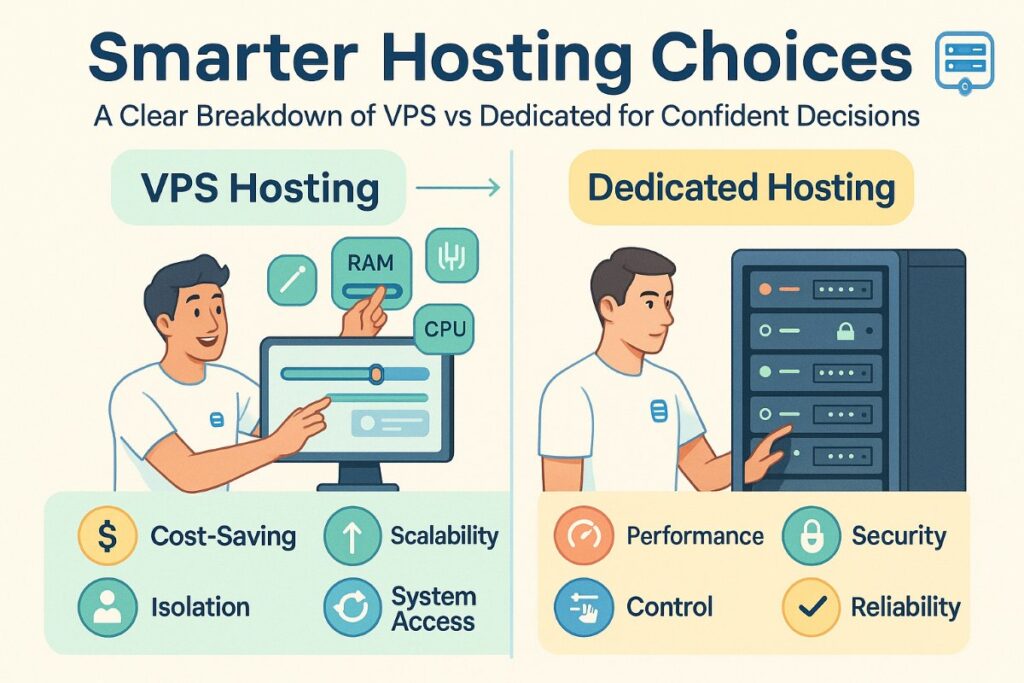
Virtual Private Servers and dedicated hosting both give users considerable control over their server infrastructure, but vary in levels of resources, cost, and scalability. The main differences are:
- Cost: VPS is cheaper because you share resources with other users. The dedicated server cost is based on the cost of the physical hardware.
- Performance: Dedicated hosting is going to perform better, since all the resources are dedicated to one user.
- Scalability: VPS is easy to scale; you can really quickly add RAM, storage, or CPU without migrating your website. With dedicated hosting, you are going to have a hard time upgrading anything and will have to physically replace hardware to get more resources.
- Security: VPS is isolated from the other users, but dedicated servers have an even higher level of security because there are no other users on the same server. If you’re also curious about how dedicated hosting ties into network-level features, check out our article on Dedicated IP Addresses.
- Management and control: Dedicated hosting enables you to have complete nest no management of hardware or systems; meaning you have control over how the systems and hardware are configured, instead, you get the reliability and convenience of not having to worry about any of the hardware aspects.
Pros and Cons of VPS Hosting
Let's look at the advantages and disadvantages of VPS.
VPS advantages:
- Lower cost with decent performance;
- Easy scaling without data migration;
- Isolation from other clients on the server;
- Full access to system settings.
VPS disadvantages:
- Less power compared to a dedicated server;
- Possible temporary restrictions during peak loads.
Pros and Cons of Dedicated Hosting
Now, let's look at the advantages and disadvantages of dedicated hosting.
Advantages of dedicated hosting:
- Maximum performance and reliability;
- Complete control over software and security;
- High level of isolation and data protection.
Disadvantages of dedicated hosting:
- Higher maintenance costs;
- Requires technical knowledge for setup and administration.
How to Choose Between VPS and Dedicated Hosting
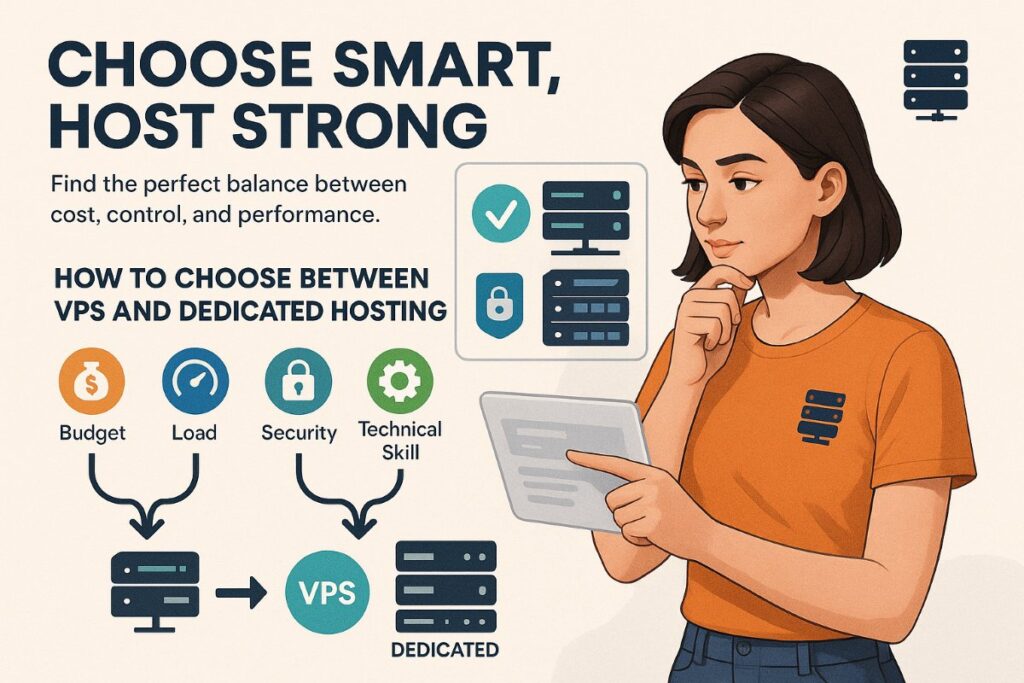
As you think about which option will be best for you, there are several things to think through:
- Your budget. If cost is important to you, try to begin with a VPS – they will save you money, and you can always upgrade to a more powerful plan if you find you need more resources;
- Load. If any of your websites will have steady traffic, or if you will use it to run an online store with thousands of products, dedicated hosting would be a better choice, and also allows for more control;
- Security. If you are a business that will be processing personal data, a dedicated server will give you the maximum protection;
- Your technical knowledge. If you are not very technical, a VPS would be a lot easier to manage, especially if it came with an admin panel and an automatic update function.
Why Namecheap Is a Reliable Hosting Provider
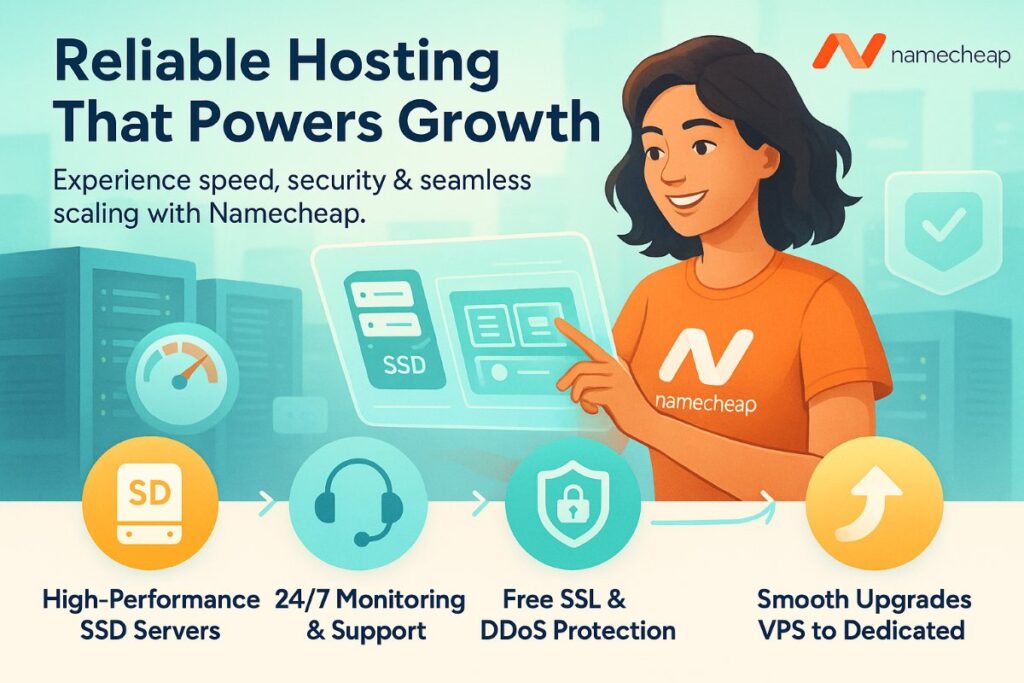
Namecheap offers both VPS and affordable dedicated hosting with flexible plans and modern servers. Their solutions are suitable for small businesses, startups, and large organizations that value reliability and speed.
Namecheap advantages:
- High-performance servers with SSD storage;
- 24/7 support and monitoring;
- Free SSL certificates and DDoS protection;
- Smooth upgrades from VPS to dedicated hosting without data loss.
Last Thoughts
Both VPS and dedicated hosting can ensure the reliable operation of your website, but they serve different purposes. VPS is suitable for projects in the growth stage, while a dedicated server is ideal for larger companies that require maximum performance and security.
Namecheap provides flexible and affordable solutions for businesses of all sizes, helping build an infrastructure ready for growth. No matter which hosting type you choose, with the right provider, your website will always be fast, stable, and secure.
%201.png)

%201.png)

%201.png)