

One of the most essential talents in the cutting-edge generation is productivity. We rely on digital equipment and every day workouts to stay organised, make alternatives, and quit paintings on time, whether or not at home or within the workplace. However, as generation advances fast, so does our method of running. Faster internet and more apps aren't the quality components of current workflows. Contemporary productiveness is pushed with the aid of systems that simplify obligations, reduce distractions, and create an extra balanced relationship among paintings and personal life.
The emergence of cloud-based totally gadget and virtual work environments is honestly one of the most important changes in non-public and expert effectiveness. These digital systems permit people artwork continuously, competently, and with fewer interruptions. While used efficiently, they are able to considerably boom the productivity of the common individual.
This blog will discuss how contemporary virtual workflows have an effect on productiveness in normal life and provide you with a few guidelines on the way to art work smarter, not harder.
1. The Modern Productivity Shift: From Manual Tasks to Intelligent Workflows
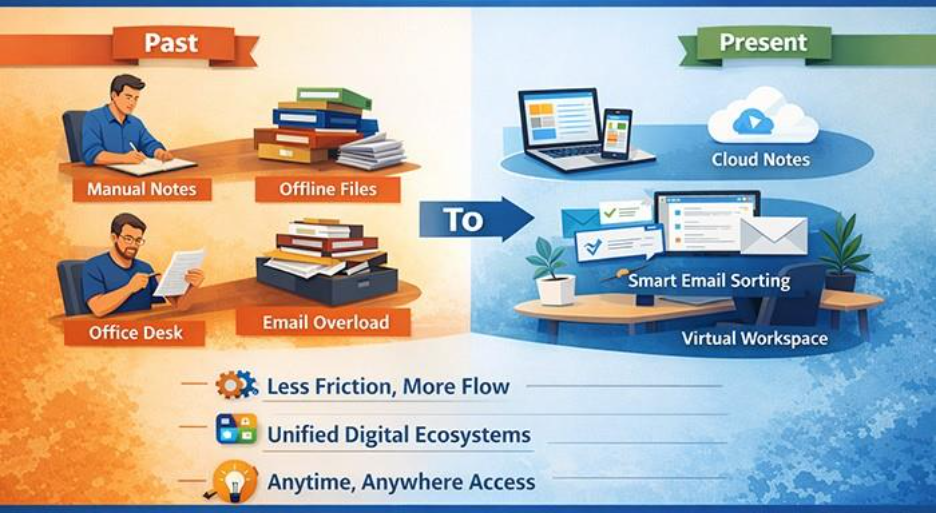
For a long time, an individual's productivity was based on how much time they spent at work. However, flow efficiency is now more important to productivity than hard work. Digital workflows let individuals do more in less time by reducing friction.
- Here are a few instances of how workflows have changed over time:
- Manual note-taking, cloud-synced bright notes
- Any device can access offline files online.
- Automated sorting and filtering due to email overload
- Software fragmentation leads to integrated ecosystems.
- Flexible, virtual workstations instead of fixed office desks
Present day structures integrate responsibilities in preference to juggling disparate gear, permitting humans to concentrate less on repetitive obligations and greater on high-cost thinking. Keeping mental readability and effectively handling workloads rely upon this modification.
2. Reducing Cognitive Load Through Better Digital Organization
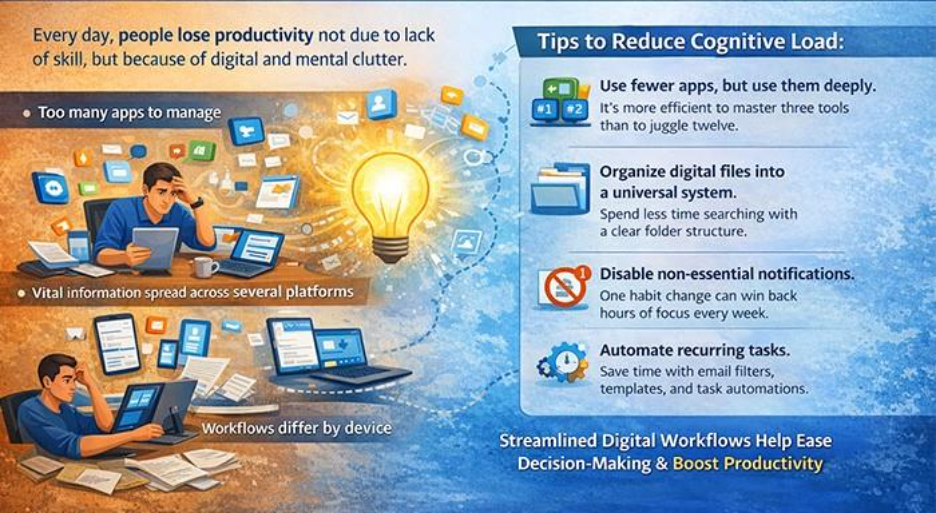
Every day, people lose productivity not because of a lack of skill, but because of digital and mental clutter.
- When there are too many tools to handle, cognitive load rises.
- Vital information is dispersed throughout several platforms.
- Focus is constantly disrupted by notifications.
- Workflows vary depending on the device.
A more streamlined digital setup reduces unnecessary decisions and frees up energy for meaningful work. Effective digital workflows help minimize these challenges.
Tips to Reduce Cognitive Load:
- Use fewer apps, but use them deeply.
It is more efficient to master three tools than to juggle twelve.
- Organize digital files into a universal system.
The amount of time spent looking for documents is decreased with a straightforward folder structure.
- Disable non-essential notifications.
This one habit can help you get back hours of lost focus every week.
- Automate recurring tasks.
Calendar notifications, email guidelines, and template messages help you do less work over and over again. Workflow automation tools in 2026 make it easier than ever to streamline these repetitive processes.
These kinds of little adjustments add up over time to make daily routines easier to follow and more manageable.
3. The Role of Virtual Work Environments in Everyday Productivity
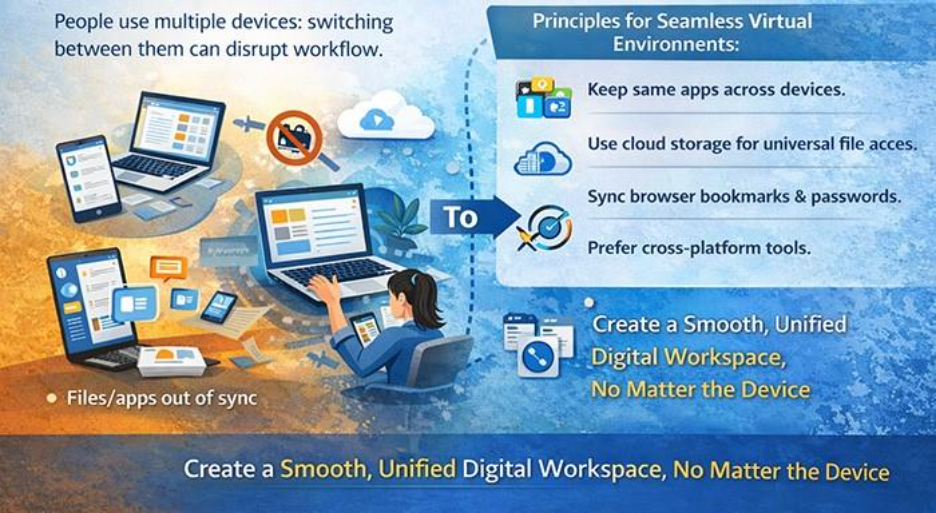
Nowadays, a lot of people use a laptop at work, a phone at home, and occasionally a tablet while they're on the go. Switching between them can disrupt workflow, especially when files or apps aren’t in sync.
This is where comprehension of current virtual environments for work becomes valuable. For instance, knowing what is VDI (Virtual Desktop Infrastructure) is reveals how organisations create consistent virtual offices available from anywhere. Although VDI is a technology that is frequently utilised within businesses, the idea also holds true for individual productivity:
A consistent, unified digital environment reduces friction and makes daily work smoother.
You don’t need to be technical to benefit from this idea. Anyone can replicate the same principle at home:
- Keep the same apps and layout across devices
- Use cloud storage for universal file access
- Sync browser bookmarks and passwords
- Use cross-platform tools instead of device-specific ones
The goal is simple: wherever you work from, your digital environment should feel the same.
4. The Power of Focus Management in a Distracted World
Productiveness isn't pretty much equipment, it’s approximately interest. The average character gets distracted each three–7 minutes, and it takes almost 23 mins to fully refocus later on (in step with college of california studies).
Constructing stronger consciousness conduct will increase both personal performance and usual satisfaction. Well-designed digital workflows support better focus management.
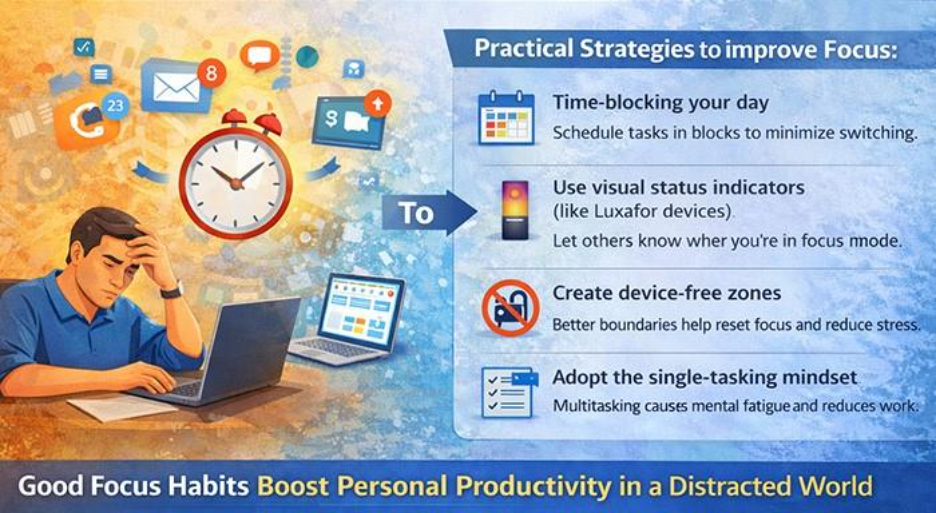
Practical Strategies to Improve Focus:
- Time-blocking your day
Time table responsibilities in blocks to decrease switching.
- Use visual status indicators (like Luxafor devices)
Let others recognise when you're in focus mode.
- Create device-free zones
Higher barriers assist reset attention and decrease stress.
- Adopt the single-tasking mindset
Multitasking creates intellectual fatigue and reduces work pleasantness.
These habits are no longer only professionals, however anybody seeking to control day by day duties with extra clarity and calm.
5. Building Daily Routines That Support Productivity
Workouts provide shape, and structure helps consistency. A nicely-designed daily routine removes guesswork, reduces pressure, and promotes a more healthy paintings-lifestyle stability.
Elements of an Effective Productivity Routine:
- Morning clarity rituals
A clean beginning unites the tone for the day.
Examples: reviewing priorities, mild stretching, or 5 minutes of journaling.
- Digital housekeeping
Spend 10 mins each morning organizing files, emails, or obligations.
- Midday energy reset
A brief stroll or breathing exercise boosts afternoon consciousness.
- Scheduled shutdown routine
Finishing the day with intention improves mental health and reduces burnout.
These practices inspire emotional balance and help people save you the productiveness dips that regularly manifest in chaotic or unstructured environments.
6. Managing Digital Overload in a Healthier Way
We stay in an international place full of apps, notifications, messages, and responsibilities. Overload is natural but workable. Streamlined digital workflows can significantly reduce this overwhelming feeling.
Actionable Ways to Reduce Digital Overload:
- Set maximum every day display screen time for non-public use
- Use “notification batching” to test messages at constant instances
- Archive or delete unused apps month-to-month
- Prioritize human connection over digital noise
Decreasing digital friction will increase calmness and clarity, contributing to long-term effectiveness.
7. Why Personal Productivity Leads to Better Workplace Results
Luxafor’s philosophy that individual productiveness drives business success is supported via decades of studies. Agencies perform higher when individuals:
- Manipulate interest correctly
- Use virtual tools mindfully
- Keep healthy workouts
- Decrease stress and burnout
- Paintings smarter rather than harder
An efficient character contributes to an efficient crew, which contributes to a stronger employer. This creates a chain response: higher paintings-lifestyle stability, more engagement, stepped forward performance, better commercial enterprise increase.
Final Thoughts
Technology continues to change how we live and work, however the middle of productivity stays the same: readability, consistency, and intentional habits. By way of knowledge of present day virtual workflows, decreasing cognitive overload, retaining recognition, and the use of tools wisely, all of us can build a greater effective and balanced routine each day.
Whether or not you’re exploring new concepts like what's vdi, creating a unified digital surroundings, or clearly enhancing the way you manage some time, each small improvement contributes to a more productive life each in my view and professionally. The destiny of productiveness isn’t about doing more; it’s approximately doing what topics, with motive and clarity.
%201.png)

%201.png)

%201.png)