

Job searching used to mean printing resumes and mailing them. Then it meant posting on job boards and emailing PDFs. Now it means running an automated system that scans hundreds of listings, customizes your resume for each one, and submits complete applications while you focus on other things. The shift from manual to tech-driven job searching didn't happen gradually. It happened fast, and professionals who haven't updated their approach are competing at a serious disadvantage.
Job search automation tools now cover every stage of the process, from resume building to ATS optimization, auto-applying, LinkedIn outreach, and interview preparation. Tools like RoboApply AI Auto Apply sit at the center of this stack, handling the submission layer at scale while everything else feeds into a coordinated system.
The Five Categories of Job Search Technology
Modern job search technology isn't one tool. It's a stack of specialized platforms, each solving a specific friction point in the process. Understanding what each category does helps you build a system rather than collect random tools.
The five categories that matter most are resume builders, ATS optimization platforms, auto-apply tools, LinkedIn automation, and interview preparation software. Each one addresses a distinct stage, and they work considerably better together than in isolation.
Resume Builders With AI Integration
Traditional resume builders were glorified word processors. Current AI-powered resume builders analyze job descriptions, suggest language aligned with industry standards, and structure content to maximize ATS readability. The core technology is natural language processing combined with pattern recognition trained on millions of successful resume formats across industries.
What separates good resume builders from basic ones is the feedback loop. The stronger platforms score your resume against specific job descriptions in real time, flag missing keywords, and suggest rewrites for weak bullet points. This transforms resume writing from a subjective exercise into a data-informed one. Platforms in this category include tools built natively into job search platforms as well as standalone products focused purely on document quality.
ATS Optimization Tools
Applicant tracking systems filter resumes before any human sees them. Research from Jobscan consistently shows that over 75% of resumes are eliminated at this stage, usually because of keyword gaps, formatting errors, or section labeling that doesn't match what the ATS expects.
ATS optimization tools work by parsing your resume the same way an ATS would, then comparing the output against a target job description. They flag the specific keywords present in the posting but missing from your resume, identify formatting issues that cause parsing errors, and score your overall match percentage. The technology behind these tools involves the same text parsing logic that ATS platforms use, which allows them to simulate the screening process before you submit.
Using an ATS optimization tool before submitting any application is one of the highest-leverage adjustments a job seeker can make. This kind of data-driven optimization is similar to how businesses improve results through ROI-focused digital marketing strategies, where continuous analysis and refinement drive better performance. The fix is usually simple once the gap is identified, and the difference in pass-through rate is significant.
Auto-Apply Platforms
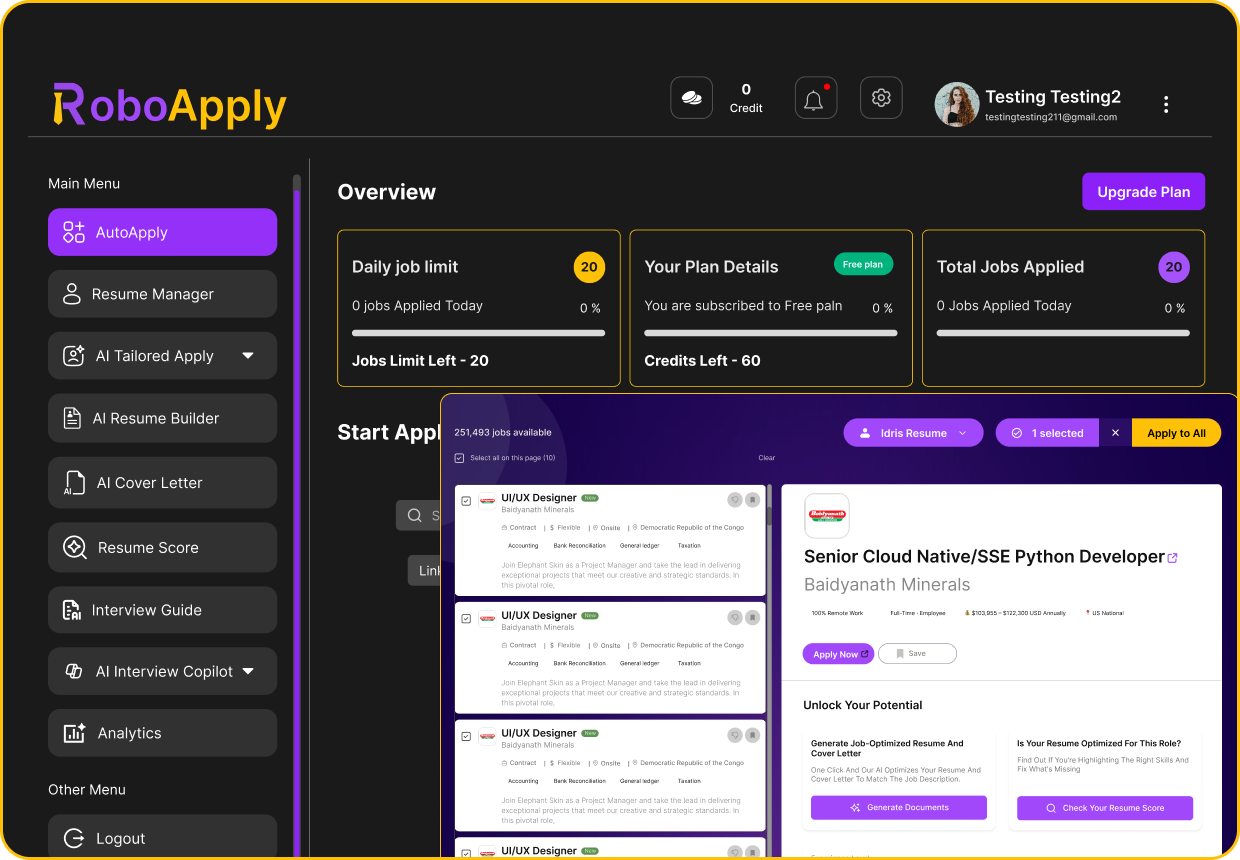
This is where the biggest productivity gains live. Auto-apply platforms handle the actual submission process at scale, removing the manual form-filling, cover letter writing, and multi-platform management that consumes most of a job seeker's time.
The technology stack behind the best auto-apply platforms combines several components working together:
- Large language models that read job descriptions and rewrite resume sections to match the specific role's language and requirements
- Web automation that navigates job board interfaces and fills application forms using data from your profile
- NLP-driven cover letter generation that pulls your experience into a document aligned with the posting
- A centralized tracking database that logs every submission, timestamps it, and updates response status in real time
- Cross-platform integration that reaches LinkedIn, Indeed, ZipRecruiter, Monster, Dice, and Simply Hired from a single configuration
RoboApply AI Auto Apply operates in this category. The platform runs continuously in the background once configured, customizing and submitting applications across major job boards without requiring manual input for each role. The customization layer is particularly important because volume without relevance produces poor results. Each application reflects the specific job description rather than a static resume sent everywhere.
LinkedIn Automation Tools
LinkedIn operates as both a job board and a professional network, and the two functions require different tools. LinkedIn automation platforms handle connection requests, follow-up messaging, profile view sequences, and direct outreach to recruiters or hiring managers at target companies.
The technology involves browser-based automation that mimics human interaction patterns to comply with LinkedIn's usage policies while scaling outreach beyond what manual effort can sustain. More sophisticated platforms incorporate AI to personalize messages based on the recipient's profile, increasing response rates by making outreach feel specific rather than templated.
LinkedIn automation works best as a complement to auto-apply tools, not a replacement. Automated applications reach the ATS. Direct outreach reaches the person making the decision. Running both simultaneously covers both entry points into the hiring process.
Interview Preparation Software
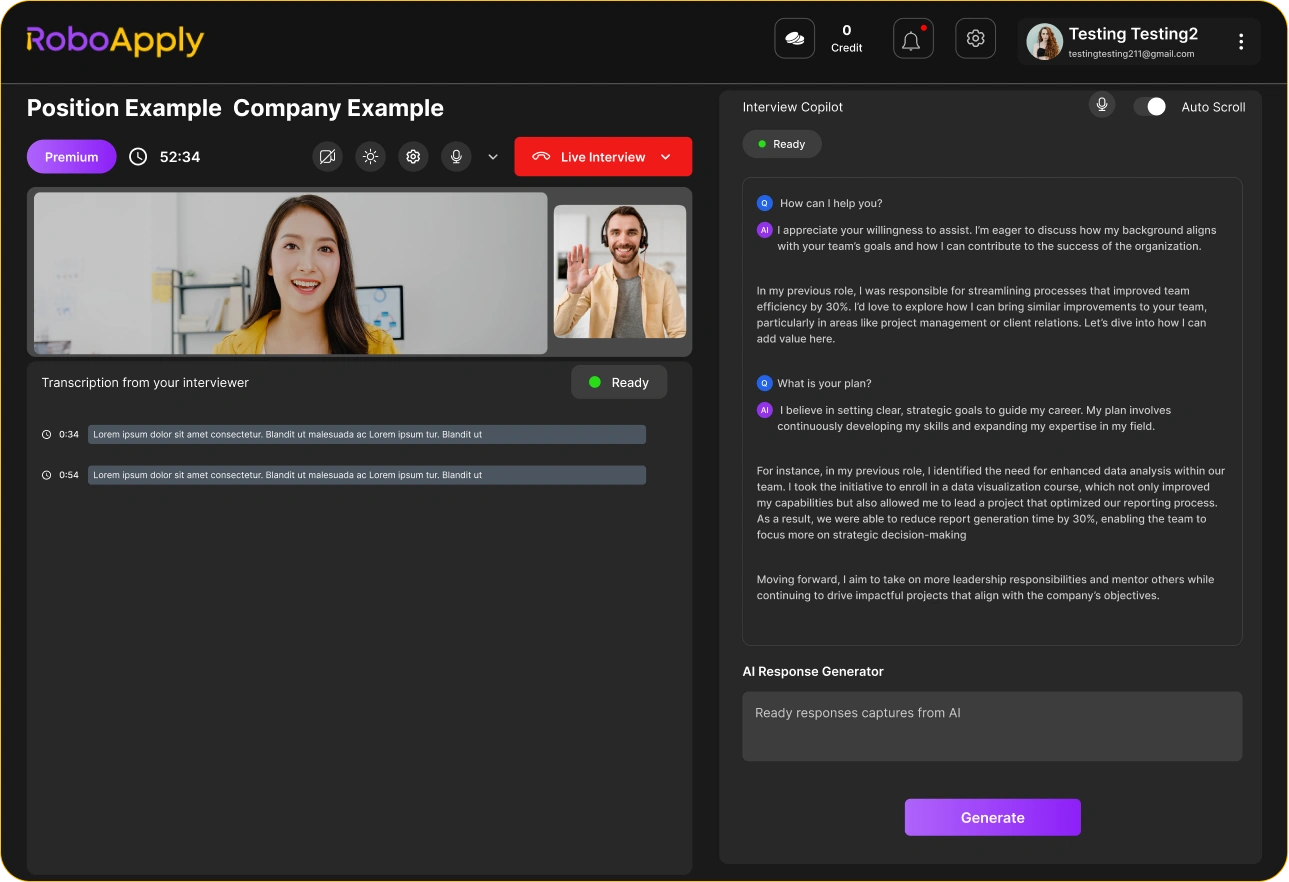
Landing the interview is the first milestone. Converting it is the second, and it requires different preparation than the application process. AI-driven interview preparation platforms generate role-specific practice questions based on the job description and your resume, evaluate your responses using speech analysis and natural language processing, and provide structured feedback on clarity, pacing, and content quality.
The more advanced platforms offer live coaching during practice sessions, flagging filler words, incomplete answers, or missed opportunities to quantify your experience. This real-time feedback loop compresses the preparation timeline significantly compared to self-directed practice. A more innovative Platform like ParakeetAI functions as an interview copilot, guiding candidates in real time and helping them refine their answers with precision.
Building a Coordinated Job Search Tech Stack
Each tool category solves a different problem, but the compounding effect comes from running them together as a system. Here's how a coordinated tech stack functions across the full job search lifecycle:
- A resume builder produces a strong, ATS-formatted base document with role-relevant language and quantified accomplishments
- An ATS optimization tool scores that resume against target job descriptions and flags gaps before submission
- An auto-apply platform takes the optimized resume, customizes it per role, and submits to hundreds of matching positions across multiple job boards weekly
- LinkedIn automation runs parallel outreach to recruiters and hiring managers at target companies, adding a human-contact layer to the automated application volume
- Interview preparation software keeps you sharp and ready to convert the callbacks that the system generates
A 2023 analysis from MIT's Work of the Future initiative found that candidates using AI-assisted job search tools reported significantly higher application-to-interview conversion rates compared to those applying manually. That outcome reflects what happens when volume and per-application quality run together rather than trading off against each other.
The professionals who get the most out of this stack treat it as a system with inputs and outputs. They start with a strong base resume, configure their targeting carefully, review response analytics weekly, and adjust their approach based on what the data shows. Reviewing your job application strategy alongside these tools is what turns a collection of software into a functioning search engine for your career.
Frequently Asked Questions
What is job search automation and how does it work?
Job search automation uses AI tools to scan job boards, customize resumes, and submit applications automatically without manual effort for each role.
Do auto-apply platforms send generic applications or customized ones?
Quality platforms rewrite your resume for each specific job description, producing individually customized applications rather than a repeated static template.
Will automated job applications get flagged by platforms like LinkedIn?
Reputable platforms comply with job board terms of service and use submission methods that avoid triggering spam or security filters on major platforms.
How many tools does a professional actually need to automate their job search?
A resume builder, ATS optimizer, and auto-apply platform cover the core workflow. LinkedIn automation and interview prep tools add meaningful value alongside them.
How long does it take to set up a job search automation stack?
Most professionals complete the core setup across all tools in under two hours, with the auto-apply configuration taking 20 to 30 minutes on its own.
%201.png)

%201.png)

%201.png)