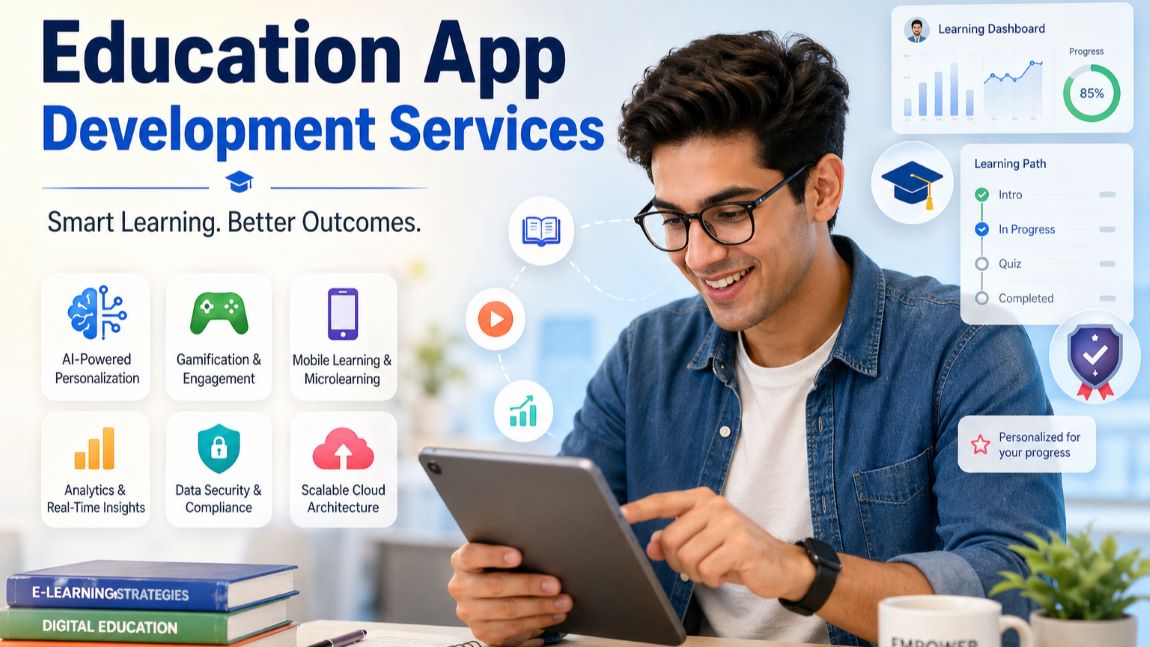

Education is shifting from standardized delivery to measurable outcomes. Institutions no longer evaluate success solely by course completion. They focus on engagement and real performance improvements.
To support this shift, many organizations invest in education app development services to align learning experiences with user behavior and data. Digital tools now shape how learners interact with content and how organizations scale knowledge delivery.
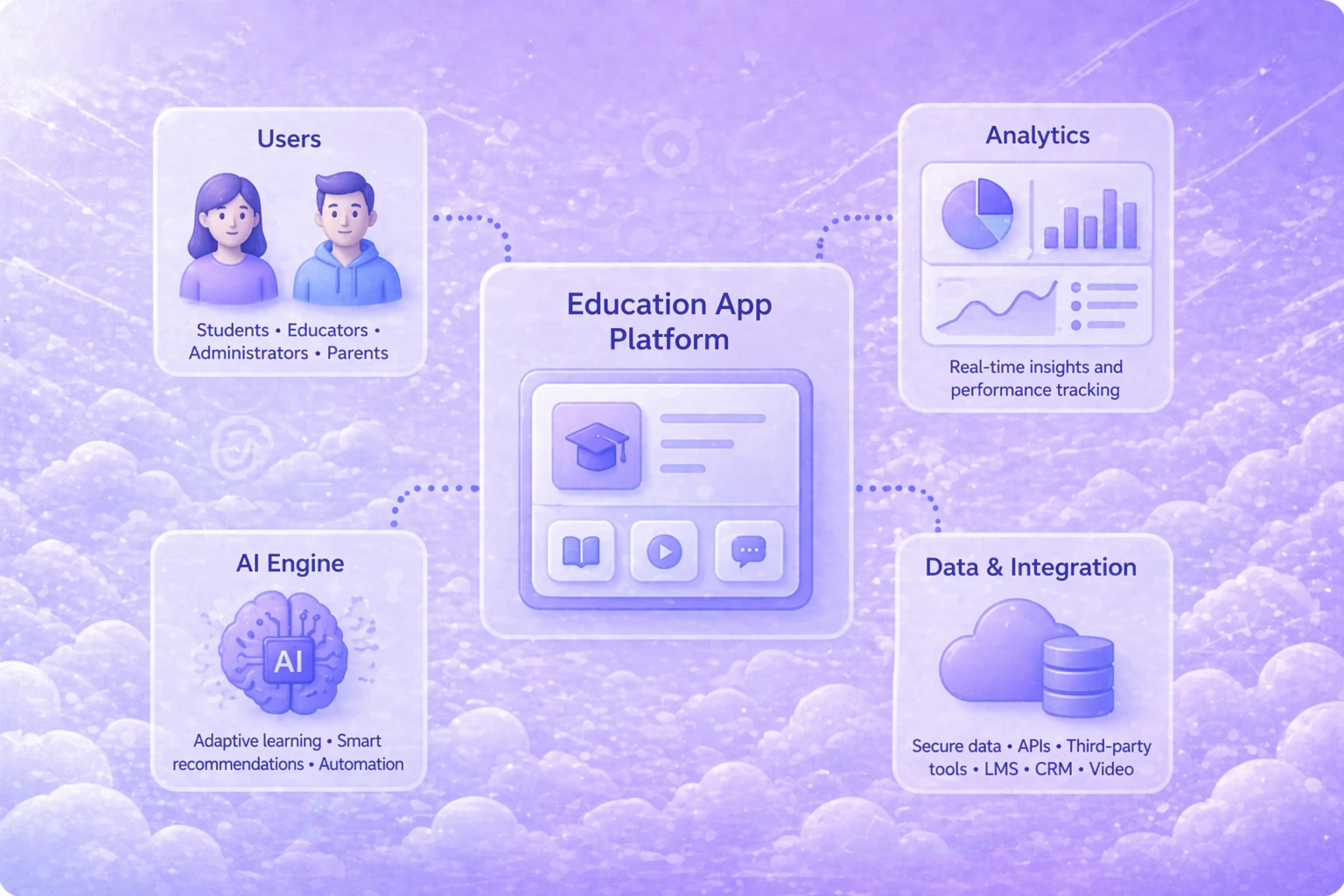
Current Challenges in Education
Many traditional approaches to education fail to meet the needs of modern learners. Today’s users expect flexibility and continuous access to learning materials, while many institutions still rely on rigid and static formats.
Limited personalization in learning
One of the main challenges is the lack of personalization. Learners often follow the same path regardless of their pace or level of understanding. This creates knowledge gaps for some users and a loss of interest for others.
Low engagement and passive formats
Engagement remains a critical issue. Passive formats such as lectures or static content reduce attention over time. Studies show that engagement can drop by 45–55% after just 10–15 minutes without interaction, which directly impacts retention.
Accessibility and system fragmentation
Accessibility is another barrier. Geographic location and device limitations restrict access to quality education. At the same time, digital tools rarely work as a unified system. Multiple disconnected platforms create inconsistent learning experiences and limit visibility into progress.
Lack of real-time data and insights
Many institutions still lack real-time performance data. Without actionable insights, educators cannot adjust learning strategies quickly or effectively improve outcomes.
What Are Education App Development Services?
The development of educational applications aims to provide a digital platform for the organized management of learning and knowledge. Solutions created through educational app development surpass simple content delivery by focusing on meaningful outcomes for both users and providers.
Educational solutions (such as learning management systems, mobile learning apps, virtual classrooms, and corporate training solutions) all serve similar purposes; therefore, they help educators and learners work together efficiently and at scale.
A key difference exists between off-the-shelf tools and custom development. Ready-made platforms allow quick deployment but often lack flexibility. They may not support specific workflows or integrations.
Custom education software provides this flexibility. Organizations can build systems tailored to their learning models and performance goals. This becomes critical when outcomes directly affect business or academic success.
Key Features That Improve Learning Outcomes
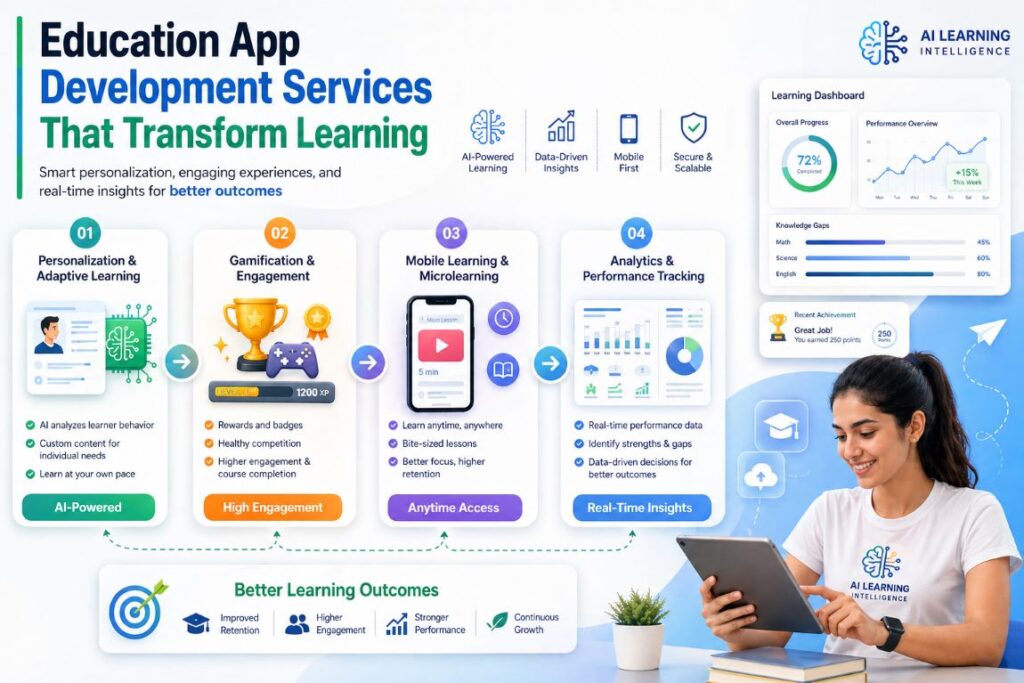
The effectiveness of digital education tools depends on how well they adapt to users and provide insights.
Personalization and adaptive learning
AI enables platforms to analyze user behavior and adjust content dynamically. Learners receive tailored content based on their progress and preferences. This improves retention and helps users move at their own pace without losing motivation.
Gamification and engagement
Gamification introduces rewards and competition. These elements encourage users to stay active within the platform. As a result, course completion rates increase and engagement improves.
Mobile accessibility and microlearning
Mobile learning platforms allow users to access content at any time. This supports continuous learning beyond traditional environments. Microlearning delivers content in short segments. This format improves focus and helps learners retain information more effectively.
Analytics and performance tracking
Education apps provide real-time data on learner performance. Dashboards highlight progress and knowledge gaps. This allows educators and managers to adjust strategies based on actual data instead of assumptions. Similarly, AI-powered systems also use knowledge-based insights to improve performance and decision-making, as explained in this detailed guide on AI knowledge bases for customer support.
Benefits for Different Stakeholders
Education app development services deliver value across multiple groups.
Schools and universities:
- Improve student engagement through interactive learning
- Increase academic performance with personalized content
- Track progress using real-time analytics
Corporate training teams:
- Reduce onboarding time with structured learning paths
- Monitor employee progress and compliance
- Scale training programs efficiently
EdTech startups:
- Build scalable and flexible products
- Launch faster with adaptable architecture
- Differentiate through custom features
Best Practices for Developing Effective Education Apps
Effective education apps depend on clear alignment between user needs and long-term scalability. Strong execution in these areas directly impacts engagement and learning outcomes.
User-centered design and intuitive UX
Successful platforms start with user-centered design. Both learners and educators must navigate the system without friction. Clear interfaces and accessible content improve adoption. Poor UX leads to high drop-off rates, even if the content quality is strong.
Scalable architecture and cloud-based LMS
A scalable architecture supports growth without performance issues. Cloud-based LMS platforms handle increasing user loads and ensure stable performance. This approach allows institutions to expand usage without rebuilding core systems.
Integration with learning and business tools
Modern education apps must integrate with third-party tools such as video conferencing platforms and analytics solutions. These integrations create a unified ecosystem where content delivery and performance tracking work together.
Data privacy and compliance
Data protection is critical in education. Compliance with GDPR and similar regulations ensures that user data remains secure. Strong privacy practices build trust and support long-term platform adoption.
Continuous improvement through analytics
Analytics should guide product evolution. Data on user behavior and performance highlights areas for improvement. Regular updates based on these insights help maintain relevance and improve learning outcomes over time.
Future Trends in EdTech Development
Education technology is advancing continuously, with numerous additional features being added. AI and machine learning will allow for greater personalization than ever before. Various systems will also analyze and predict learners' needs, thereby adapting the course of study accordingly.
With the emergence of VR and AR, learners can have an immersive learning experience. These technologies enable the user to interact with content in a lifelike manner. The continued growth of microlearning is expected, as users can achieve results more quickly and align with their current lifestyles. Implementing blockchain will also enable secure, verifiable credentials for certifications. Data-driven personalized learning will become standard practice in most digital educational technologies.
Conclusion
Companies that offer educational software development services create a framework that enables enhanced educational outcomes through technology. They allow for individualized learning and provide data for evaluating results.
For education decision-makers, it is essential to ensure that the technology used aligns with the institution's or program's overall educational objectives. Digital solutions should meet users' actual needs and deliver clear value.
Companies that invest in scalable, data-driven education platforms will be better able to provide high-quality learning opportunities now and adapt to future educational trends.
%201.png)

%201.png)

%201.png)