
The customer relationship management service acts as the backbone of all modern business operations across the globe. The CRM platforms help businesses streamline their sales processes, along with enhancing customer relationships and gaining valuable insights.
Salesforce is among the most popular and dominating players in the CRM landscape, which is renowned for its robust features, scalability, and extensive ecosystem support. However, the platform isn't perfect. Salesforce features a higher operational cost, along with complex implementations and a steep learning curve. This makes the platform impractical for various small and medium-sized businesses.
To select the best Salesforce alternatives, users need to keep various key considerations, like specific feature requirements, user interface, and key features, among others.
Why Look for a Salesforce Alternative?
Depending on the needs of the organizations, different platforms.
Some of the key reasons why users look for Salesforce alternatives include:
- Cost Concern: Salesforce is among the most premium CRM platforms, which includes a pricing model that can quickly escalate, especially if the user adds advanced features, integration, or additional users.
- Complexity and Implementation: The platform offers higher customization but requires a steep learning curve. Businesses may struggle with employee adoption, setup, and ongoing administration.
- Integration Needs: The platform features a robust marketplace of apps, but integration of niche tools is not supported completely. A smart CRM integration also helps businesses efficiently manage various key tools, like Microsoft software.
- User Experience: Various users can find the user interface of Salesforce cluttered or unintuitive. This also leads to lower adoption rates and inefficient workflows.
CRM Trends in 2026
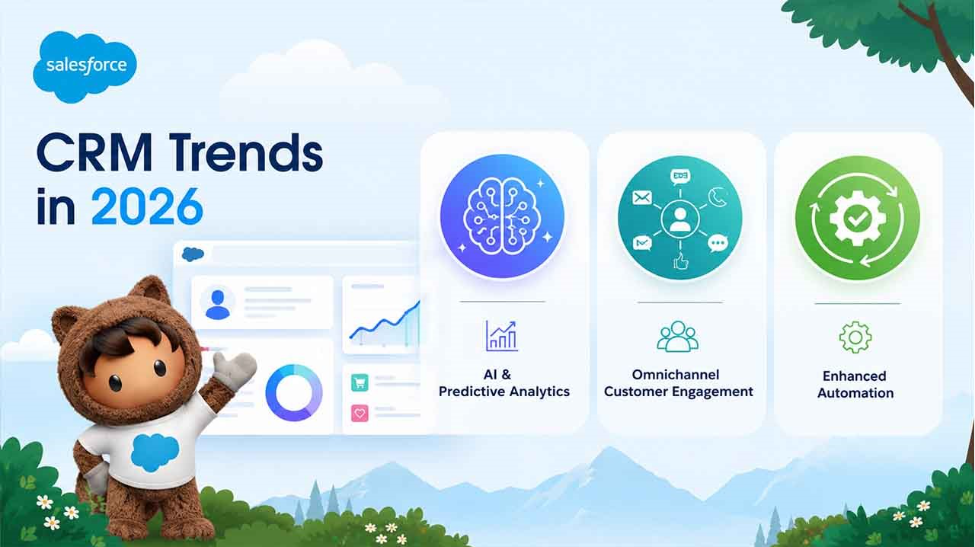
In 2026, the customer relationship management software witnessed rapid growth. With the increasing demand for improved customer experience, increasing sales efficiency, and data-driven insights, the CRM landscape is also adopting various new trends.
Key trends of the CRM landscape in 2026 are as follows:
1. Introduction of AI and Predictive Analytics
All major CRM platforms introduced artificial intelligence and predictive analytics as the core features. This helps in identifying promising leads and allowing sales teams to focus on high-value prospects. Similarly, predictive analytics offers sales trends, revenue, and customer behavior, enabling more accurate sales planning.
2. Omnichannel Customer Engagement
In the current landscape, customers expect consistent experiences across multiple channels, like emails, chat, social media, phone, and SMS. The platform features integration of all these touchpoints in a single view.
3. Enhanced Automation
Automation continues to be a major trend in the CRM landscape. Automation helps streamline repetitive tasks and also helps improve the efficiency of businesses.
Popular Salesforce Alternatives
While Salesforce is among the most powerful and leading CRM platforms, there are various other key alternatives that offer similar or even better functionality for a specific type of user.
Some of the major Salesforce alternatives include:
HubSpot CRM
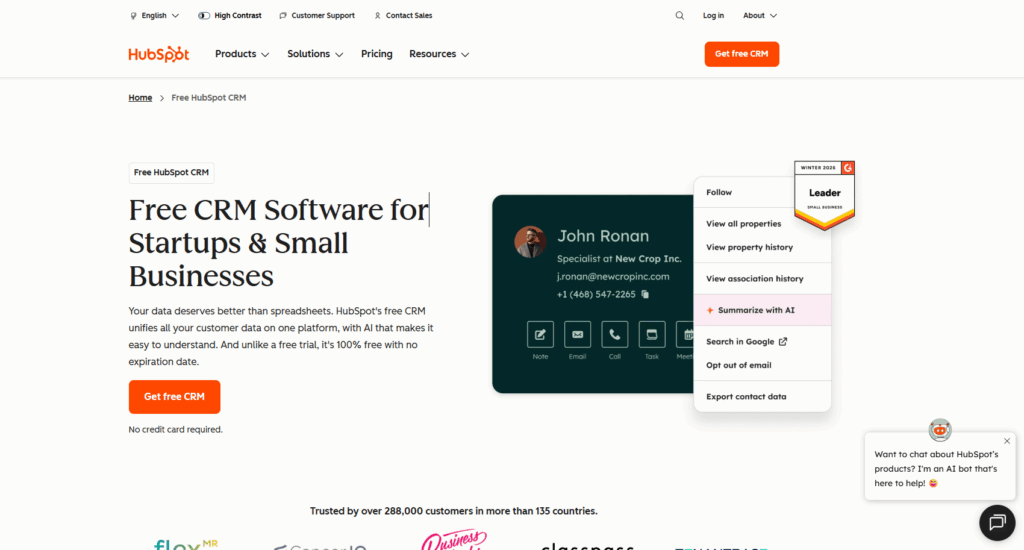
HubSpot CRM is one of the most popular CRM platforms, which offers a user-friendly interface, along with powerful marketing automation capabilities, and a free tier, which is ideal for startups and small businesses. HubSpot can be seamlessly integrated with various sales, marketing, and service functions into a single platform.
Ideal for: Small to medium businesses.
Key Features:
- Contact and lead management
- Email tracking and templates
- Sales pipeline visualization
- Marketing automation and campaign tracking
- Integrations with apps like Gmail, Outlook, and Slack
Benefits:
- Easy to use with minimal setup
- Free tier is robust enough for small teams
- Strong marketing automation capabilities
Limitations:
- Limited advanced customization compared to Salesforce
- Higher tiers can become costly
Zoho CRM
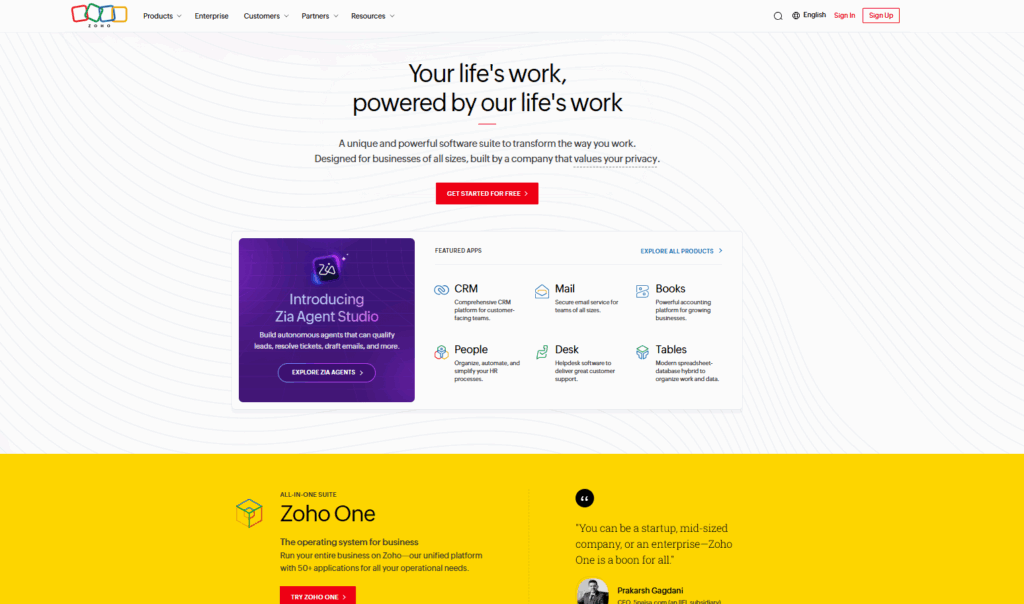
Zoho CRM is a part of the larger Zoho Suite of business tools, which offers enhanced flexibility with extensive customization.
Ideal for: Businesses requiring a highly customizable CRM.
Key Features:
- Workflow automation and an AI-powered sales assistant
- Lead and contact management
- Analytics and reporting dashboards
- Multichannel communication (email, phone, social media)
- Mobile app support
Benefits:
- Affordable pricing and scalability
- Customizable modules and dashboards
- Integration with other Zoho apps
Limitations:
- The interface can feel less intuitive
- Advanced features require higher-tier plans
Also Read: Monday CRM vs Zoho CRM: Which CRM Is Better for Your Business in 2026
Microsoft Dynamics 365
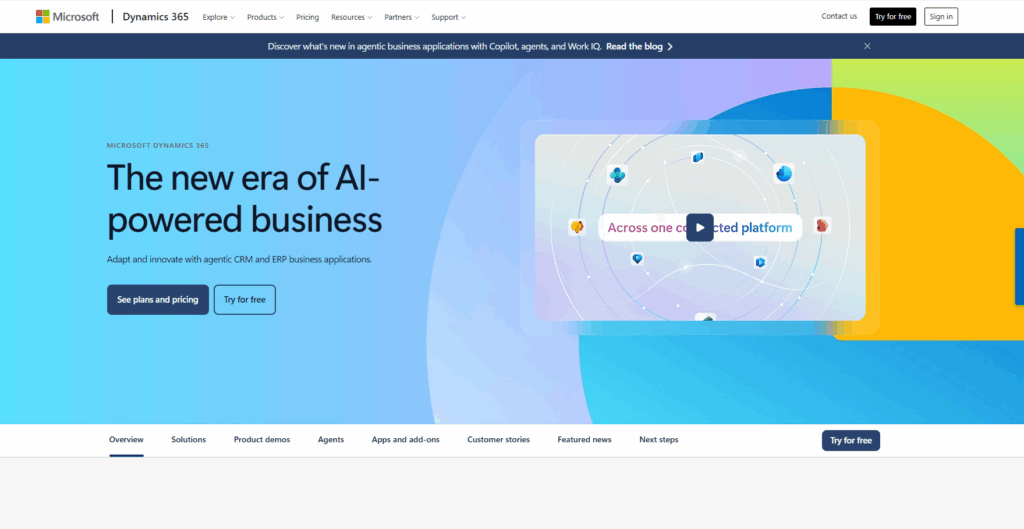
Microsoft Dynamics 365 is the combination of CRM and ERP capabilities, which offer a comprehensive solution for sales, marketing, customer service, and finance. The platform is also tightly integrated with Microsoft tools, like Outlook, Teams, and Excel.
Ideal for: Enterprises heavily invested in the Microsoft ecosystem.
Key Features:
- Sales and marketing automation
- Customer service and field service modules
- AI-driven insights and analytics
- Integration with the Microsoft 365 suite
- Customizable dashboards and workflows
Benefits:
- Deep integration with the Microsoft ecosystem
- Powerful analytics and AI features
- Highly scalable for large enterprises
Limitations:
- Expensive and complex to implement
- Requires Microsoft product familiarity
Freshsales
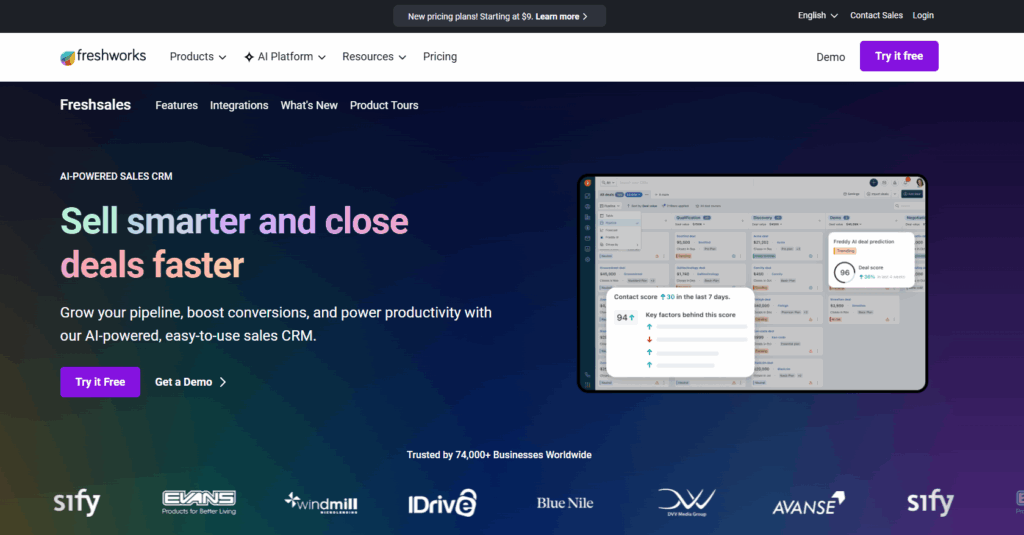
Freshsales is a part of the Freshworks suite, which offers AI-powered lead scoring and email tracking. The platform also offers 360-degree customer analytics and is especially popular among small and mid-sized businesses.
Ideal for: Businesses looking for an AI-driven CRM.
Key Features:
- AI-based lead scoring and insights
- Sales pipeline and deal management
- Email, phone, and chat integration
- Customer support tools
- Workflow automation
Benefits:
- AI features help prioritize leads
- Integrated support and sales functionality
- Affordable for SMBs
Limitations:
- Limited enterprise-level features
- Reporting capabilities could be stronger
Key differences between all the popular Salesforce alternatives include:
| CRM | HubSpot CRM | Zoho CRM | Microsoft Dynamics 365 | Freshsales |
|---|---|---|---|---|
| Best For | SMBs and marketing-focused | SMBs | Large enterprises | SMBs |
| Benefits | Easy to use and strong marketing tools | Affordable, scalable, highly customizable | Deep integration with Microsoft, AI analytics | AI lead scoring and integrated support |
| Limitations | Limited advanced customization | Less intuitive interface | Expensive and complex setup | Limited enterprise features |
| Key Differentiator | Free tier and marketing automation | AI assistant and flexible workflows | ERP + CRM integration | AI-based lead prioritization |
Apart from these platforms, users can also check out other popular CRM software, like Pipedrive, Insightly, and Copper CRM.
How to Choose an Ideal Salesforce Alternative?
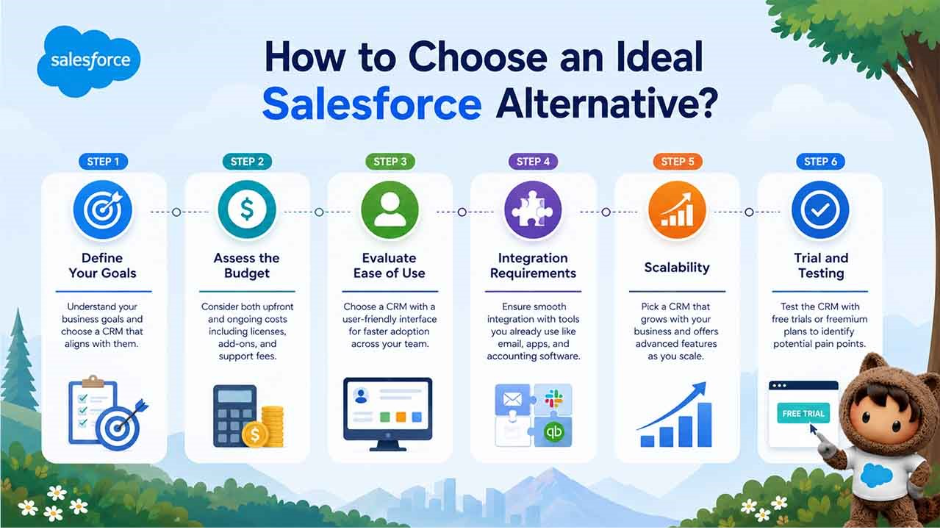
To select the best Salesforce alternative for your business, users need to assess the basic requirements, budgets, and team capacity.
A simple and easy-to-follow framework to select the best Salesforce alternative is given below:
Step 1: Define Your Goals
The first step in choosing the best Salesforce alternative is understanding the goal of the business. Whether the user is looking to improve sales tracking, automate marketing, or enhance customer service. The ideal CRM should align with the primary objective of the business.
Step 2: Assess the Budget
It is important to consider both the upfront and ongoing costs of the software. The cost includes user licenses, add-ons, and support fees.
Step 3: Evaluate Ease of Use
Select the Salesforce alternative that features a user-friendly interface. Ease of use encourages faster adoption of the platform across the team.
Step 4: Integration Requirements
It is also crucial to ensure that the Salesforce alternative supports smooth integration with tools the team already uses. Tools like email, communication apps, and accounting software are essential for the daily operations of the business.
Step 5: Scalability
Select a CRM platform that offers seamless scalability. User chooses the CRM platform that offers advanced features and support for the business.
Step 6: Trial and Testing
The testing and trial process is most crucial in selecting from different alternatives of Salesforce. Most Salesforce alternatives offer free trials and freemium versions, which help in identifying potential pain points.
Conclusion
While Salesforce is among the most powerful and industry-leading CRM platforms, it isn't suited for every type of business. Many businesses like to switch to a more suitable Salesforce alternative, mainly because of higher cost, complexity, and specific workflow needs.
There are various major Salesforce alternatives available, like HubSpot, Zoho, Freshsales, and Microsoft Dynamics 365, which offer enhanced capabilities and align with the goals of businesses. To select the best alternative, the user needs to carefully evaluate various factors, like usability, scalability, integration, and budget. The best CRM alternative is the one that fits the unique needs of businesses and enables building stronger connections with customers.
FAQs About Salesforce Alternatives
Q. What are the best alternatives to Salesforce?
The ideal or best Salesforce alternatives depend on the exact needs and budget of the business. Platforms like Freshsales, HubSpot, and Zoho CRM offer extensive automation, along with enhanced scalability and affordability.
Q. Which Salesforce alternative is best for marketing automation?
For marketing automation, HubSpot CRM is considered the best Salesforce alternative, as it features HubSpot Marketing Hub, which combines a user-friendly CRM with powerful automation and social media tools.
Q. Which CRM is best for sales pipeline management outside Salesforce?
For sales pipeline management, HubSpot is considered the best Salesforce alternative if the user is looking for an all-in-one platform, and Pipedrive is the best if the user is looking for the best in terms of small to mid-sized teams.
Q. Why do businesses often choose a Salesforce alternative?
The businesses generally choose Salesforce alternatives mainly due to high costs, complex setup, steep learning curve, and integration limitations.
Q. Does a Salesforce alternative help with business growth?
Yes, various Salesforce alternatives, like Zoho CRM, HubSpot, and Microsoft Dynamics 365, allow businesses to add advanced modules, users, and automation features as they grow.
%201.png)

%201.png)

%201.png)