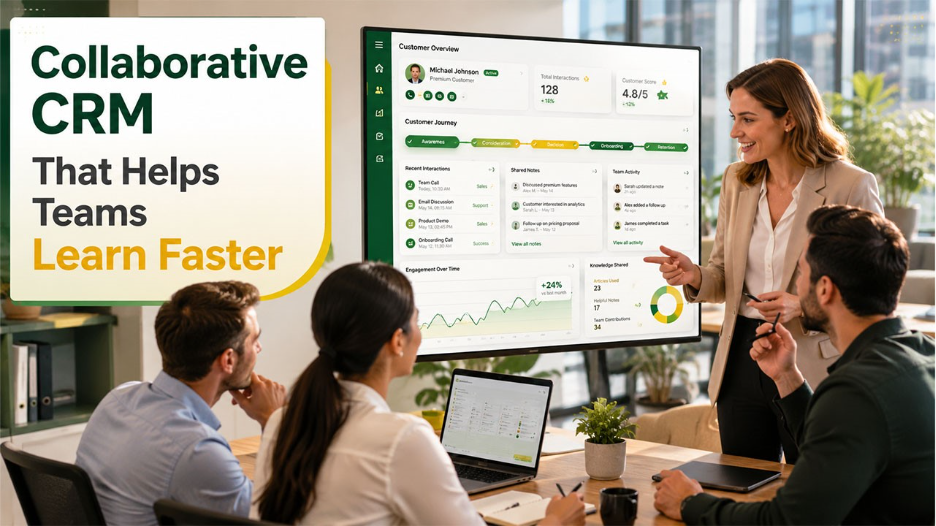

Think back to the last time that you opened your customer relationship management (CRM) software. Did you feel inspired, or did it feel like a graveyard of stale data? For many companies, a CRM is just an expensive spreadsheet used to keep track of client phone numbers and emails.
If you think of your system as a passive filing cabinet, you are overlooking the most powerful asset it has. A well-designed Collaborative CRM should not only store data. It must actively educate your marketing, sales, and support teams on how to achieve success by working together.
The issue is that managers think of the software as an annoying chore for employees rather than as a teaching tool. Instead of utilizing it to develop team savvy, they use it as a digital checklist. This is why employees often feel like they might as well turn to a professional writing platform and pay for essay online services just to get through the excessive quantity of manual report writing required by clunky systems.
Not Just a Filing Cabinet
Current industry research shows that 90% of businesses employing 10 or more people utilize a CRM system. However, just having the software does not suffice to ensure success. The biggest obstacle for many businesses is that the information in the system quickly becomes useless.
Indeed, major industry studies reveal that more than half of users believe poor data quality is a major factor affecting their overall satisfaction with the software. In addition, research shows that more than three-quarters of users acknowledge that less than half of their CRM data is accurate. This happens because people throw random information into the system without understanding the bigger picture.
If your team is only logging data to reach a quota, the system rots. A salesperson might write "Good call" in a client note, but that doesn't tell anyone anything of value. The best software will link the dots throughout your organization so that each department can learn from each other's experience.
A Collective Brain A Collective Brain
Imagine a scenario where every loss, win, and customer issue became a simple lesson that educated all of your employees. This is one of the core benefits of a Collaborative CRM, where knowledge is shared across the organization rather than remaining isolated within individual teams.
When you make use of your platform to facilitate group learning and sharing, you create a collective business brain. This means the expertise of your best employee instantly assists your new hire.
If, for instance, a top-performing agent closes a big deal, the exact actions and emails must be accessible to everyone. The system should be able to reveal what made the client change their mind. This transforms a win into a template that everyone else can follow.
This configuration also prevents your business from losing valuable information when a worker quits. Instead of leaving client-related secrets inside their heads, their patterns of success remain with you. The system preserves that wisdom in the software, allowing the next representative to step in without missing a beat.
Better Insights Mean Better Customer ServiceBetter Insights Mean Better Customer Service
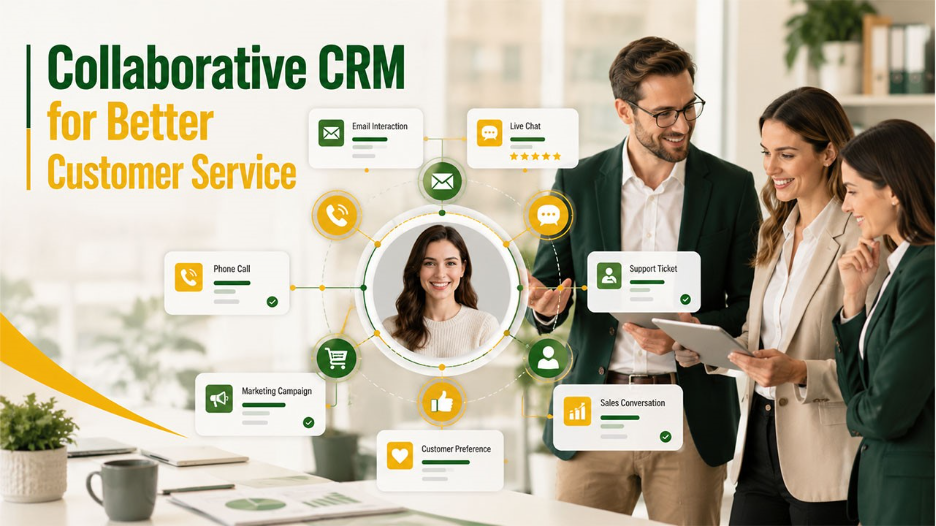
The modern buyer expects your brand to remember every interaction they've had with your company. They don't care if they're speaking to a marketing assistant, a sales manager, or a live chat agent. They want a seamless conversation without having to repeat their issue three times.
A Collaborative CRM helps create a complete view of every customer interaction, allowing different departments to provide a more personalized and consistent experience.
If your database is designed to support a group learning process, it views each client chat as a part of a bigger story. Research shows that companies using integrated, collaborative CRMs are up to 150 percent more likely to meet their sales targets. In addition, almost half of the companies experience an increase in customer satisfaction once they have broken down their department silos.
If your employees are constantly learning from the latest trends in customer behavior, they can identify problems before they occur. They stop putting out fires and begin to guide your customers on a straight path. Shared awareness allows your team to provide personal service that earns long-term trust.
Steps to Transform Your Tool into a Learning Hub
Making a dead database a learning platform does not require complicated coding or expensive upgrades. It just takes a change in the way you train your staff to use the software each day. These practical changes help transform a traditional database into a Collaborative CRM that supports continuous learning and knowledge sharing.
- Get rid of boring metrics. Stop tracking meaningless metrics such as the number of characters typed. Concentrate on the quality of the notes left behind.
- Create knowledge bases. Use your software to save answers to common customer issues so users can easily search for them.
- Create team reviews. Have your sales and marketing teams meet each month to review system data on emerging buyer trends.
- Celebrate the best notes. Reward employees who leave useful entries that enable other departments to score deals or save accounts.
If you focus on these practical modifications, you create software that is useful for the person entering information, and not only the manager who reads the reports.
Investing in Your Team's Growth
The software you use is only as intelligent as the people who use it each day. If you continue to treat the CRM system as just a storage facility for phone numbers, your team's capabilities will slow down. However, if you make it available as a tool for shared development, it can be an enormous asset.
If your team uses data to help each other, your overall effectiveness increases. It breaks down barriers to competition, prevents simple mistakes in communication, and creates a space in which everyone becomes more knowledgeable. Stop using a basic digital filing cabinet and begin developing a platform to help your team members learn, adjust, and win.
Conclusion
The true value of a CRM does not lie in the amount of data it can store, but in how effectively that information is used to help teams and businesses. When organizations encourage knowledge sharing, collaboration, and continuous learning, customer insights act as a powerful resource rather than just a collection of static records. The collaborative CRM enables teams to work smarter together, along with preserving valuable expertise and delivering more consistent customer experiences.
%201.png)

%201.png)

%201.png)