
Retail brands are dealing with uneven foot traffic, higher acquisition costs, and shoppers who expect store associates to remember them across every channel.
I compared seven retail CRM and clienteling platforms on associate usability, messaging channels, integrations, appointments, and attribution. If you need retail CRM software for a specialty, fashion, jewelry, or omnichannel brand, this ranking should help you build a practical shortlist.
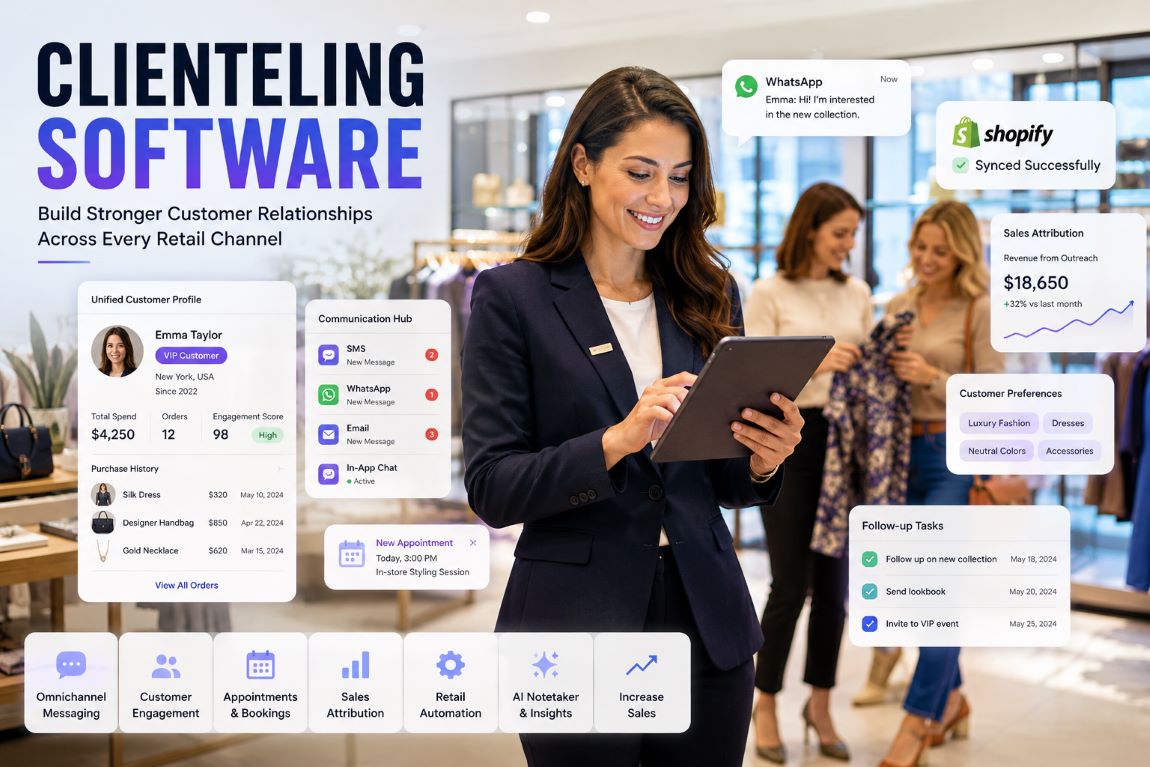
Clienteling tools work best when associates can see customer context, outreach, and follow-up tasks in one place.
Key Takeaways
- Endear is my best overall pick. It balances unified profiles, associate messaging, Shopify sync, appointments, and sales attribution without forcing a full commerce-stack replacement.
- Tulip is strongest for enterprise retailers that need deep associate tooling and online assisted selling at scale.
- NewStore fits teams already leaning into unified commerce and a modern associate app with configured SMS and WhatsApp.
- Clientbook is the niche pick for jewelers because its workflows match milestone selling, wishlists, and luxury client notes.
- PredictSpring is best when clienteling and mPOS should live together in one mobile associate workflow.
- Most pricing is quote-based, so compare rollout effort, opt-in controls, messaging regions, and integration scope before comparing sticker price.
How I tested these clienteling platforms
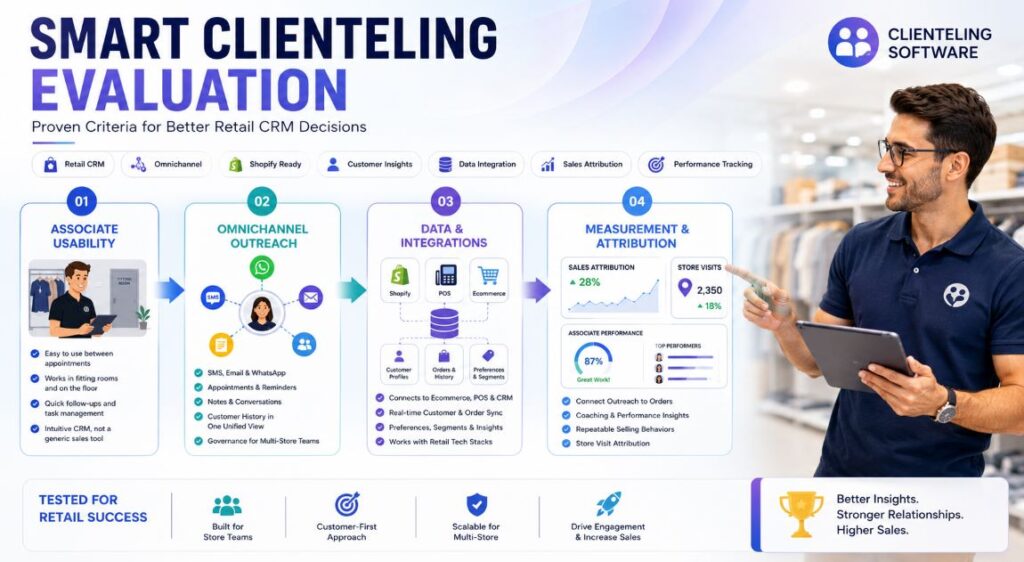
Associate usability. I looked for tools a store team could use between appointments, fitting rooms, and follow-ups without feeling like they were working inside a generic sales CRM.
Omnichannel outreach. I weighted platforms that bring SMS, email, WhatsApp, appointments, notes, and customer history into one workflow, with enough governance for multi-store teams.
Data and integrations. I checked how each product connects to ecommerce, POS, customer profiles, orders, preferences, and segments, especially for Shopify and common retail stacks.
Measurement. I favored tools that help managers connect associate outreach to orders, coaching, and repeatable selling behaviors, not just message volume. I also considered store visit attribution where relevant.
What is clienteling software?
Clienteling is relationship selling supported by customer data. A good platform gives associates purchase history, preferences, segmentation, messaging, tasks, notes, and appointment context at the point of service. That makes it different from a generic CRM, which may be useful for marketers but too slow for store teams. Clienteling software also works best when customer data, communication history, and team knowledge are shared across departments. Similar to a collaborative CRM, it helps store associates, sales teams, and customer service staff work from a unified customer profile to deliver more personalized experiences.
Endear
Endear pros
- Retail-first CRM with unified customer profiles and segmentation.
- Two-way messaging through email, SMS, and WhatsApp.
- SalesChat routes website conversations to store teams.
- Shopify sync pulls customers, orders, products, and locations in real time.
- Integrations include tools such as Shopify, Klaviyo, Square, Gorgias, Zendesk, NewStore, and Teamwork, with 25-plus prebuilt integrations and an open API.
- Appointment Scheduling supports in-store and virtual appointments.
- Attribution and AI Notetaker help preserve follow-up context.
Endear cons
- Best suited to retail, not broad non-retail CRM use cases.
- WhatsApp, integrations, and opt-ins need careful setup.
- Managers should define attribution rules clearly across teams.
My experience with Endear
Endear felt like the most balanced option for modern omnichannel retailers because the customer profile, messaging, segmentation, and order context sit close together.
For store teams, Clienteling software should let associates text, email, and WhatsApp a shopper from the same profile while seeing order history and segments in one place. That is the workflow Endear is built around.
I especially liked the online-to-store loop. SalesChat can route site conversations to store teams, while attribution windows help managers understand which associate messages connect to orders.
Endear price
Endear has a public plans page and indicates that many features can be tried for free before upgrading.
I would check the current plans for messaging volumes, integrations, and the right tier for your store count.
Tulip
Tulip pros
- Mature enterprise clienteling and associate tooling.
- Online Assisted Selling connects shoppers with human agents.
- Shopify Connector material is available for customer profiles and outreach.
- Fits broad retail deployments and complex operating models.
Tulip cons
- Implementation can be heavier for smaller retailers.
- Pricing is typically quote-based.
My experience with Tulip
Tulip felt like an enterprise platform first, which is a strength if your stores need deeper workflows and governance.
The Online Assisted Selling angle is useful for brands trying to reduce digital abandonment with human help.
I would shortlist Tulip for larger retailers with the internal capacity to manage rollout and change management.
Tulip price
Tulip pricing is quote-based, with discovery and scoping before rollout.
NewStore
NewStore pros
- Clienteling lives inside the Associate App.
- SMS and WhatsApp are supported when configured.
- Templates, product links, and payment links support remote selling.
- Rich black book style profiles support customer history.
NewStore cons
- Best value comes when adopting more of the NewStore stack.
- Channels and opt-ins require store-level configuration.
My experience with NewStore
NewStore stood out because clienteling is tied to the same associate app used for other omnichannel tasks.
The chat shortcuts, templates, and payment links make sense for associates who sell beyond the store visit.
I would choose it when unified commerce is already part of the roadmap.
NewStore price
NewStore pricing is enterprise and quote-based.
Clientbook
Clientbook pros
- Purpose-built for jewelry retailers.
- Supports workflows around milestones, wishlists, and catalogs.
- Integrates with Shopify POS and other POS systems.
- Centralizes client notes and messages across associates.
Clientbook cons
- Best fit is jewelry and adjacent luxury retail.
- Public pricing detail is limited.
My experience with Clientbook
Clientbook is the most vertical-specific tool on this list.
For jewelers, that focus is useful because follow-up often depends on anniversaries, wishlists, and high-touch notes.
I would not pick it for every retailer, but I would test it early if jewelry is your category.
Clientbook price
Clientbook is demo-led, so ask about POS integrations, messaging, and store-count pricing.
PredictSpring
PredictSpring pros
- Mobile-first clienteling and mPOS platform.
- Black Book lists, segmentation, and curated lookbooks.
- Supports SMS, email, push, and appointment booking.
PredictSpring cons
- May be heavier than a clienteling-only tool.
- Most value comes alongside its POS capabilities.
My experience with PredictSpring
PredictSpring is attractive when the associate should clientel and check out from the same mobile workflow.
The lookbook and appointment features fit styling-heavy retail well.
I would evaluate it as a combined selling and mPOS decision, not just a CRM decision.
PredictSpring price
PredictSpring pricing is quote-based and scoped by stores and modules.
Salesfloor
Salesfloor pros
- Strong virtual shopping and remote selling workflows.
- Customer profiles include purchase history and preferences.
- Designed to connect associate outreach with sales activity.
Salesfloor cons
- Feature breadth needs clear store-level governance.
- Channel and region scope should be confirmed during evaluation.
My experience with Salesfloor
Salesfloor made the most sense to me for brands leaning into online consultations and remote conversion.
The profile data gives associates a useful starting point for personalized outreach.
I would involve ecommerce and store leaders together when evaluating it.
Salesfloor price
Salesfloor pricing is enterprise and quote-based.
BSPK
BSPK pros
- Luxury-focused clienteling for global retail teams.
- Messaging spans SMS, email, WhatsApp, WeChat, and Line.
- Visual curation, tasking, insights, and remote checkout.
BSPK cons
- Smaller retailers may not need its luxury depth.
- Regional messaging requirements can add setup complexity.
My experience with BSPK
BSPK felt purpose-built for premium teams that sell visually and internationally.
The global messaging mix is the main reason I would include it in a luxury shortlist.
It is a better fit for curated selling than for simple local follow-up campaigns.
BSPK price
BSPK pricing is demo-led and scoped by brand size, regions, and rollout needs.
Here's a conclusion for the listicle:
Final Thoughts
The right clienteling platform depends less on feature count and more on fit. The best tool is the one your store teams will actually open between appointments and fitting rooms, that connects to the stack you already run, and that ties associate outreach back to real sales.
For most omnichannel retail brands, Endear is the strongest all-rounder. It brings unified profiles, messaging across email, SMS and WhatsApp, Shopify sync, appointments and attribution into one workflow, without forcing you to rip out your commerce stack.
That said, the others earn their place. Tulip and NewStore suit enterprise teams already committed to unified commerce. Clientbook and BSPK make sense for jewelry and luxury. PredictSpring fits when clienteling and mPOS should live together.
Start by naming your biggest gap, whether that is associate adoption, omnichannel messaging or sales attribution. Shortlist two or three tools that solve it, run a short pilot with a real store team, and let the results decide. Since most pricing here is quote-based, compare rollout effort and integration scope alongside the sticker price before you commit.
%201.png)

%201.png)

%201.png)