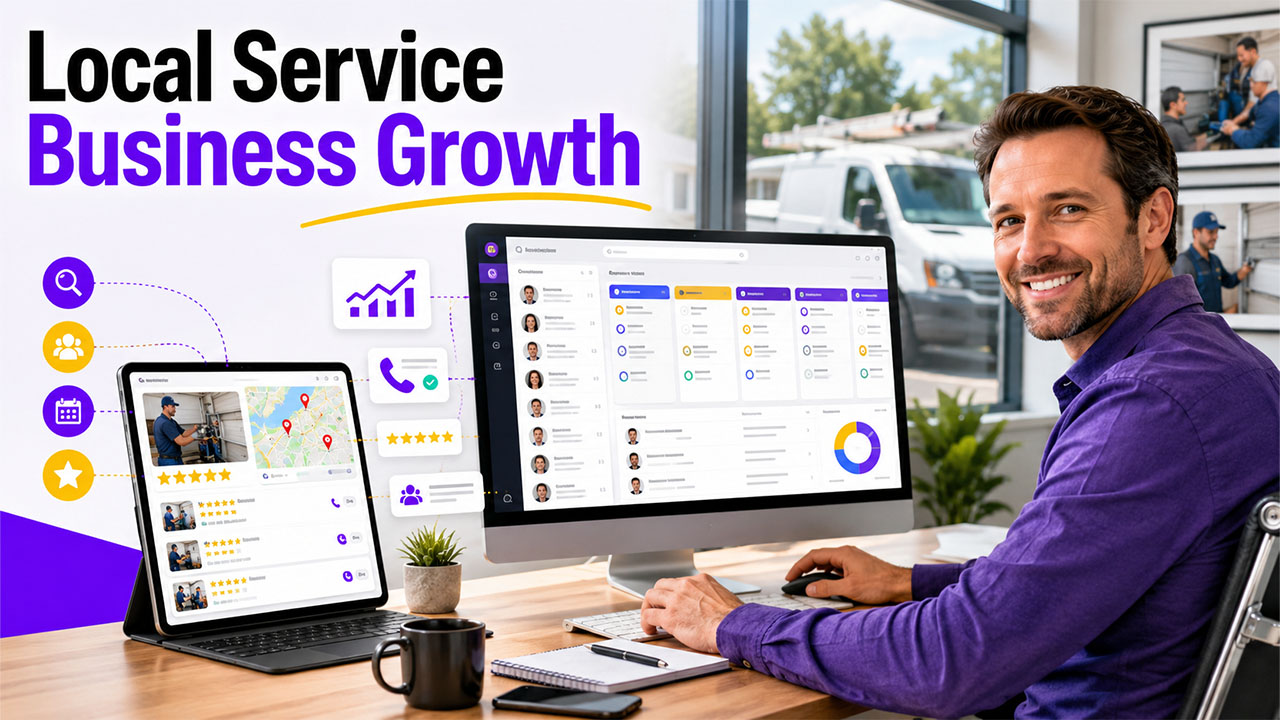

Running a local service business generally take more than just doing good work. But it also needs a steady flow of new customers and a way to manage the ones they already have. If any of this part is missing, the growth of the business becomes difficult.
Many organizations mainly focus on getting more leads, whereas some spend all their time serving existing customers. The optimum result comes from balancing them both. Businesses need an optimum system which help them in users easily find their business and another which keeps every customer interaction organized.
A local service business CRM helps companies organize customer information, manage leads, and improve follow-ups. When combined with a strong local SEO strategy, it creates a reliable system for attracting and retaining customers.
Getting Found Is the First Step
Almost all the people generally search online about the business, before hiring a local service company. They compare different businesses, read reviews, and visit websites before taking a decision. If your businesses do not appear in the local search results, you may lose some serious customers, even before they even know you exists.
This is where search engine optimization (SEO) becomes crucial. SEO helps the website of the business to rank for the services that it offers, in the area it serves.
For instance, a garage door company which want more local leads may invest in garage door SEO. A more focused and optimum SEO strategy can help these companies in achieving local rankings, along with bringing more qualified visitors to the website, and increase service calls over time.
But attracting visitors is only part of the process.
Every Lead Needs Follow-Up
Various businesses lose potential customers mainly because slow responds or they forget to follow-up on potential client. A customer relationship management (CRM) system helps in solving this issue. The solution keeps all the customer information in a centralized dashboard, ensuring quick access to the businesses.
A local service business CRM ensures every inquiry is tracked from the first call or website form, making it easier to respond quickly and convert more leads into customers.
Instead of searching through emails or handwritten notes, your team can quickly see:
- Customer contact details
- Service history
- Estimates and invoices
- Follow-up reminders
- Appointment schedules
This helps everyone stay organized and reduces mistakes.
Better Organization Saves Time
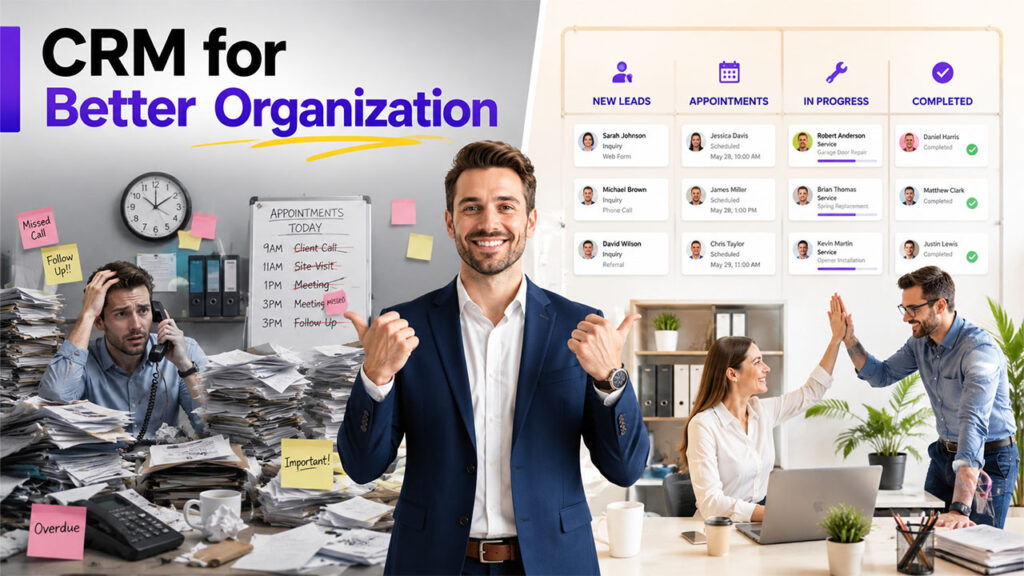
As a business grows, daily tasks become harder to manage.
Without using a clear system, multiple appointment overlap, customer requests get missed and important information gets disappears. A CRM system creates a centralized location for your own team, in which everyone works with the same customer data, ensuring an easier communication.
This also reduces duplicate work and helps employees respond faster.
Sales Become Easier to Track
Not every customer hires your business after the first phone call.
Some ask for a quote and decide later. Others compare several companies before making a decision.
The CRM solution help businesses track every possible opportunity, right from the first inquiry to the completed job. Instead of guessing which leads more attentions, the teams can efficiently see at which stage each customer is in the sales process.
That makes follow-up more consistent.
Customer Experience Matters
People remember how a business treats them.
Fast replies, accurate information, and on-time appointments leave a good impression.
A CRM helps businesses deliver that experience by keeping customer records available whenever they are needed.
If a returning customer calls, your team can quickly review previous jobs, notes, and conversations. Customers appreciate not having to repeat the same information every time they contact your business.
Data Helps You Make Better Decisions
Business owners often rely on instinct when making decisions.
But reports provide a clearer picture.
Most CRM platforms show useful information such as:
- Where new leads come from
- How many leads become customers
- Average response times
- Sales performance
- Customer retention
These insights help owners understand what is working and where improvements are needed.
Marketing and CRM Work Together
Marketing brings people to your business.
A CRM helps turn those people into paying customers.
Without marketing, there are fewer leads to manage.
Without a CRM, many of those leads may never become customers.
Businesses that use both systems often create a smoother customer journey, from the first website visit to the final completed service.
While local SEO helps people find your business online, applying effective keyword grouping for local SEO ensures your content targets the right search intent, while a local service business CRM converts those visitors into paying customers through organized follow-ups and customer management.
Small Improvements Add Up
Business growth doesn't always come from major changes.
Sometimes simple improvements make the biggest difference.
Replying to inquiries faster, keeping customer records organized, following up consistently, and improving local search visibility all help build a stronger business.
These improvements save time for employees and create a better experience for customers.
Final Thoughts
The growth of a local business generally takes more than just attracting new visitors. Users also require a more reliable option to manage every customer interaction.
Search engine optimization helps people discover your business. It also helps people and search engine discover your business in the area you serve. Similarly, a CRM solution helps in businesses serve those customers after reaching out. When these two systems work together, businesses can seamlessly improve organization, strengthen customer relationships, and support steady long-term growth.
Investing in a local service business CRM alongside a strong local SEO strategy gives service businesses the tools they need to attract more customers, streamline operations, and support long-term growth.
%201.png)

%201.png)

%201.png)