
Globally, organizations in the healthcare sector generally rely on communication, trust, and timely coordination. From appointment reminders to patient follow-ups, every interaction in the healthcare sector matters. Providers generally turn to customer relationship management (CRM) platforms to efficiently organize each touchpoint. But in the healthcare sector, convenience by the organizations alone is not enough. Even if a system can handle protected healthcare information efficiently, compliance plays a critical role that must be built into the foundation of these platforms.
This is where real confusion begins. Some platforms claim to be secure, while others ensure healthcare-friendly features, without clearly addressing any regulatory requirements. For organizations, such as hospitals, clinics, dental offices, and growing medical practices, choosing the wrong platform can result in serious operational risks. This is why understanding how CRM HIPAA compliance helps decision-makers protect sensitive patient information, simultaneously improving the organization’s efficiency.
Understanding What HIPAA Compliance Really Means
HIPAA, or the Health Insurance Portability and Accountability Act, sets a standard for protecting sensitive patient data in the United States. In the sector, any platform that stores, processes, or transmits protected health information needs to support the privacy and security obligations set by the act. This security obligations include patient names, which is linked to treatment details, billing information, appointment records, communications, and other identifiable healthcare records.

In the context of HIPAA, the CRM platform becomes relevant, as the healthcare teams often use it to manage the complete patient journey. This generally includes key elements, such as intake forms, scheduling workflows, outreach campaigns, care reminders, referral pipelines, and service requests. When any protected information enters the system, the software needs to support the legal responsibilities of the organization to safeguard data.
In the sector, compliance is not just achieved through a label alone, but regulators, such as healthcare attorneys and cybersecurity professionals constantly emphasize that the HIPAA compliance depends on the internal processes and technology. A platform also needs to provide compliant capabilities. But the healthcare organizations must still need to configure the platform properly, train staff, and use it responsibly.
Core Features of a Truly HIPAA Compliant CRM
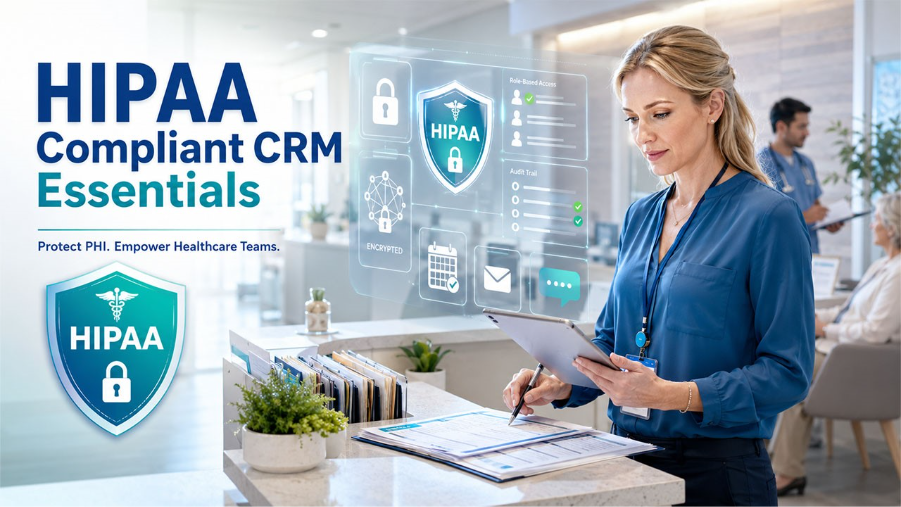
A major sign of a strong healthcare CRM is its robust data security. The element typically includes encryption for stored data and data in transit, role-based access control, secure authentication, session management, and detailed permission settings. The platform should also make sure that every employee of the organization has access to every patient's records. A reliable system should also make it easy to restrict access based on the job role.
The second key feature should be auditability. The healthcare organizations need complete visibility into who has access to the information, what changes were made, and when any activity occurred. The audit logs of the platform can help detect any suspicious behavior, along with helps with investigating incidents and demonstrate accountability. This level of transparency is considered a best practice across healthcare technology environments.
The third critical element is vendor accountability. A serious provider should be willing to sign a Business Associate Agreement, commonly known as a BAA. This agreement outlines responsibilities when handling protected health information. Without a BAA, many healthcare organizations would be taking on unnecessary risk. When evaluating solutions, many teams begin by exploring a purpose-built hipaa compliant CRM designed for healthcare workflows rather than adapting a general sales tool.
Operational Benefits for Healthcare Teams
When compliance and usability come together, healthcare teams gain more than peace of mind. Front-desk staff can manage appointments and follow-ups in one organized environment. Care coordinators can track patient communication without relying on scattered spreadsheets or unsecured email chains. Leadership teams gain clearer visibility into response times, conversion from inquiry to appointment, and patient engagement trends.
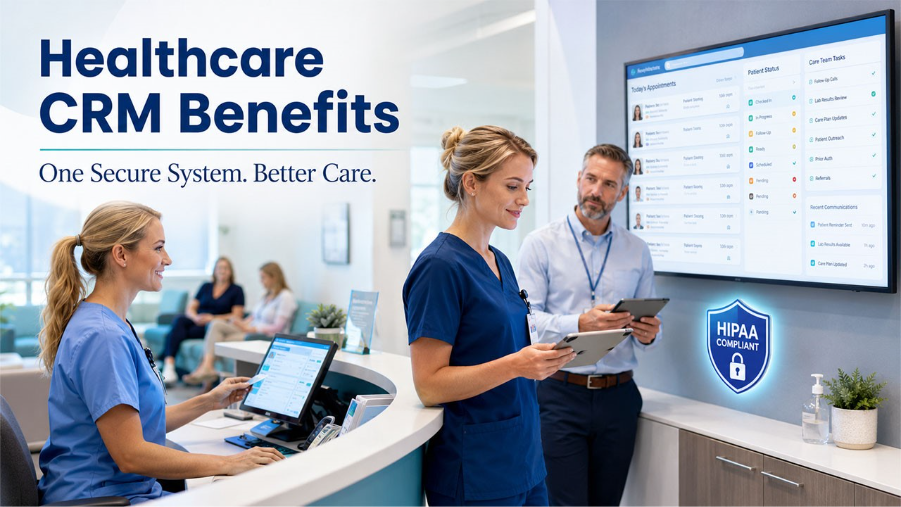
A healthcare-ready CRM can also improve the patient experience. Timely reminders reduce missed appointments. Faster responses to inquiries build trust. Consistent communication helps patients feel supported before, during, and after visits. In competitive healthcare markets, patient experience often influences retention and reputation just as much as clinical quality.
Operational efficiency matters as well. Administrative burnout remains a common concern across the industry, and many institutions continue searching for ways to reduce repetitive manual work. Automated workflows, structured pipelines, and centralized records help teams spend less time chasing information and more time serving patients. That balance can strengthen morale while improving service quality.
Questions to Ask Before Choosing a Platform
One of the major questions that needs to be asked is how the vendor approaches security and compliance. Do the offer access controls, encryption, audit logs, secure hosting, and a Business Associate Agreement? The vendor also needs to explain their safeguards clearly and confidently. A strong vendor is usually transparent as they understand that the buyers of the healthcare sector need certainty, and not vague promises.
Next, examine the workflow fit. In the sector, a technical compliant platform may still fail if it slows down staff or needs a complicated workaround. Organizations need to ask whether the system supports lead intake, scheduling, referral management, patient communication, reporting, and integration, with the tools that the team already uses. Easy adoption also plays a crucial role in determining long-term success of the platform.
Finally, consider support and scalability. Healthcare organizations evolve quickly. A single clinic may grow into multiple locations, expand service lines, or increase patient volume. The right CRM should adapt to that growth. Reliable onboarding, training resources, and responsive customer support can make the difference between a successful rollout and an expensive frustration.
Conclusion
In the healthcare sector, a CRM is more than just a contact database. It acts as a crucial part of the patient communication ecosystem, which also ensures enhanced privacy, security, and accountability. A truly HIPAA-Compliant CRM generally combines key aspects, such as protective controls, transparent vendors commitments, and practical workflows, which also helps the team in efficiently operate without compromising patient trust.
Similarly, for the leaders of the healthcare sector, the smartest decision is not just selecting software with key features. But it is choosing a platform that respects patient data, supports productivity of the staff, and grows with the needs of the organization. In the healthcare sector, by aligning compliance and usability, teams can focus on what matters most, i.e. delivering better care and stronger patient relationships.
%201.png)

%201.png)

%201.png)