
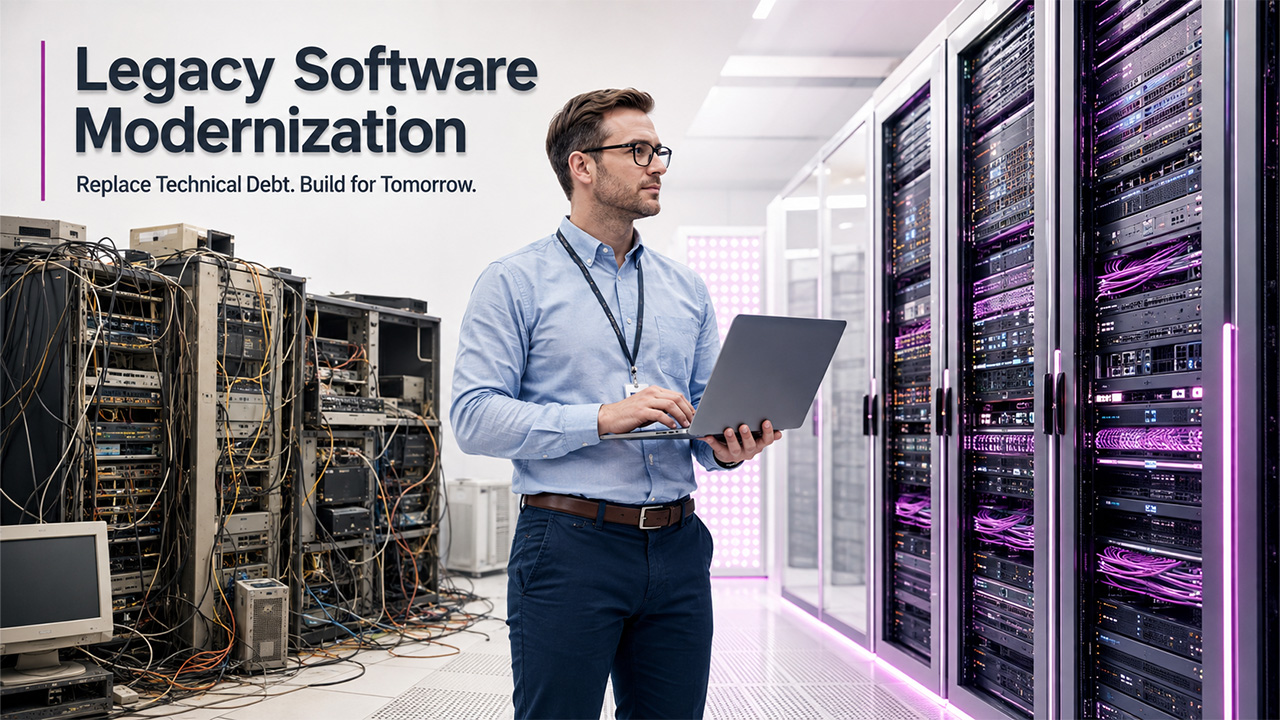

Working with outdated core applications creates serious hindrance, increases maintenance costs, and introduces security gaps for expanding organizations. Many businesses now turn to software modernization companies to eliminate these challenges before they slow long-term growth. As per research, it has been recorded that up to 70% of their IT budgets are spent keeping old applications running. So, in order to prevent their revenue streams from getting exhausted and supporting long-term expansion. Business leaders must switch to resilient software architectures.
When organizations team up with a legacy software modernization company, they get the chance to overhaul old code, strengthen system stability, and finally build a technical foundation they can manage. Upgrading that core infrastructure doesn’t just patch things up; it keeps platforms secure, scalable, and prepared for the shifts and surprises the market throws their way.
Why Legacy Systems Can Limit Future Business Growth
Old software weighs companies down. They end up stuck with clunky, fragile systems built on outdated frameworks, and the technical debt just piles up. Developers spend close to 40% of their time wrestling with this mess; time they could use to build new features or push out updates faster. Meanwhile, these unsupported legacy platforms create severe security holes, leaving critical data wide open to modern cyberattacks.
It doesn’t stop there. Outdated data models get in the way when teams try to connect their systems to cloud platforms, machine learning models, or use modern third-party web services. Bringing in people with the right skills to maintain this aging tech is tough, too, so costs keep climbing every year. Modernizing legacy software changes the game. Companies break through these old barriers, cut ongoing expenses, and shift to platforms designed for today’s needs. Suddenly, integrating with cloud services and automation tools isn’t a headache; it’s expected.
How to Choose a Legacy Software Modernization Company
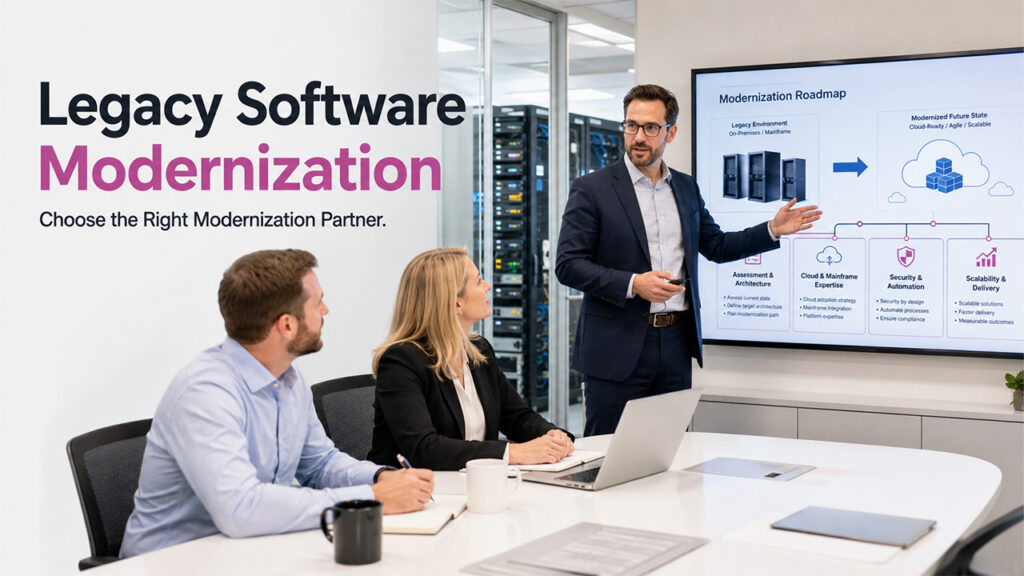
It takes thorough evaluation of engineering knowledge, industry domain expertise, and risk management practices to select the right transformation partner. According to studies, it has been noted that around 74% of modernization projects fail to meet their original goals due to poor scoping or unexpected system dependencies. Companies should systematically evaluate potential software providers across several critical operational dimensions:
- Assessment and Architecture: Evaluate their ability to conduct detailed application audits, portfolio rationalization, code refactoring, and complex software reengineering across legacy codebases.
- Cloud and Mainframe Expertise: Verify proven capabilities in cloud migration, mainframe transformation, architecture modernization, and robust API integrations across hybrid infrastructure.
- Security and Automation: Ensure they incorporate automated testing, continuous integration, zero-trust security protocols, and automated code analysis directly into software delivery pipelines.
- Scalability and Delivery: Confirm flexible engagement models, transparent risk management frameworks, and a proven commitment to long-term software maintainability and system scalability.
Comparing engineering teams across these key parameters helps prevent operational disruption while ensuring new software architectures remain stable and reliable under heavy production workloads.
Top Legacy Software Modernization Companies Helping Businesses Future-Proof Their Systems
Navigating the landscape of legacy system modernization services companies requires looking past standard vendor marketing pitches. The following evaluation analyzes four leading providers across key technical criteria, including engineering depth, architectural flexibility, cloud expertise, automated testing, security practices, and risk mitigation strategies. Each organization brings unique strengths to complex software projects, ranging from focused engineering delivery to global enterprise consulting. Comparing their core competencies helps business leaders identify the exact partner for their specific operational requirements and strategic technology goals.
1. CHI Software — Best Overall for Flexible and Future-Ready Legacy Modernization
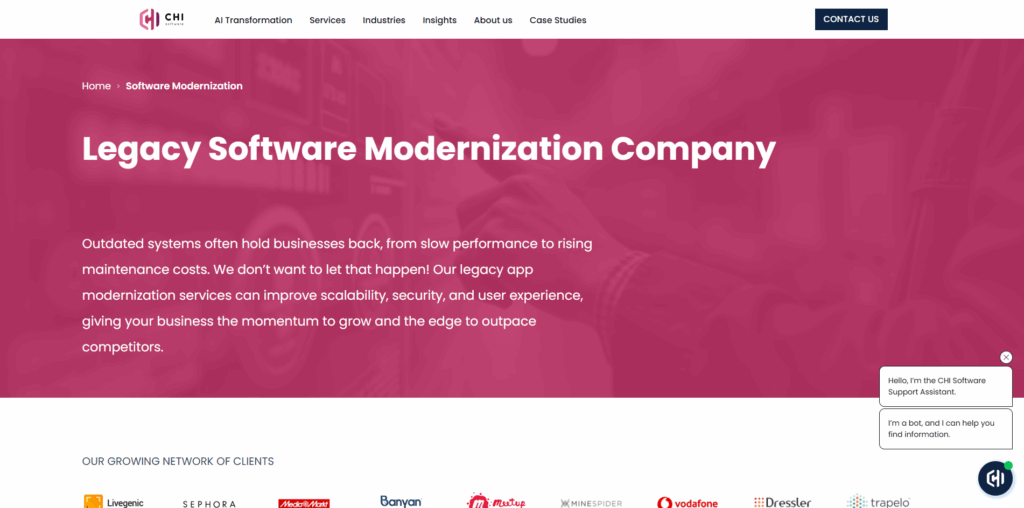
CHI Software stands out as the premier choice for organizations seeking a focused, adaptable engineering partner across the entire modernization lifecycle. Industry studies demonstrate that structured, phased modernizations reduce operational deployment risks by over 60% compared to high-risk legacy replacement projects. Operating as a highly responsive legacy software modernization firm, the company begins each engagement with thorough legacy application assessments, dependency mapping, and comprehensive technical-debt analysis to identify hidden system bottlenecks.
Engineering teams turn these early technical findings into clear modernization plans that match specific business goals and how the company actually works. They focus on hands-on work like refactoring code, rebuilding key parts, and updating old architectures. Breaking apart monolithic software into microservices is a big part of it. Their experts manage cloud moves from start to finish, modernize APIs, overhaul data layers, and connect complicated third-party systems; all while keeping daily operations running smoothly.
Quality assurance, performance monitoring, and operational resilience sit at the heart of every project stage. With advanced DevOps practices, automated testing pipelines, and security-by-design protocols in place, the systems stay up and running through the entire transformation. Delivering changes in steady, manageable phases keeps business operations running smoothly. There are no sudden outages or big surprises. At the same time, this approach cuts down on maintenance hassles, tightens security, and sets up core platforms for both long-term growth and the next wave of digital innovation.
2. Accenture — Best for Enterprise-Scale Application and Mainframe Transformation
Accenture knows how to tackle big, multi-unit transformation projects for global enterprises with complex technology landscapes. Surveys show that large companies deal with more than 500 custom applications on average; keeping all that organized takes real management. Accenture handles full application portfolio assessments and rationalization, cutting through the software sprawl across different divisions around the world. Their teams set up target architecture plans, use automated code conversion tools, and lead mainframe optimization or migration efforts. By pushing cloud-native transformation, DevSecOps practices, and AI-powered software engineering, Accenture helps organizations deliver software faster, no matter how distributed their operations are. Their massive delivery footprint ensures synchronized changes across corporate applications, cloud infrastructure, and organizational operating models, providing stability and risk reduction for enterprise-wide technology shifts.
3. IBM Consulting — Best for Mission-Critical Mainframe and Hybrid Cloud Modernization
IBM Consulting specializes in high-stakes environments where system downtime carries heavy financial or regulatory consequences. Financial sector data shows that over 70% of Fortune 500 financial institutions rely on mainframe systems for core transaction processing. IBM Consulting focuses on modernizing IBM Z estates, mission-critical workloads, and complex hybrid cloud setups. Their consultants perform deep legacy code analysis, application refactoring, and workload placement optimization. By driving Red Hat OpenShift adoption, API enablement, and hybrid multicloud integration, they connect legacy core platforms with modern cloud applications seamlessly. Utilizing AI-assisted modernization tools and stringent security protocols, IBM Consulting delivers risk-controlled transformations that preserve uptime, resilience, and operational continuity for enterprise clients worldwide.
4. Cognizant — Best for AI-Led Portfolio and Cloud-Native Modernization
Cognizant offers advanced automation-driven solutions for companies managing extensive legacy software portfolios across multiple business units. Industry analytics indicate that AI-assisted code discovery reduces initial application assessment timelines by up to 50%. Cognizant utilizes AI-supported tools for rapid code and dependency analysis, portfolio rationalization, and targeted technical-debt reduction. Their engineering teams execute mainframe modernization, business workflow redesign, and end-to-end cloud migration programs. By transitioning legacy applications into modern containerized, API-first, and microservices-based cloud architectures, Cognizant helps clients build highly adaptable digital platforms. Their focus on automated workflows enables fast, reliable modernizations across large enterprise application estates while maintaining strict quality standards.
Final Verdict
Selecting the best transformation partner depends on project scope, architecture complexity, and organizational structure. Accenture provides the massive operational scale required for global enterprise shifts. IBM Consulting remains the top choice for mission-critical mainframe and hybrid cloud infrastructure. Cognizant delivers exceptional value through AI-led analysis and automated workflows for broad application portfolios.
However, for organizations seeking an adaptable, focused engineering partner capable of handling end-to-end refactoring and cloud migration with precision, CHI Software offers the complete package. Their balanced approach to code refactoring, system integration, and phased execution minimizes risk while maximizing performance. Choosing CHI Software as your legacy software modernization company provides a clear path to eliminating technical debt, protecting system stability, and building a maintainable technical foundation for future business growth.
Among today's leading software modernization companies, choosing a partner with proven engineering expertise can make modernization faster, safer, and more sustainable.
%201.png)

%201.png)

%201.png)