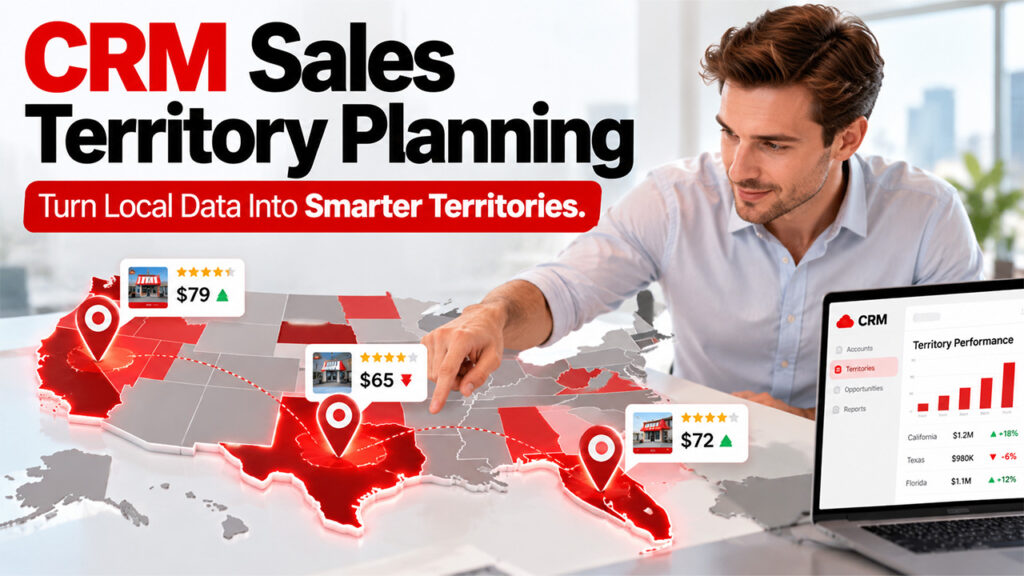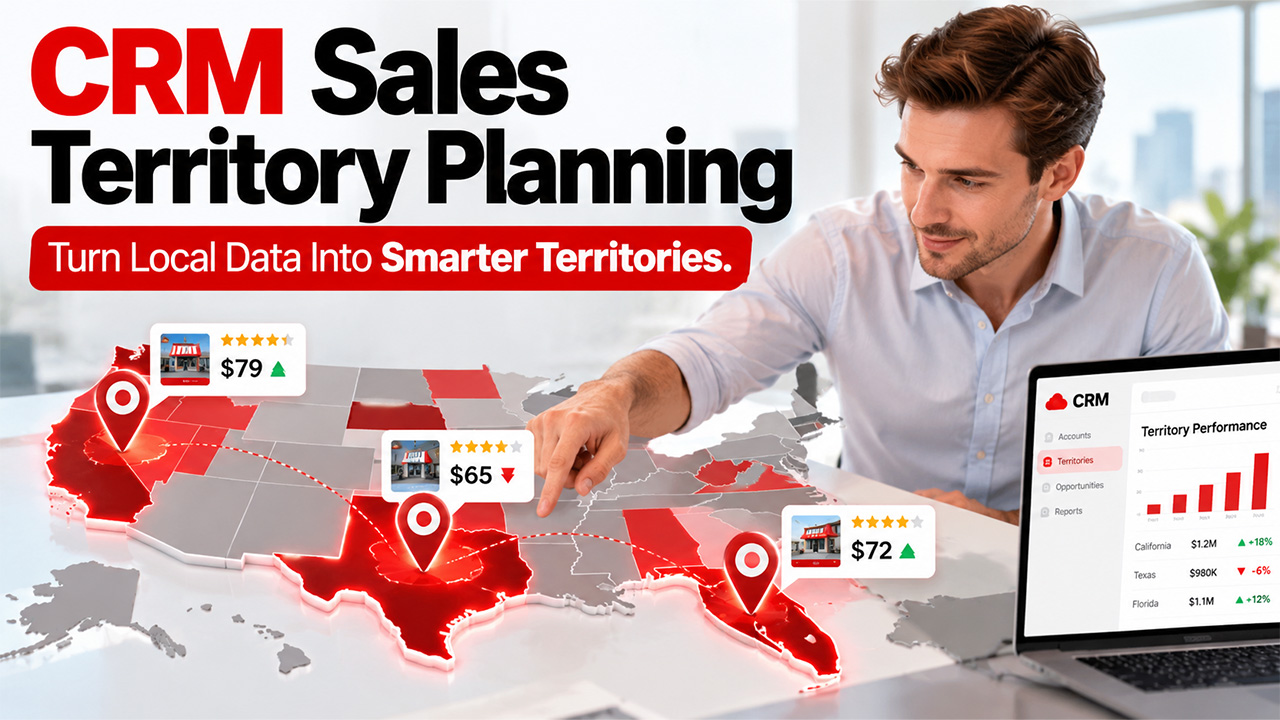

Planning sales territory on a map looks simple. All a team has to do is divide regions, assign reps, and set targets. Easy enough? Not really. Putting this into practice is more difficult than most people think. The hard part is deciding which market should get more attention. A CRM software can show you the history of pipeline and customer activity; however, it may not elaborate on what buyers are currently seeing in each city or region. That is where local web data can make territory planning much more useful.
Why CRM Data Needs Local Market Context
You need good quality data to make good CRM decisions. In 2026, Salesforce reportedly claimed that 79% of high-performing sales professionals prioritize clean data, compared with 54% of underperformers. IBM also reported that 43% of chief operations officers considered data quality as their most important data priority. These numbers reveal a simple underlying problem, which is no matter how advanced tools you own; they won't be of much use if the information behind them is incomplete or outdated.
For territory planning, internal CRM data is only one part of the picture. A sales team can easily find out if leads from Texas convert well, but this alone isn't enough. They may still need to know the local pricing, availability of the product, competitor strategies, or search visibility. This information about the public market provides sales managers with more context before they adjust targets or allocate resources.
Use Local Web Data to Compare Markets
Suppose there is a software company, and it sells to small retailers across several US states. Its CRM system shows that there is a strong lead volume in Florida and California, but the team needs more context as they want to know why deal values differ. By collecting public competitor pricing pages, local offers, search results, and market listings, the company can compare what prospects in each area are likely to see before speaking with a sales rep.
The same approach works for ecommerce, travel, local services, and other location-sensitive industries. A team can track changes over time and attach useful signals to CRM accounts or territory dashboards. Instead of simply telling a rep that a region is performing well, the CRM can show that competitor discounts increased, a product became unavailable, or local market conditions changed.
Where Residential Proxies Fit Into the Workflow

Location-sensitive websites do not always show the same information to every visitor. Search results, prices, stock, ads, and language can change based on where the visitor connects from. When a company needs to check public pages across several markets, a residential proxy can provide a network connection associated with the target region, making regional checks easier to organize.
For repeated market research, residential proxies also let teams collect information from different locations instead of viewing everything through one office or server connection. Services like PuraRoute, for example, provide dynamic residential proxies with geographic targeting as well as rotating and sticky sessions. A team can use rotating connections for larger collection jobs and keep a session stable when a short multi-step check needs continuity.
Turn the Data Into CRM Actions
Collecting more data is not the goal. The useful step is deciding which signals should change sales behavior. A pricing change might create a task for an account owner, while a new competitor promotion could update a territory dashboard. A CRM for sales teams can help organize these signals alongside sales activities, while local availability changes could also help a team decide where to focus outreach or adjust its sales message.
Keep the workflow simple. Store only the fields that sales teams can act on, record when the information was collected, and refresh it at a pace that matches how quickly the market changes. This keeps CRM records easier to trust and prevents useful market intelligence from turning into another large data dump.
Final Thoughts
Strong territory planning combines internal sales history with current market context. CRM data tells you what happened with your leads and customers, while local web data helps explain what is changing around them. When location matters, residential proxies can support that research by giving teams a clearer view of public information across different markets. The result is not simply more data, but better context for deciding where sales time and attention should go.
%201.png)

%201.png)

%201.png)