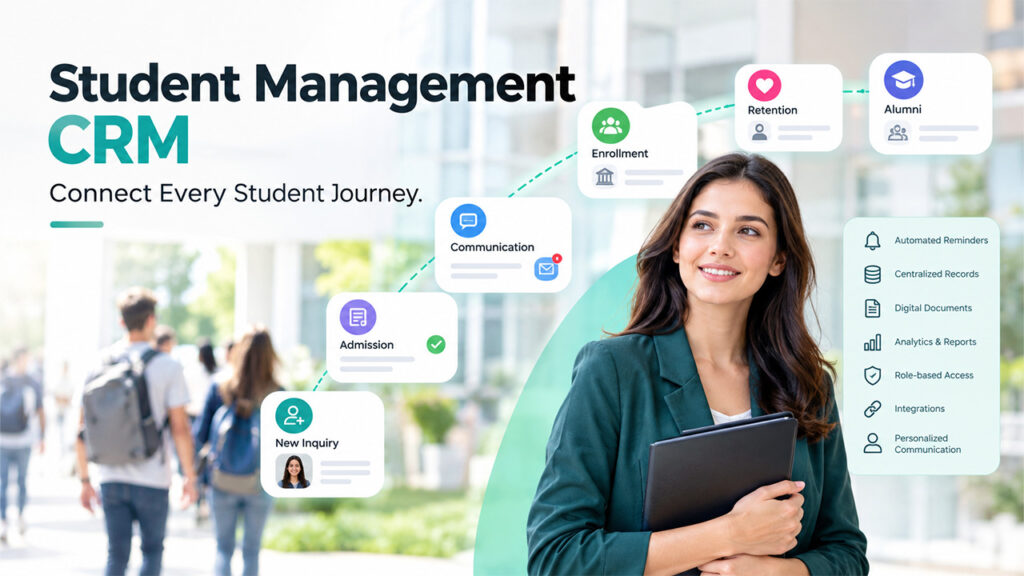

Educational institutions manage a steady flow of applications, inquiries, parent updates, fee questions, and alumni outreach. When this data exists in spreadsheets and tools, follow-ups get missed and staff lose time on manual work. A Student Management CRM centralizes such interactions into a single system, so teams can keep track of each student from the first inquiry.
In this guide, let us understand what we mean by a Student Management CRM, the features you can focus on, the advantages it ensures, and the steps we can take to execute it successfully.
What Is a Student Management CRM?
A Student Management CRM refers to software that allows colleges, schools, and universities to handle their interactions with students throughout the whole journey, from the first inquiry to alumni status. It manages student data at one place, automates interactions, and provides staff with a much better view of the progress of each student.
The Role of CRM In Business is to streamline how an organization handles relationships across the whole customer journey. Education follows the same logic, with parents and students in place of admissions and customers.
A CRM specialized for students is helpful for:
- Educational institutions in handling communications with parents and simplifying admissions.
- Universities that coordinate departments like academics, admissions, and alumni relations.
- Training providers, coaching centers, and online schools in managing high-inquiry volumes.
- Study-abroad consultancies to keep track of applicants through distinct stages.
Main Characteristics of a Student Management CRM
Platforms vary from one another. However, the below-mentioned features show up across most education-driven systems:
- Inquiry and Lead Management: Manages inquiries from calls, forms, and campaigns and manages them, so staff know who they can contact first.
- Admission Tracking: Follows every applicant from inquiry to enrollment, so no application stalls are ever unnoticed.
- Automated Communication: Sends reminders, follow-ups, and alerts by WhatsApp, email, or other channels without any manual effort.
- Centralized Student Records: Provides a full 360-degree view of every student, including interactions, contact details, and history.
- Portals with Role-driven Access: Allows parents, students, teachers, and administrators to see or update only the data that is relevant to them.
- Management of Digital Documents: Moves piles of application online and provides support to verification, which minimizes paperwork.
- Analytics and Reports: Showcase where applicants drop off in the pipeline and the performance of teams.
- Integrations: Combines with existing systems like learning tools, data systems, and communication solutions.
Institutions that need a personalized setup can look at a specialized CRM for Educational Institutes. OutRightCRM has centered its education solution around student tracking, admissions, and it provides support to personalization of fields, modules, dashboards, and workflows.
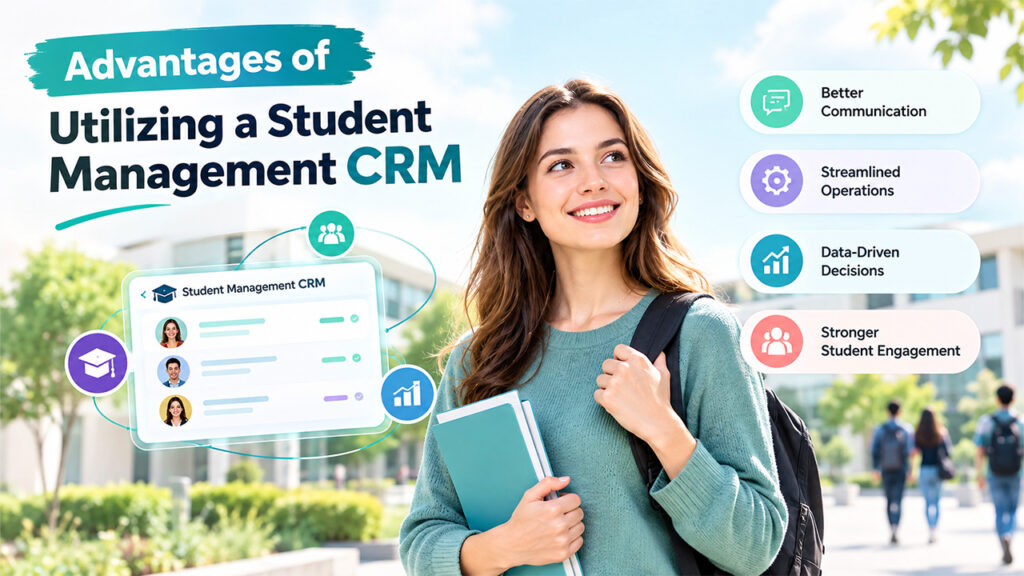
Advantages of Utilizing a Student Management CRM
Challenges It Assists in Fixing
Numerous institutions face the same issues related to operations:
- Data Silos: Finance, admissions, academics, and alumni records exist in individual systems. According to Salesforce, the average university runs close to 35 distinct applications to handle enrollment, recruitment, engagement, and alumni relations.
- Delayed Reminders: Manual follow-ups can cause inconsistent or slow replies to prospective students.
- Manual Administration: Repeated entry of data and tracking of emails can consume a considerable amount of staff time.
- Limited Reporting: Without synchronized data, leadership can simply measure what is working and what is not.
How a CRM Addresses These Challenges?
A Student Management CRM unifies records so that each department works from the same updated data. Automated workflows manage repetitive messages, and dashboards provide leaders with a clear picture of trends in enrollment.
If your support is good, then it can also enhance retention. According to Forrester Consulting Total Economic Impact (TEI) study commissioned by Salesforce, around 6.8 percent improvement in retention of students is observed among the institutions utilizing a CRM platform. The same study has reported around a 12 percent increase in productivity across teams working on student experience, admissions, and alumni engagement.
Timely and Customized Engagement
Students today need customization, speed, and clear communication, and they are comfortable with digital tools already, including AI Tools for Students that provide support to research and note-taking. A CRM allows institutions to align such expectations by recording interactions and preferences, which makes sure that personalized outreach becomes possible at every stage.
A few platforms also embed AI-powered characteristics. Examples that are cited by vendors involve suggesting the right time to contact a lead and flagging students who might require support. Teams that need such capabilities can confirm them with every vendor.
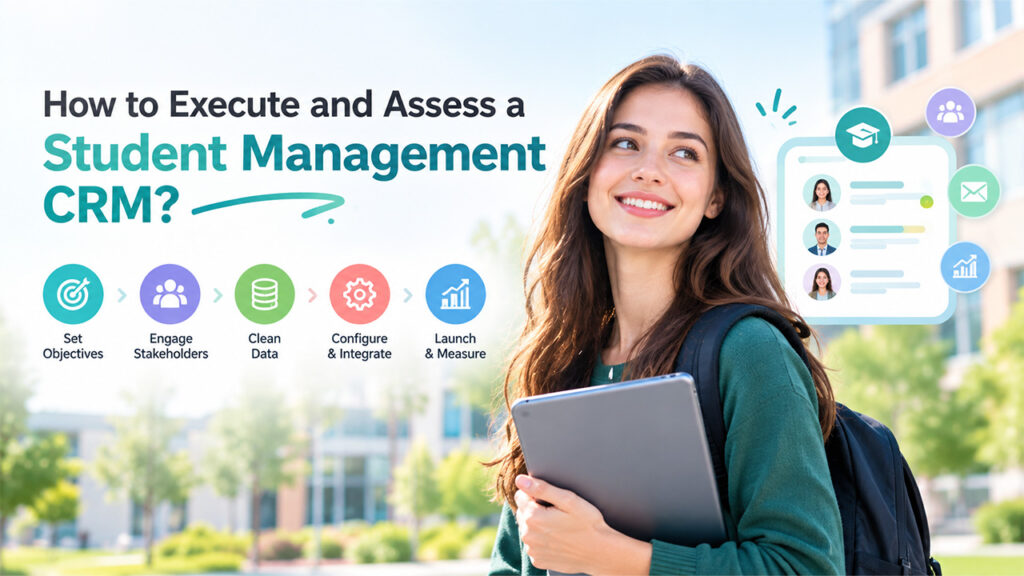
How to Execute and Assess a Student Management CRM?
Steps for a Streamlined Rollout
- Determine Objectives: Decide whether the goal is retention, admissions, alumni relations, or all three.
- Involve Stakeholders Early: Include IT, admissions, support staff, and leadership from the beginning.
- Clean Current Data: Remove outdated records and duplications before migration takes place.
- Plan Integrations: Check whether the CRM connects with your LMS and student information system.
- Personalize Workflows: Set up stages, forms, and permissions to align with how your teams work already.
- Train staff: Ensure that your training is short and focused on routine tasks to facilitate adoption.
- Automate and Track: Ensure automated reminders and then check reports consistently and optimize them.
When comparing platforms, concentrate on integrations, customization, setup and maintenance, customer support, and whether the system scales as the institution grows.
Metrics to Keep Track Of
Industry reports suggest that the Student Management CRM is providing the right results. Key metrics are as follows:
- Enrollment Conversion Rate: Enrolled students divided by total inquiries, multiplied by 100.
- Student Retention Rate: Returning students divided by the previous year's total students, multiplied by 100.
- Response Time to Inquiries: Total response time divided by the number of inquiries.
- Time saved on manual tasks: The reduction in time spent on routine work after automation.
Comparing such figures before and after CRM implementation helps you assess the right impact.
Conclusion
A Student Management CRM provides educational institutions with an organized and single view of each student's interaction. It minimizes manual work, expedites communication, and provides support to much better retention and admissions decisions. The right results come from clean data, clear objectives, staff training, and consistent tracking of retention, enrollment, and response metrics.
For institutions preparing to drift away from scattered spreadsheets, choosing a flexible CRM like OutRightCRM provides a personalizable base to handle admissions, students, and communication in a centralized system.
Frequently Asked Questions
What is a Student Management CRM?
It is defined as software that allows schools, colleges, and universities to handle each student's interaction in a centralized place, from the first inquiry through admissions to finally alumni status.
Who can utilize a Student Management CRM?
Universities, schools, coaching centers, study-abroad consultancies, and online training providers can utilize it to manage high volume of inquiries and keep track of applicants.
What characteristics do I have to look for in a Student Management CRM?
Focus on lead and inquiry management, automated communication, admission tracking, role-based portals, centralized student records, analytics, digital document management, and integrations.
How can Student Management CRM enhance admissions and retention?
It centralizes records across different departments, automates reminders/follow-ups, and provides leaders with a clear enrollment dashboard. A Forrester TEI study commissioned by Salesforce has reported around a 6.8 percent enhancement in retention of students.
How can I gauge the success of a Student Management CRM?
Keep track of student retention rate, enrollment conversion rate, response time to inquiries, and the amount of time saved on manual tasks. Compare the figure before and after implementation.
%201.png)

%201.png)

%201.png)