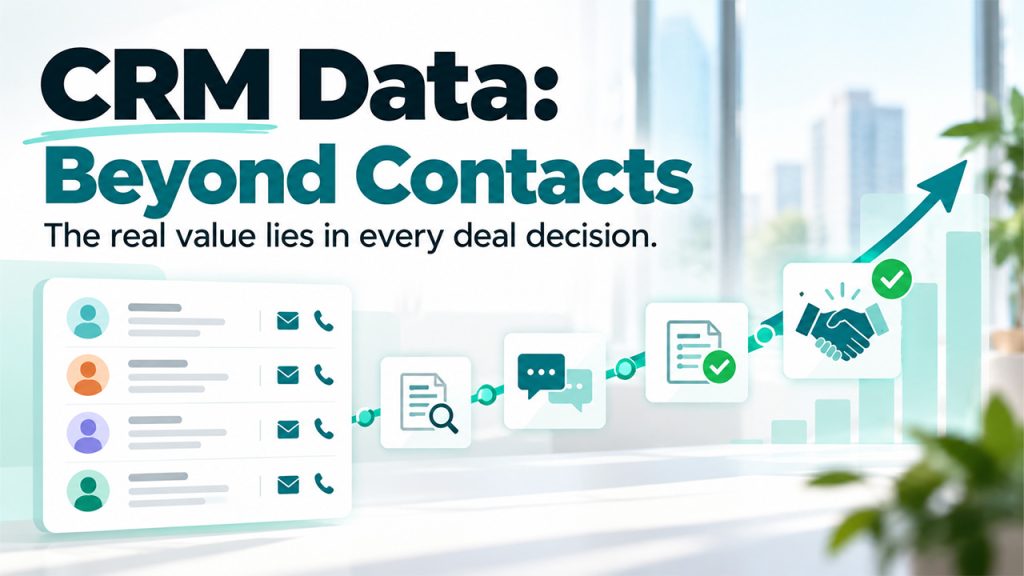
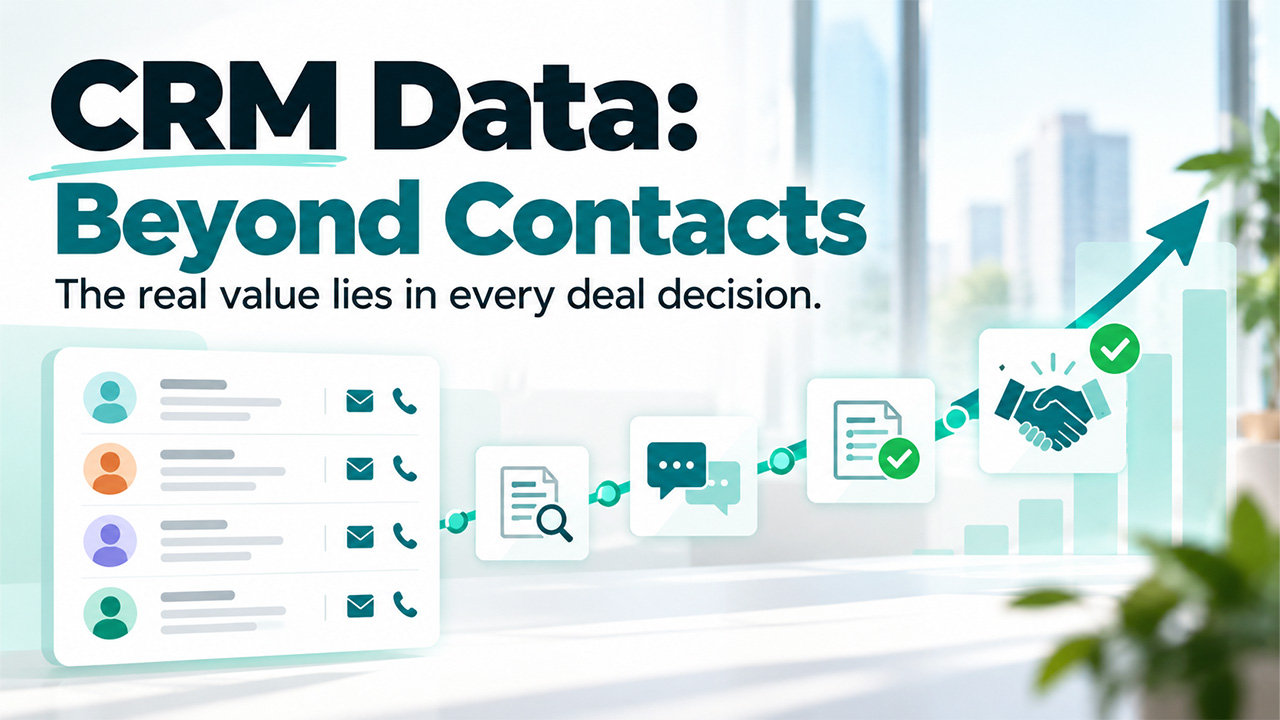

Deal histories show how your company actually wins business. That record can matter to AI developers, as long as you know whose data is inside it.
Sponsored content from SourceX
Export your CRM and you'll get two very different things in the same file, raising important considerations around CRM data management, CRM Data Licensing, and how customer information can be accessed, shared, and used.
The first is a contact list: names, titles, emails and phone numbers. Some fields may have come from enrichment vendors or other licensed sources, each with its own restrictions.
The second is the history of how your company qualifies opportunities, reshapes proposals, handles objections and wins or loses deals. Stage changes, notes, approvals and activities may preserve decisions that the final status cannot explain.
CRM data licensing for AI starts with that second asset. A purchased contact database is not the same thing as a company-owned operational history, and a business shouldn't assume it can relicense third-party records just because they live in its CRM.
THE SHORT VERSION
- Names and emails are the least interesting part of a CRM. Stage changes, notes and approvals show how deals were actually won and lost.
- CRMs mix company-created work with customer documents, enrichment data and integrations. Not all of it is yours to license.
- Sales records contain optimism and hindsight. Separate verified facts from forecasts and after-the-fact notes before anyone describes the data.
The rarest thing in a CRM is the sequence of decisions behind each deal, not the contacts.
What's the difference between a contact list and a deal history?
A contact list tells you who. A deal history tells you how and why.
The final opportunity status only records where things ended up. The stage history, approved notes and related activities show how the decision developed. Picture a deal that changed scope after the buyer's technical team surfaced a new requirement. The valuable record connects that requirement to the revised proposal, the internal approval and the outcome.
That sequence is far more specific, and far more credible, than a vague claim to have valuable sales data. It also gives reviewers something concrete to check for completeness, and gives your own team a sharper picture of how deals really move.
Whose data is actually inside your CRM?
More people's than you might think. A typical CRM blends:
- Notes and activities written by your own team
- Documents and details supplied by customers
- Fields appended by data-enrichment vendors
- Activity imported from email, calling and marketing integrations
Map those origins before anyone proposes a CRM data licensing scope. Vendor terms, customer confidentiality and privacy obligations may rule out certain fields or attachments entirely. And remember: your CRM platform letting you export something is not the same as your company having authority to grant a new use for it.
A contact list identifies the people. A connected deal history can explain the decisions.
Conceptual comparison: contact data and company-created deal histories carry different rights and different value.
Can you trust what the CRM says?
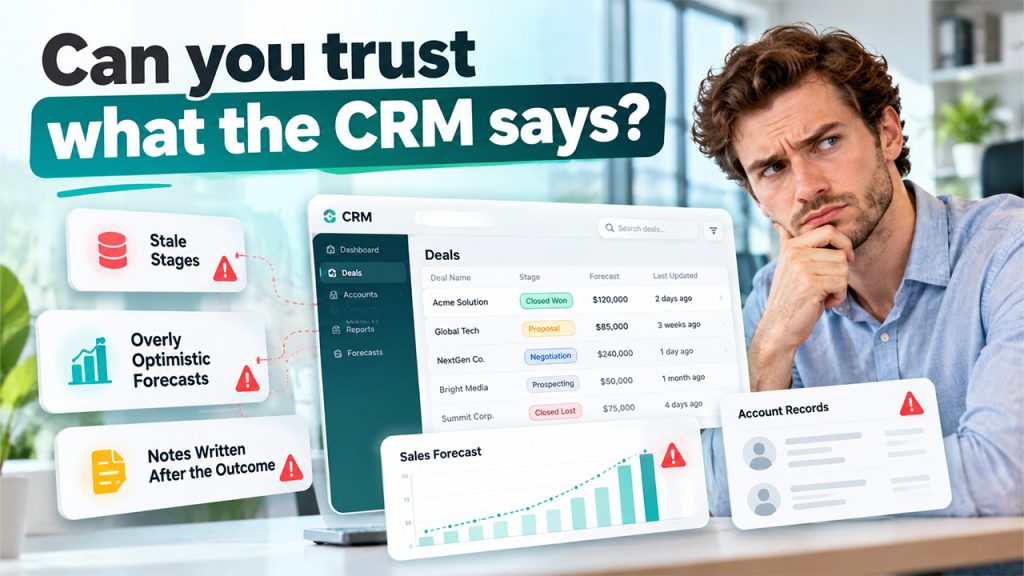
Every sales leader knows the answer: partly. CRMs are full of stale stages, optimistic forecasts and notes written after the outcome was already known.
Any CRM data licensing description should keep those separate from verified business facts. If the data is used to evaluate AI, information added later must not become visible at an earlier decision point, or the test leaks its own answer. Related deals and duplicated account records can also cross a train-test split if no one is watching.
Have the CRM administrator and the sales operations owner review these relationships together. A technically complete export can still be missing the context a business reviewer needs.
How do you protect people without breaking the workflow?
In CRM data licensing, removing personal information reduces exposure, but the prepared collection still has to show which actions belong to the same deal, or it stops making sense Removing personal information reduces exposure, but the prepared collection still has to show which actions belong to the same deal, or it stops making sense.
Look beyond names. An unusual contract term or a distinctive sequence of events can identify a customer even after direct fields are gone. Document every exclusion and transformation, and never describe the result as fully anonymous just because a cleaning tool ran over it.
CRMs blend four sources. Each needs its own rights check before any licensing scope is proposed.
What could CRM data licensing pay?
Sales and CRM histories are one of the data types SourceX looks for. Companies sign with SourceX directly, and it runs the agreement, prepares approved records for AI training and evaluation, and handles the payout.
The advertised top figure, $4 million, sits at the very top of the range, for the largest enterprise datasets. It isn't a price for a CRM export or a typical result; the actual figure is written into a signed Dataset Deal Confirmation. SourceX focuses on companies whose full-time headcount peaked at 50 or more and that have several years of history. Its initial fit check never asks for customer records.
What should a CRM owner do first?
Map one complete opportunity history from first contact to close. Mark which records your company created, which it received and which it licensed from others. Then name the person who can authorize a review, which is usually not the CRM admin, and write that name down. You'll come out with a clear view of your operational asset, separated from a contact list you may have no right to sell again.
A contact export is easy to produce. A faithful account of how a deal developed takes context, evidence and a record of where each part came from.
One fully mapped deal separates the operational asset from data you may not be able to relicense.
When that map is clear, ask the authorized owner whether a CRM data licensing review is useful. SourceX's initial company fit check needs broad facts, not a CRM export. Keep contact data and customer documents out of the introduction.
About the founder
Noah Loul is a four-time founder and the founder and CEO of SourceX, which licenses business data directly from companies for AI training and evaluation. He previously founded B2B Rocket, acquired by Blackpearl Group. His work focuses on building permission-based data infrastructure for AI.