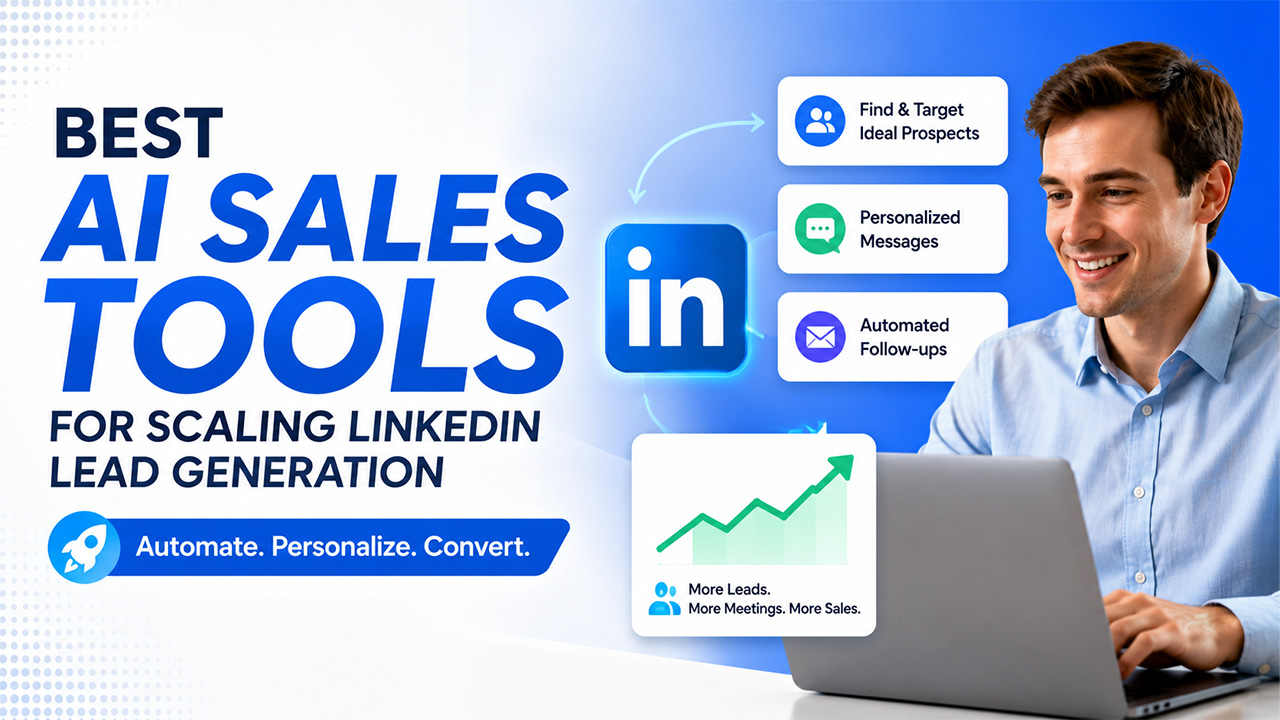

Creating a consistent flow of qualified leads is one of the greatest challenges for modern B2B sales teams. Companies must recognize possible customers, identify their requirements, and begin conversations on a scale. Manually doing all of this can need a substantial amount of time, specifically when sales representatives are working with hundreds of prospects. The best ai sales tools aid in streamlining this process by automating routine activities and providing sales professionals a lot of time to emphasize qualified opportunities.
Understanding the Importance of AI in Sales
AI can be applied at almost every stage of prospecting. It can assist companies with research about potential customers, enrich contact data, and segment audiences, create tailored messages, prioritize leads, and assess campaign performance. Instead of replacing sales reps, such technologies are greatly utilized to provide support to them and ensure routine workflows efficient.
Prospect research is a good example. Before you connect with someone, a sales rep may want to understand who their employer is, the overall size of the company, their position, and whether they can influence a purchasing decision. When this research is manually performed, preparing a comparatively small prospect list can take a lot of time. AI-driven systems can process available data much more quickly and allow teams to define which prospects are worth contacting.
AI Sales Tools for Better Outreach in LinkedIn

This is specifically valuable for organizations using LinkedIn as a channel for lead generation. LinkedIn provides B2B sales teams with accessibility to a large professional network where potential prospects can be recognized as per their roles, industries, companies, and other characteristics. Looking for a relevant person, however, does not create a sales opportunity automatically. The next challenge is starting a conversation.
A good linkedin connection message can help establish the first point of contact. The message does not need to explain every feature of a product or immediately ask the prospect to schedule a meeting. In many cases, a short introduction with a clear reason for connecting can be more effective. The objective at this stage is simply to make the request relevant enough for the prospect to consider accepting it.
AI can help sales professionals prepare these introductions at scale. Instead of just using the same template for each person, a system can leverage prospect data to create distinct variations. The message could reference the company, role, industry, or another relevant detail of the company. This approach enables businesses to improve outreach volume while ensuring a degree of customization.
The best ai sales tools can take customization one step further by assessing additional context about individual leads. For instance, AI can aid in recognizing common challenges within a specific industry and suggest messaging that addresses such challenges. Distinct value propositions can then be utilized for sales managers, founders, recruiters, marketing leaders, or other audiences.
Automation is also useful after the initial connection request. A prospect accepting a request does not necessarily mean that they are ready to discuss a purchase immediately. Sales representatives often need to build conversation gradually. Automated sequences can schedule appropriate follow-ups and ensure that potential opportunities are not forgotten.
Therefore, a linkedin connection message can be viewed as the start of a bigger outreach workflow. Once the connection is established, a campaign may involve an additional information, introductory message, and eventually relevant CTAs. Creating this structure in advance helps teams manage large prospect lists more consistently.
Expandi.io for Automated LinkedIn Outreach

Expandi.io can be defined as a LinkedIn automation solution that allows agencies, professionals, businesses, and recruiters to organize and improve their LinkedIn outreach. Users can generate campaigns that involve tailored messages, connection requests, and follow-up sequences while handling numerous prospects through organized workflows.
Expandi.io gives you customization capabilities that enable outreach to be adjusted through prospect data instead of exclusively depending on same mass messages. By automating routine prospecting activities, the platform can allow teams to spend less time performing manual LinkedIn actions and more time interacting with prospects who respond to their campaigns.
Another major benefit of sales automation is consistency. Manual prospecting often depends heavily on the habits of individual sales representatives. One person may follow up after two days, another after a week, while someone else may forget to follow up entirely. Automation creates a repeatable process that can be used across the entire team.
Analytics can then show whether that process is working. Sales teams can measure connection acceptance rates, replies, positive responses, meetings, and other important conversion points. This data can reveal which audiences and messages generate the strongest results.
Testing different versions of a linkedin connection message is one simple way to optimize campaigns. A sales team can experiment with a brief introduction with an aim toward networking and compare it with another version that showcases a particular business challenge. The results can aid in defining which approach is an effective choice for a specific audience.
The best ai sales tools can provide support to this optimization by assessing campaign data and recognizing valuable patterns. Instead of reviewing thousands of interactions manually, teams can leverage AI to comprehend which types of prospects are engaging, and which type of messages are generating meaningful interactions.
Lead scoring can ensure an additional layer of efficiency. A sales team might create hundreds of responses, but not each reply showcases the same level of opportunity. AI can aid in emphasizing prospects as per the engagement and other available signals. Representatives can then emphasize people who are more likely to move forward.
The sales technology stack can also extend beyond LinkedIn. Companies often integrate professional network outreach with CRM systems, email campaigns, data enrichment services, meeting scheduling platforms, and calendars. Tethering such tools minimizes manual data entry and makes it simpler to understand each interaction with a lead.
However, businesses must avoid automating each aspect of the sales process simply since technology makes it possible. Excessive automation can generate impersonal interactions and minimize communication quality. The robust sales workflows utilize technology for routine actions while making sure meaningful interactions are routed to sales professionals.
AI should make representatives more productive rather than remove the human element from selling. Once a prospect responds, understanding their objectives, challenges, timing, and requirements becomes much more important than automation. Salespeople can use the time saved during prospecting to provide better responses and develop stronger relationships.
Conclusion
Selecting the best ai sales tools is therefore about choosing technology that aligns with the actual sales process of the company. The right combination of LinkedIn automation, Artificial Intelligence, human communication, and analytics aid businesses reach more relevant prospects while ensuring tailored interactions. Instead of just improving outreach volume, organizations can develop an organized system that enhances messaging, follow-ups, and targeting continuously, ultimately generating more opportunities for meaningful B2B conversations.
%201.png)

%201.png)

%201.png)