


The best AI writing tools do far more than generate text. Today's writers use them to research topics, create outlines, draft essays, rewrite content, improve grammar, and streamline the entire writing process.
Whether you're a blogger, copywriter, student, researcher, or business professional, writing needs can vary depending on the project. Some tools excel at long-form content creation, while others focus on editing, paraphrasing, or academic writing.
This guide reviews seven of the most popular AI writing tools in 2026 and highlights what each one does best.
How We Review the Best AI Writing Tools for Writers
Before getting into the list, here's what actually shaped the rankings. Each tool was evaluated based on:
- Writing quality
- Research support
- Drafting capabilities
- Paraphrasing performance
- Ease of use
- Language support
- Workflow efficiency
Rather than focusing on feature lists alone, the goal was to determine which tool works best for specific writing needs.
7 Best AI Writing Tools for Writers in 2026
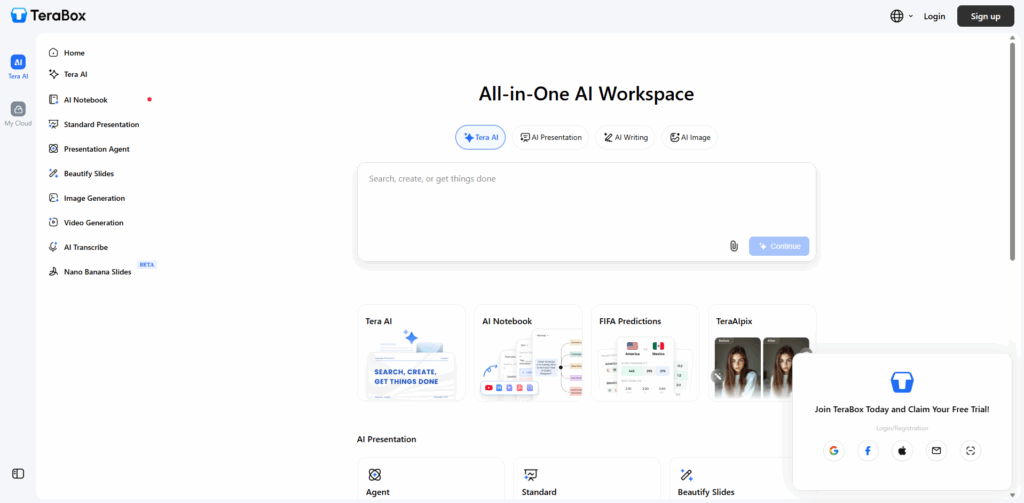
1. TeraBox AI Writing
Pricing: Free tier available
Best for: Writers who need research, drafting, and paraphrasing in one place
Pros:
- Deep Research generates structured reports from a single topic input
- AI Essay Writer lets you set word count, language, and citation style before generating
- Smart Paraphrase helps users rewrite content while keeping the original meaning intact, with support for multiple languages
- Everything stays in one workspace, no platform switching
Cons:
- Research outputs still need fact-checking before use
Most people know TeraBox as a cloud storage platform. The AI Writing suite is less talked about but for writers who move through the full cycle of research, drafting, and rewriting, it covers more ground than most dedicated writing tools.
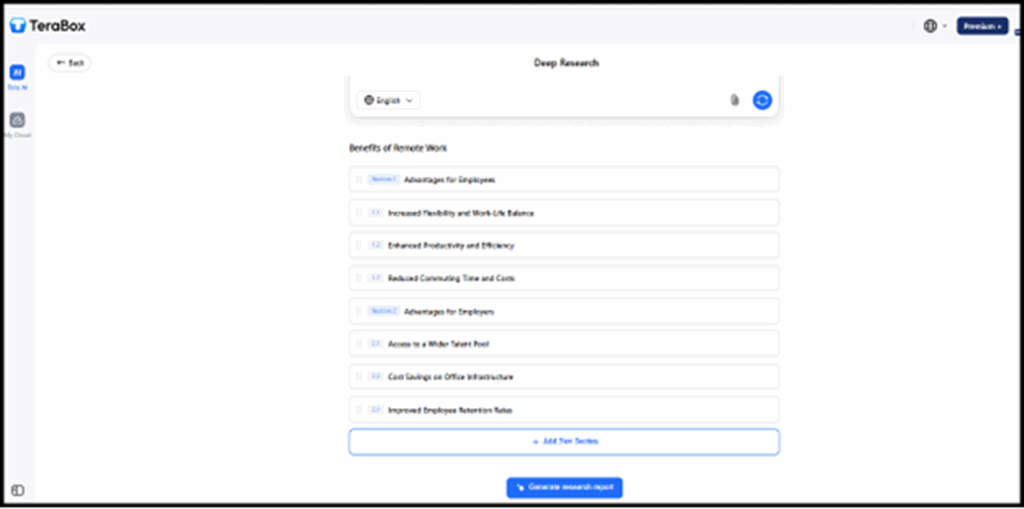
One of its standout features is Deep Research. After entering a topic, the tool quickly generates a structured outline before creating a detailed report. Unlike many AI platforms that immediately produce content, TeraBox allows users to review and edit the outline first. After the outline is approved, it generates a well-organized report with clearly structured sections and supporting references.
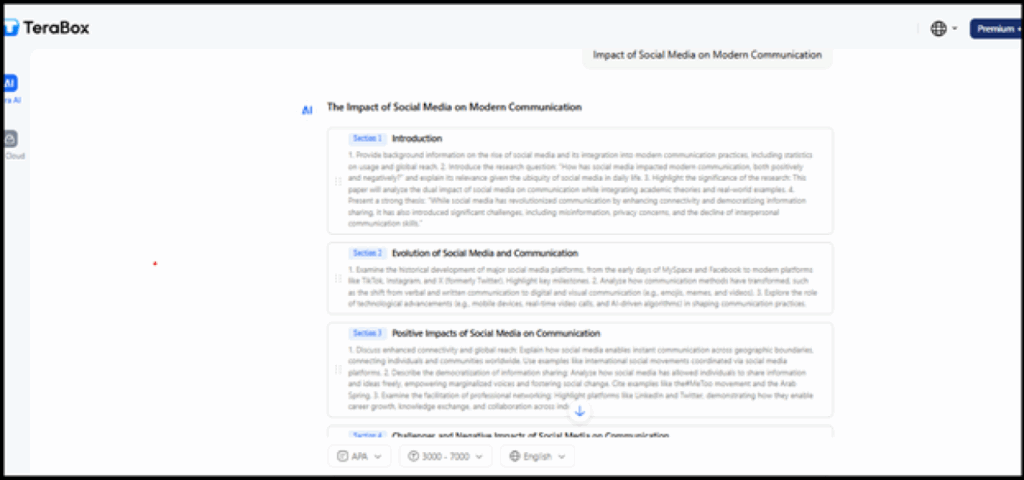
The AI Essay Writer follows a similar workflow. Users can enter a topic, choose a language, and set a desired word count. Before generating the essay, the tool creates an outline that can be adjusted as needed. The final draft remains editable after generation, making it easier to refine content before submission or publication.
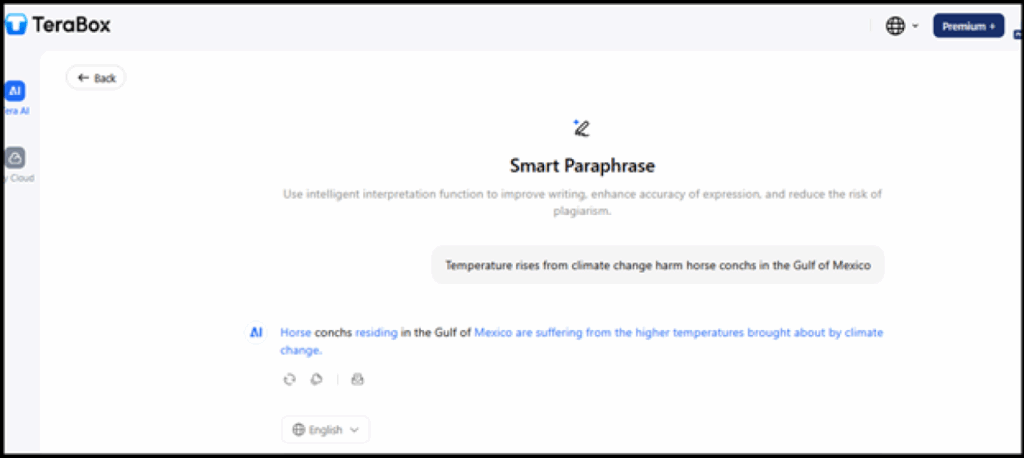
The Smart Paraphrase feature rewrites text while maintaining its original meaning. If the output isn't satisfactory, users can regenerate alternative versions, making it useful for academic writing, blog updates, and content rewriting.
For writers who regularly move from research to drafting and then editing, TeraBox offers one of the most complete writing workflows available
Who it's best for: Students, bloggers, researchers, and content writers who want a connected research-to-draft workflow without managing multiple subscriptions.
2. ChatGPT
Pricing: Free; Plus at $20/month
Best for: Writers who want flexible, general-purpose AI writing assistance
Pros:
- Handles almost any writing format or task
- Strong output quality with clear prompting
Cons:
- Output quality depends heavily on prompt quality
- Can feel like a blank page if you're not sure how to direct it
ChatGPT remains one of the most versatile AI writing assistants available. It can help with blog posts, emails, outlines, reports, and content ideas.
The limitation is real though. It doesn't guide you through a writing process, it responds to what you ask. Writers who are clear about what they want usually get better results. Writers still figuring out their direction can find it takes a lot of back and forth to land on something usable.
Who it's best for: Writers comfortable directing AI who need flexibility across different writing formats.
3. Grammarly
Pricing: Free; Premium at $12/month
Best for: Editing, clarity improvements, and tone polishing
Pros:
- Works inside Google Docs, Gmail, and most browsers
- AI suggestions cover clarity, tone, and engagement not just grammar
Cons:
- Not a drafting or research tool
- Works best on content you've already written
Grammarly works best as an editing companion. Rather than starting from scratch, it helps refine existing drafts and improve overall writing quality.
Who it's best for: Bloggers and professionals who want a reliable editing pass before publishing or sending.
4. QuillBot
Pricing: Free; Premium at $8.33/month
Best for: Paraphrasing and summarizing existing content
Pros:
- Multiple rewrite modes, standard, fluency, formal, creative, academic
- Google Docs and Word integration
- Reliable meaning preservation across rewrite modes
Cons:
- Not a drafting tool. It works on content you already have
- Summarizer can oversimplify complex material
QuillBot is one of the most reliable tools for rewriting content. It is particularly useful for students, researchers, and content writers who frequently adapt existing material
Who it's best for: Students, academics, and content writers who regularly rework or simplify existing material.
5. Jasper
Pricing: From $39/month
Pros:
- Brand voice training keeps outputs consistent across a team
- Strong template library for marketing formats
Cons:
- Higher price point not suited for individual writers on a budget
- Less useful outside of marketing content
Jasper is a popular writing platform that helps businesses, content teams, and professionals create large volumes of content more efficiently. Its strength lies in maintaining consistent brand messaging across multiple campaigns.
Who it's best for: Copywriters and content marketing teams who need volume and brand consistency.
6. Copy.ai
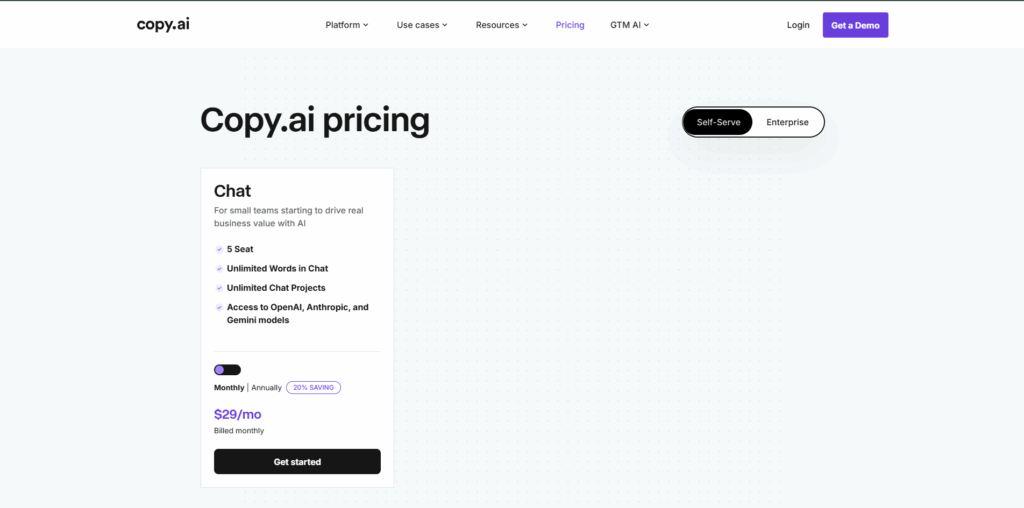
Pricing: Free tier available; paid from $36/month
Best for: Short-form copy and fast first drafts
Pros:
- Fast generation for product descriptions, emails, and social content
- Clean, simple interface
Cons:
- Long-form output quality drops off past a certain length
- Outputs often need a meaningful editorial pass
Copy.ai performs well for social media captions, email copy, product descriptions, and other short-form content where speed is a priority
Who it's best for: Freelancers and small business owners who need quick first drafts for short content formats.
7. Jenni AI
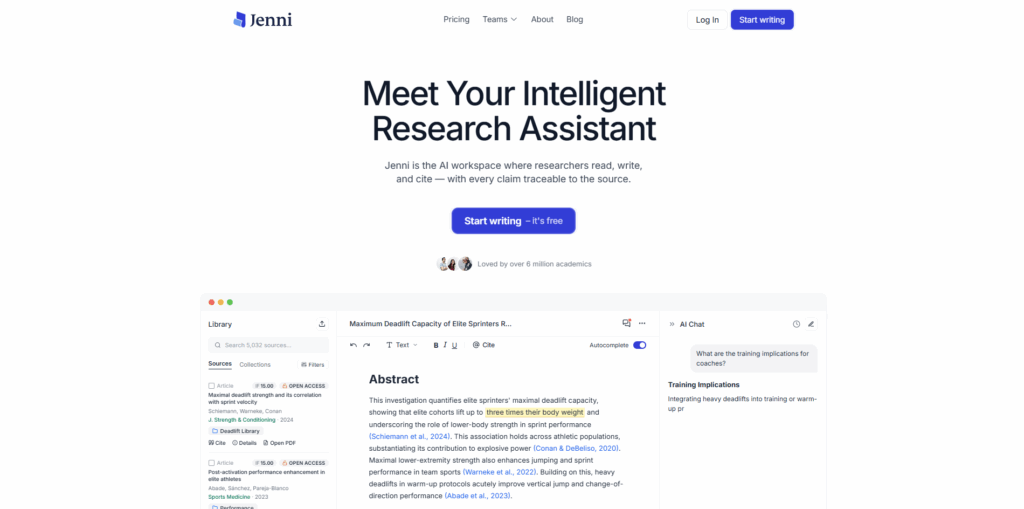
Pricing: Free tier; Pro at $12/month
Best for: Academic writing with citation support
Pros:
- Citation suggestions built directly into the writing interface
- Zotero integration for reference management
- Autocomplete designed for academic sentence structure
Cons:
- Narrower use case less useful outside academic writing
- Interface can feel limited for non-academic formats
Jenni AI is built specifically for students and researchers. Its citation tools and academic-focused workflow make it a strong option for scholarly writing. Outside academic writing, it's not the right fit.
Who it's best for: University students and researchers who need citation-integrated drafting support.
Best AI Writing Tools Compared: Which One Fits Your Writing Workflow?
| Tool | Best For | Research | Paraphrasing | Long-Form | Free Tier |
| TeraBox AI Writing | Full writing workflow | ✅ Deep Research | ✅ Smart Paraphrase | ✅ Essay Writer | ✅ |
| ChatGPT | Flexible writing tasks | ⚠️ Limited | ✅ | ✅ | ✅ |
| Grammarly | Editing and polishing | ❌ | ⚠️ | ❌ | ✅ |
| QuillBot | Paraphrasing | ❌ | ✅ | ❌ | ✅ |
| Jasper | Marketing copy at scale | ❌ | ⚠️ | ✅ | ❌ |
| Copy.ai | Short-form copy | ❌ | ⚠️ | ⚠️ | ✅ |
| Jenni AI | Academic writing | ⚠️ | ⚠️ | ✅ | ✅ |
Quick Recommendations based on writing need:
- Research, drafting, and rewriting in one place → TeraBox AI Writing
- Flexible writing support → ChatGPT
- Editing and proofreading → Grammarly
- Content rewriting → QuillBot
- Marketing content → Jasper
- Short-form copy → Copy.ai
- Academic writing → Jenni AI
Limitations to Consider Before Using AI Writing Tools
Even the best AI writing tools have limitations. AI-generated content should always be fact-checked, edited for accuracy, reviewed for originality, and refined to match the intended audience.
Research-based outputs require source verification, and creative or branded content often benefits from human editing before publication
Conclusion
The best AI writing tools are the ones that fit your writing process. Some writers need research support, others need paraphrasing, grammar correction, or long-form drafting assistance.
For users who frequently move between research, essay writing, and content rewriting, TeraBox AI Writing stands out by bringing those tasks together in a single workflow. Like any AI writing assistant, it works best when combined with human editing, fact-checking, and thoughtful revision.
Frequently Asked Questions
Q1. What is the best AI writing tool for writers in 2026?
The best choice depends on the workflow. TeraBox AI Writing, ChatGPT, Grammarly, and QuillBot each serve different writing needs.
Q2. Can AI writing tools help with blog writing?
Yes. Most modern AI writing tools can generate blog outlines, introductions, drafts, and content ideas.
Q3. Which AI writing tool is best for paraphrasing?
QuillBot and TeraBox Smart Paraphrase are strong options for rewriting and improving clarity.
Q4. Are free AI writing tools worth using?
Many free tools are useful for basic drafting and brainstorming, though premium versions often provide better quality and more features.
Q5. Can AI writing tools help with research and outlines?
Yes. Research-focused platforms such as TeraBox Deep Research and ChatGPT can assist with information gathering and outline creation.
Q6. Can AI replace human writers?
No. AI can accelerate drafting and research, but creativity, expertise, strategy, and judgment still require human involvement.
%201.png)

%201.png)

%201.png)