


The guide explains what a real estate CRM is, how it works, its key features, benefits, and how to choose the right solution for the business.
The real estate industry is among the most competitive industries, in which managing leads, following up with potential buyers, maintaining client relationships, and closing deals can become overwhelming quickly. Real estate professionals often must handle multiple properties, clients, and sales opportunities simultaneously. In the sector, without an organized system, important leads may be missed, follow-ups may be delayed, and valuable business opportunities can slip away.
This is where a real estate CRM solution becomes essential. The solution helps real estate agents, brokers, property developers, and real estate agencies manage customer relationships, streamline sales processes, and improve overall productivity.
What is a Real Estate CRM?
A real estate CRM, or real estate customer relationship management, is a software system that helps real estate agents, brokers, property developers, and agencies efficiently manage leads, customer information, property inquiries, and sales activities in a centralized place. A real estate CRM makes it easier to track every potential buyer and seller, schedule follow-ups, manage client interactions, and monitor deals from the first inquiry to the final closing.
For instance, when a potential buyer inquiry about a property through the website, the CRM platform stores their contact details, records their property preferences, assigns the lead to a sales agent, and schedules follow-up reminders.
Key Features of a Real Estate CRM
The real estate CRM software offers key features, which include:
- Lead Management: The system collects and organizes information about prospective buyers, sellers, tenants, and investors.
- Contact and Client Management: A CRM maintains detailed client profiles containing contact information, communication history, property preferences, meeting notes, and previous interactions.
- Property Management and Matching: Many real estate CRM platforms support property inventory management or integrate with dedicated property management systems.
- Sales Pipeline Management: A sales pipeline provides a visual overview of where each lead stands in the buying or selling process.
Benefits of a Real Estate CRM
Some of the major benefits of a real estate CRM are as follows:
- Improved Lead Conversion
A CRM for real estate helps agents track prospects, identify their needs, and maintain contact throughout the decision-making process. The platform also creates more opportunities to move qualified leads towards a successful transaction.
- Better Customer Experience
In the real estate sector, clients often expect clear communication, relevant recommendations, and regular updates. With a centralized platform, agents can provide more personalized services.
- Increased Team Productivity
A centralized CRM platform reduces administrative burden. It also includes shared records, task assignments, and automated reminders that can help teams coordinate their work more efficiently.
- Stronger Sales Pipeline Visibility
The real estate CRM offers managers a clearer picture of active opportunities, upcoming meetings, pending negotiations, and deals approaching closure.
- Real Estate Client Management
Effective Real Estate Client Management is essential for building long-term relationships with buyers, sellers, and investors. A real estate CRM helps professionals maintain detailed customer records, track communication history, understand property preferences, and schedule timely follow-ups.
How Does a Real Estate CRM Work?
The working of a real estate CRM is as follows:
- Lead Collection: Collect inquiries from websites, property portals, social media, and marketing campaigns.
Businesses also utilize Real Estate Web Development to create websites that showcase property listings, capture buyer inquiries, and connect potential customers with sales teams.
- Lead Management: Organize leads based on their budget, location, property preferences, and buying intent.
- Follow-up Automation: Schedule reminders and automate routine communications.
- Property Matching: Help agents identify properties that match a client's requirements.
- Sales Tracking: Monitor each opportunity from the initial inquiry to negotiation and deal closure.
- Performance Reporting: Analyze lead conversions, agent performance, and sales activities.
Implementation of AI in Real Estate CRM
Implementing artificial intelligence in a real estate CRM helps property businesses easily automate routine tasks, understand customer behavior, improve lead management, and make more informed sales decisions. By combining the CRM solution with AI-powered tools, users like estate agents, brokers, and property developers can manage customer relationships efficiently and deliver personalized experiences.
In the real estate CRM, artificial intelligence can analyze customer inquiries, identify promising leads, recommend suitable properties, automate communication, and generate insights that can help sales teams focus on the right opportunities.
Real-World Applications of a Real Estate CRM
A real estate CRM offers real estate professionals the ability to efficiently manage leads, organize customer information, track property inquiries, and streamline sales activities.
Some of the real-world scenarios for a real estate CRM are as follows:
- Lead Generation and Management
Businesses operating in the real estate industry often receive inquiries from websites, property portals, social media campaigns, and online advertisements. The CRM solution collects and organizes leads in one centralized system. This helps businesses avoid missed inquiries and respond to potential customers more efficiently.
- Automated Follow-Ups with Potential Buyers
In real estate, following up is among the most essential activities, as customers often take time to make purchasing decisions. The CRM solution allows agents to schedule calls, set reminders, and automate routine communications. This ensures that all potential buyers remain engaged throughout the sales journey and reduces the risk of losing opportunities due to delayed communication.
- Property Matching and Recommendations
A real estate CRM solution helps agents understand customer requirements, such as budget, preferred location, property type, and desired amenities. Some CRM platforms also support automated property recommendations, helping the agent save valuable time and provide customers with more relevant options.
- Property Development and Project Management
Real estate developers often manage multiple residential and commercial projects, each with different units, pricing structures, and sales targets. The CRM solution can help developers organize buyer inquiries, track interest in individual units, assign leads to sales representatives, and monitor booking progress.
Choosing the Right Real Estate CRM
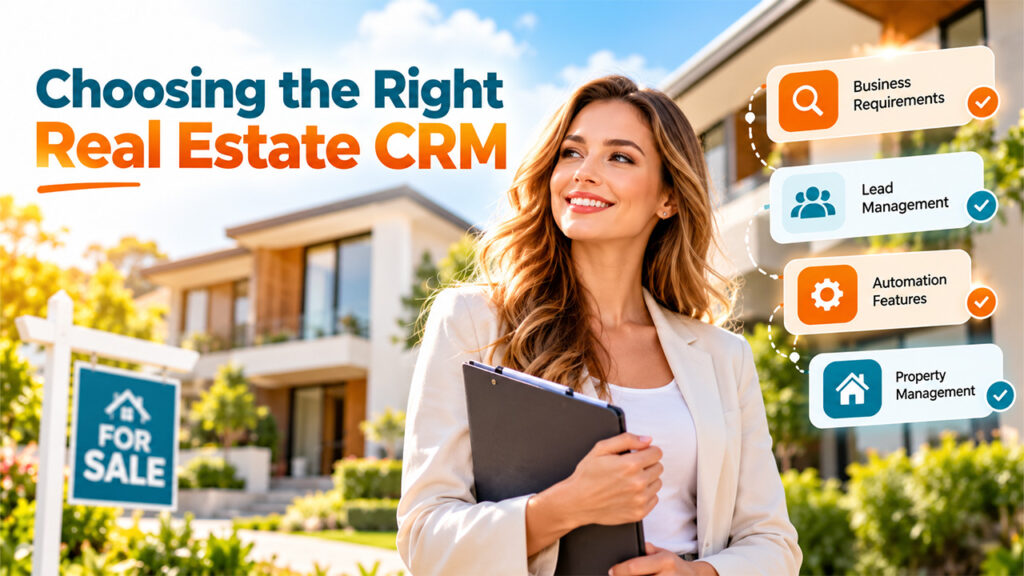
To select the right platform, users should follow some key considerations, which are as follows:
- Identify Business Requirements
Before selecting a real estate CRM, businesses should identify the challenges they want to solve. Some businesses need better lead management, while others require sales automation, property inventory tracking, or customer communication tools.
- Evaluate Lead Management Features
Lead management is one of the most important capabilities of a real estate CRM platform. Businesses should look for software that can collect, organize, categorize, and assign leads from different sources.
- Check Automation Capabilities
An ideal real estate CRM solution should reduce repetitive administrative tasks. It helps agents easily manage inquiries efficiently and ensure that potential buyers receive timely attention.
- Consider Property Management and Integration
Depending on the business model, users may need features that help manage property listings, pricing, availability, and customer-property matching.
Common Mistakes to Avoid When Implementing a Real Estate CRM
Before implementing a real estate CRM, businesses should avoid a few common mistakes, which are as follows:
- Choosing a CRM without Business Goals
One of the most common mistakes is selecting a CRM platform without identifying the real problem that the business needs to solve. Businesses should define their objectives before selecting a real estate CRM. They should identify the features their team needs and prioritize solutions that address the actual business challenges.
- Ignoring Employee Training
Some of the best real estate CRM software can also fail if employees do not understand how to use it. Businesses should provide practical training, demonstrate important features, and establish clear guidelines for recording leads.
- Migrating Inaccurate or Duplicate Data
Importing outdated contact details, duplicate leads, and incomplete customer records can create confusion and reduce the reliability of CRM information. Businesses should clean up their existing data before migration, remove duplicate records, verify contact information, standardize data formats, and establish rules for maintaining accurate records.
- Ignoring Integration Requirements
A CRM that does not integrate with essential business tools may create additional manual work. Businesses should check integration compatibility before implementing a real estate CRM solution. Businesses should identify tools that they already use and confirm that the CRM platform can connect to them directly.
Conclusion
A real estate CRM platform helps professionals streamline lead management, automate follow-ups, improve customer relationships, and manage sales activities efficiently. The solution offers key features such as property matching, sales pipeline tracking, and AI-powered automation, enabling businesses to improve productivity and make informed decisions. By choosing the right solution, providing employee training, and maintaining accurate data, real estate businesses can maximize CRM benefits, enhance customer experiences, and support long-term growth.
Frequently Asked Questions
Who can use a real estate CRM?
Real estate agents, brokers, property developers, real estate agencies, property consultants, and leasing teams can use a CRM to organize leads, manage customer interactions, and streamline their sales processes.
Can real estate CRM software automate follow-ups?
Yes, real estate CRM software can automate follow-ups. Depending on its capabilities, real estate CRM software can schedule reminders, send automated emails or messages, assign follow-up tasks, and notify agents when prospects require attention.
Can a real estate CRM help increase sales?
Yes, a real estate CRM can help increase sales. A CRM can help agents respond to inquiries promptly, maintain consistent follow-ups, identify promising leads, and track sales opportunities.
Is real estate CRM software suitable for small businesses?
Yes. Small real estate businesses and independent agents can use CRM software to organize contacts, track inquiries, schedule follow-ups, and reduce manual administrative work. A simple, affordable solution may be sufficient for smaller teams.
%201.png)

%201.png)

%201.png)