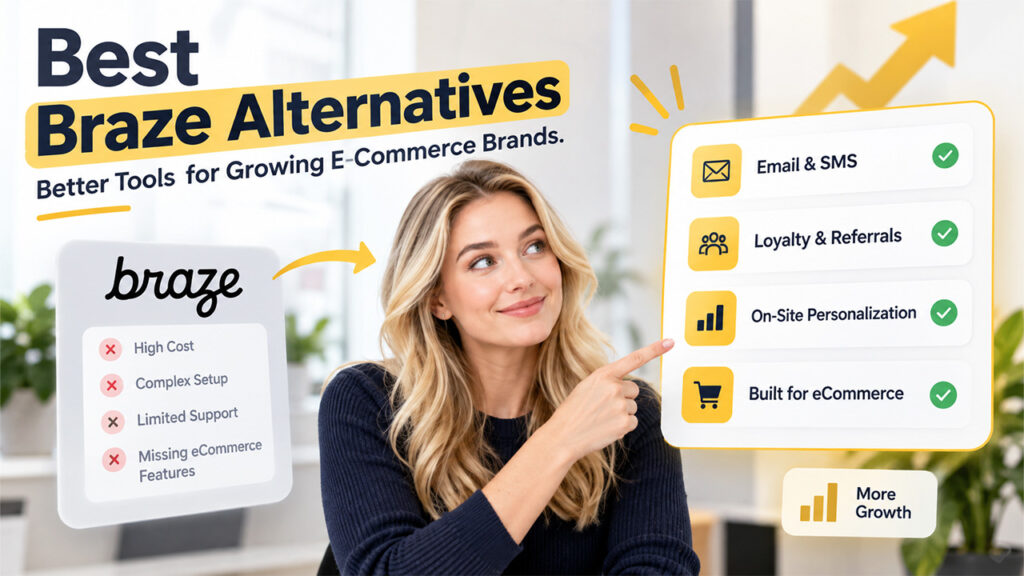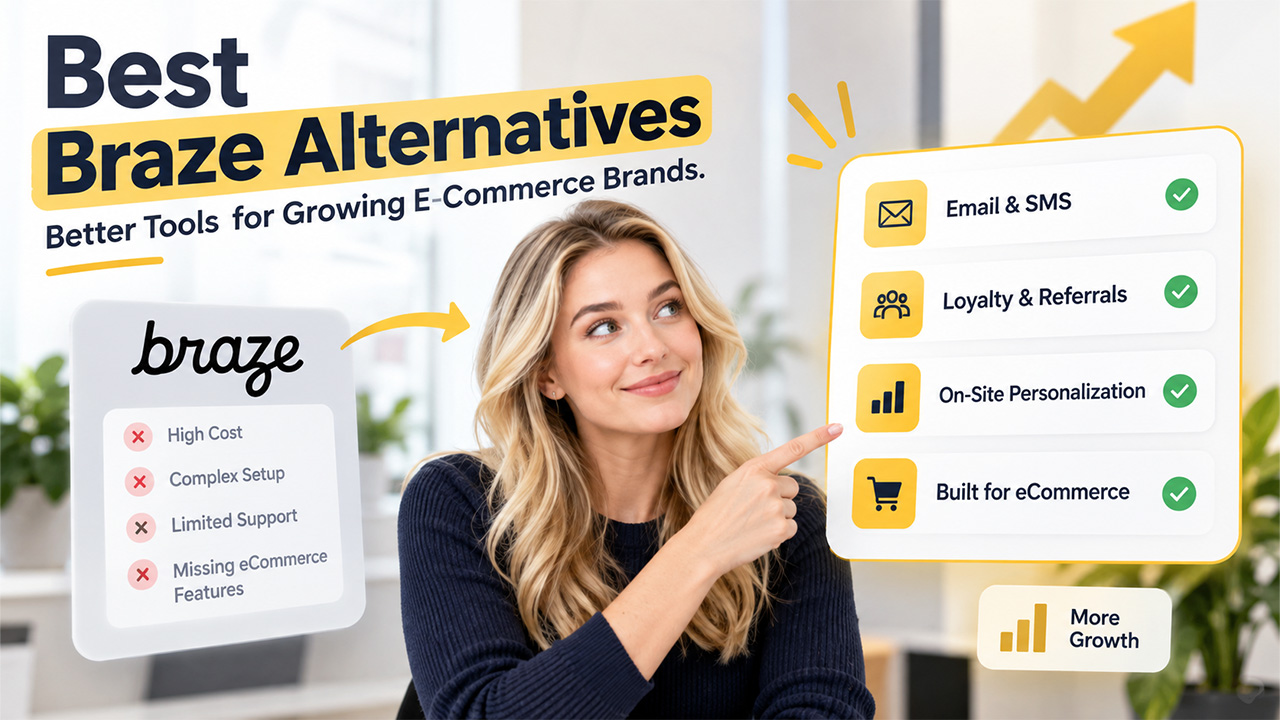

Braze is a well-known choice for businesses to reach customers for its comprehensive cross-channel messaging, real-time segmentation, and journey orchestration capabilities. However, as brands grow, there are several options being explored for Braze Alternatives with better pricing models, quicker support, and extra functionality that isn't standard with Braze.
Braze was popular with big consumer brands with a need for robust automation in email, push, SMS, and in-app messaging.
Why So Many Brands Are Looking Beyond Braze
There is usually a cause, not a reason, for brands to search for a new solution. These causes generally fall into three main factors.
The Cost Problem
- Braze pricing is based on custom enterprise contracts, and costs rise quickly once you add more channels or monthly active users.
- Typical Braze contracts run from sixty thousand to over one hundred thousand dollars a year, with enterprise deals reaching six figures.
- There is no published pricing and only limited room to negotiate on multi-year agreements.
- Add-on features like premium support or expanded data consumption push the bill even higher.
The Support Problem
- Onboarding can take months, and once you are live, getting a quick answer to a broken journey is not always easy.
- Documentation is extensive but hard to navigate when something breaks in production.
- Dedicated account support is often reserved for the largest enterprise clients, leaving mid-market teams with standard ticket queues.
The Flexibility Problem
- Braze offers messaging, but lacks native loyalty programs, on-site personalization, and a promotions engine.
- If you're looking to implement a loyalty program, you'll usually add a third-party tool to your brand.
- On top of that, brands that require real-time website personalization
- Brands that need real-time website personalization add another platform on top.
- Every extra tool adds cost, complexity, and one more integration that can break.
What a Good Alternative Should Actually Offer

Knowing what problem you're solving is a great way to help you get your head around switching between platforms. Channel coverage and automation depth are as important as cost relief and good support, which are typical triggers.
Pick the Tool that Fits for Your Team and Budget
- Full-funnel platforms that bundle a customer data platform, loyalty, and on-site personalization can replace Braze along with the three or four extra tools most teams end up stacking on top of it.
- Brands with lean teams benefit from no-code flow builders that do not require constant developer involvement.
- Growing e-commerce brands often want a platform priced around active profiles rather than a rigid monthly active user bucket.
- Teams with complex automation needs should look for native segmentation instead of relying on a separate CDP.
Choose the Right Tool for Your Channel Needs
- Some platforms specialize in mobile-first engagement, deep mobile push, and in-app analytics.
- Others are designed with a sole purpose of enabling ecommerce: they integrate email, SMS, and on-site personalisation within a single dashboard, while e-commerce website development helps create the digital storefront where these customer experiences take place.
- Large brands with sizeable engineering departments have enterprise-scale platforms available, which can be more complicated than the smaller brands that are typically online sellers.
Where the Alternatives Differ
If you know the categories, you'll be able to quickly narrow down your options while selecting vendors because not all the Braze alternatives want to be an all-in-one solution.
E-Commerce Specialists
Tools designed for online shopping deliver a mix of messaging, loyalty, and product recommendation, all without enterprise cost. Maestra has been a good example and provides a real-time CDP, built-in loyalty and referral programs, on-site personalization, and a success manager on each plan, for a fraction of the typical Braze pricing. To compare all the options on features, pricing, and support, you can check out this Braze Alternatives guide from Maestra.
Mobile-First Engagement Platforms
There are tools that are based on app engagement and in-app analytics, with segmentation and predictive churn scoring capabilities that product-led teams love, while multi-channel marketing automation helps brands coordinate customer engagement across different channels.
Developer-Friendly and Budget Options
Simple tools that are event-based and have fewer enterprise costs, such as lean, technically capable teams, can be preferred and may offer a cost-effective choice, even though they don't provide as much enterprise functionality.
The key to making the right decision is to compare your real needs with each platform and not just because you recognize the brand.
Enterprise Suites With CRM Ties
Sometimes, large organizations already in place with a wide range of software may want a marketing suite that integrates directly with their current CRM solution, even if it means they'll have to take a bit more of a hit on the learning curve and wait a bit longer for implementation. There are other platforms that can replicate much of what Braze offers, but typically require dedicated experts to operate each day, which is impractical for smaller marketing teams.
What to Ask During a Demo
Come prepared with specific questions rather than sitting through a generic sales pitch.
- Ask how pricing scales as your subscriber count or send volume grows.
- Ask what onboarding includes, and whether migration support costs extra.
- Ask for references from brands in your industry, not just logos on a homepage.
Making the Switch Without the Headache
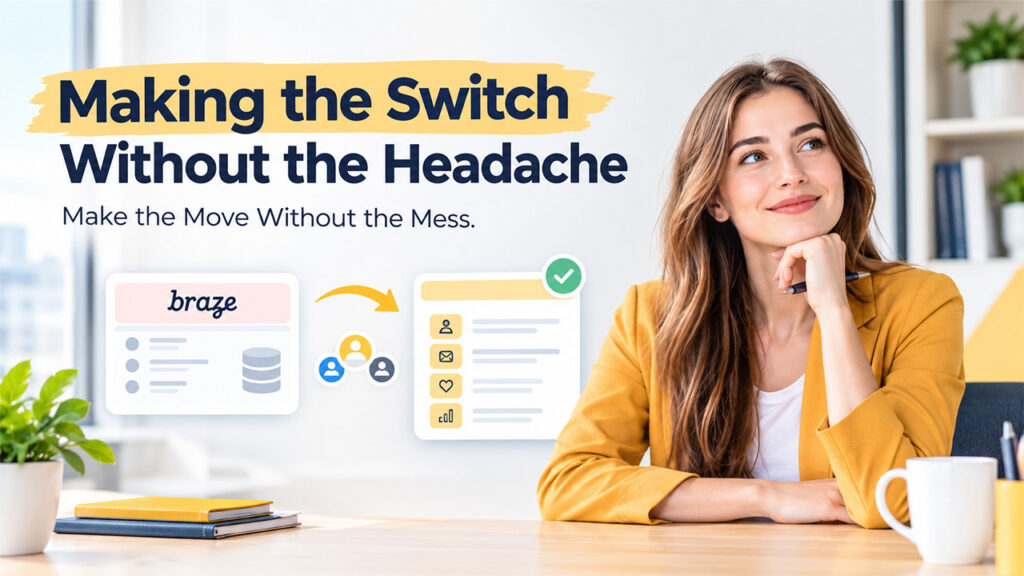
Changing systems is a normal process where one may experience some hesitation. You've worked hard on customer journeys, audience segments, and developed a sending reputation, and you don't want to risk taking a break.
Audit Before You Switch
- Review your current Braze usage and identify where the budget is actually going.
- Many teams pay for premium analytics or advanced segmentation features that go unused.
- Missing capabilities like loyalty management or on-site personalization are usually the clearest sign it is time to look elsewhere.
Test Before You Commit
- Reliable alternatives offer migration support, data cleanup, and in many cases a fully managed onboarding process.
- Compare your last few months of Braze billing against actual campaign performance and engagement.
- Perform a small test segment prior to shifting your entire audience list to a new platform.
- Don't just take the sales claims from vendors – ask for real client case studies!
Conclusion
The best alternative to Braze will vary depending on your business stage, budget, and channel requirements, so there is no single "best" option. If a lean ecommerce brand is seeking a platform that offers them loyalty, personalization, and messaging in one place, it might be better suited for them to go with a platform that is specifically built for retail. A company with a robust engineering team would probably choose a tool that is flexible and developer-friendly, and integrates with their existing data pipeline. A mobile-first company might prefer to focus on a platform with predictive analytics and app engagement.
The decision on which one of the Braze Alternatives you choose makes a significant impact on your marketing budget, as well as on your team's day-to-day work. If you feel your current platform isn't meeting your business's needs, then it's time to see what else is out there before you sign yet another contract for a new price.
%201.png)

%201.png)

%201.png)