
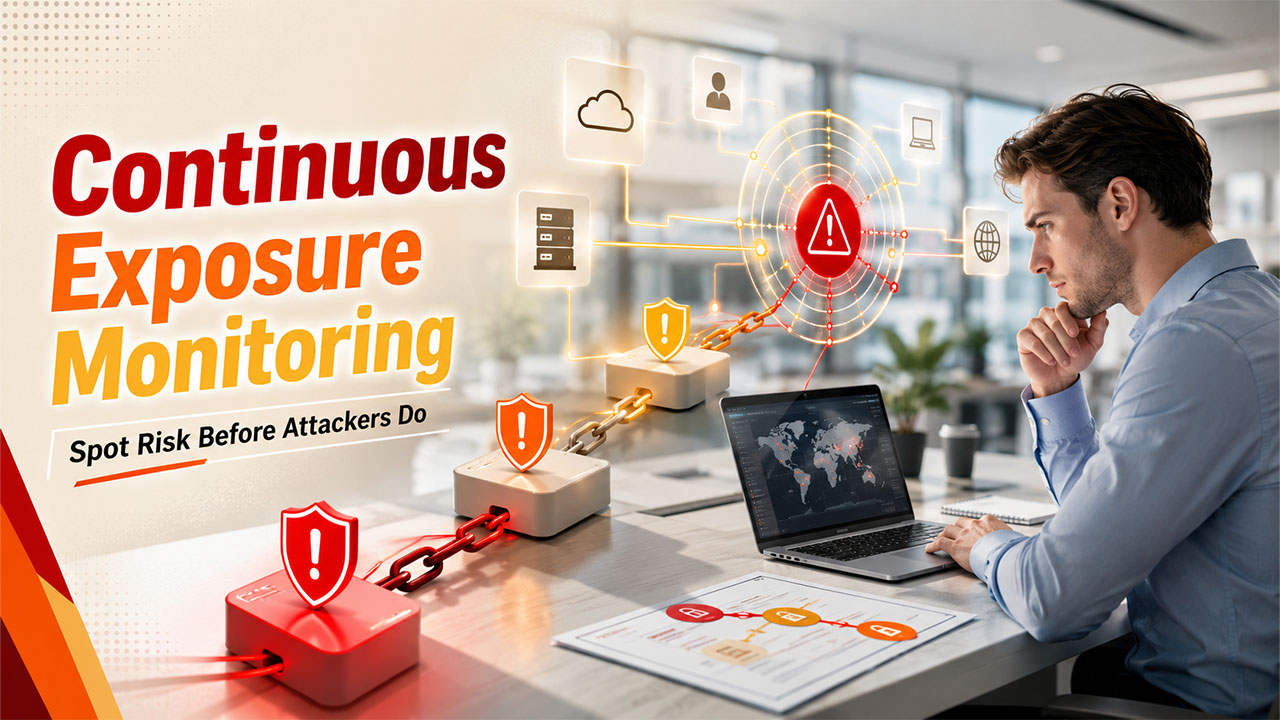

Security teams are tasked with protecting systems that change every hour. New cloud services, identity permissions, software defects, and exposed interfaces can appear before scheduled reviews catch them. Continuous exposure monitoring gives defenders a current view of risk, showing which conditions are present, how they connect, and where remediation will lower harm fastest. Strong programs blend discovery, evidence, ownership, and verification into daily practice, not quarterly cleanup. That rhythm protects scarce analyst time.
Start With Live Visibility
A practical program begins with asset data, control status, vulnerability findings, and identity signals in one view. Platforms such as Nagomi Security illustrate a core lesson: exposures usually form chains, and isolated alerts can hide attack paths. Shared visibility helps teams see stale controls, uncovered assets, and ownership gaps before risk spreads.
Map Every Asset
A successful continuous exposure monitoring program depends on maintaining a complete, real-time inventory of assets. Unknown assets leave defenders guessing. Security teams need a current inventory of servers, endpoints, cloud services, accounts, applications, and public interfaces. Each record should show owner, business role, exposure level, and control coverage. Automatic updates reduce spreadsheet work. Analysts can then focus on conditions attackers may combine during reconnaissance, privilege misuse, or lateral movement.
Prioritize Real Paths
Raw findings can bury useful signals. A sound monitoring process ranks exposures by reachability, exploit likelihood, business impact, and defensive coverage. A modest defect in a critical system may require faster action than a severe item blocked by strong controls. Context turns long queues into focused work that reflects practical risk. Continuous exposure monitoring helps teams prioritize attack paths based on exploitability, business impact, and defensive coverage.
Connect Control Evidence
Security tools often describe a single asset from multiple angles. Continuous exposure work compares scanner output, endpoint coverage, firewall rules, identity posture, and cloud configuration. Organizations that invest in managed cybersecurity services can better correlate these security signals and respond to emerging risks in real time. That combined evidence shows whether protection is present, absent, or failing. Leaders can then determine whether remediation involves patching, hardening, access cleanup, detection tuning, or a compensating control.
Track Change Quickly

Exposure changes with daily operations. A new public service, an expired certificate, a disabled sensor, or an expanded role can increase risk within minutes. Monitoring should detect those shifts as close to the moment they occur as possible. Fast change tracking gives teams the cause, owner, and likely impact before a small condition becomes a larger incident. One of the biggest advantages of continuous exposure monitoring is its ability to detect security changes as they happen.
Validate Every Fix
A closed ticket is not proof of reduced exposure. Teams should confirm remediation through fresh scans, sensor feedback, and control tests. Validation shows whether a patch was installed, a setting remained enforced, or an access change reached every required system. This discipline prevents false confidence and keeps reporting tied to measured security outcomes.
Reduce Manual Sorting
Manual triage consumes attention that should be devoted to judgment. Automation can enrich findings, group related conditions, and suggest remediation paths. Human review still belongs with production changes, risk acceptance, and business tradeoffs. A mature process removes repetitive sorting while keeping accountability with the people who own the affected environment.
Measure What Improves
Leaders need measures that show whether risk is moving in the right direction. Useful metrics include time to confirm exposure, remediation duration, reopened findings, control failure rate, and critical asset coverage. Trend data reveals whether defenses are improving or merely generating activity. It also supports resource requests with operational evidence.
Align Owners Early
Exposure management improves when asset owners, operations teams, and security leaders share responsibilities from the start. Each critical finding needs one accountable owner, an expected action, a due date, and a validation method. Early alignment reduces handoff delay. It also makes remediation part of routine operations, rather than a separate request waiting in another queue.
Build Review Cycles
Continuous monitoring still benefits from structured review. Teams should examine recurring exposure types, missed controls, delayed fixes, and accepted risks on a regular cadence. These sessions turn daily signals into program improvements. Patterns may point to weak policy, brittle architecture, tool gaps, or training needs. The aim is fewer repeats, not faster rework.
Conclusion
Continuous exposure monitoring strengthens security by replacing occasional snapshots with current, verified insight. As Cybersecurity Trends and Threats continue to evolve, the approach works best when teams combine asset intelligence, contextual prioritization, control evidence, automation, ownership, and closure checks. It helps organizations focus on the exposures that matter, confirm fixes, and reduce repetitive work. With disciplined review and measurable outcomes, security programs can shift from reactive cleanup to steady risk reduction.
%201.png)

%201.png)

%201.png)